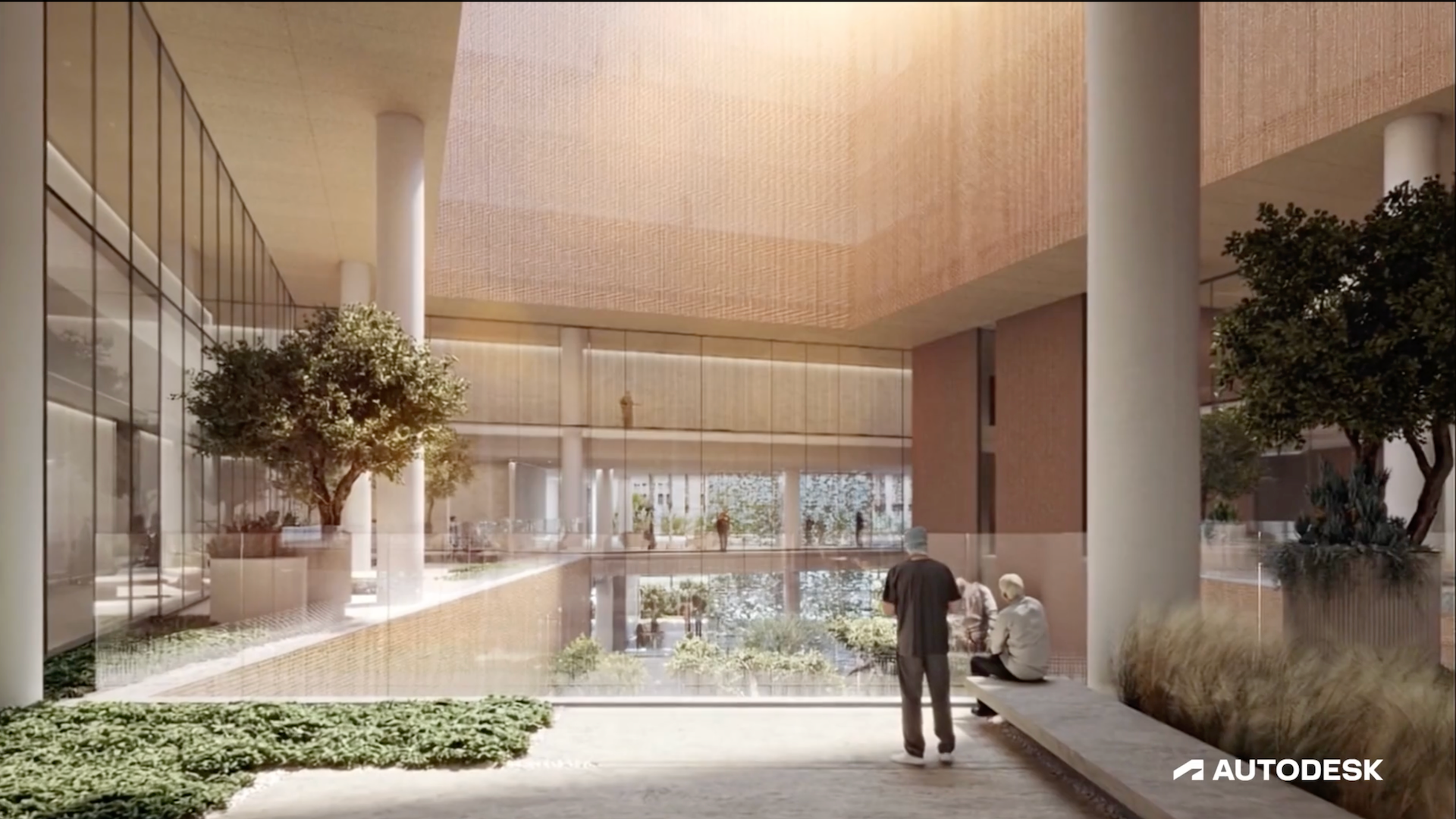
David Martin, Global Design Director, Stantec: Most people have somebody that they know who’s perished from cancer. We had two people on our team who lost loved ones during the course of the design process. There was a lot of empathy and awareness of what the whole project was about. They were part of something bigger than just themselves. To create an architecture that supports caring long into the future. The Hamdan Bin Rashid Cancer Hospital in Dubai is a project where we were literally able to integrate all of the things that we do really well and coordinate it in support of the client's vision, which was to really transform cancer care in the region.
Esra Abumounshar, Generative Design Lead, Stantec: They wanted to have something iconic. One thing that our lead designer gravitated towards was the Ghaf tree in the region and the way it twisted. From the sustainability perspective, well, if it twists, we can capture the wind. Well, let's study the wind and build the sustainability story behind that to back it up with some data-driven information.
Darren Burns, Vice President, Innovation Leader, Buildings, Stantec: The temperature extremes are quite severe and trying to create positive healthcare outcomes that both have internal and external environments is extremely challenging.
Abumounshar: We're able to create healing gardens in various areas of the building, which really was inspirational to all of us because you're creating a place where people are really suffering through this illness but are starting to see life being developed beyond that.
Martin: Our primary platform for delivering collaborative work in them is Revit. We leveraged quite heavily ACC Cloud, and we leveraged Forma specifically because of its cloud collaboration capabilities.
Burns: We had 120 people participating in the project, and they were spread out over 12 offices in 12 time zones. Forma became really, really critical for us to understand solar shading and heat buildup. The microclimates in the building warmer allowed us to make decisions more quickly. Our ability to be more creative and more imaginative was assisted by that leap in speed.
Martin: The ability to leverage cloud shared data is essential to these projects being successful. I can't imagine the coordination without them.