Electric utility design and engineering software
Electric utility design and engineering software
Autodesk solutions for innovative design and building solutions.
Electric utility design for the future
Electric utility design for the future
Challenges like aging infrastructure, grid modernization, climate change, regulatory compliance, and handling vast amounts of data can strain the resources of electric utility providers. What’s needed are advanced software solutions that enhance reliability, efficiency, and safety—and prepare utilities for the continued evolution of the energy sector.
Autodesk solutions include robust infrastructure design and management tools, integrated GIS capabilities, real-time monitoring and analytics, asset management throughout the lifecycle, and support for sustainability initiatives. They also make it easier for you to collaborate, ensuring seamless communication and coordination across projects.
What better design and construction solutions can do for utilities
Build business resilience with Autodesk electric utility solutions

Improve productivity at your power plant
Enhance your electric utility operations with Autodesk Vault, the premier data management solution designed to streamline workflows, improve collaboration, and ensure data integrity. Vault helps power utility providers efficiently manage and secure their design and engineering data, from initial concept through maintenance and upgrades.


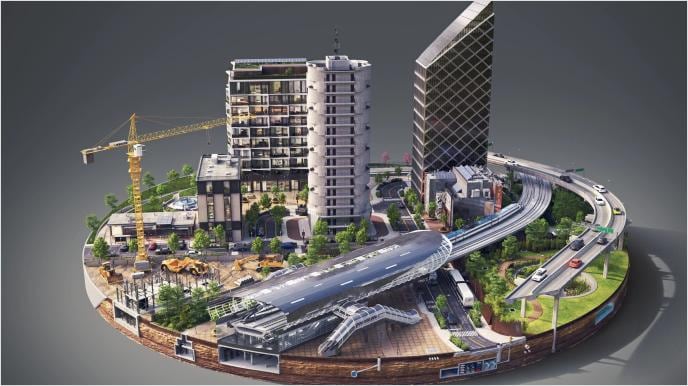
Reimagining success in a data-driven world of utilities
Reimagining success in a data-driven world of utilities
The utilities sector in the United States has been experiencing a digital transformation for the past decade. Utilities have transformed daily administrative and some business operations, but still have a long way to go in digitizing the infrastructure lifecycle. Read this e-book to learn how Autodesk is helping the utility industry digitize.
Electric utility design and engineering software
Resources for power industry professionals

WEBINAR
Using Twinmotion in utilities
Using Twinmotion in utilities
Revit® is used to design, document, and deliver building and infrastructure projects, Twinmotion compliments the process by keeping pace with real-time rendering of design and build efforts.

PARTNER OVERVIEW
The power of BIM & GIS combined
The power of BIM & GIS combined
Autodesk and Esri, the industry's leading supplier of GIS software and applications, have partnered to transform infrastructure project workflows. Our strategic alliance bridges BIM and GIS, placing critical data at the center of projects.

WEBINAR
Using BIM Collaborate Pro and Workshop XR
Using BIM Collaborate Pro and Workshop XR
This webinar discusses how Autodesk Workshop XR can take model coordination further by creating Autodesk Construction Cloud issues in the VR environment.
Frequently asked questions (FAQs)
What software do electric or power utility professionals use?
Electric utility professionals use software for various functions including digital 3D modeling for network simulation, workforce and crew management, and field and asset optimization. They also rely on platforms for managing communication networks and geographic information systems (GIS) for asset management and field operations. Additionally, software for electrical system design, distribution, transmission, operation, and automation is essential, often integrated with digital twin technology. Tools for monitoring equipment health, supporting asset performance management, and assessing environmental processes like waste reduction are also commonly used. These solutions enhance operational efficiency, reliability, and compliance in the power utility sector.
How does digital transformation affect the power utility sector?
If embraced, digital transformation can significantly enhance the power utility sector. For example, it can help power providers improve efficiency, reliability, and customer service. With advanced data analytics, it’s much easier to forecast demand and manage grids. Real-time monitoring and automation streamline operations, reducing downtime and maintenance costs, and enhanced cybersecurity measures protect critical infrastructure.
How does Autodesk integrate with ESRI for the benefit of the electric utilities industry?
ESRI is a leader in Geographic Information System (GIS) modeling and mapping software and technology. Autodesk and ESRI integration enables the seamless flow of data between GIS and BIM, which helps electric utilities providers better plan, design, manage, and optimize their infrastructure.
How is cloud technology used in the electric utility industry?
Cloud technology is used extensively in the electric utility industry to enhance efficiency, scalability, and data management. It enables real-time data collection and analysis from smart meters and sensors, improving demand forecasting and grid optimization. Cloud platforms support advanced analytics and machine learning for predictive maintenance, reducing equipment failures and downtime. They also facilitate the integration of renewable energy sources by managing and balancing supply and demand. Cloud-based systems enhance cybersecurity by providing robust, scalable security solutions. Moreover, customer-facing applications hosted on the cloud offer personalized insights and services, improving customer engagement and satisfaction.
How can Autodesk software help optimize power utility operations?
Autodesk software can significantly optimize power utility operations through various advanced tools and functionalities:
Design and planning: Autodesk's design software, such as AutoCAD and Revit, assists in creating precise electrical infrastructure layouts, enhancing planning accuracy and efficiency.
BIM integration: Building Information Modeling (BIM) tools like Revit facilitate detailed 3D modeling and simulation of electrical systems, improving project visualization and coordination.
Asset management: Autodesk tools help in creating comprehensive digital twins of physical assets, enabling better monitoring, maintenance, and management of utility infrastructure.
Collaboration: Cloud-based solutions like Autodesk Construction Cloud allow for seamless collaboration among teams, ensuring all stakeholders have access to the latest project data and updates.
Workflow automation: Automation tools streamline repetitive tasks, reduce errors, and free up resources for more strategic activities.
Sustainability: Autodesk software supports sustainable design practices by enabling the analysis of environmental impacts and optimizing resource usage.
By using these capabilities, Autodesk software helps power utility companies enhance their operational efficiency, reduce costs, and improve service reliability.
What is digital twin technology and why is it important for power plants?
A digital twin is a virtual replica of a physical asset that is updated in real time to represent its live characteristics. It is a virtual reality where power plant engineers can experience and ask what-if questions to simulate scenarios to help them solve problems, train staff, meet challenges, increase efficiency, reduce expenses, and improve service.
For example, power utility plant engineers can use digital twin technology for the following aspects of plant operations and maintenance:
Real-time monitoring: Digital twins provide a real-time virtual representation of physical assets, allowing engineers to monitor equipment performance continuously and detect anomalies early.
Predictive maintenance: By analyzing data from the digital twin, engineers can predict potential failures and schedule maintenance proactively, reducing downtime and extending the lifespan of equipment.
Simulation and testing: Engineers use digital twins to simulate different operational scenarios and test changes in a virtual environment before implementing them in the real world, minimizing risks.
Optimization: Digital twins help in optimizing plant operations by providing insights into energy consumption, performance inefficiencies, and potential improvements, leading to cost savings and enhanced efficiency.
Training: They serve as training tools for new engineers, offering a risk-free environment to understand complex systems and procedures.
Remote management: Digital twins enable remote monitoring and management of plant operations, which is especially useful for managing multiple sites or during emergency situations.
By integrating digital twin technology, power utility plant engineers can achieve more reliable, efficient, and sustainable plant operations.
What is electric power transmission and distribution?
Electric power transmission and distribution involves the process of transporting electricity from power plants to end-users. Transmission refers to high-voltage transfer over long distances, while distribution involves lower voltage delivery to homes and businesses. This system ensures reliable and efficient access to electricity for various applications.
Autodesk offers several products that can be used to design electric transmission and distribution systems, including:
AutoCAD: For detailed design and drafting of electrical systems
Revit: For building information modeling (BIM) to design and manage infrastructure projects
Civil 3D: For civil engineering design and documentation
InfraWorks: For infrastructure design and planning
Let's talk utility solutions
Let's talk utility solutions
Contact us to learn more about how Autodesk can help you solve business challenges for your power plant
Contact us to learn more about how Autodesk can help you solve business challenges for your power plant
Let's talk utility solutions
Let's talk utility solutions
Contact us to learn more about how Autodesk can help you solve business challenges for your power plant
Contact us to learn more about how Autodesk can help you solve business challenges for your power plant