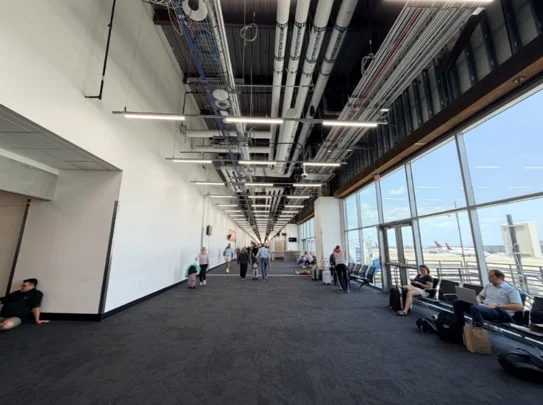
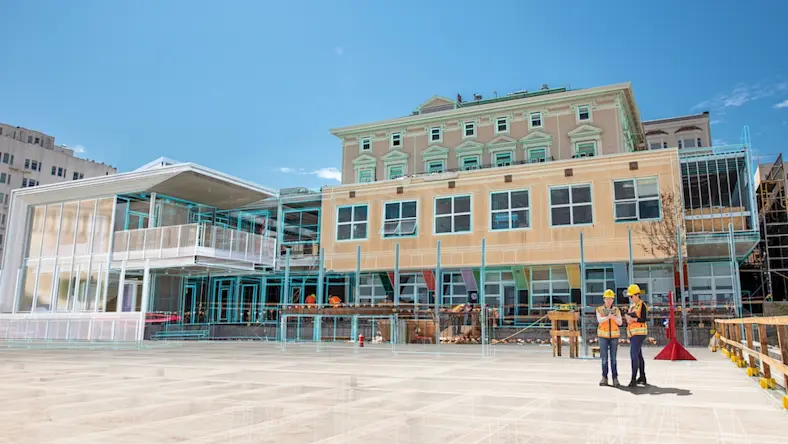
Hartsfield-Jackson Atlanta International Airport is modernizing landside and airside facilities through its ATLNext program, with support from WSP.
Using Autodesk Tandem, WSP built a digital twin that brings facility design and asset lifecycle data together to support proactive decision-making.
For WSP’s work at ATL, success means keeping infrastructure in the background, so that passenger experience remains the focus.
When an airport works well, most travelers never think about the infrastructure behind the journey. They notice the departure board, the coffee before an early flight, the family waiting at baggage claim. The people moving through the airport become the story—their journeys, connections, and opportunities. The escalators, elevators, utilities, pipes, and security systems that make those moments possible simply fade into the background.
At Hartsfield-Jackson Atlanta International Airport (ATL), those everyday movements take place at extraordinary scale—about 280,000 people move through the airport every day, which is the equivalent of an entire city passing through one building in 24 hours. At that scale, every infrastructure system should perform reliably while the airport keeps moving.
Helping manage that complexity is WSP, a global professional services firm with expertise across engineering, advisory, and science-based disciplines. WSP provides project and program management support for ATLNext, the airport’s capital improvement program.
For Chris Harman, director of Digital Delivery and Innovation at WSP, the challenge is not a lack of data. It is bringing together enormous amounts of data from drawings, models, documents, sensors, and maintenance records and putting them in context for insight-driven, proactive decision-making. WSP built a digital twin using Autodesk Tandem to connect that data in a visual environment. By bringing facility data together and making it easier to understand in context, the digital twin helps teams prioritize maintenance, plan asset replacement, and manage aging systems.
In this video, Harman discusses how WSP is using the digital twin technology at ATL to connect infrastructure data, inform operational decisions, and keep passenger experience at the center.