AI IN EDUCATION
Artificial intelligence (AI) in education: Reshaping the future of learning
Artificial intelligence (AI) in education: Reshaping the future of learning
From adaptive learning platforms and virtual tutors to automatic grading systems and skill-gap analyses, the use of AI in education is transforming learning and teaching for educators and students alike.
What is artificial intelligence (AI) in education?
What is artificial intelligence (AI) in education?
Artificial intelligence (AI) employs machines to perform tasks that typically require human intelligence, such as reasoning, learning, and problem-solving. In educational contexts, AI can be used to facilitate student learning, to assist instructors, and to support institutions. Reactive and predictive AI tools can help teachers and administrators automate routine tasks and perform detailed data analyses, while generative AI can be used to produce novel content for lesson planning, personalized learning, and more.
As AI becomes more prevalent in industry and society, interest in developing responsible uses of AI in education has grown. Recent research indicates that as many as 60% of K-12 educators in the US and 54% of higher education students worldwide use AI weekly. Many educators recognize AI’s potential to streamline administrative tasks, improve learning outcomes, and even enhance student engagement. Incorporating AI in education—both as a tool for learning and as a tool to learn about—may better prepare students to effectively use AI in their future careers.
With many parts of the world facing teacher shortages and many industries facing skills gaps, AI tools hold potential for increasing educational access and reaching underserved groups through remote learning, virtual tutoring, and adaptations for disability and learning differences.

The role of AI in higher education
The role of AI in higher education
Many higher education institutions are exploring AI applications to streamline operations, promote student success, and facilitate research. At the administration level, AI can perform data analysis and automate scheduling, communication, and resourcing. Faculty can use AI to analyze data in support of curriculum design, to automate grading, to prepare course materials, and to provide personalized learning opportunities. AI can also accelerate academic research by performing complex analyses, running simulations, and identifying areas for further study.
Adopting AI in higher education carries risk as well as potential. Most higher education institutions are approaching AI—particularly generative AI—cautiously due to concerns about academic integrity and ethical usage, AI’s potential for bias and inaccuracy, and data privacy and security. Many in the higher education community recognize the need for bringing AI literacy into the curriculum and developing frameworks for both teaching and learning about AI to ensure safety, guard against misuse, and prepare students to be responsible users and developers of AI in their future careers.
Since the introduction of ChatGPT and other generative AI models, higher education students have proactively used generative AI for help with research, understanding complex topics, generating first drafts, or improving writing. A recent survey of undergraduates in 15 countries found that 80% had used generative AI to support their studies, with 29% turning to it first when seeking help on a concept or assignment. On that same survey, 69% of student respondents expressed a desire for their curriculum to include training on AI tools relevant to their future careers.

How can AI be used in education?
How can AI be used in education?
The many potential uses of AI for school can be broadly categorized as either student-focused or instructor-focused.
Student-focused AI tools include AI tutoring and adaptive learning platforms that can personalize instruction based on individual student data, such as past performance and feedback, learning preferences or disabilities, and educational goals. Other student-focused AI tools offer accessibility features like text-to-speech, visual recognition, speech-to-text, and language translation. In addition, students can use AI tools for writing support, creative-thinking prompts, self-assessment, and independent research.
Instructor-focused AI includes tools that assist with curriculum design and the creation of instructional content, such as study guides, activities, testing materials, visual aids, and lecture scripts. Instructors can also use AI to automate administrative tasks like grading, scheduling, and managing student records.
AI has the potential to free up more instructor time for direct student interaction. It can also improve assessment capabilities, providing instructors with analyses of students’ performance and aptitude on both an individual and aggregate level. Instructors can use this information to refine their teaching approach and provide additional support and remediation.

Benefits of AI in education
Personalizing learning
AI tutoring and adaptive learning platforms can provide real-time feedback and instruction tailored to a student’s skill, pace, learning style, and individual abilities.
Supporting teachers
AI tools that automate administrative tasks and streamline course planning and prep can free up teachers’ time to focus on direct interaction with students.
Promoting digital literacy
Using AI in education creates opportunities for students to gain hands-on experience with AI technology and develop an understanding of the ethics of AI use.
Bridging educational gaps
The use of AI can help address global educational gaps, including teacher shortages, administrative overload, access inequality, and the need for digital skills training.
Reducing skills gaps
Using AI in the classroom helps students develop technical skills and competencies that align with industry demands, increasing their competitiveness in the job market.
Demystifying AI for engineering educators
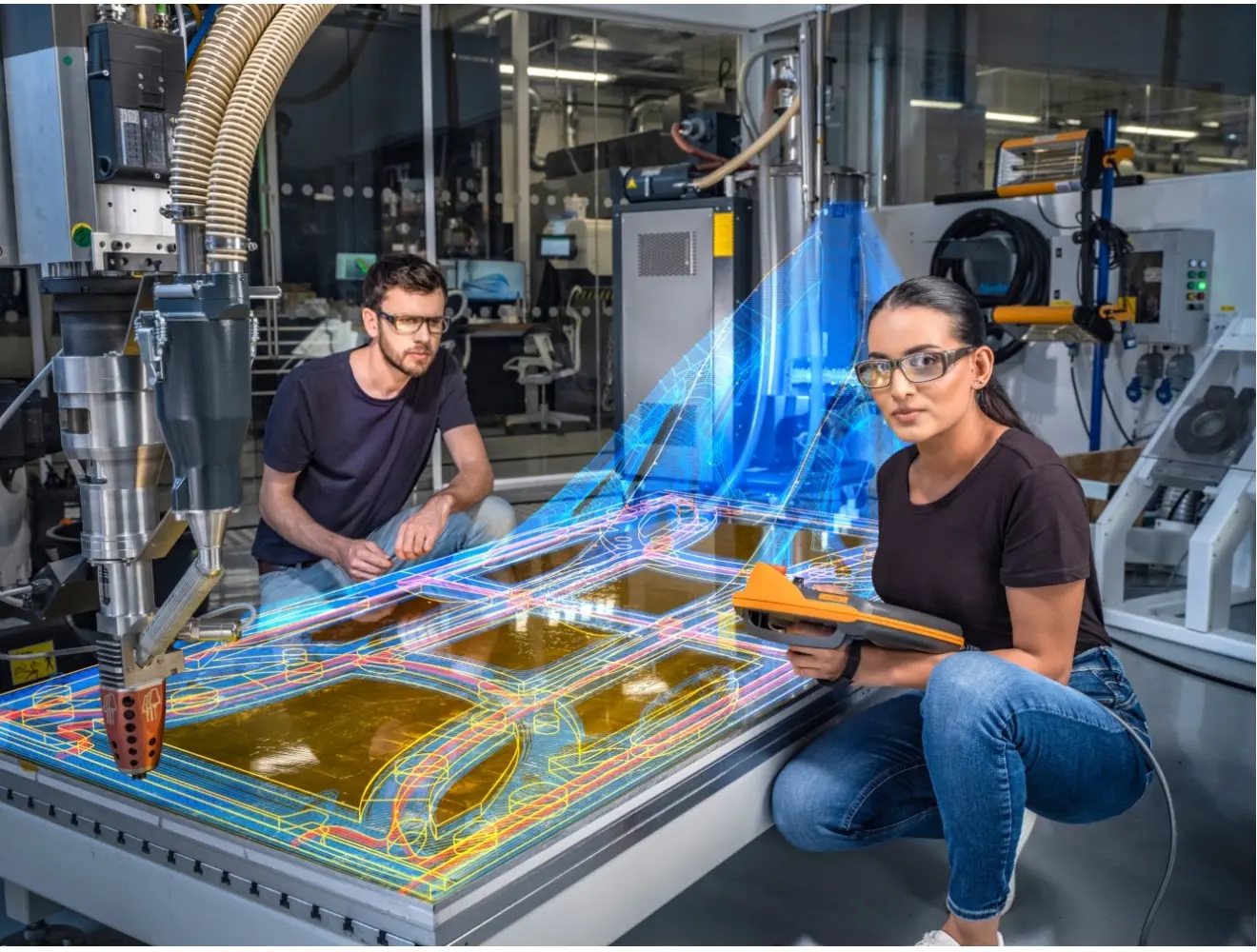
What is AI for engineering educators?
AI basics, key terminology, and the role it can play in the day-to-day life of an engineer.
AI basics, key terminology, and the role it can play in the day-to-day life of an engineer.




AI resources for teachers
Discover how the growing skilled talent gap is reshaping industries—and why AI skills are quickly becoming a top priority for employers.
Explore the different types of AI and the ways they are being incorporated into the Design and Make industries.
Discover educational initiatives designed to equip students with the skills necessary to work with Industry 4.0 technologies, including automation, robotics, AI, and the Industrial Internet of Things (IIoT).
Learn about Autodesk’s AI technology solutions that empower its customers to design, innovate, and create.
Explore the projects and publications of the Autodesk AI Lab, a global team of research scientists dedicated to advancing both fundamental and applied artificial intelligence research.
The STEM disciplines—science, technology, engineering, and mathematics—are top priorities for educators and institutions focused on preparing students to succeed in a technology-driven world.

HOWARD UNIVERSITY
AI in AECO education for a better built environment
AI in AECO education for a better built environment
A historically Black research institution is creating a new Design and Make Lab and embracing AI training in AECO education.

KOGAKUIN UNIVERSITY
Smart factory education supports the future of work
Smart factory education supports the future of work
A Japanese university offers smart-factory education to prepare engineering students for using AI in their future manufacturing careers.

SXSW EDU
Empowering the next generation through STEM education
Empowering the next generation through STEM education
STEM experts discuss the integration of AI tools and other strategies for aligning education with changing workforce needs.
Skills in the Age of AI Spotlight Report
Skills in the Age of AI Spotlight Report
Autodesk’s Spotlight on Skills in the Age of AI report is a special edition of the 2025 State of Design & Make report examining the role of AI in the changing skills landscape. Featuring data from business leaders across the Design and Make industries, the report highlights the increasing importance of being able to use AI effectively. It also identifies soft skills that are becoming more valued in the context of advancing technology. For educators and education decision-makers, the report offers valuable insights into the training and experience students need to develop skills that will help them succeed in the workforce.

Frequently asked questions (FAQ) about AI in education
How can AI tools enhance teaching and learning experiences?
AI tools can enhance teaching by aiding instructors in creating educational materials and developing curricula. They can also automate grading and analyze student performance to help teachers identify students who need additional support.
AI tools can enhance learning experiences through personalized and adaptive learning systems that tailor learning to meet students where they are. They can also increase the accessibility of learning materials through speech recognition, text-to-speech, language translation, and by offering content in alternative formats for students with neurocognitive differences.
Are there specific examples of AI for school being used effectively today?
Adaptive learning platforms like Top Hat, Knewton Alta, and Smart Sparrow are actively used at many higher education institutions. These platforms offer a suite of AI-enabled tools that help educators develop interactive classroom experiences and personalized learning. Many schools have also adopted programs like Turnitin to streamline assessment, feedback, and grading.
On a larger scale, Singapore’s Ministry of Education (MOE) has adopted a nationwide Student Learning Space (SLS) platform that incorporates several AI-enabled tools for adaptive learning, lesson planning, student feedback, and assessments.
What are the primary benefits of using AI in schools and universities?
Using AI in schools and universities can improve student learning outcomes by providing personalized, accessible instruction. When AI is used to streamline administrative tasks, it can free up teachers’ time and energy to focus on more meaningful and educational interactions with students. AI analytics can refine assessments, offering real-time feedback, evaluating nonstandardized tests, and providing educators with detailed analyses of student performance. Finally, incorporating AI into classrooms increases students’ digital literacy and prepares them to use AI effectively and responsibly in their future careers.
How can educators ensure that AI-driven tools are used ethically and responsibly?
Educators and administrators must inform themselves about the capabilities and limitations of the AI tools they and their students are using. Responsible and ethical AI tools should be transparent about how their algorithms are trained and provide opportunities for educators to inspect and even override AI inputs and outputs as needed. Educators need to ensure the AI tools they use follow robust data privacy and security standards, and be alert to potential bias and inequity in the tools’ output. As part of introducing AI into the classroom, educators should prioritize teaching students about the technology itself, helping them understand how to use it safely and ethically.
What are the pros and cons associated with AI in education?
All AI models have the potential for bias, inaccuracy, and incompleteness. This limitation is inherent in how AI models are trained, but it can be exacerbated if the educators using the AI aren’t careful about vetting and monitoring it. Bias in educational AI could undermine the value of personalized or adaptive learning problems, potentially failing to support marginalized student groups.
Another major concern about AI is data security and privacy. Any system that personalizes coursework or analyzes student performance relies on potentially sensitive data about students. Educators and administrators planning to use such tools must establish transparent standards about how data is collected, stored, used, and shared.
In addition to concerns about equity and privacy, many educators worry that students may develop an overreliance on AI or use it inappropriately, for example, by asking a chatbot to write a paper for them. This sort of misuse could prevent students from learning valuable skills like research, writing, and critical thinking.
How does AI support personalized learning for individual students?
Personalization tools can adjust the sequence and pace of learning experiences based on student input and historical data. AI learning systems can provide real-time feedback on student performance, and more advanced AI tutors could potentially guide students through problem-solving and creative thinking. AI tools like speech recognition and language translation can make course materials accessible for students with disabilities, language barriers, or learning differences.
What is the future outlook for AI adoption in educational institutions?
AI is likely to become increasingly common in educational institutions, just as it is in many other aspects of society. More advanced AI tools have the potential to improve student outcomes, prepare learners for future careers, streamline administrative tasks, and enable educators to teach more effectively. Institutions looking to expand their use of AI will need to develop and refine frameworks for evaluating, implementing, and monitoring AI programs to check for bias or inaccuracy and ensure data security and privacy.
In addition to AI being leveraged as an educational tool, it will also become more common as part of the curriculum. With the proliferation of AI across industries and modern culture, schools are beginning to prioritize training students on the ethical, responsible use of AI. Educational institutions are also expanding their course options in AI development, as well as skills-based training on using AI tools on the job.
How can teachers and administrators begin implementing AI solutions in their curriculum?
Teachers and administrators looking to implement AI can start by gauging their institution’s readiness, evaluating the existing technological infrastructure, and engaging with staff, faculty, parents, and students to familiarize everyone with the opportunities and risks involved with AI use. The next step is to identify specific needs and objectives that AI can address and seek out tools and applications that can meet those needs.
Educators can begin with small-scale pilot programs that let them quickly implement an AI solution and gather efficacy data on it. Many applications educators already use regularly, such as learning management systems and productivity app suites, have built-in AI features that can be explored for prototyping. By starting with pilots and prototypes, educators can test assumptions, refine focus, and develop frameworks for transparency, security, privacy, and responsible usage before rolling out the AI more broadly.
How does AI help improve access to quality education worldwide?
AI has the potential to overcome geographical and socioeconomic barriers to quality education. AI-powered learning platforms are available at any time of day and can be made accessible to users in remote or underserved locations. With teacher shortages affecting many regions of the world, AI-enabled virtual classrooms and AI tutoring systems can enable teachers to reach and support more students, regardless of location.
Language-processing AI tools can translate materials to give students in different parts of the world access to the same educational information. These tools can also adapt materials to make them more accessible to non-native speakers, people with language processing disabilities, or learners with visual or hearing impairments.
AI can also support the democratization of education through data analysis. Educators and policymakers can use AI to identify education gaps and determine equitable resource allocations.
How does AI in education impact the learning of nontechnical skills?
As AI becomes more integrated into technical tasks at school and in the workforce, human-centered interpersonal and soft skills—such as problem solving, communication, and critical thinking—will continue to be highly valued. Autodesk’s Spotlight on Skills in the Age of AI report highlights the value of these soft skills, even in fields and industries that rely heavily on technical knowledge and AI. Educators can prepare their students for future careers by prioritizing the development of soft skills, as well as technical knowledge and AI competency.