& Construction

Integrated BIM tools, including Revit, AutoCAD, and Civil 3D
& Manufacturing

Professional CAD/CAM tools built on Inventor and AutoCAD
At BKW Grid & Hydro Engineering, the journey to becoming a digital pioneer began with a clear strategic decision: The sweeping transformations in the energy sector demanded a fundamentally new approach to design and collaboration. After all, the operating environment has shifted noticeably: Existing grids require rapid expansion while legacy infrastructure must be modernized simultaneously. Compounding this is the integration of a decentralized power supply landscape driven by the growth of renewable energy. And finally, all these challenges must be overcome against the backdrop of an acute skilled labor shortage.
For large-scale, multi-year capital projects in particular, these overlapping shifts are driving a surge in complexity—further intensified by an ever-expanding web of regulatory requirements. There is only one viable response: To manage this complexity and ensure quality, planning must become more efficient and transparent with fewer errors.
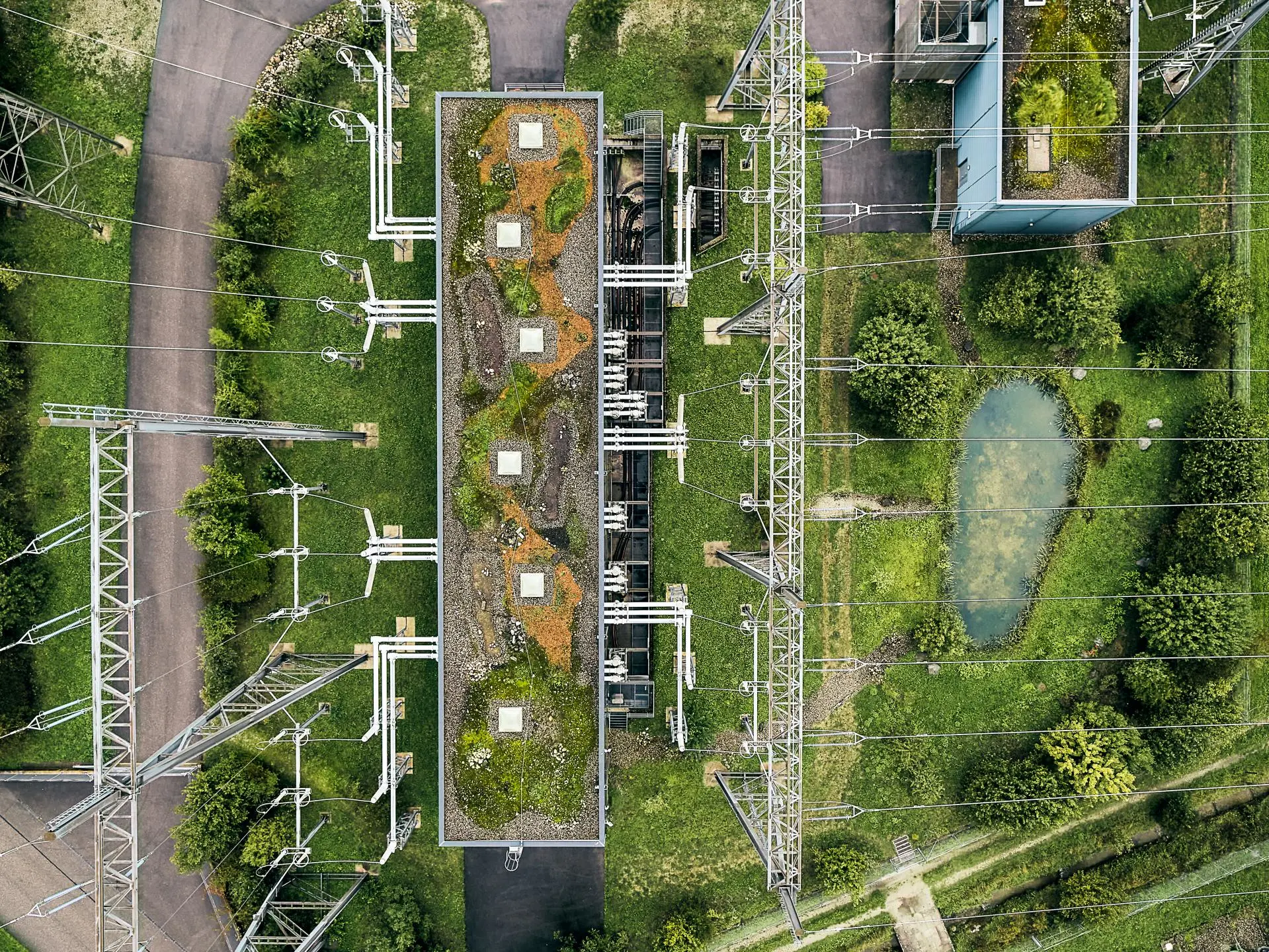
This approach is especially vital for BKW Grid & Hydro Engineering, an engineering consultancy within the BKW Group’s engineering network. Most of its contracts involve capital projects—complex, large-scale undertakings that integrate structural and civil engineering with transformer stations, substations, and power lines. This inherent diversity demands simplified, standardized processes—which means relying even more heavily on digital workflows than before.
The immense complexity of capital projects in the energy sector calls for greater efficiency in design.
A consistent common data environment (CDE) improves the quality of collaboration and ensures everyone has a shared understanding.
A centralized coordination model helps reduce errors and risks, especially in large-scale projects involving many participants.
This increased efficiency makes it possible to handle more projects even when human resources are scarce.
A reliable data basis facilitates informed decision-making at every stage of the project lifecycle.
“It was clear to us that introducing centralized models and a shared data basis was the answer to our challenges,” says Oliver Krone, Head of Grid and Hydro Engineering, explaining what motivated him to pursue a comprehensive digital transformation. To describe his goal, he says: “Our motto is: from file-based to data-based work.”
BKW GHE began using a model-based approach to connect design information when it introduced BIM methodology in 2018. As a pioneer, the company also adopted an early version of a cloud-based common data environment. Following the switch to Autodesk Construction Cloud (ACC), today BKW GHE uses Autodesk Forma to integrate digital workflows even more closely. The company’s current common data environment is the result of ongoing development work on its digital design and collaboration processes—with the goal of creating a reliable, end-to-end digital information chain.
During its transformation journey, BKW GHE systematically refined its strategy, processes, and digital capabilities, with support from its solution partner, Autodesk. Both Autodesk’s dedicated Customer Success Team and its Account Team had already gathered substantial experience with implementing digital methods in infrastructure design, having supported well-known energy providers in the DACH region. The teams saw their primary task as relieving BKW GHE of the increasing pressure associated with large-scale infrastructure projects. The ability to plan complex capital projects in a scalable manner and deliver them with greater control was always central to these consulting and implementation efforts. As a result, the engineering firm built up specific digital capabilities to work more efficiently and strengthen its competitive position.
Oliver Krone, Head of Grid- and Hydro-Engineering, BKW GHE
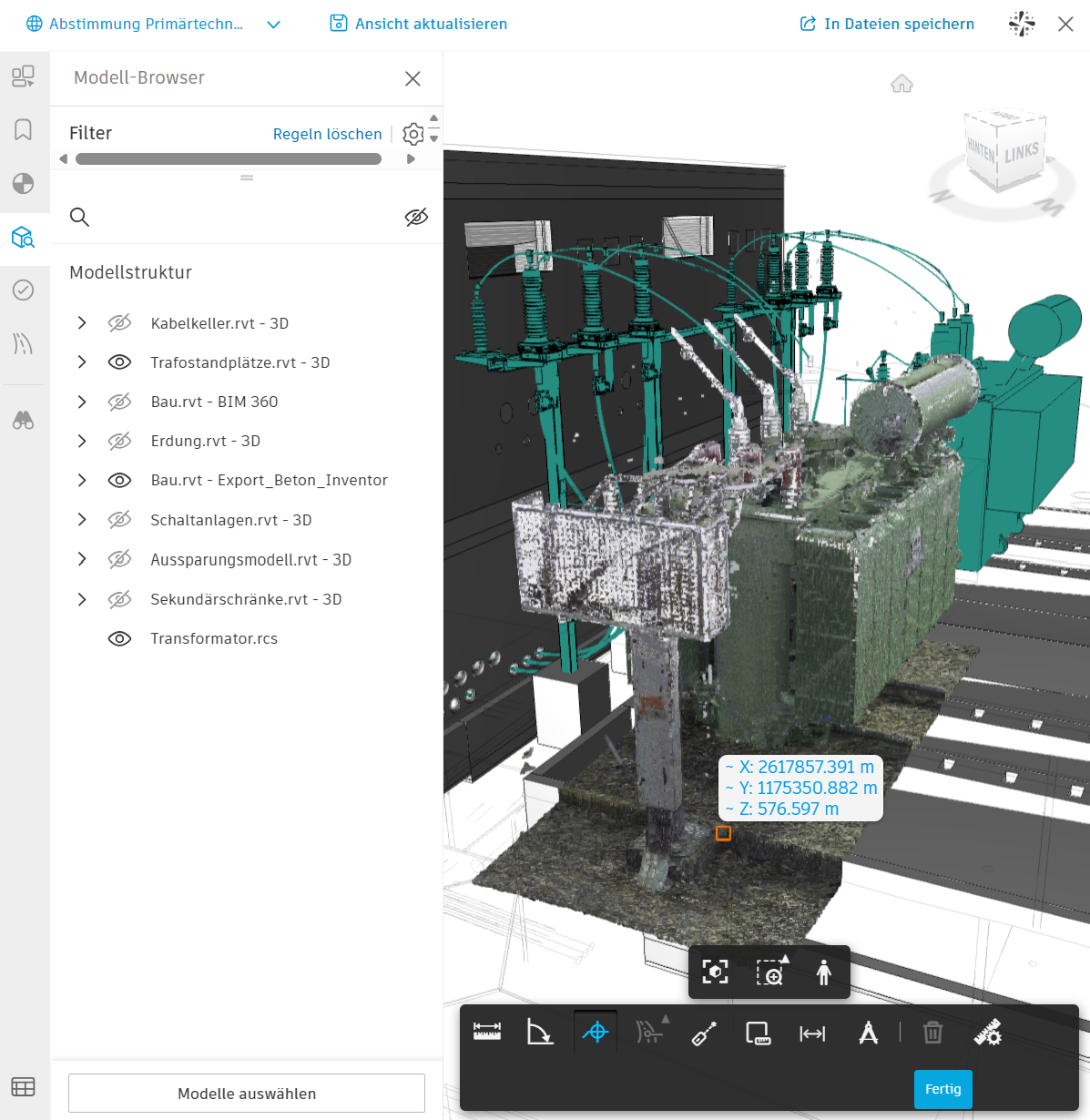
During the expansion of a grid station, BKW GHE began by creating a digital 3D technical model using laser scanning and point clouds. This made it possible to detect deviations from the existing conditions model with millimeter precision. In the process, it was discovered that the existing conditions model provided by the client was incorrect. The utility lines and safety clearances didn’t align, requiring the entire extension to be shifted by five meters. This way, a serious error—and one that would have led to significant additional costs on the construction site—was identified well ahead of construction. The existing conditions modeling was subsequently updated, and the result was a reliable coordination model that could be handed over to the operator once construction was completed.
With the introduction of Autodesk Forma, BKW GHE has taken the next step in its evolution. From the outset, everyone involved agreed that a proof of concept backed by a robust cost-benefit analysis was essential. After all, without specific projects, it’s impossible to determine whether efforts to refine digital project delivery yield improvements in quality and efficiency. To this end, use cases were first defined to allow employees to become familiar with the principle of the common data environment.
Across multiple projects, it was successfully demonstrated that a CDE can greatly improve interdisciplinary collaboration, resulting in fewer inefficiencies. “We didn’t want to digitalize for its own sake; our focus was always on tangible value. And we recognized that value very quickly: a CDE makes it much easier for employees and partners to see their projects as part of an integrated system. There are fewer misunderstandings, transmission errors, and breaks in information flow—with measurable benefits in terms of efficiency and cost-effectiveness,” Krone says, summarizing his experience.
Daniel Spörri, who serves as a CAD-PDM administrator at BKW GHE and is responsible for BIM technology and license management, agrees. Having played a key role in driving the adoption of BIM, he was also closely involved in implementing the common data environment. In his view, the ability to overlay multiple discipline-specific models onto a central model was a true paradigm shift: “Interconnected thinking transforms employee mindsets. People stop thinking in terms of ‘my’ model, and instead see ‘our’ model as a single source of truth. And the bigger and more complex a project is, the more important this becomes.”
Daniel Spörri, CAD-PDM-Administrator, BKW Grid- & Hydro-Engineering
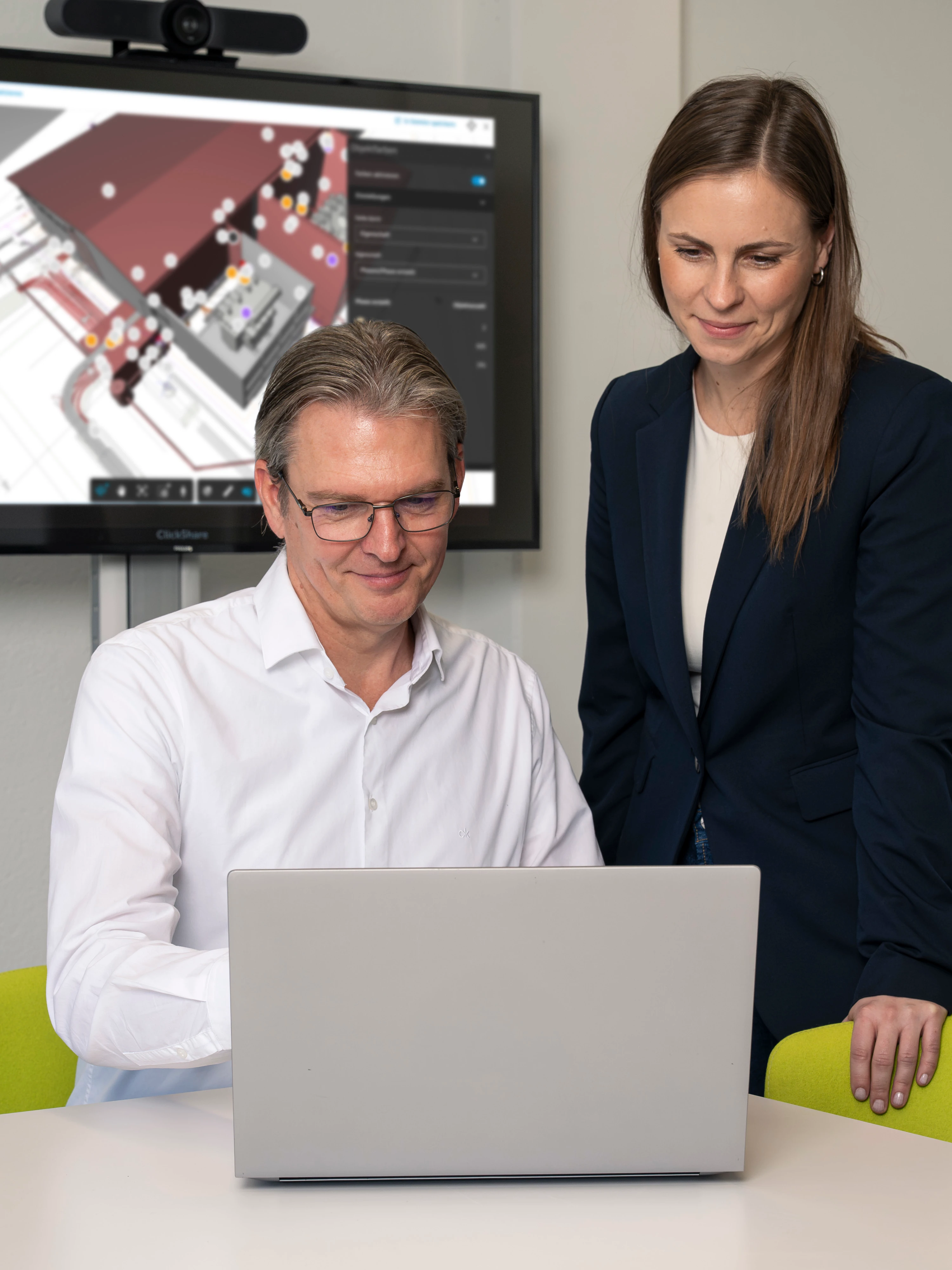
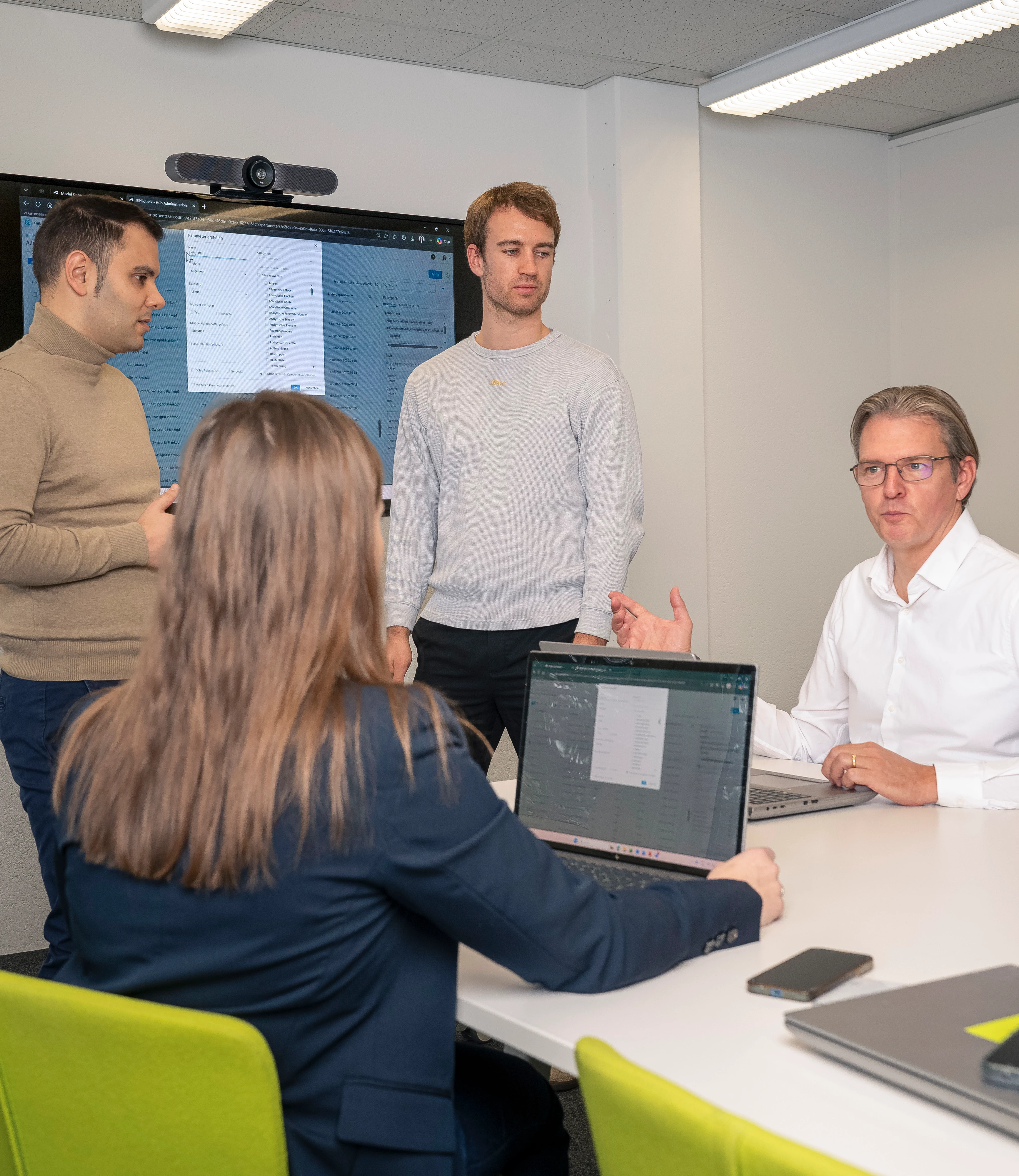
As head of the BIM Business Unit at BKW GHE, Lisa Graubner-Müller plays a key role in the company’s digital transformation: “Working in a common data environment is something you have to learn and internalize,” she believes. An important step for her is to firmly embed the new way of working into her daily project routines. The ultimate goal is for all project stakeholders to collaborate using a shared coordination model and a common data environment. That means specialist planners and departments will now be engaging in a closer form of collaboration. This transition is being driven by the introduction of BIM coordination meetings, which bring all disciplines together—from construction technicians to surveying specialists to high-voltage technicians. This cross-functional approach has fostered a significantly stronger, shared understanding of the project across disciplines.
At the same time, employees are using practical examples to explore how they can make workflows more efficient. These tangible quick wins have given team motivation an additional boost. Technical questions are addressed collaboratively on an ongoing basis: What tools will we use in the future, and how will we integrate them? Where are the interfaces? How can we resolve issues with data export? How do we integrate BKW GHE’s existing software environment, ranging from Revit and Inventor to Civil 3D? Beyond clarifying these important operational issues, the goal is to develop a routine: Just as BIM is now second nature, working seamlessly within a common data environment should also become the established standard for project delivery.
Lisa Graubner-Müller, Head of BIM Business Unit, BKW Grid- & Hydro-Engineering
A substation renovation project was selected as a pilot for synchronizing models from various engineering disciplines. Design data from Revit and Inventor was incorporated into a shared coordination model. This meant that technical models could be used for clash detection, and issues with clearly defined responsibilities could be recorded directly in the model. As time went on, the digital workflow was gradually expanded—for example, by adding Autodesk Vault, which was used specifically in conjunction with Inventor to manage design data.
The insights gained from the pilot project really highlighted the added value of the common data environment and model-based coordination. Consequently, the use of a common data environment was expanded to other suitable projects. At the same time, other departments within BKW GHE expressed interest in supplementing existing projects and coordination models with their subject-specific content—for example, by integrating additional calculation or technical models, such as a lightning protection calculation model.
For BKW GHE, crossing the threshold into “BIM2Field” is the next logical step on its journey toward full digital transformation. The vision is to eventually be able to do without paper plans on the construction site. In one area, this is already a reality at BKW GHE: Reinforcement and formwork can already be provided in a model-based format on the construction site—there are already dedicated Revit families for the corresponding building elements. The company has set itself a clearly defined goal to drive the digital transformation of construction sites and play a pioneering role in this area as well.
Crucially, a central data platform is also a prerequisite for the effective use of artificial intelligence. After all, the only way to capitalize on the promise of AI is with a reliable and consistent data basis—for example, to standardize and automate processes.
For BKW GHE, digital project delivery is about far more than adopting new technology. With a shared data basis, standardized processes, and centralized model coordination, the company has laid the groundwork for implementing complex energy infrastructure projects more efficiently, with greater control, and with fewer errors. This approach reveals design risks earlier, and it reduces format discontinuities and coordination issues. Moreover, the increased efficiency creates additional capacity to handle more projects and manage the growing volume of work, despite a shortage of specialist resources.
A comprehensive return-on-investment study conducted in collaboration with Autodesk shows that these changes also pay off financially. It demonstrates significant, measurable time and cost savings in several areas, thereby confirming the value of digital project delivery. At the same time, BKW GHE has developed additional expertise in information management, model coordination, data structures, and digital collaboration—skills that not only strengthen project execution, but also enhance the company’s competitive position.
As a result, BKW GHE has established scalable project delivery capabilities that can also benefit other parts of the BKW Engineering network in the future.
Oliver Krone, Head of Grid- & Hydro-Engineering, BKW GHE
As part of Switzerland’s BKW Group, BKW Grid & Hydro Engineering (GHE) is responsible for design services in the field of energy infrastructure—both for the Group’s own projects and for external clients. GHE, with 160 employees, is part of the BKW Engineering network, which brings together more than 50 partner companies from the DACH region. The BKW Group also includes BKW Energie AG, one of Switzerland’s largest energy suppliers.
For more information, visit www.bkw-ghe.ch