Autodesk flexsim for warehouse simulation

Optimize your warehouse with 3D warehouse simulation

Model your warehouse in 3D, test “what‑if” scenarios, and make improvements faster with warehouse simulation software built for warehousing operations.

Warehouse simulation software, Autodesk FlexSim

What is warehouse simulation?

Warehouse simulation is a way to model your real‑world (or proposed) warehouse system to better understand what’s happening and to identify improvements. In a simulation model, elements like storage, docks, conveyors, AGVs, and even personnel can be introduced and adjusted quickly. This allows you to see how changes affect flow, resource use, and efficiency before you commit in the real world.

Why simulate warehousing?

Run smarter warehouse scenarios, without real‑world risk.

Test changes without disruption

Put your warehouse to the test in a risk‑free environment without disturbing the existing system.


Controlled costs while protecting throughput

Use simulation to help determine minimum operating costs without sacrificing throughput.


Keep up with rising pressure

As labor costs, equipment costs, and customer demand rise, simulation helps you evaluate how your warehouse can perform under new constraints.


Warehouse simulation using Autodesk FlexSim

What questions does warehouse simulation software help organizations address?

Warehouse decision makers face operational questions every day. Simulation modeling with FlexSim is designed to help you explore these questions and validate decisions with data.

  • Are we maximizing our storage locations to optimize product movement?
  • Are our products getting to the right place at the right time?
  • Have we succeeded in reducing WIP to the lowest possible level?
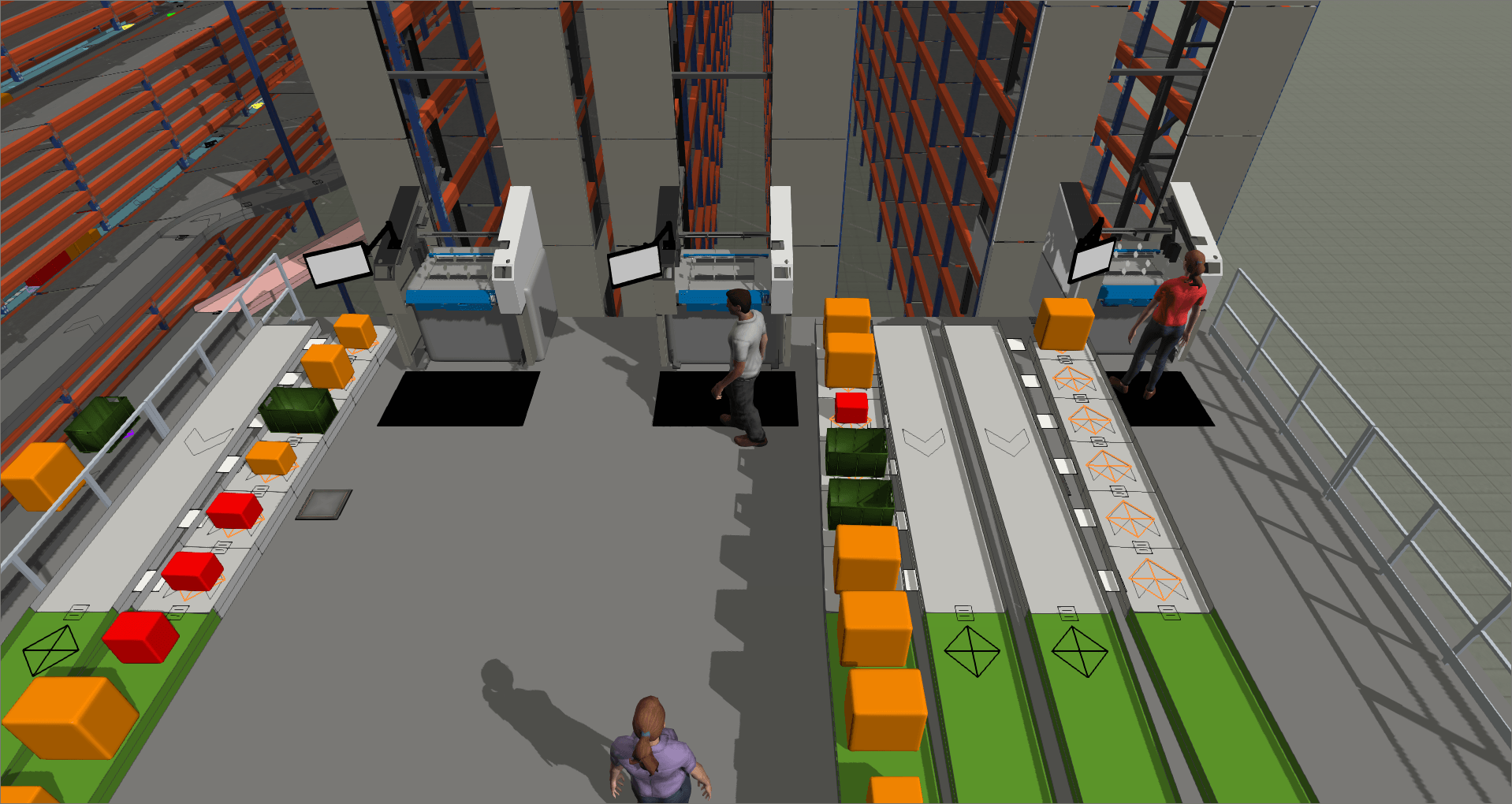
Autodesk FlexSim screenshot of warehouse simulation

Why use Autodesk FlexSim for warehouse simulation?

FlexSim warehouse simulation software combines power with ease of use, making it faster to build, test, and refine simulation models.

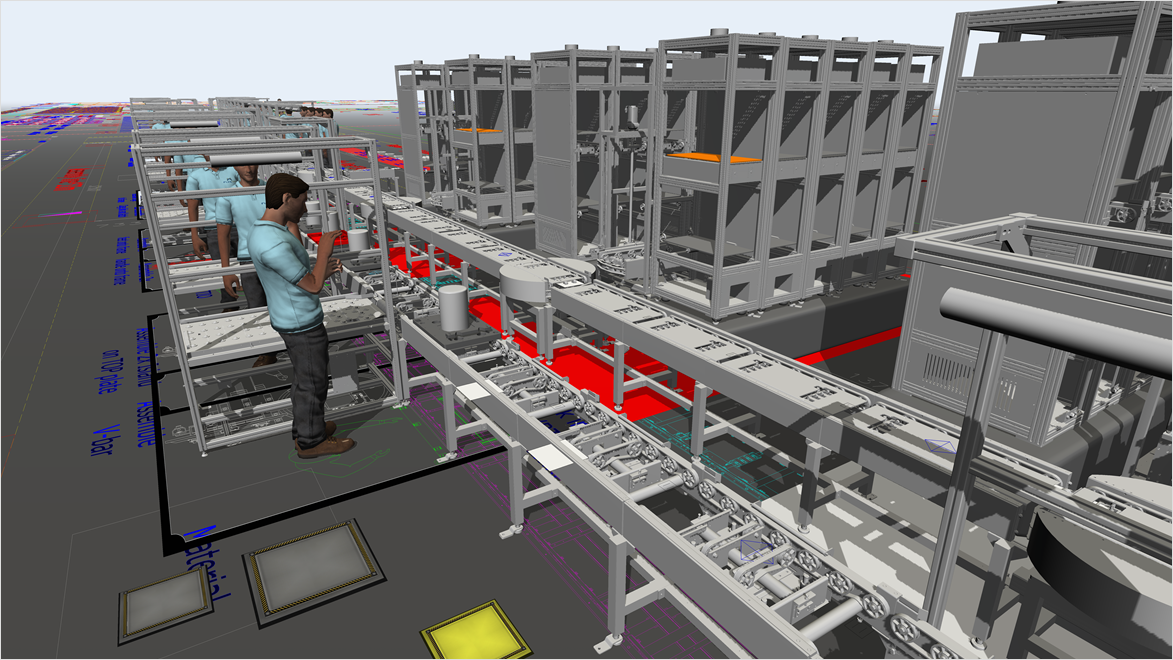
With an intuitive simulation engine that includes drag‑and‑drop controls and configurable options, teams can quickly create true‑to‑life warehouse simulation models that run to scale in a 3D environment. These realistic visuals make it easier to see how a virtual warehouse operates, spot inefficiencies, and align stakeholders around proposed changes.

Combine this with built-in statistical reporting and analysis, and you'll have the data you need to support confident, data-driven decisions.

Features of warehouse simulation software

Explore the powerful tools that help you rapidly build realistic simulations, test ideas safely, and uncover the best path to optimized warehouse performance.

True-to-life 3D discrete event simulation

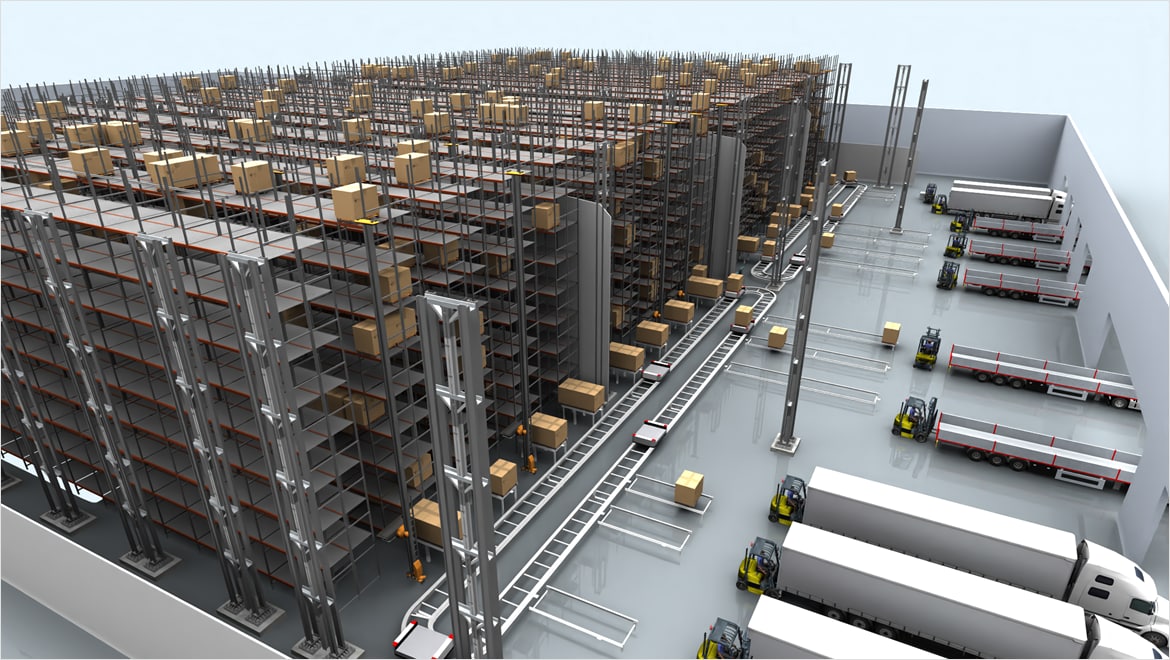
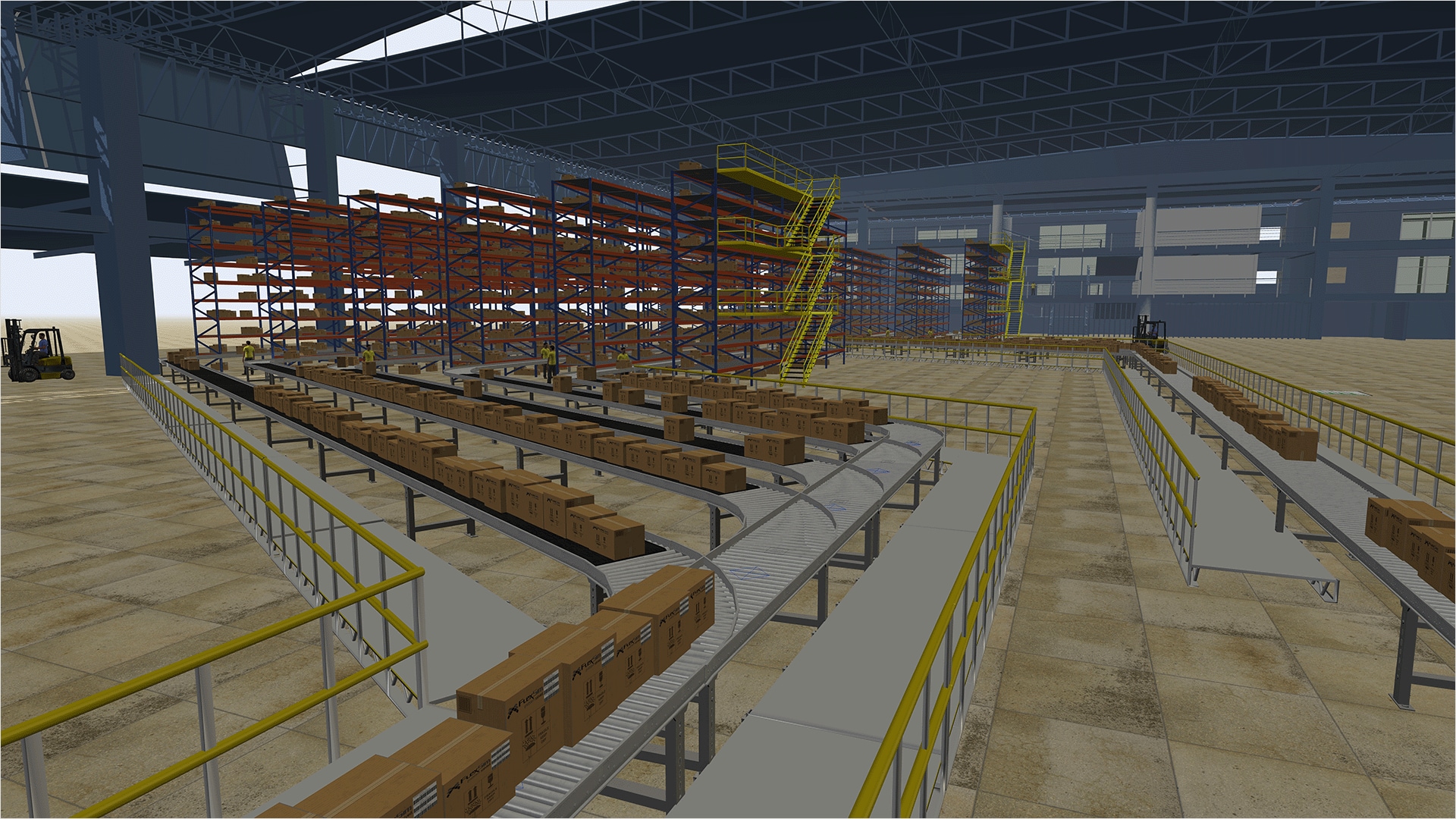
FlexSim provides full-scale, true-to-life 3D simulation models of warehouse operations. This allows teams to visually model storage, docks, conveyors, AGVs, personnel, and material flow within a realistic virtual environment. These true-to-scale models help stakeholders clearly understand how a warehouse operates end to end. Thus, making it easier to identify bottlenecks, inefficiencies, and layout issues before implementing changes in the real world. 


Drag-and-drop modeling with warehouse specific object libraries

FlexSim includes an easy-to-use, drag-and-drop modeling environment with a full library of prebuilt objects and logic, significantly reducing the time required to build accurate warehouse simulations. For warehousing, this includes prepackaged modules for storage systems, conveyors, automated guided vehicles (AGVs), docks, and material handling systems.


Scenario testing, experimentation, and data-driven decisions

A core strength of FlexSim warehouse simulation is its ability to run “what-if” scenarios in a risk-free virtual environment. Users can test different layouts, staffing levels, equipment investments, and process changes without disrupting live warehouse operations. FlexSim includes a built-in scenario manager, along with statistical reporting and analysis. This allows you to compare alternatives and understand tradeoffs related to throughput, capacity, labor utilization, and operational efficiency.


Autodesk FlexSim for warehouse simulation

How does Autodesk FlexSim for factory simulation work?

Autodesk FlexSim warehouse simulation software works by modeling real-world warehouse operations in a digital environment, then using simulation to visualize performance, test scenarios, and support better operational decisions.

  1. Build a true-to-scale virtual warehouse: FlexSim warehouse simulation software lets teams create accurate, 3D digital models of real warehouse environments using pre-built components like racks, docks, conveyors, AGVs, and labor. These models reflect actual layouts and processes, making it easy to visualize operations end to end.
  2. Simulate warehouse operations over time: A discrete-event simulation engine runs warehouse activities, such as receiving, picking, putaway, and transport based on defined rules and timing. This allows teams to see how materials and resources interact, revealing bottlenecks, congestion, and inefficiencies as conditions change.
  3. Test “what-if” scenarios without risk: FlexSim enables users to experiment with layout changes, staffing levels, equipment investments, and process rules in a virtual environment. By comparing scenarios, teams can evaluate tradeoffs and understand performance impacts before making real-world changes.
  4. Analyze performance with visual and data-driven insights: As the warehouse simulation runs, FlexSim captures key performance metrics alongside immersive 3D visuals. Built-in reporting helps validate observations, communicate results, and support confident, data-driven decision-making.

Get started with warehouse simulation using Autodesk FlexSim

Industries that use warehouse simulation software

How warehouse simulation powers smarter operations in every major sector.

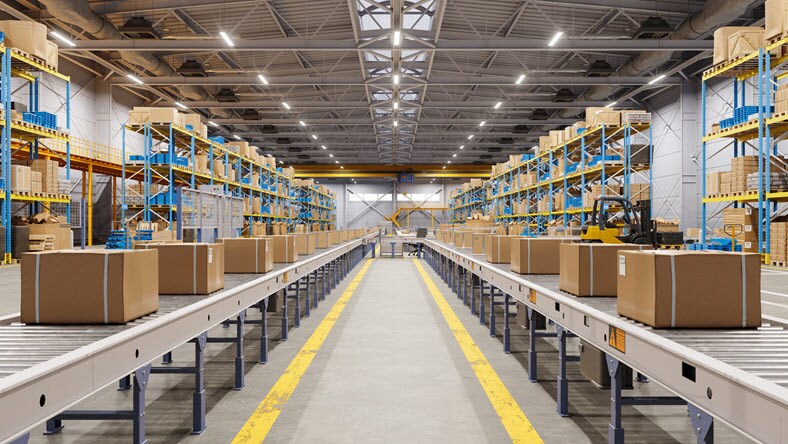
Warehouse simulation for the retail and e-commerce industry

Retail and e-commerce

Retailers and e‑commerce companies use warehouse simulation software to model fulfillment centers, test picking and packing strategies, and prepare for peak demand periods. The growth of omnichannel fulfillment and faster delivery expectations has made warehouse simulation especially valuable for evaluating layout changes and capacity before implementation.


Manufacturing industry for warehouse simulation

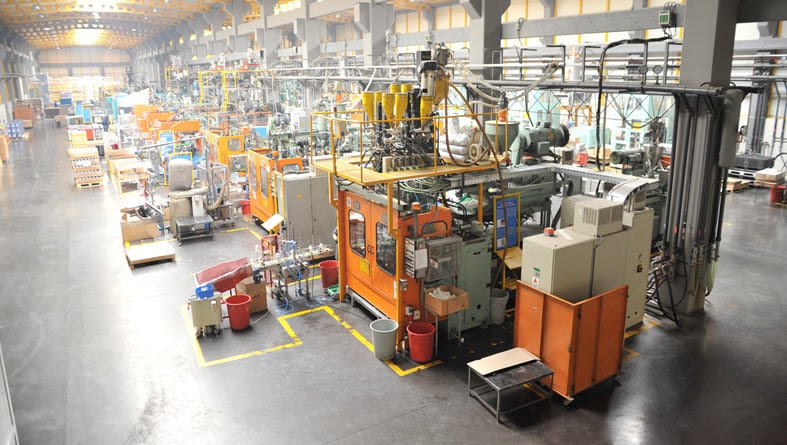
Manufacturing

Manufacturers use warehouse simulation to optimize raw material storage, work‑in‑process buffers, and finished goods distribution. Simulation helps manufacturing organizations understand how warehouse operations interact with production flow and automation, supporting decisions related to layout design, throughput, and resource utilization.


Automotive industry for warehouse simulation

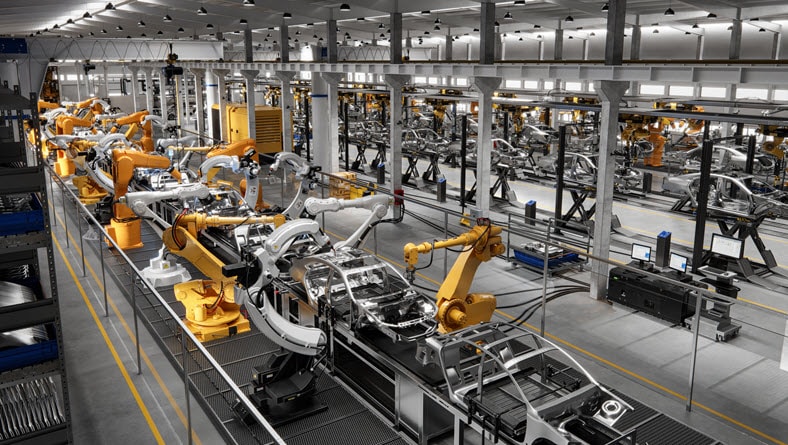
Automotive

Automotive organizations use warehouse simulation to support high‑volume, just‑in‑time operations, and automated material handling systems. Simulation is commonly applied to validate warehouse layouts, AGV usage, and parts flow before investing in physical infrastructure.


Food and beverage industry for factory simulation

Food & beverage

Food and beverage companies use warehouse simulation to analyze cold storage, high‑turn inventory, and time‑sensitive distribution processes. Simulation supports decisions related to layout optimization, labor planning, and throughput while accounting for seasonal demand and shelf‑life constraints.


Frequently asked questions (FAQ) on warehouse simulation and warehouse simulation software

What is warehouse simulation?

Warehouse simulation is the use of a computer-based model to represent and analyze real-world warehouse operations in a virtual environment. It allows organizations to visualize how inventory, equipment, labor, and material flow move through a warehouse over time. Teams are able to understand system behavior without disrupting live operations.


Tools like Autodesk FlexSim use true-to-scale 3D models and a discrete-event simulation engine to show how receiving, storage, picking, and shipping interact under real operating conditions.

What is warehouse simulation software?

Warehouse simulation software is a specialized type of simulation technology designed to model, test, and optimize warehouse processes before changes are implemented in the real world.


Autodesk FlexSim is an example of warehouse simulation software that combines drag-and-drop modeling, realistic 3D visualization, and performance analytics to create accurate digital representations of warehouse environments. By running simulated operations over time, the software helps teams evaluate layouts, resources, and workflows using data rather than assumptions.

What are the benefits of warehouse simulation software for manufacturers?

For manufacturers, warehouse simulation software provides a low-risk way to improve performance and support better decision-making.


With FlexSim, manufacturers can test “what-if” scenarios, such as changes to layout, staffing levels, automation, or throughput targets without interrupting production or distribution operations. The combination of immersive 3D visuals and built-in analytics helps teams identify bottlenecks, validate process changes, and align stakeholders around data-driven improvements before investing time or capital.

What problems can warehouse simulation software solve in production and warehousing?

Warehouse simulation software, like Autodesk FlexSim, can help solve key problems in production and warehousing, including:

  • Bottlenecks and congestion that limit warehouse throughput
  • Inefficient warehouse layouts that increase travel time and handling costs
  • Poor labor utilization, including overstaffing or understaffing
  • Capacity constraints caused by growth, seasonality, or variability
  • Uncertainty around the impact of automation or equipment investments
  • Risk and cost associated with trial‑and‑error changes in live operations

What industries use warehouse simulation software the most?

Warehouse simulation software is used most heavily in industries where complex operations, variability, and high capital risk make trial‑and‑error impractical, including:

  • Manufacturing
  • Automotive
  • Healthcare & pharmaceuticals
  • Food & beverage
  • Retail & e-commerce

Is Autodesk FlexSim a warehouse simulation software solution?

Yes, Autodesk FlexSim is a warehouse simulation software solution that enables organizations to model, visualize, and optimize warehouse operations using true‑to‑scale 3D simulation and data‑driven analysis.

How do I choose the right warehouse simulation software solution?

The right warehouse simulation software should:

  • Ability to model real warehouse complexity
  • Scenario testing and what-if analysis
  • Strong analytics paired with clear visualization
  • Ease of use and speed to value
  • Scalability and flexibility for future needs

Learn more about Autodesk FlexSim for warehouse simulation.

Can I try Autodesk FlexSim?

Yes, you can download a free trial of Autodesk FlexSim here

See more FAQ