& Construction

Integrated BIM tools, including Revit, AutoCAD, and Civil 3D
& Manufacturing

Professional CAD/CAM tools built on Inventor and AutoCAD
From reactive to predictive: Pinnacle's 12-story Madurai campus with 4,500+ assets now operates with 97% uptime, responding to work orders 67% faster while saving 12,000 work hours annually.
Measurable ROI in under two years: A ₹20 lakh investment delivers ₹12 lakh in annual recurring savings—60% return with 1.7-year payback through optimized energy, predictive maintenance, and eliminated manual processes.
Confidence over crisis: Facilities teams shifted from firefighting breakdowns to reviewing predictive analytics, while new staff onboarding dropped from 7 days to 3 days with complete asset information always accessible.
Walk into Pinnacle Infotech's Madurai campus today and you'll notice something unusual: the calm. Facilities teams move with purpose rather than urgency. Equipment hums predictably. Indoor environments maintain optimal comfort without constant adjustments.
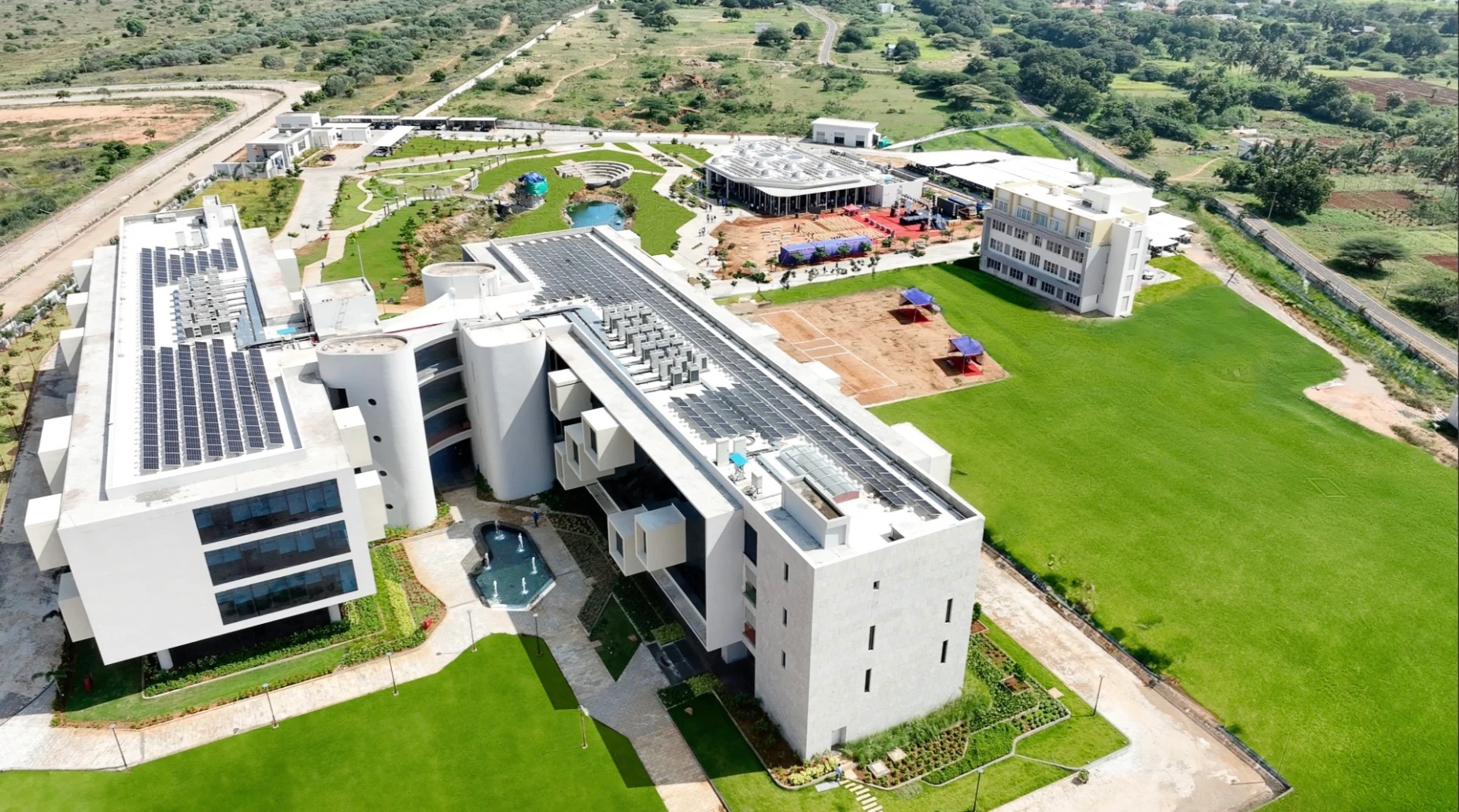
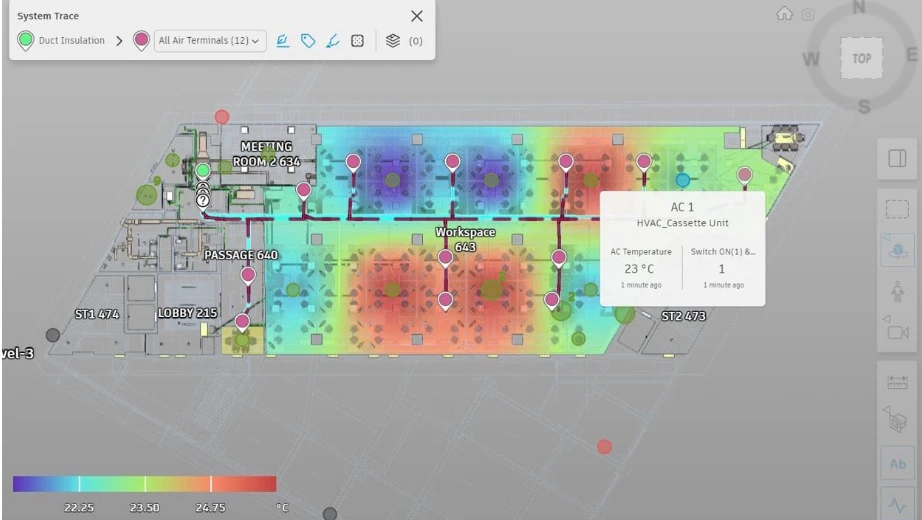
Across the 81,000-square-meter campus housing 3,200 employees, 576 live sensors monitor everything from air quality to equipment performance. When air quality shifts in a conference room, sensors detect it and the system responds before occupants feel uncomfortable. When energy consumption patterns deviate from normal, facilities managers see detailed breakdowns instantly on their mobile devices.
The confidence extends beyond the facilities team. Occupants trust their environment will remain comfortable. Finance teams forecast maintenance budgets with unprecedented accuracy. New employees learn the facility in three days instead of seven, because comprehensive asset information is always accessible through intuitive digital interfaces.
Naman Patwari, Head of Automation at Pinnacle
Pinnacle Infotech wasn't starting from crisis. As a company specializing in building information modeling (BIM) and digital construction solutions, they were already experienced in providing globally acclaimed Digital Twin solutions to architecture, engineering, construction, and owner-operator (AECO) megaprojects worldwide. At their Madurai campus, maintenance schedules existed, building systems functioned, and problems got resolved.
However, Pinnacle's operations relied heavily on human effort and institutional knowledge. Maintenance logs and asset information lived in multiple different databases. Energy monitoring meant someone physically reading meters across the campus. When new staff joined, experienced colleagues spent a week walking them through systems and procedures.
"We were good at firefighting," explains Naman Patwari. "The question was whether we could create a facility that anticipates needs instead of just responding to them."
The Pinnacle team recognized an opportunity: they had the expertise to build Digital Twins for clients. Could they demonstrate that same transformation on their own campus?
The vision was comprehensive from the start. Pinnacle didn't want a visualization tool or a dashboard. They wanted a genuine Digital Twin—a living digital replica that maintained constant dialogue with the physical campus.
Using Autodesk Tandem as the central platform, Pinnacle developed an LOD 500 (Level of Development) as-built model enriched with complete asset metadata. Every piece of equipment—from the 602 air conditioning units and thousands of sprinklers to fire alarm devices and security systems—received a digital identity containing manufacturer details, installation dates, warranty information, and maintenance protocols.
"Data governance isn't glamorous, but it's absolutely essential," notes Dr. Uma Maheswaran, EVP & Global Head of Pinnacle Design. "An intelligent building requires intelligent data. We established clear standards before connecting a single sensor."
Then came the integration work. Building management systems, SCADA (supervisory control and data acquisition) outputs, smart meters, and standalone IoT (Internet of Things) sensors all fed real-time data into Autodesk Tandem through industry-standard protocols. Air quality monitors, humidity sensors, energy meters, and equipment performance trackers created a comprehensive nerve system for the campus.
The final layer connected Autodesk Tandem with InnoMaint, Pinnacle's enterprise-grade computerized maintenance management system (CMMS) designed for large and mission-critical facilities. With ready integrations to BIM platforms, building management systems, and IoT sensors, InnoMaint's AI and machine learning capabilities enable predictive maintenance and intelligent work order automation. When sensor data indicated developing issues, the Digital Twin automatically generated work orders with complete equipment context and maintenance history. Technicians received mobile notifications with everything needed to address problems efficiently.
"We designed the architecture in layers—visualization, communication, edge processing, and application," explains Dr. Maheswaran. "Each layer serves a specific purpose, but they work together seamlessly. That integration is what makes the system truly intelligent."
Dr. Uma Maheswaran, EVP & Global Head of Pinnacle Design
The quantified results are compelling. Work order response time dropped 67% from 60 minutes to 20 minutes. Breakdown resolution time was cut in half. Asset uptime jumped from 85% to 97%. Planned maintenance time was reduced by more than 50%. Paper-based records dropped by 80 percent, eliminating 300 kg of CO₂ emissions annually.
But numbers alone don't capture the full transformation. Maintenance supervisors now spend mornings reviewing predictive analytics instead of fielding urgent calls. Technicians receive work orders already containing full equipment context, eliminating callbacks for information. The facilities director presents board-level reports with confidence, knowing every data point is current and accurate.
"The biggest change isn't visible in spreadsheets," says Bimal Patwari, CEO & Co-Founder, Pinnacle Infotech. "It's the peace of mind. Our teams work with confidence instead of anxiety. Equipment breakdowns don't trigger panic because we catch issues early. That change in daily experience—that's the real value."
Occupants benefit too. Indoor environments maintain consistent comfort because the system adjusts proactively. Equipment reliability means fewer disruptions. Real-time energy monitoring reveals optimization opportunities that were previously invisible. In one instance alone, the system helped avoid ₹1.2 lakh in costs during an energy-demand spike event.
Bimal Patwari, CEO & Co-Founder, Pinnacle Infotech.
In many ways, Pinnacle's Madurai campus has become a working proof point of what's achievable right now, in India, with current tools and pragmatic implementation.
"Many organizations assume Digital Twins require massive budgets or years of implementation," observes Biswaroop Todi, Vice President at Pinnacle. "Our campus proves otherwise. The technology exists. The ROI is measurable. The main decision is simply choosing to move forward."
For Pinnacle, the Digital Twin has fundamentally changed their relationship with their infrastructure. The campus is no longer something that requires constant vigilance. It's a connected environment that largely manages itself—monitoring its own health, anticipating its own needs, and communicating clearly when human intervention is valuable.