& Construction

Integrated BIM tools, including Revit, AutoCAD, and Civil 3D
& Manufacturing

Professional CAD/CAM tools built on Inventor and AutoCAD
OMG Auto Moulds Pvt. Ltd., headquartered in Vasai, Maharashtra, is a part of the Om Galaxy Group, a name rooted in tooling excellence since 1986. With over three decades of industry expertise, the company was established in 2019 to specialise in injection moulds for the automotive and white goods sectors. Currently operating out of a 32,000-sqft facility and supported by a team of more than 100 professionals, OMG Auto Mould services major OEMs and Tier-1 suppliers with moulds ranging from 60T to 910T. The foundation of OMG Auto Mould is built upon a legacy of versatility, ethics, and engineering excellence backed by modern machinery and streamlined workflows.
Driven by a vision to deliver industry-ready tooling solutions, OMG Auto Moulds quickly transitioned from concept to operation with the help of advanced tool rooms, precision machining setups, and in-house moulding capabilities, which positioned them as a key player within Vasai’s industrial landscape. With roots in Om Galaxy’s legacy of ethical engineering and a customer-first approach, OMG Auto Moulds began working on projects for major automotive OEMs and Tier-1 suppliers, where complicated geometries, high-strength materials, and intricate tolerances are the standard.
The shift in the automotive industry posed a specific set of challenges. “The moulds needed to withstand repeated high-pressure cycles, the surface finishes had to reach Class-A standards for visible components, and dimensional precision was critical to minimising downstream assembly difficulties. Moreover, we had to find a way to meet the expectations of the OEMs and Tier-1 suppliers, who demanded zero-defect delivery and rapid production ramp-ups, all within increasingly compressed development timelines,” said Nandakumar Puthiyaveetil, Director, OMG AUTO Mould Pvt Ltd.OMG Auto Moulds was also battling limitations in terms of design accuracy, surface quality consistency, and machining reliability. These factors made it challenging for the company to produce:• Complex geometries with intricate shapes • Slender supporting structures like deep ribs • Thin-walled structures that demand precise surface modelling• Parts like fillets, which need to be manufactured such that they avoid weak points, tool-path errors, or machining difficulties.
Besides these, the company’s limitations also posed hurdles when it came to producing perfect mirror surfaces for parts where aesthetics play a crucial role, such as IP assembly and interior trims. “These require highly controlled machining procedures and error-free toolpaths,” said Subhash Saroj, Sr Pragrammer, OMG AUTO Mould Pvt Ltd. The transition from 3-axis to 5-axis machining for complicated mould inserts compounded these difficulties. It increased the likelihood of collisions, caused programming delays, and resulted in unexpected rework. These directly impacted not only delivery deadlines but also eroded production confidence among automotive OEMs.To remain competitive, OMG Auto recognised that conventional CAD/CAM tools alone were insufficient. They identified the need for a unified digital ecosystem, one that integrates design and machining and also includes proactive error-prevention measures. “Implementation of Autodesk solutions marked an important moment, setting the groundwork for first-time-right manufacturing in even the most complicated automotive tooling projects,” said Subhash.
For a project with one of the largest Indian automotive companies, OMG Auto Moulds was entrusted with creating an IP assembly mould with detailed surface detailing, tight draft angles, and demanding dimensional tolerances across several inserts. The traditional workflow, which included 2D CAD for initial layouts and fragmented CAM programming, caused friction at each handover. Additionally, the lack of real-time simulation resulted in cautious toolpaths, longer machining cycles, and frequent design-to-CAM backtracking. Complex surfaces, undercuts, and lifter regions were particularly prone to manual interpretation errors, which extended validation cycles and increased risks of rework.
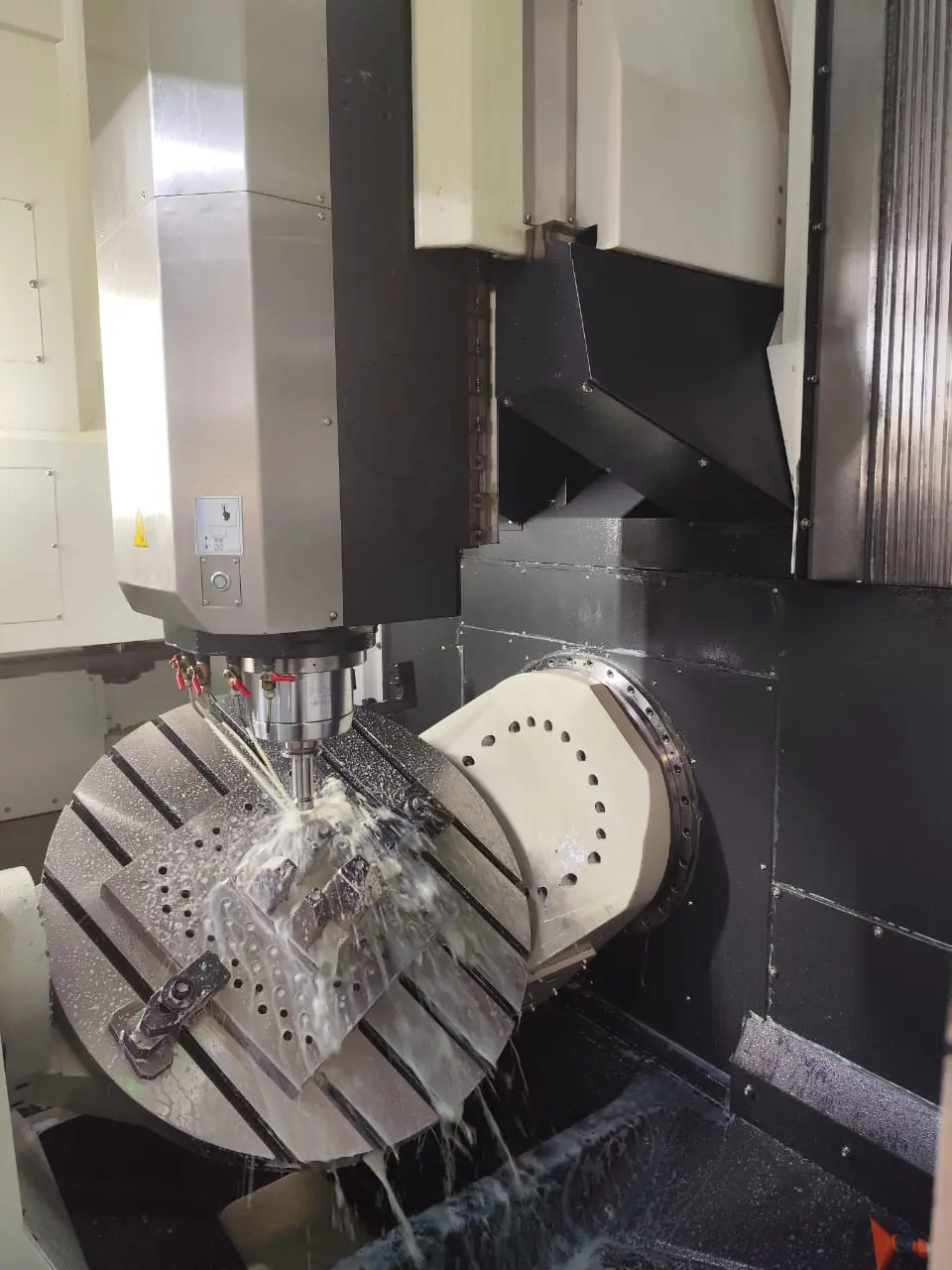
Implementing Autodesk’s PowerShape and PowerMill gave OMG Auto Moulds a digital backbone. PowerShape’s hybrid modelling technique combined solid and surface manipulation to improve parting lines, shutoffs, and fillets, all critical for automobile aesthetics and functional accuracy. Real-time validation tools integrated into the workflow enhanced the accuracy of design iterations. PowerMill enabled high-speed machining strategies tailored to specific mould materials, while difficult tool engagement zones were managed through advanced 5-axis programming. Collision simulation and machine toolpath verification eliminated setup errors, enabling machining teams to operate with new confidence and speed.
Nandakumar Puthiyaveetil, Director, OMG AUTO Mould Pvt Ltd.
OMG Auto Moulds used PowerMill's adaptive roughing and rest machining algorithms to reduce both tool wear and cycle time. They applied boundary detection and intelligent stock recognition to cut down air cutting. At the same time, the CAM team imported IGES/STEP models directly and used PowerShape to construct electrodes for deep rib areas without the need for external tools. “This gave our engineers more control and eliminated dependency on third-party software,” said Subhash. Toolpath modelling became part of day-to-day operations, delivering results across moulds of varying sizes. PowerMill’s repeatable macros and templates proved to be an invaluable feature for the large-scale, standardised tooling projects that required multi-cavity setups or family moulds. Talking about various features that helped the company, Subhash added, “When we combined these tools, every mould programme transformed into a structured, digital production process that was faster, repeatable, and more reliable than our previous workflow,” added the lead programmer.
Autodesk Moldflow gave OMG Auto Moulds' design team the ability to validate and optimize designs before machining. By simulating flow, cooling, and potential defects upfront, the team fine-tuned part geometry for aesthetics, fitment, and tooling feasibility. This early validation reduced rework and accelerated turnaround while ensuring moulds met OEM standards. Combined with PowerMill and NC verification, Moldflow closed the loop between design and machining, enabling a seamless digital workflow with first-time-right accuracy.PowerMill's multi-axis finishing resulted in precise cavities with minimal polishing, while Moldflow simulations optimised gating and cooling up front. Verification tools and toolpath templates accelerated and protected repetitive activities. The benefit was quantifiable and evident: large-scale mould projects scaled more successfully, rework was dramatically reduced with first-shot OK production, machining time for complicated moulds lowered by 52%, collision avoidance increased by 65%, and design iterations became 30% faster.
Subhash Saroj, Sr Pragrammer, OMG AUTO Mould Pvt Ltd.
Building on its digital-first transformation with Autodesk PowerShape, PowerMill, and Moldflow, OMG Auto Moulds is now focused on scaling its capabilities to prepare for the next wave of modern automotive and white goods challenges. The company plans to expand and take the automation and simulation-driven workflows to further levels. Looking ahead, OMG Auto Moulds also plans to integrate Autodesk Fusion into its software suite entirely, allowing for a full-fledged collaborative team, connected data management, and cloud-driven scalability. Moldflow validated designs upfront, and together with PowerMill and NC verification, created a connected workflow from design to machining with “first-time-right” results for OMG Auto Moulds.The modern terms such as 4.0, AI-driven toolpath optimisation, and connected production line are the most apparent goals OMG Auto Moulds is planning for. This will not only strengthen OEM confidence but also position the company for diversification into new precision-intensive sectors, reinforcing its reputation as a trusted partner in global tooling.