& Construction

Integrated BIM tools, including Revit, AutoCAD, and Civil 3D
& Manufacturing

Professional CAD/CAM tools built on Inventor and AutoCAD
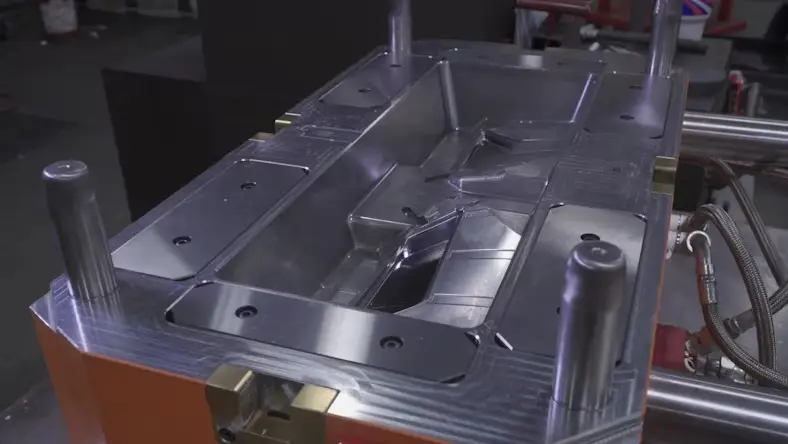
A specialist manufacturer of ultra-high-precision aluminium die-casting and mould tooling, Kay Tee Tooling Technologies deals in automotive safety and medical applications where tolerances below five microns is a norm. To address rising complexity, tight delivery schedules, and traceability requirements, the company adopted a Fusion-led digital manufacturing workflow with Autodesk PowerMill as the core machining execution layer. Kay Tee Tooling made a disciplined, fully digital, and highly repeatable operation by integrating Autodesk Fusion for in-process inspection and feedback, Fusion Operations for real-time shop-floor control, and PowerMill for sophisticated collision-free 5-axis machining. Improved multi-axis machining techniques made it possible to move away from EDM-intensive operations as part of this transition, which led to a 30% decrease in electrode usage and related improvements in material and process efficiency.
“For us, Autodesk Fusion is not just a set of tools, it defines how our factory plans, thinks, and executes every mould & operation. Within that ecosystem, PowerMill has been the core of how we handle complexity. It expanded our technical understanding of multi-axis machining, gave us confidence in machine features we once sent to EDM, and helped us execute challenging geometries with precision and repeatability.” ~ C. N. Kannan, Managing Director, Kay Tee Tooling
Kay Tee Tooling Technologies is a Chennai-based precision tooling manufacturer that specialises in ultra-high-accuracy die-casting and mould tooling for automotive safety, medical, electronics, and other industrial applications. The company usually operates within environments where tolerances of less than five microns, complex cavity geometries, and zero- or near-zero-draft features are common. Its day-to-day operations span the complete tooling lifecycle, including design support, high-precision machining, EDM, and certified inspection. Kay Tee Tooling manufactures mould bases, die inserts, EDM electrodes, and custom tooling components, often in high-mix, low-volume production scenarios that demand strict process control and repeatability.
The shop floor setup includes global-grade CNC & EDM platforms with highly advanced metrology systems such as ZEISS CMMs, GOM 3D scanning, and in-machine probing. This multi-process setup environment demands strict disciplined workflows and smooth coordination across design, machining, inspection, and shop-floor execution
Kay Tee Tooling works in one of the most difficult manufacturing segments, which is ultra-high-precision mould making. This particular segment of mould making is defined by extremely small part sizes (typically less than 60 mm) and tolerances that are less than five microns. Many mould cavities have zero-draft or near-zero-draft geometries, mirror-finish surface requirements, and hardened steels that surpass 52 HRC. This combination of requirements leaves minimal room for error at any level of manufacturing.
Historically, manufacturing settings of this type have relied significantly on individual understanding and disconnected & independent operating systems. Prior to its digital transformation, Kay Tee Tooling had to deal with challenges such as high-mix, low-volume precision production. The process was split over handwritten job cards, spreadsheets, and informal updates, making it difficult to keep real-time track of mould components, EDM electrodes, and outsourced operations. Repeated projects relied primarily on the knowledge and memory of CAD & CAM engineers, which increased risk and directly affected repeatability. In addition, EDM operations demanded extensive coordination between electrode design, external processing, machining, and inspection, frequently including several handoffs with poor traceability. In addition, human alignment and inspection between machining used to lead to time-consuming re-setups, also increasing the possibility of errors.
As mould complexity and customer demand increased, Kay Tee realised that small process improvements were no longer enough. The company needed a single digital system that could capture machining intent, execute complex operations consistently, validate results, and track every step with full discipline and traceability across the factory.
C. N. Kannan, Managing Director, Kay Tee Tooling
Kay Tee Tooling implemented Autodesk Fusion as a digital backbone upon the whole shop floor, a much better and coordinated approach than a group of independent software tools. The goal was to develop a single, controlled system capable of defining manufacturing purpose, executing operations, validating outcomes, and maintaining traceability across the entire tooling lifecycle. Fusion became the go-to tool for process planning, shop-floor execution, and operational feedback.
The core of this transformation is Autodesk Fusion Operations, which now governs all production activities for Kay Tee Tooling. From machining to EDM and inspection to external processes. Every mould is now being initiated within Fusion Operations using structured, standardised inputs, including the bill of materials, component-level routings, and detailed operation sequences. Each project and component typically involves 10 to 15 steps, and all are controlled and communicated within the same Autodesk Fusion-led digital system.
Once defined, Fusion Operations helps the team convert this data into a live, dynamic production schedule. Each operation, whether performed in-house or externally, is digitally tracked in real time. This system helped the team replace manual job cards, spreadsheets, and verbal updates with a much better, controlled, and traceable communication system.
Autodesk Fusion and Fusion Operations form the backbone of Kay Tee Tooling's digital ecosystem, with each playing a unique role. Fusion Operations allows them to track every mould component and electrode at the operation level, giving them an upper hand of real-time visibility into machining, EDM, inspection, and outsourced processes. This one features substitutes for several manual tasks. Each of these parts, which usually takes 10-15 defined actions, is now being fully traceable and holds an organised digital routing, assuring controlled, sequential execution. Machine assignments, process definitions, and live status updates are centrally managed within Fusion Operations. Real-time job tracking, process standardisation, cloud-based accessibility, and historical data capture – these four features of Fusion Operations form the pillars of Kay Tee Tooling’s digital manufacturing setup.
In parallel, Autodesk Fusion supports in-machine inspection and process feedback. The one particular feature that helped Kay Tee Tooling in a 20% reduction in re-setup time was Fusion’s in-machine inspection tools. This simple feature provides the shop floor with the ability to probe and validate features directly on the machine, without removing the part. Together, these capabilities eliminated fragmented tracking, reduced coordination effort, and allowed for predictable execution in Kay Tee Tooling’s high-mix, ultra-high-precision manufacturing environment.
C. N. Kannan, Managing Director, Kay Tee Tooling
In Kay Tee Tooling's Fusion-led manufacturing environment, Autodesk PowerMill serves as the high-accuracy execution layer for complex machining. Its primary applications include simultaneous 5-axis machining on DMG MORI machines, machining of hardened steels above 52 HRC, and cavity features with zero-draft geometries and mirror-finish requirements. PowerMill has been set up with machine-specific post-processors, ATC-linked standard tool libraries, and dedicated electrode-manufacturing templates to ensure uniform toolpath behaviour and repeatable output across projects.
Before beginning cutting during CAM validation, PowerMill's draft analysis and corner-radius analysis are utilised to identify undercuts, tight radii, and non-machinable features. This allows for early adjustment during the strategy or design stage, enhances first-time-right machining, and eliminates unplanned EDM usage. With collision-checked multi-axis toolpaths, PowerMill enables Kay Tee to regularly achieve sub-5-micron precision in high-complexity mould components.
C. N. Kannan, Managing Director, Kay Tee Tooling
One of the most tangible benefits from setting up Fusion Operations is Kay Tee Tooling's ability to pick up repeat orders nearly immediately. For repeat moulds, engineers replicate the existing Fusion Operations project, including the bill of materials, operation routings, machine assignments, tooling details, and inspection stages, and send it directly to production. What once took hours or days of planning the same operation and procedures is now completed in minutes, with no reliance on human designers or planners.
“For repeat orders, everything is already defined inside Fusion Operations. We simply copy the process and start production. The BOM, operation sequence, machining intent, inspection steps, and even external processes are already captured. This helped us remove dependency on individuals, eliminate replanning, and allow us to restart complex mould programmes in minutes instead of days, while maintaining the same level of accuracy and control, said Kanan.
The Autodesk ecosystem has made measurable gains for Kay Tee Tooling. Within precision, efficiency, and execution by structuring its manufacturing system on Autodesk Fusion, Fusion Operations, and . The company regularly delivers sub-5-micron dimensional accuracy on complicated mould components, especially in zero-draft and hardened steel applications. Improved multi-axis machining tactics resulted in a 30% reduction in electrode usage by increasing the percentage of features cut directly on 5-axis CNC machines. At the operational level, in-machine inspection with Autodesk Fusion has resulted in a 20% reduction in re-setup and alignment time, while Fusion Operations has completely eliminated manual shop floor tracking. Repeat orders may now be restarted practically instantaneously using existing digital process specifications, minimising reliance on human engineers while maintaining fully traceable, scalable manufacturing workflows.
Digitisation alone was never the end goal for us; it was only the foundation,” added Kannan.
“Once our processes were fully digital and controlled, we could focus on executing higher levels of complexity with confidence. Today, we are consistently achieving sub-5-micron accuracy on challenging mould components, including zero-draft and hardened steel features. By improving our multi-axis machining approach, we have also reduced our dependence on EDM, cutting electrode usage by around 30 percent. This shift is what allows us to think seriously about automation and building future-ready manufacturing systems.
Kay Tee Tooling's transition shows that precision focused digital manufacturing is not a replacement for technical skill, but rather an infrastructure for improving it with structure, visibility, and repeatability. By combining Autodesk Fusion as the central digital backbone, with PowerMill for advanced execution, the company has created a tightly controlled manufacturing ecosystem in which precise decisions are defined once and executed consistently across the shop floor.
Beyond precision and speed, the integrated Fusion ecosystem has resulted in significant cost savings, particularly by lowering electrode rework and rejection. Process digitisation has shifted decision-making away from individual memory and onto system-defined procedures, minimising risk as complexity increases. At the same time, Kay Tee is using this digital foundation as a springboard for further automation, such as software customisation and automated process execution.