Use custom scheduling in InfoAsset Manager

Identify when to use custom scheduling and configure the Custom Scheduling dialog.


Use custom scheduling in InfoAsset Manager

Step-by-step guide

Custom scheduling allows a set of user-specified SQL queries or cost/duration calculations to be run automatically at the beginning or end of a scheduling process. The queries are run when creating and updating scheduled tasks, and when updating active incidents. An example use of these queries is to transfer data from asset to survey objects.

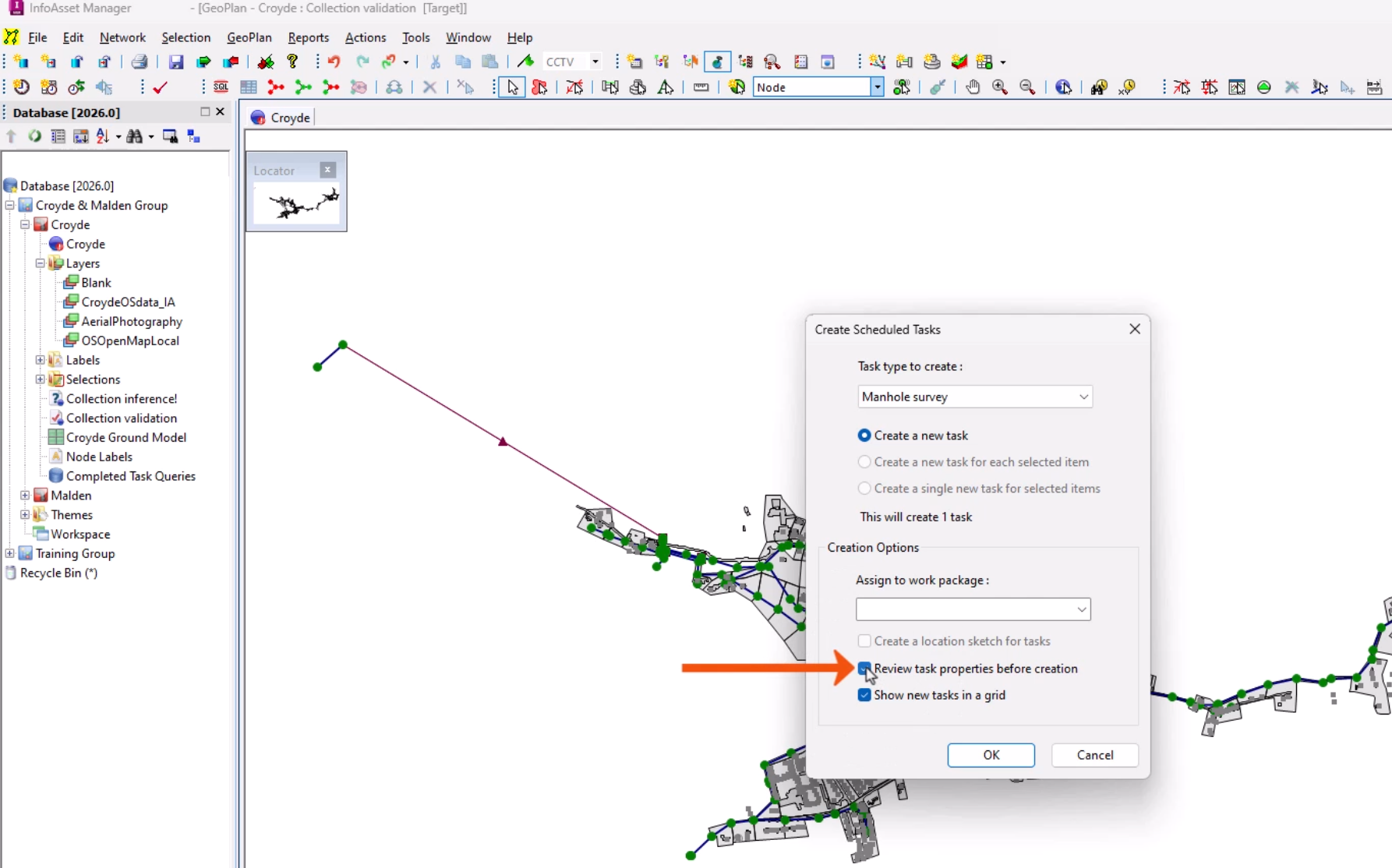
Custom scheduling can remove the need to select Review task properties before creation from the Create Scheduled Tasks dialog.

In the InfoAsset Manager interface, a network is displayed on the GeoPlan; and in the Create Scheduled Tasks dialog, under Creation Options, the Review tasks properties before creation option is called out with a red arrow.

Instead, you can enable a custom prompt dialog to show only the fields that need to be completed.

To set up or change custom scheduling for the current network,

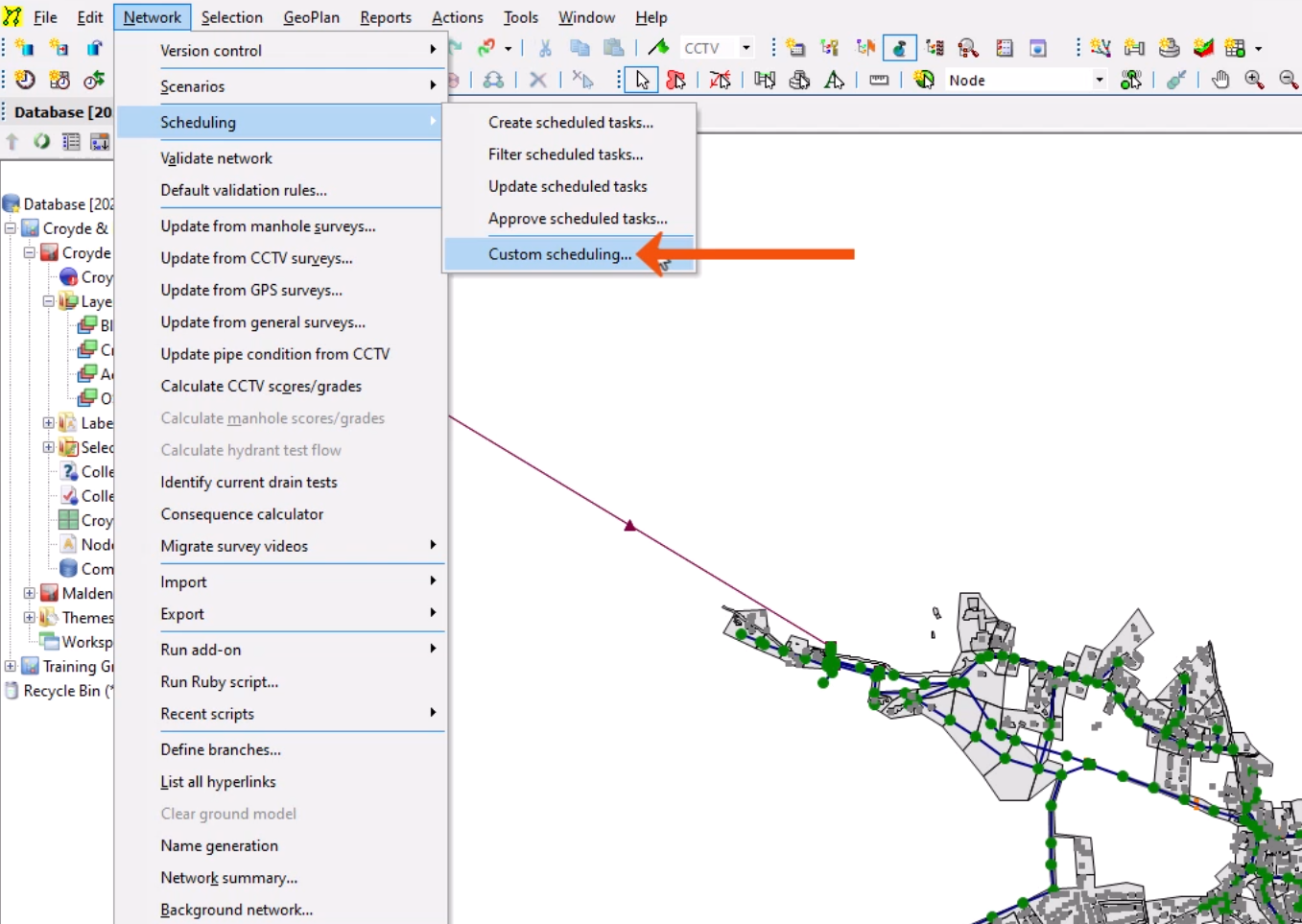
  1. From the Network menu, expand Scheduling and select Custom scheduling.
    In the expanded Network menu, Scheduling selected, and in the flyout, Custom scheduling being selected and called out with a red arrow.

Custom scheduling can be triggered in the following cases:

  • Immediately after a scheduled task has been created from the Create Scheduled Tasks dialog.
  • Immediately after a repeated scheduled task has been created by the Update Scheduled Tasks process.
  • When updating a completed task or incident that has not yet been closed.
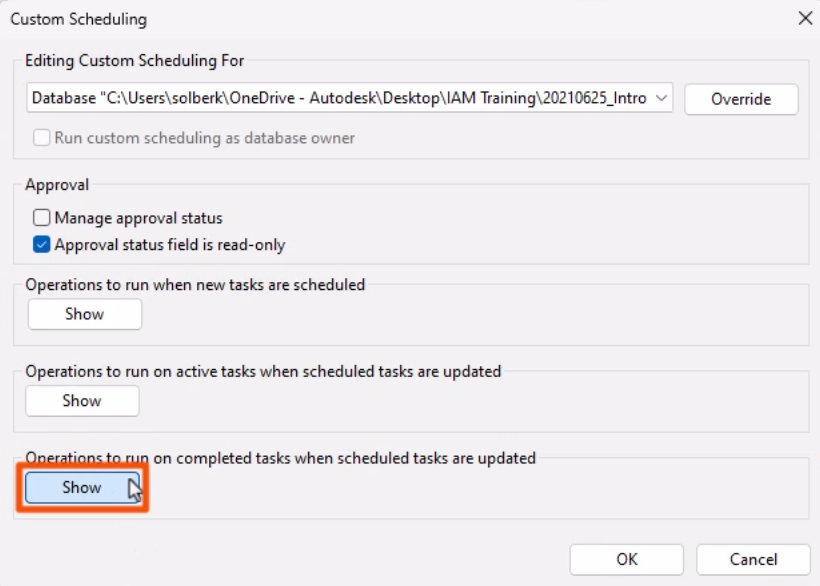
  1. In the Custom Scheduling dialog, click Show to expand any of the groups where you want to add a query.
    In the Custom Scheduling dialog, under one of the groups, the Show button is being clicked and is highlighted in red.
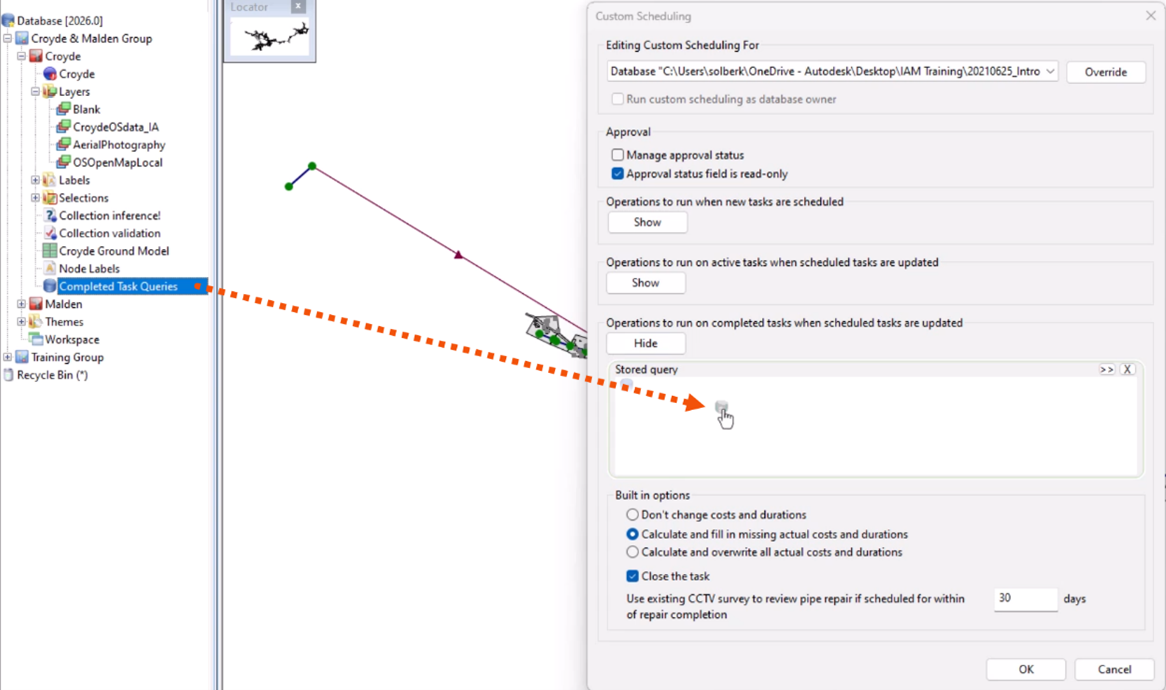
  2. Drag in a stored query that you want to run automatically.
    From the Explorer window, a dotted red line shows the path of a query being dragged into the Custom Scheduling dialog and dropped into the Stored query box.
  3. Edit any other options as needed.
  4. Click OK.

As the SQLs required for custom scheduling are database objects, these can be grouped within a specific Asset group, and then hidden or restricted, so that they are not edited by mistake.

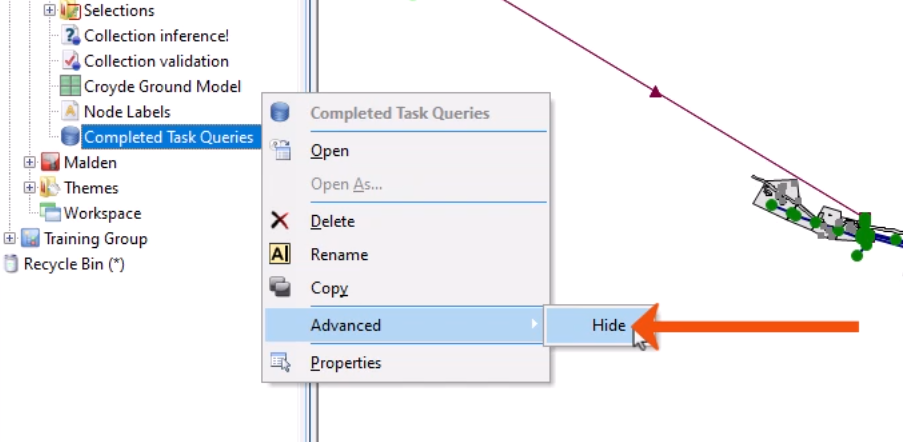
  1. To hide a query, right-click it and select Advanced > Hide.
    From the Explorer, the expanded context menu for the query is open with Advanced selected, and in the flyout, Hide is being selected and is called out with a red arrow.