Set up a database in InfoAsset Manager

Create and open a standalone database in InfoAsset Manager.


Set up a database in InfoAsset Manager

Step-by-step guide

There are two different types of databases used by InfoAsset Manager:

  • Standalone databases are suitable for individual users working on small projects, working locally on a PC. This database type is only appropriate for use on an individual machine.
  • Workgroup databases are suitable for individuals and groups of users, or for users working over Wide Area Networks. Workgroup databases require the InfoWorks Workgroup Server service to be running on a server. This is typically set up by a system administrator.

When InfoAsset Manager is started for the first time, it appears blank, because no database is selected.

To create a new database:

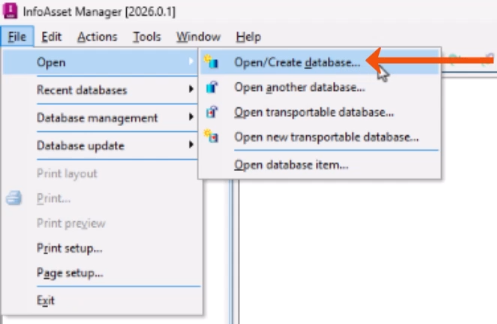
  1. From the File menu, select Open > Open/Create database.
    The File menu expanded with Open selected, and in the flyout, Open/Create database being selected and called out with a red arrow.
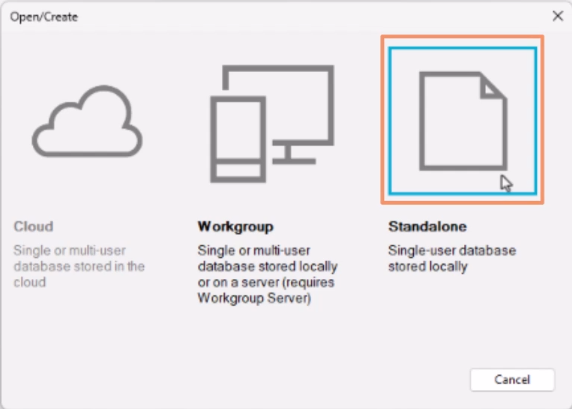
  2. In the Open/Create dialog, select a database type. In this case, select Standalone.
    The Open/Create dialog, with Standalone being selected and highlighted in red
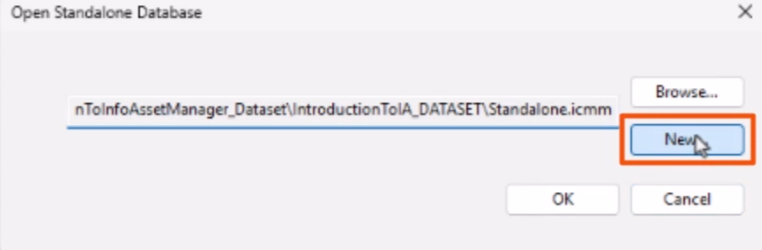
  3. In the Open Standalone Database popup, click New.
    The Open Standalone Database popup, with New being selected and highlighted in red.
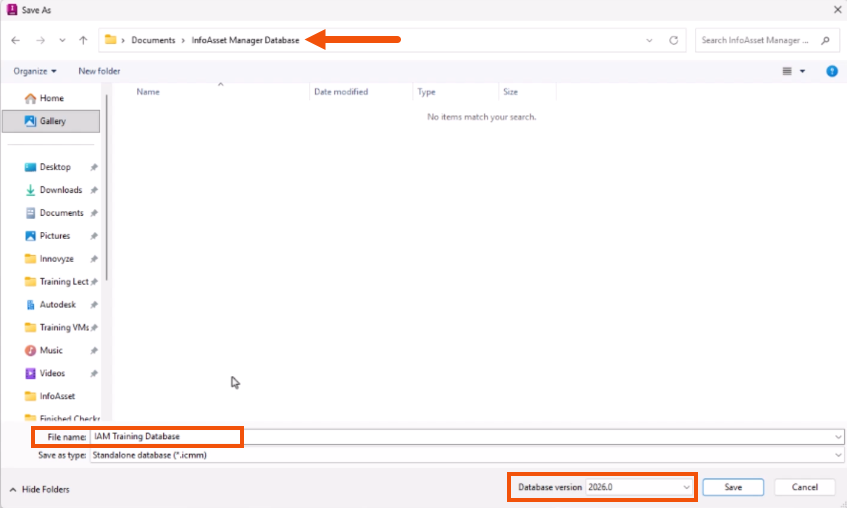
  4. In the Save As dialog, add a File name, such as “IAM Training Database”.
  5. Select the location for the .icmm database file.

For the best performance as a single user, store the database on the local hard disk.

Each database has a version number. For example, a database created with version 2023.0 of the software has a database version of 2023.0. This can be useful when collaborating with users who may be working with a different version of InfoAsset Manager.

  1. From the Database version drop-down, choose which version of the database will be used when a database is created.
    In the Save As dialog, the File name and Database version both set and highlighted in red, and the selected location called out with a red arrow.
  2. Click Save.
  3. Back in the Open Standalone Database popup, click OK.

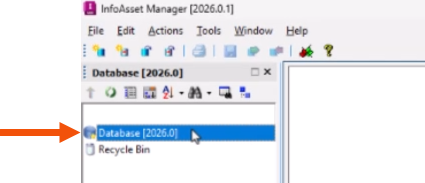
The new database is created and displays in the Explorer window.

The Explorer window, with the new database called out with a red arrow.

If the Explorer window is not currently open:

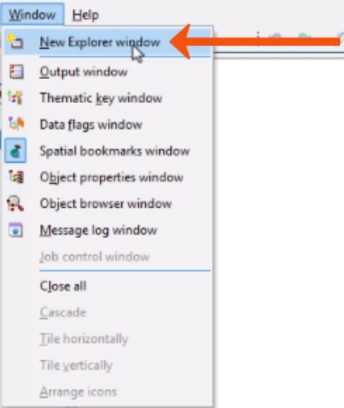
  1. From the Window menu, select New Explorer window.
    The Window menu expanded, with New Explorer window being selected and called out with a red arrow.