Architecture, Engineering
& Construction
& Construction

Integrated BIM tools, including Revit, AutoCAD, and Civil 3D
Product Design
& Manufacturing
& Manufacturing

Professional CAD/CAM tools built on Inventor and AutoCAD
Top products
Streamline workflows and bring products to life with precision and speed with Autodesk Fusion – a unified platform for prototyping, CNC machining and manufacturing design.
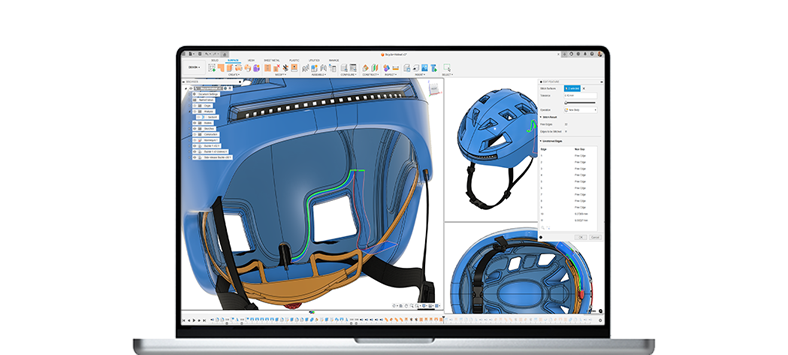
Autodesk Fusion is your all-in-one solution for rapid prototyping, CNC machining, sheet metal fabrication and design for manufacturing, offering tools to streamline workflows and accelerate innovation in product development.
Transform ideas into reality with precision and efficiency using Autodesk Fusion's advanced capabilities.
Built on more than 40 years of innovation, Autodesk Fusion provides advanced CAM tools to help your business win and grow.
Automated workflows and a modern user experience shorten learning curves, helping your team to become productive and profitable sooner.
Streamline your entire product development process by integrating powerful tools like CAD, CAM, CAE and PDM in a single cloud-based platform.
ADVANCED MANUFACTURING CAPABILITIES
Advanced CAD + CAM tools for manufacturers, machinists, engineers and teams needing precise high-performance CAM solutions.
Includes advanced manufacturing capabilities:
CORE ESSENTIALS
Integrated cloud CAM, CAM, CAE, PCB and PDM core capabilities ideal for designers, engineers, machinists and teams working across the product development lifecycle.
Includes:
Try Autodesk Fusion free for 30-days
Experience the power of unified design and manufacturing tools with integrated product data management with Autodesk Fusion.
Fusion manages data in the background while teams stay focused on product development. Eliminate time spent searching for files or losing work. With Fusion, data is always centralised, accessible and secure.
With 2-axis milling, the cutting tool moves across two axes, X and Y, while 3-axis milling adds the Z axis, where the tool head moves up and down.
Upgrading your CNC software to offer 3-axis toolpaths can accomplish the same milling jobs with fewer setups – leading to less machine time and corresponding cost savings. With 4-axis milling, one rotational axis is added.
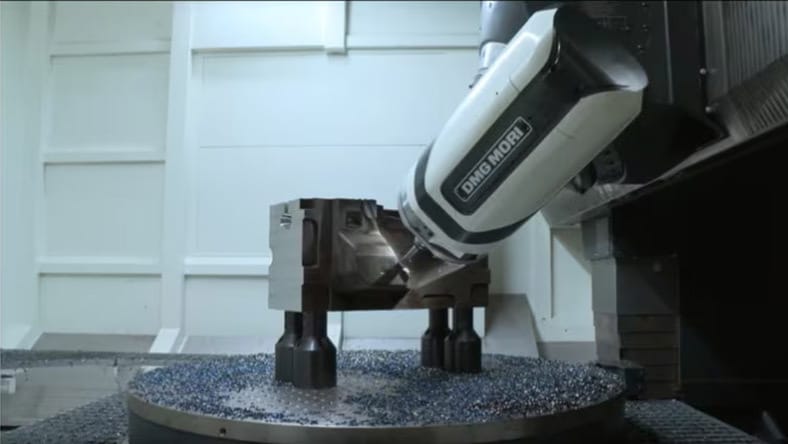
With 3+2-axis machining, also called positional 5-axis machining, the cutting tool moves across three linear axes (X, Y and Z) and can tilt to different angles along two rotational axes (A or B, plus C). By contrast, simultaneous 5-axis machining, also called true 5-axis machining, moves both the cutting tool and the workpiece along X, Y, Z, as well as A/B and C axes simultaneously.
3+2-axis machining has the advantages of reducing setups, avoiding collisions and using shorter, more rigid tools without the level of complex CNC software and hardware programming that simultaneous 5-axis machining requires. However, simultaneous 5-axis machining can achieve more complex organic shapes and contours, as well as reduce machining time and waste.
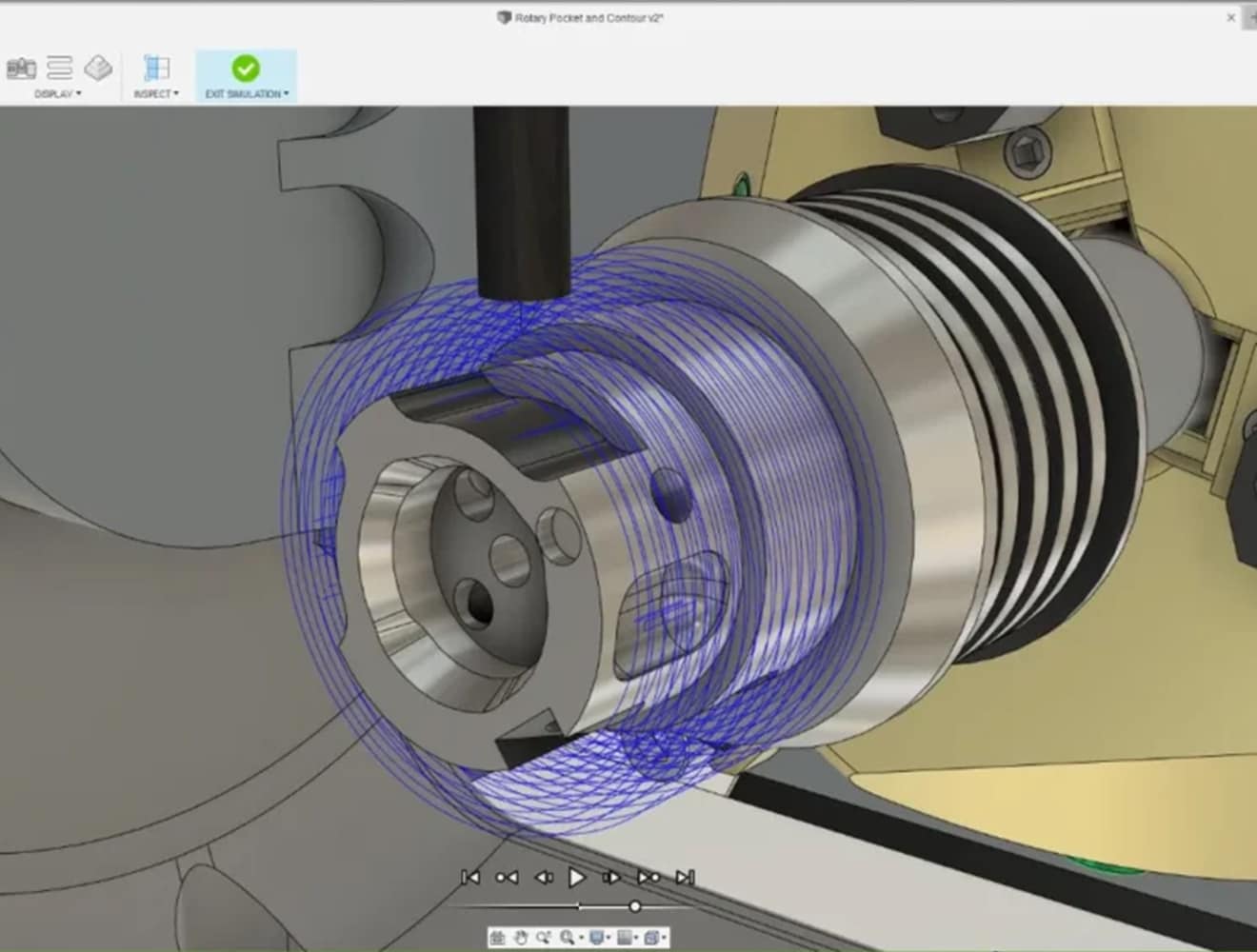
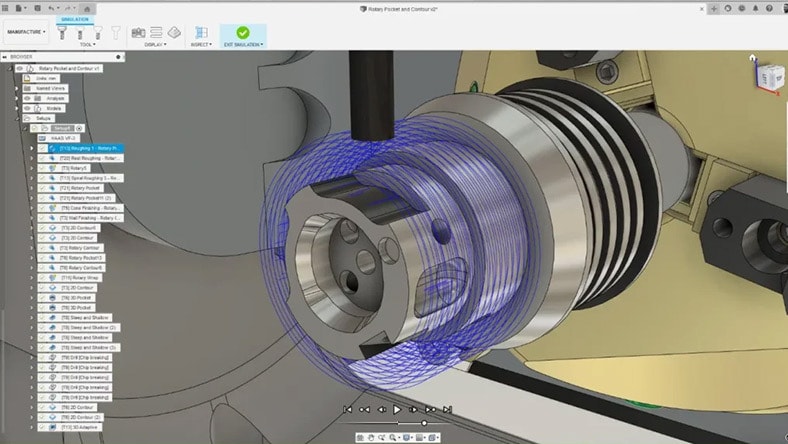
CNC turning typically involves lathe machines that spin the stock along a stationary cutting tool. Turning operations include removing material from the front of the stock or from the outside of the part; adding threads to the part; and boring, or creating holes, in the part.
Turning does certain jobs more efficiently than milling, but “mill-turning” operations can combine both turning and milling when your CNC software and machinery can support it.
Sheet metal fabrication is a process that involves creating metal structures and components by cutting, bending and assembling sheet metal. The process usually begins with cutting, which is achieved through various methods such as shearing, laser cutting, waterjet cutting (US Site) or plasma cutting (US Site), to shape the metal into the desired dimensions.
After cutting, the metal is bent into the necessary shapes using tools such as press brakes, rollers or other bending equipment to form angles and curves as specified by the design. The final stage involves assembling the cut and bent pieces using techniques such as welding, riveting or adhesive bonding to construct the final structure or component.
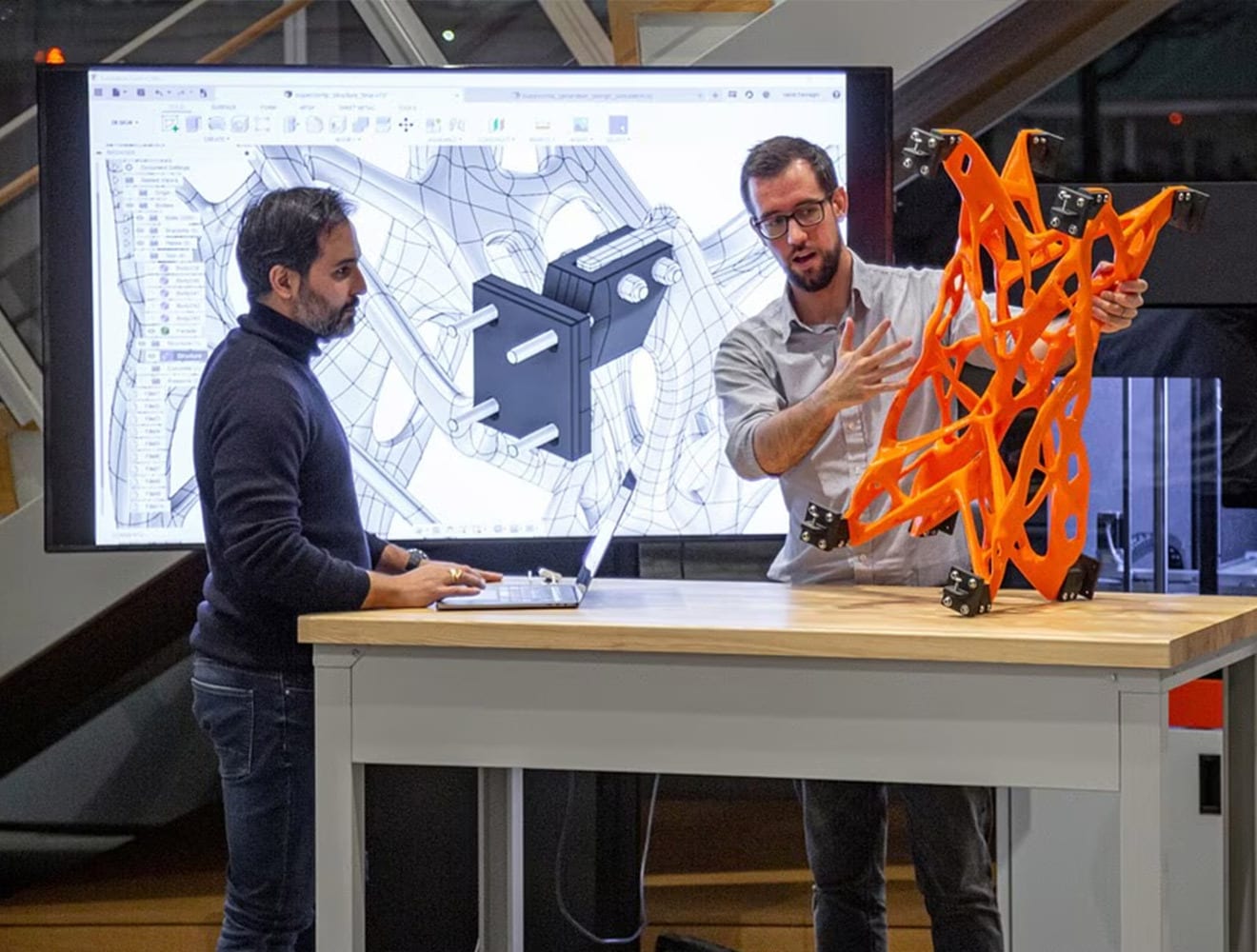
3D printing is the process of adding material to a structure using an extruder or printhead that adds material by heating, melting or applying pressure, building an object one layer at a time. It is a type of additive manufacturing.
Autodesk Fusion provides comprehensive tools for 3D printing, enabling users to design, simulate and prepare models for additive manufacturing. With Fusion, users can easily create complex geometries, optimise designs for printing and seamlessly collaborate across teams to bring innovative products to life.
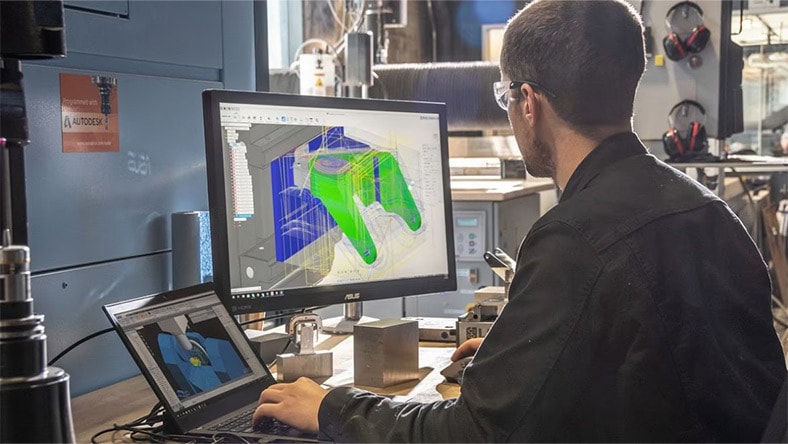
Integrated CAD/CAM automatically cascades design revisions through to production, shortening delivery times and avoiding costly mistakes.
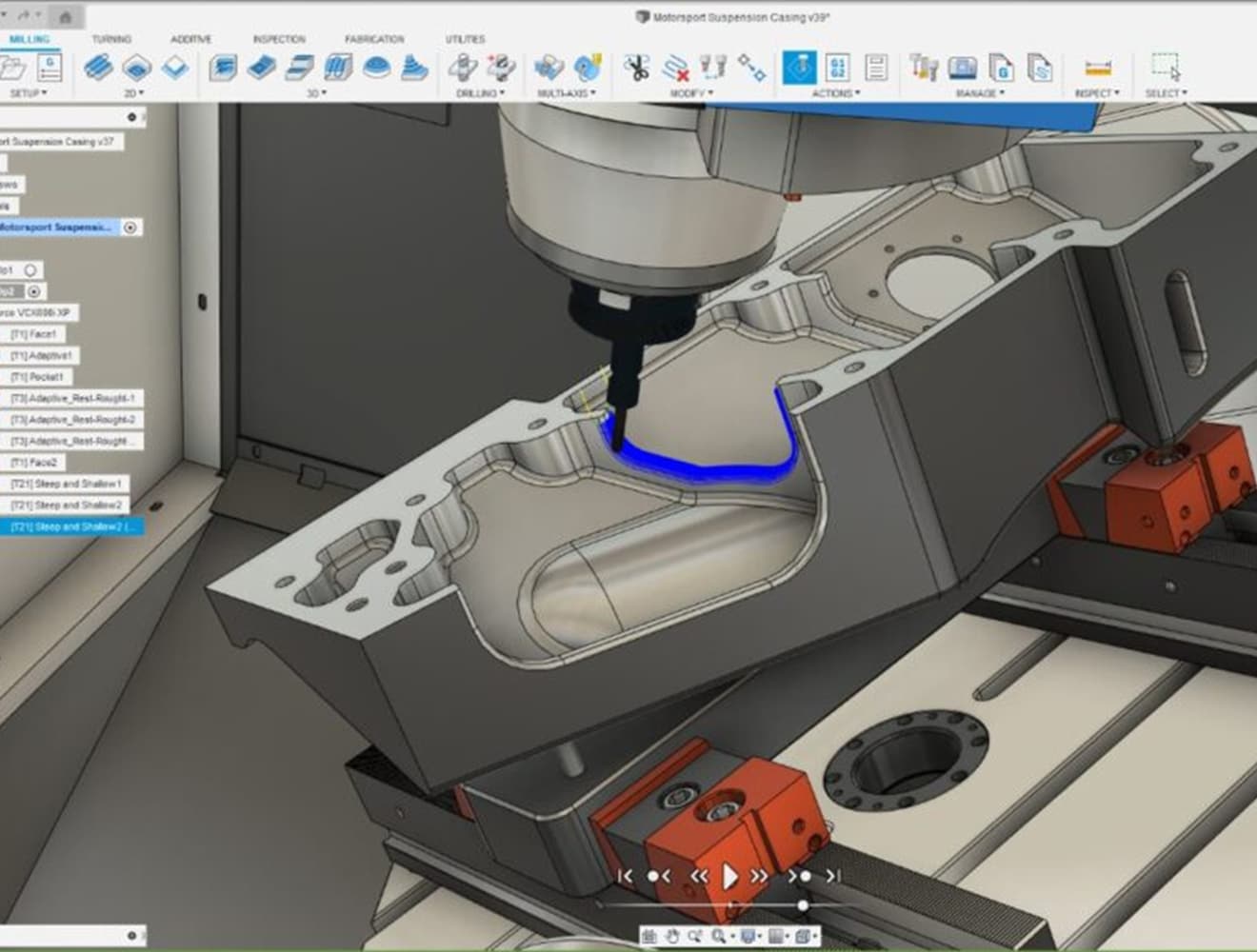
Speed up 2D, 2.5D, 3-, 4- and 5-axis CAM programming with automation and user-defined templates built around your best practices.
Make better use of your 4- and 5-axis CNC machines. Produce high-quality parts using fewer setups which lowers production costs.
Dedicated 2D turning strategies. Combined milling and turning processes generate NC code for multi-tasking hardware.
— Konrad Nerc, Managing Director, Nerc Precision Engineering Ltd
Increase in business revenue
Faster CAM programming times
– Paul Bourne, Operations Manager, Brown & Holmes (Tamworth) Ltd
Increase in business revenue
Reduction in non-conformance reporting
– Patrick Fee, Shop Manager, Conturo Prototyping
Reduction in CNC machine part setup times
Factory growth (1,000 sq-ft to 17,000 sq-ft)
Don’t settle for a siloed approach. See how an integrated CAD, CAM, CAE and PCB software platform delivers unprecedented value to designers, engineers and manufacturers.
Quickly convert your best practices into templates that can be shared across your team helping you make better use of your people, tooling and machines.
Automate common CAM processes and workflows to remove manual non-value add tasks that are expensive and poorly controlled.
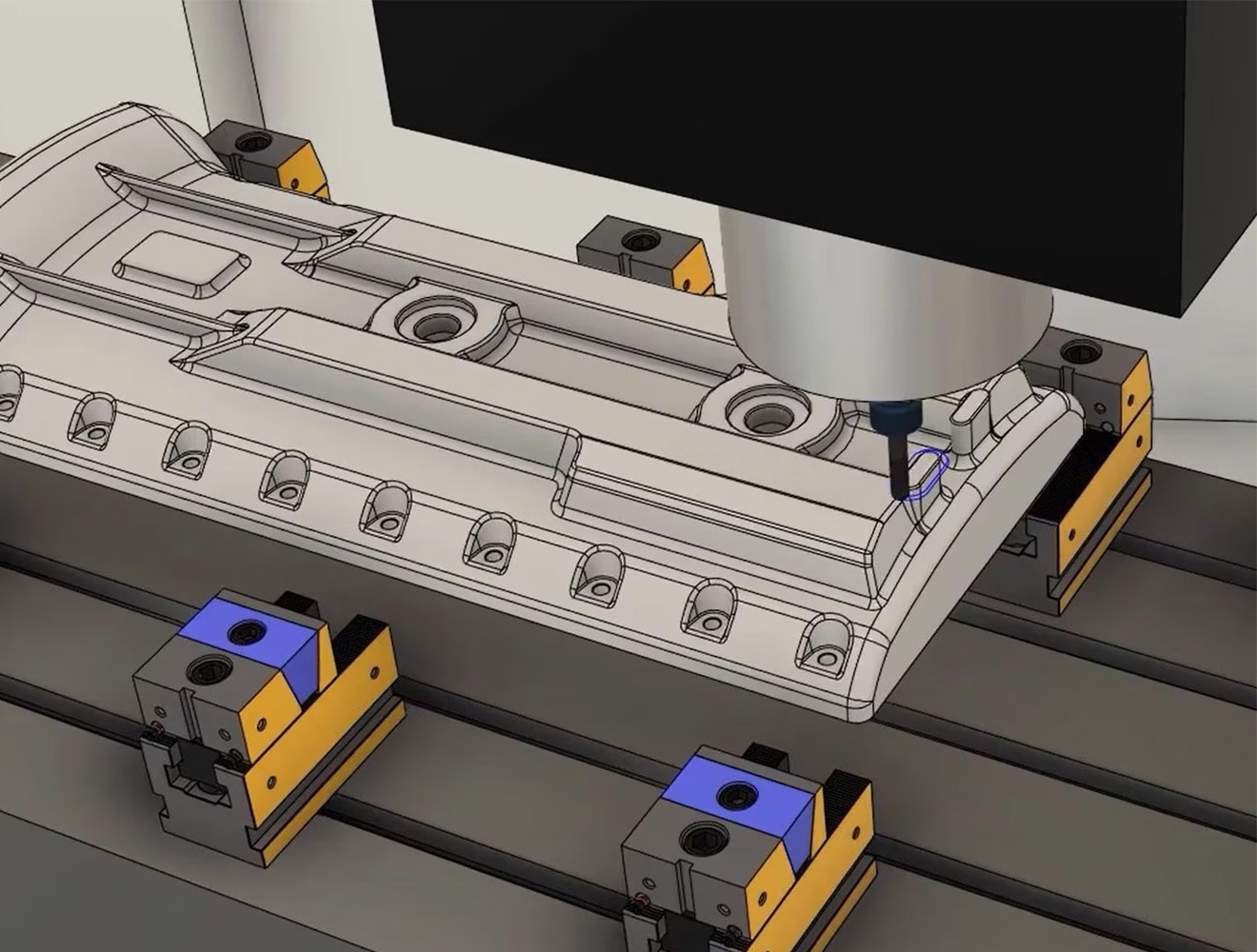
Create the high-quality, collision-free NC machining code you need to produce parts to tolerance and protect your investment in CNC machinery.
Seamlessly connect your CAM programming and shop-floor teams to the data they need to make business-critical decisions faster.
Embrace innovative technologies that can help expand your manufacturing business and offer a higher-value service to your customers.
Optimise machining processes to remove waste by reducing the consumption of time, materials and other precious resources.
Integrations with leading OEMs help streamline common tasks. Learn more about Autodesk partnerships (US Site) with industry leaders.
Connect with a real Fusion expert via email, chat and phone support.
Download 500+ out-of-the-box integrations from the Autodesk App Store to customise Fusion.
Connect, learn, inspire and grow your online community with groundbreakers like you.
Learn anywhere, anytime with free self-paced, online training courses and role-based certifications.
Autodesk Fusion for Manufacturing streamlines modern manufacturing by combining CAD, CAM, CAE, data management and collaboration tools in one environment. It enables teams to accelerate prototyping, CNC machining and production with advanced capabilities such as 2D 5-axis machining, manufacturing automation, part inspection and free editable post processors. By integrating design and manufacturing workflows, Fusion helps manufacturers improve precision, reduce waste and bring products to market faster.
Yes, Autodesk Fusion for Manufacturing includes sheet metal fabrication (US site) and nesting (US site) tools to minimise material waste, streamline production and reduce costs by efficiently arranging parts and updating toolpaths as designs change. Try for free for 30-days today.
Yes, Autodesk Fusion for Manufacturing is an integrated CAD/CAM software solution. No add-ons or plug-ins are required. Autodesk Fusion for Manufacturing is an industry-leading solution streamlining your entire product development process by integrating powerful tools such as CAD, CAM, CAE and PDM in a single cloud-based platform.
No, Autodesk Fusion for Manufacturing is a comprehensive offering that includes all core Autodesk Fusion essentials, plus advanced CAD/CAM tools for teams needing precise high-performance CAM. See pricing options here.
Yes, Autodesk Fusion for Manufacturing does handle probing and inspection workflows (US site). It supports spindle mounted geometry probing to measure features, update tool wear and improve part accuracy, as well as surface inspection to validate complex surfaces and generate reports that help monitor and control machining quality.
Yes, Autodesk Fusion for Manufacturing includes comprehensive tools for 3D printing (US Site) to design, simulate and prepare models for additive manufacturing.
Autodesk Fusion for Manufacturing (US site) offers advanced manufacturing capabilities beyond what Autodesk Fusion offers. Advanced features include 4- and 5-axis simultaneous milling, cutting, milling, turning (US site) and turn-mill, manufacturing automation, part inspection and probing, and more.
Autodesk Fusion for Manufacturing is available for
Yes, Autodesk Fusion for Manufacturing is built on more than 40 years of leading industry technology and was recently ranked the world’s no. 1 CAM software supplier by CIMdata. Try for free 30 days today.
Advanced manufacturing capabilities in Autodesk Fusion for Manufacturing include:
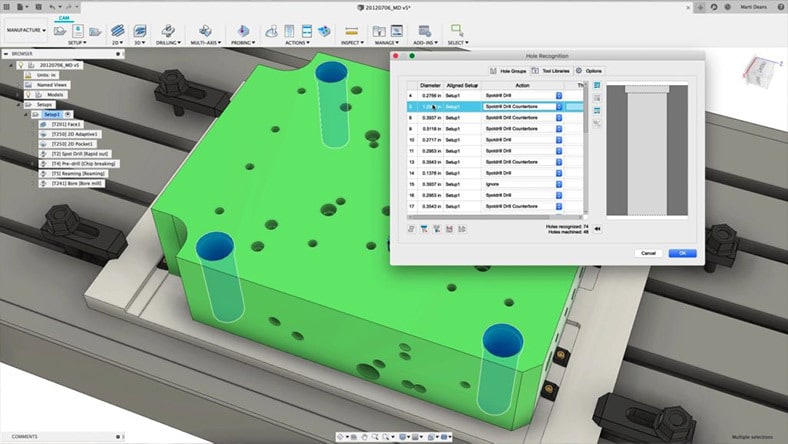
Automatic hold recognition and drilling
Automated entire part machining (3-axis and multi-axis)
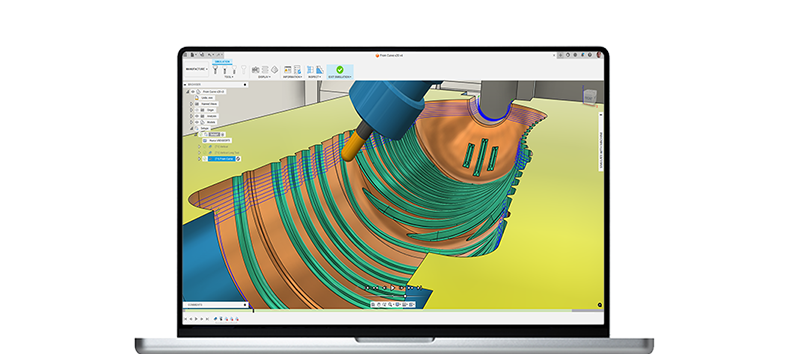
4- and 5-axis simultaneous milling
Multi-axis collision avoidance
Toolpath modifications
Probing
Surface inspection (US site)
Part alignment
Deburr (US site)
Additional sheet-based nesting and fabrication tools
Metal Powder Bed Fusion (US site) (MPBF), Directed Energy Deposition (DED) and process simulation for MPBF
Fusion for Manufacturing helps you machine faster, finish better, and spend less with advanced toolpaths, automation, and integrated data management and collaboration. Try for free 30 days today.
Yes, a 30-day free trial to Autodesk Fusion includes access to all the capabilities included in Autodesk Fusion for Manufacturing.
Product designers and engineers:
Manufacturing professionals:
Additive manufacturing specialists:
Small and medium-sized enterprises (SMEs):
Educational Institutions and Students:
Entrepreneurs and startups:
Industries:
Overall, Autodesk Fusion for Manufacturing caters to a broad spectrum of users who need a unified platform to bridge the gap between design and manufacturing.
Autodesk online store promotion:
For a limited time, customers who purchase two (2) new 1-year subscriptions to Autodesk Fusion, Autodesk Fusion for Design, and/or Autodesk Fusion for Manufacturing in the same transaction may receive 25% off the current Autodesk suggested retail price (SRP) for each qualifying subscription, and customers who purchase three (3) or more new 1-year subscriptions to those products in the same transaction may receive 33% off the current Autodesk SRP for each qualifying subscription. Products must be purchased from the Autodesk online store, and the applicable discount will be automatically applied at checkout.
This offer is available for commercial copies only from October 12, 2026 through October 30, 2026 and is limited to a maximum of twenty (20) qualifying subscriptions per customer. This offer does not apply to renewals or current subscriptions, may not be combined with other rebates, promotions, conditions, or discounts, and is void where prohibited or restricted by law.
This offer cannot be combined with any conditions or discounts provided by Autodesk to contracted accounts, including but not limited to accounts with enterprise business agreements, volume purchase agreements, or accounts purchasing extra territory rights. If applicable, this offer cannot be combined with the government customer discount program.
At the end of the discounted term, auto-renewing subscriptions sold by Autodesk will renew at the price in effect on the renewal date, subject to then-current terms and conditions, unless you cancel recurring billing before renewal.
AUTODESK RESERVES THE RIGHT TO CANCEL, SUSPEND OR MODIFY PART OF, OR THIS ENTIRE PROMOTION, AT ANY TIME WITHOUT NOTICE, FOR ANY REASON IN ITS SOLE DISCRETION. PRICES FOR AUTODESK SOFTWARE ARE SUBJECT TO CHANGE.
Autodesk, the Autodesk logo, and Autodesk Fusion are registered trademarks or trademarks of Autodesk, Inc., and/or its subsidiaries and/or affiliates in the USA and/or other countries. All other brand names, product names, or trademarks belong to their respective holders. Autodesk reserves the right to alter product and services offerings, and specifications and pricing at any time without notice, and is not responsible for typographical or graphical errors that may appear in this document.
© 2026 Autodesk, Inc. All rights reserved.