 Shannon McGarry
Project success depends on smooth transitions between the design, simulation, and manufacturing phases. Autodesk Fusion is a connected product development platform that maintains a single source of truth, accelerating development.

Elevate your design and manufacturing processes with Autodesk Fusion
Moving from design and production is possibly the greatest challenge in all of product development. Whereas designers focus on aesthetic intent and functional requirements, manufacturing engineers prioritize toolpaths and material constraints. With the right tools, these different focuses can be reconciled, but in practice, fragmented workflows get in the way. When teams rely on static exports such as STEP or IGES files, the underlying design intelligence disappears. Parametric data is lost, causing any late-stage modification to entail a design restart or for the production team to work with outdated information. Fortunately, Autodesk Fusion provides the tools and unity needed to help teams move between design and production with ease.
Communication gap and the move to production
In many cases, communication gaps between departments are a bigger technical hurdle than the design or production itself.
In the context of quality assurance, a communication gap could mean that teams might not receive the latest revision of a bill of materials, while procurement specialists order components based on obsolete specifications. These errors slow down the process because they also introduce hidden costs through scrapped parts and wasted machine time. Without a method to track changes in real time, engineers spend more hours managing data than solving complex problems. Documentation often lives in disconnected spreadsheets or email threads, which makes it impossible to establish a clear audit trail for engineering change orders.
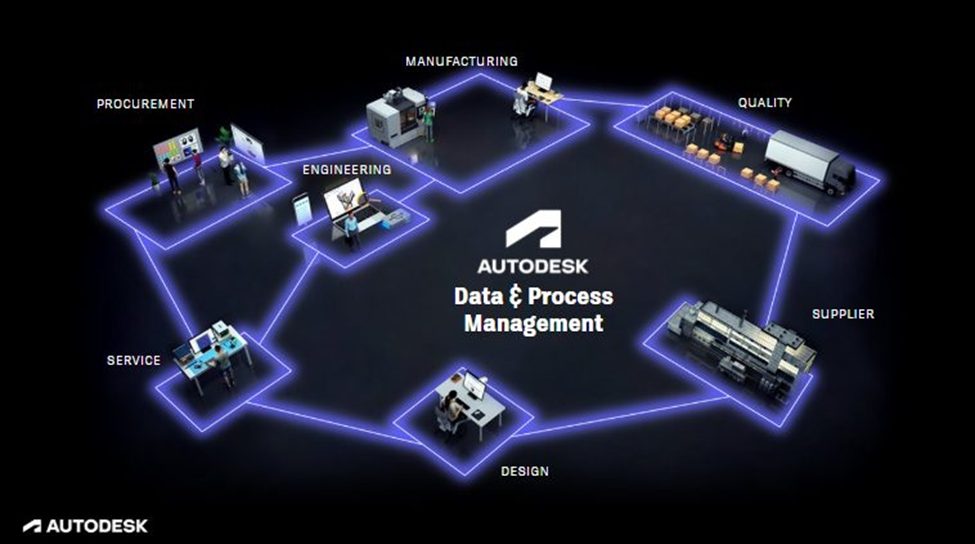
Technical complexity also increases when products incorporate advanced electronics or specialized materials. Each additional discipline adds another layer of potential friction to the handoff process. For example, if the mechanical designer doesn’t understand the thermal constraints identified by the simulation expert, the final assembly might fail in the field. Establishing a technical framework that supports multidisciplinary collaboration is the only way to prevent these systemic breakdowns. Success requires a strategy that treats design and manufacturing as a continuous loop rather than as separate events.
Integrating design and production with Autodesk Fusion
With Autodesk Fusion, development teams can maintain a single source of truth that connects every phase of the project.
Fusion integrates CAD, CAM, and CAE tools into a single connected product development environment, eliminating the need for risky file translations. Imagine a world where designers can create complex geometry while manufacturing teams simultaneously develop toolpaths on the same model. Fusion makes this possible and, because the data lives in a cloud-connected workspace, every participant sees updates the moment they happen. As a result, the machinist always works from the most recent design iteration, preventing the common problem of cutting parts to old specifications.
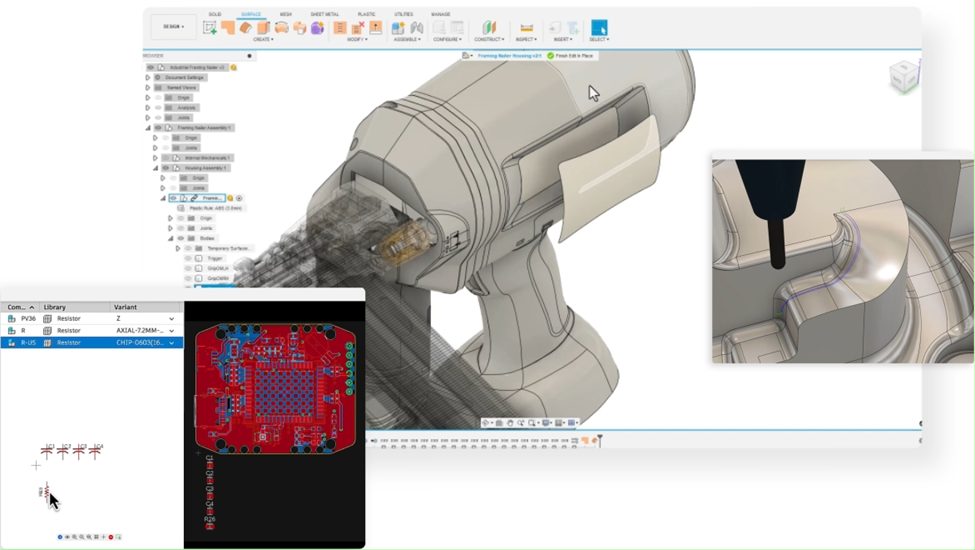
Fusion also includes features that help designers validate their concepts through advanced simulation before any metal is cut. Engineering teams can use these capabilities to test structural integrity or thermal performance within the same interface used for modeling. If a simulation reveals a weakness, the designer can modify the geometry, and the associated toolpaths update automatically. With a truly associative workflow, Fusion reduces the friction traditionally found between the analysis and manufacturing stages. Using these integrated features, product teams can identify potential failures early in the cycle when changes are less expensive to implement.
Manufacturing teams can also use Fusion to automate the creation of 2D drawings and annotations. The software also includes Drawing Automation features that generate views and dimensions from the 3D model’s properties, reducing manual entry errors and ensuring documentation remains consistent with engineering intent. By centralizing all project data, including bills of materials and version history, the software provides a clear path from the first sketch to the final shipping product.
Empowering teams through technical continuity
Overcoming the challenges of engineering handoffs requires a fundamental change in how data flows through an organization. When designers and engineers work within a shared environment, they spend less time searching for files and more time perfecting their products. Autodesk Fusion provides the technical backbone needed to enact this change and helps teams deliver high-quality results with fewer errors. Download a free 30-day trial today to see how a connected product development platform can take your productivity to the next level today.