 Heather Miller
Inspired by her childhood during a massive drought, Elle Turner created SEVAS to make water conservation easier, more practical, and even a beautiful part of everyday life. With Autodesk Fusion, she and her designer were able to turn an early idea for a shower water catcher into a refined, production-ready product by testing details digitally, reducing physical prototyping, and collaborating closely with manufacturers also using Fusion. Sustainability carries through the entire product, including recyclable materials, low-waste manufacturing, and replaceable parts.

Elevate your design and manufacturing processes with Autodesk Fusion
Every morning the same thing happens in homes around the world. We turn on the shower and wait for the water to warm up. Gallons of water go right down the drain before we ever step foot inside.
But Elle Turner, inventor and founder of SEVAS, grew up with a different reality. During Australia’s Millennium Drought that stretched for more than a decade, conserving water was part of everyday life. Her family kept a bucket in the shower to catch the water that would otherwise be wasted while warming up, then carried it outside to keep the garden alive.
The habit stayed with her into adulthood. But a bucket wasn’t always the ideal solution. It’s inherently bulky and difficult to carry. She could see her mom having increasing difficulty carrying it. And, well, it was simply a bit of an eyesore in her new bathroom. That’s when she started dreaming up SEVAS.
Designing a better habit
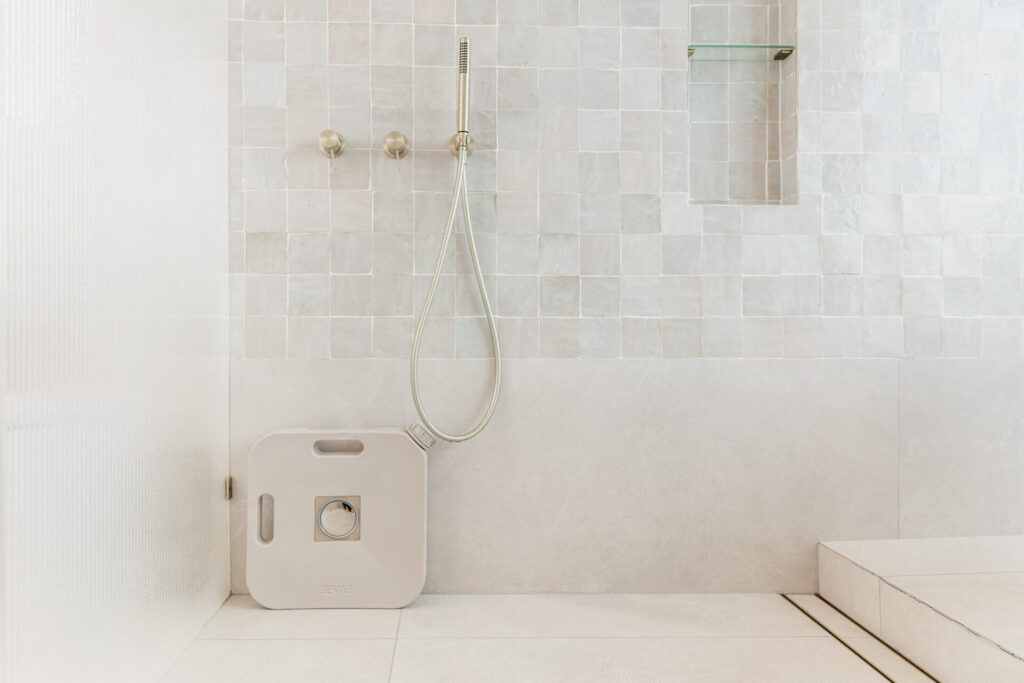
The idea for SEVAS (“saves” spelled backwards) Water Catcher was deceptively simple. Turner wanted to create something that could sit inside a shower, capture the water that runs while it heats up, and make it accessible to carry and reuse around the home and garden. It had to solve issues with size, stability, and ease of use, too.
She also had a personal motivation. After renovating her bathroom, all she could see was “this blue, $2 bucket in my beautiful, beige tiled bathroom.” She knew it definitely needed to be attractive for anyone to actually leave it in their bathroom.
“I think a successful product has to look good, but also be functional and easy to use,” she says. “I think these are the biggest design principles for something to become a habit and that people stick to.”
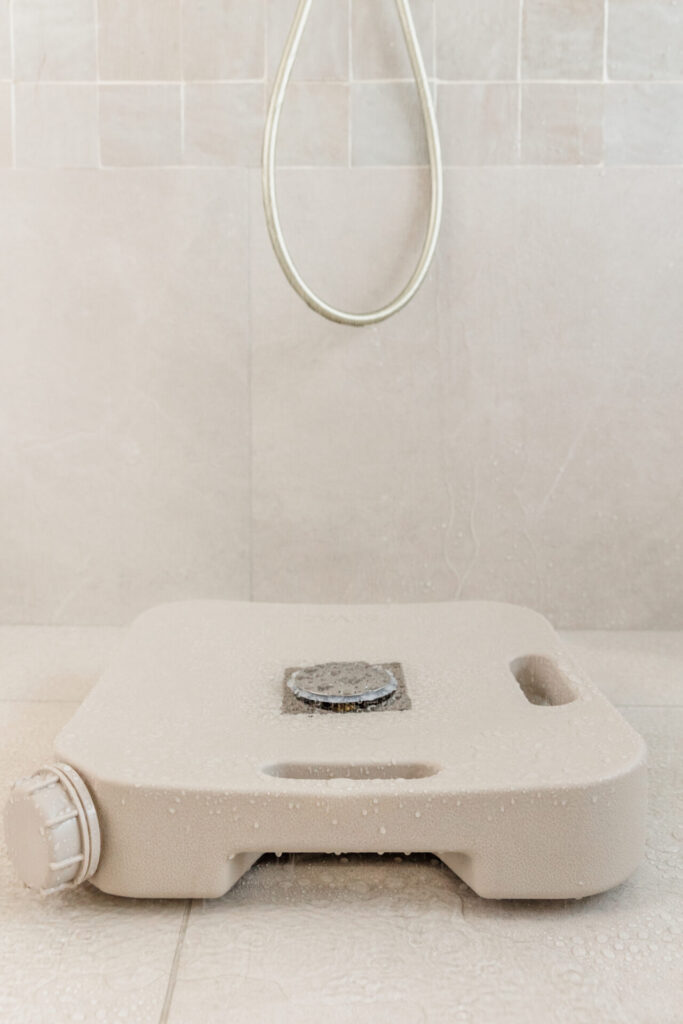
With SEVAS, she’s delivering on that belief. It’s designed to collect up to five liters (1.32 gallons) of water. It’s placed on the floor of the shower with the drain open. Once the shower is ready, you simply press down the drain with your foot to close and place it vertically to remove later. An ergonomic handle makes it easier to carry, and a detachable watering-can attachment makes it ready for immediate use.
“Our mission is that small habits create big impact,” Turner says. “If everyone can do a little bit, then we’re actually going to be saving a huge amount of water.”
Bringing SEVAS to life with Fusion
Like many inventors, Turner started with an idea and a sketch pad. But, from there, it was a whole new world.
“My background is in marketing,” she says. “I know how to bring a concept to life and tell the story, but I had never invented anything or put anything into production, so that was completely new.”
She turned to a seemingly simple solution to get started. She Googled how to invent a product, found a product designer through Upwork, and began explaining what she wanted to create. That collaboration introduced her to Autodesk Fusion.
“I just had this idea on paper, but it really came to life when we put it into Fusion,” she says.
Fusion gave the pair a place to move past the abstract idea of “something better than a bucket” and start answering specific design questions. Instead of creating physical prototypes, they explored design decisions digitally with Fusion. They could understand how water would move through the product, assess the expected water level, and refine the slope for the central drain. They could even use a digital adult-sized hand to evaluate the thickness and grip of the handles.
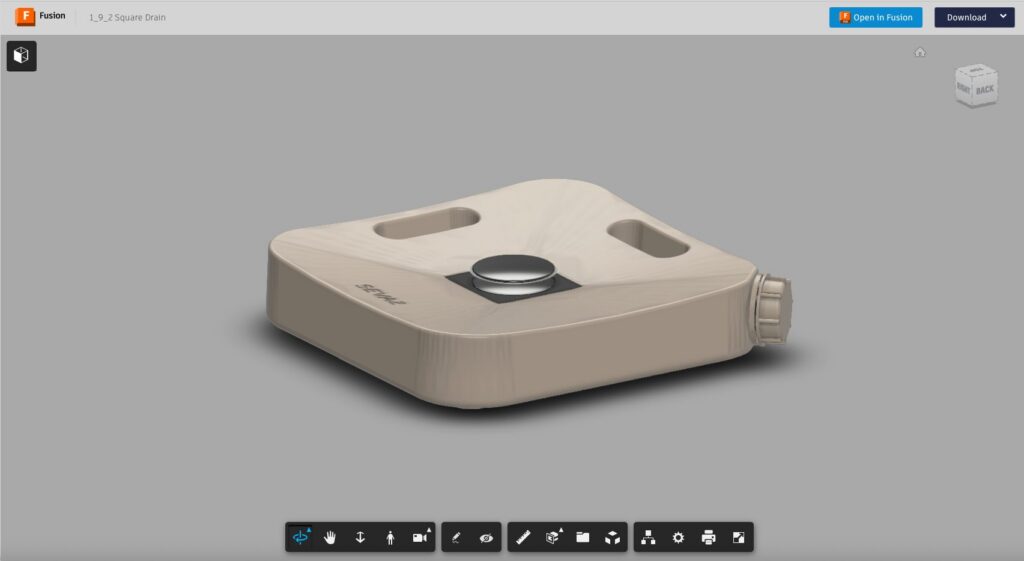
Elle also started learning Fusion to participate directly in the process. For someone with no formal product design background, its accessibility changed everything. She could actually be part of the design process herself.
“Fusion is easy to navigate for someone without design experience,” she says. “We created a space for us to play, write notes, and make changes. It was all completely virtual because the designer was in another country.”
Moving from design to prototype
SEVAS looks seemingly simple from the outside, but it actually has a great deal of complexity in the design. Its plug mechanism alone incorporates multiple components that must align closely enough to prevent leaks. Fusion helped Turner and her designer work through those details before and during production.
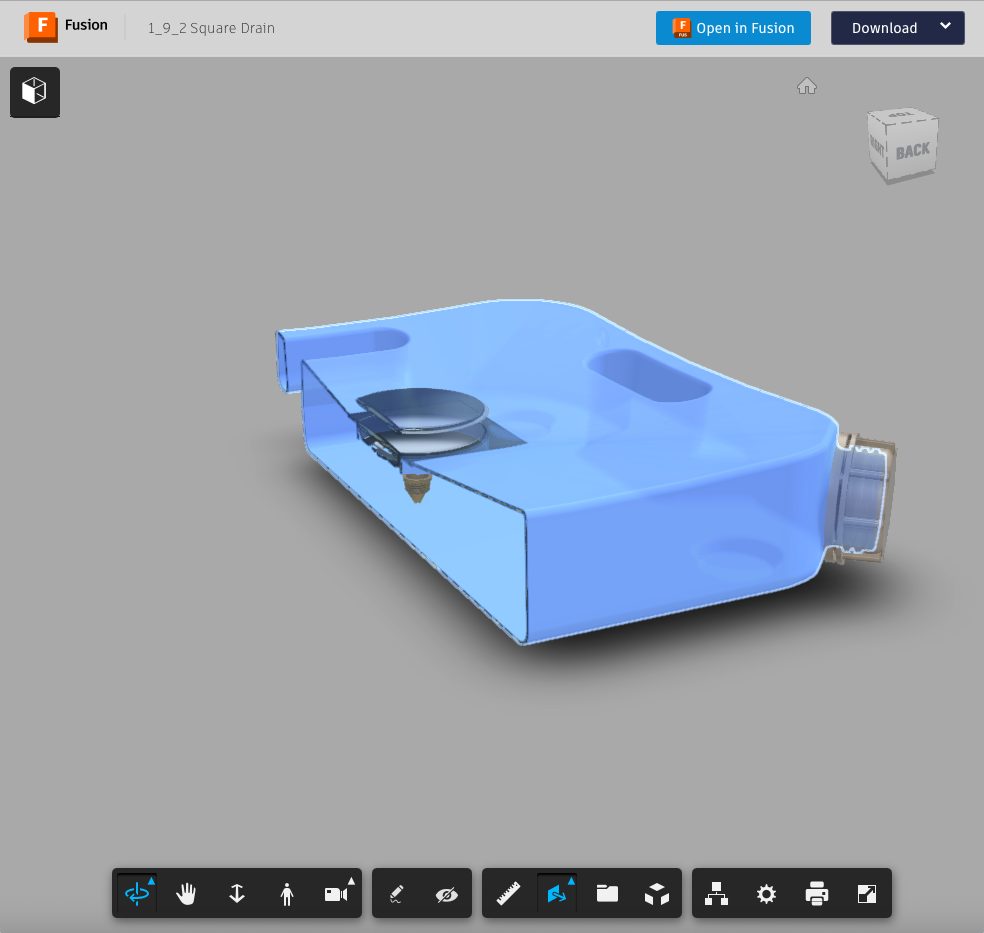
It also allowed them to take existing components and rethink them for an entirely different use, such as the drain used in the product.
“The plug is commercially available, but it’s designed to sit flat,” Turner says. “With Fusion, we could look at these different parts of the plug and make the design work when it’s vertical.”
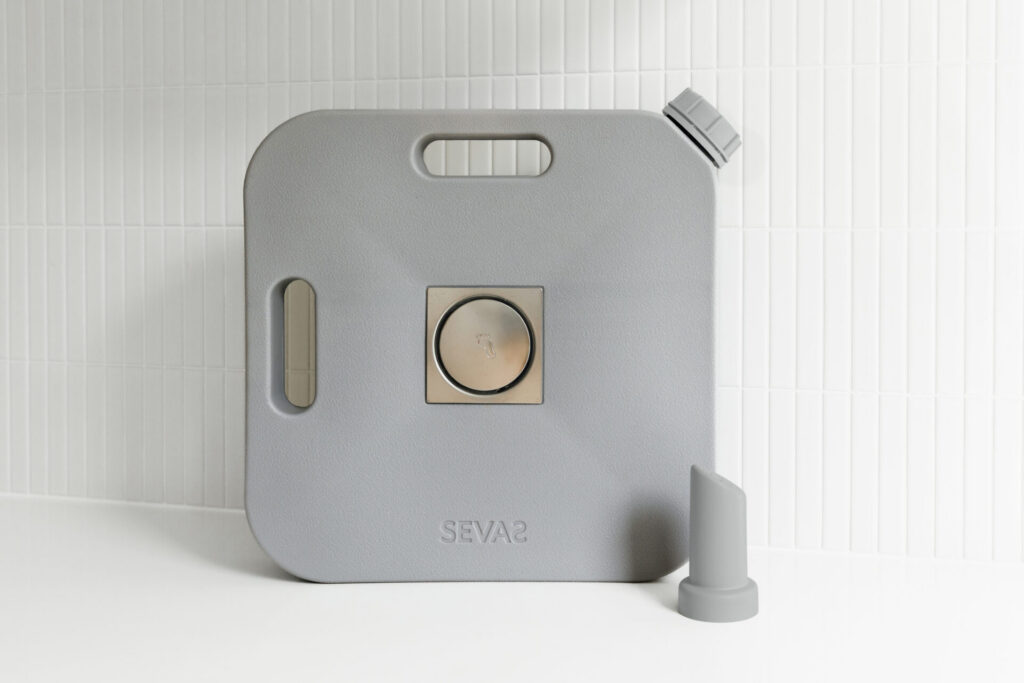
Eventually, the digital design became a physical prototype. Turner 3D printed two prototypes, and her own family stress tested them for six months. For a founder funding a new product herself, there was a direct financial benefit.
“We didn’t have to spend a whole lot of money on prototyping over and over again because we were able to use Fusion to get it so close to what the real product could be,” she says.
“Fusion is so intuitive and easy to navigate. You’re able to get input and work with designers and manufacturers, even without any experience, in a much faster way.”
—Elle Turner, Founder, SEVAS
Making sustainable choices for manufacturing
Saving water is the reason SEVAS exists, but Turner didn’t want the sustainability impact to end once the shower turned off. When it came time to put SEVAS into production, she once again turned to her trusty partner Google to locate the most sustainable manufacturer possible.
SEVAS is made from 100% recyclable HDPE, selected in part for its durability for a long product life, and all the packaging is biodegradable. Manufacturing uses a closed-loop cooling system so that water in production is recirculated rather than wasted.
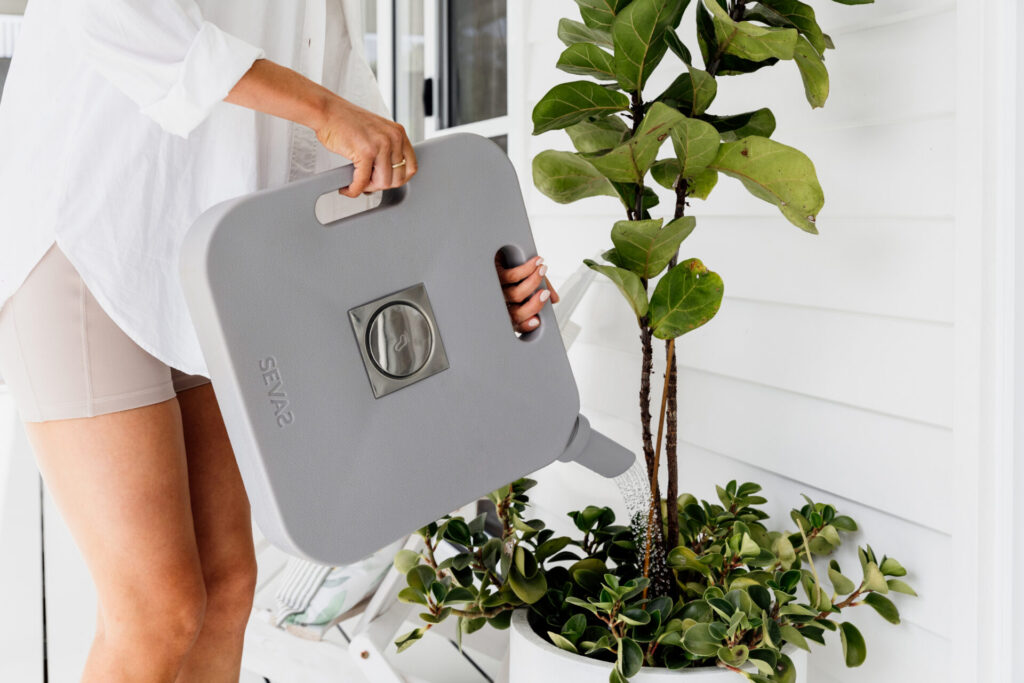
“We have zero offcuts in our waste,” Turner says. “Any offcuts of plastic have to go back into the product and production so there is zero water waste. When the machine is running for the mold, they use water to cool down the plastic container. But it had to be on a recycled system. No water is wasted. Otherwise, what’s the point?”
“Our manufacturer also uses Fusion, so it’s fantastic because we can go back and forth on things if they have suggestions or an issue,” she adds.
SEVAS takes off and makes an impact beyond the shower
Once Turner had the final product, she planned an initial run of 500 units. One day, she decided to post a simple video of the product on social media. At the time, the SEVAS account had three followers: herself, her husband, and her sister. The video received five million views within days. Within a week, 3,000 people had joined the email waitlist.
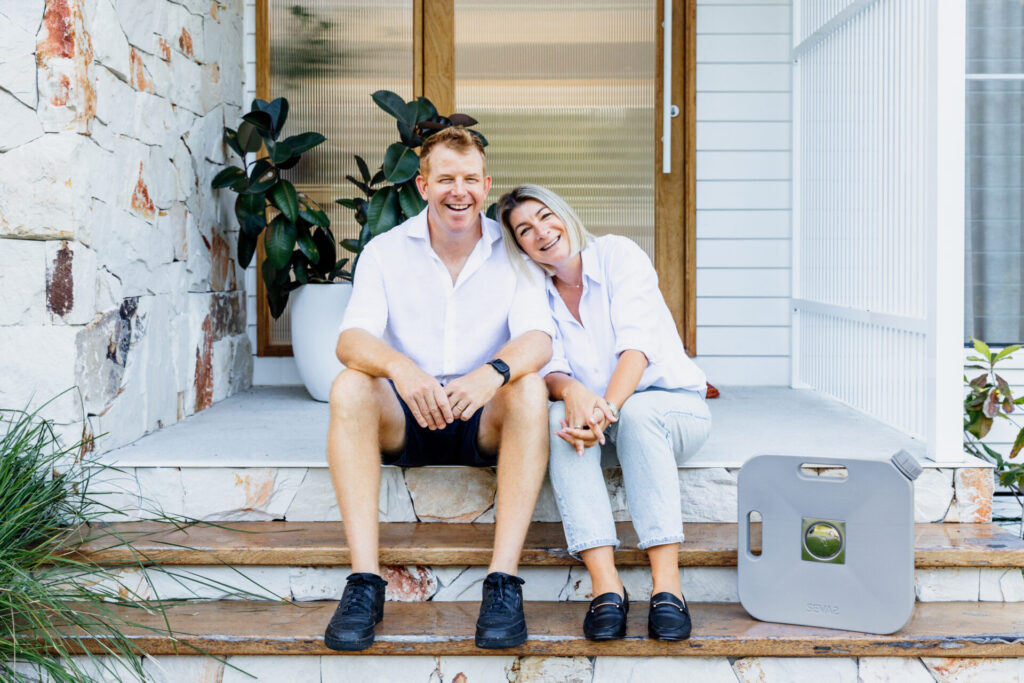
SEVAS launched in June 2025 and has since sold roughly 13,000 units. Now available in both Australia and the United States, demand continues to be high as they look into expansion in Europe.
Turner estimates they’ve already collectively saved more than 25 million liters (6.6 million gallons) of water annually if each is used for just one shower per day. SEVAS also supplies replacement parts so customers can repair the catcher rather than replace the entire product if individual components wear down.
The original SEVAS Water Catcher is only the beginning. They’ve recently redesigned it to eliminate the complicated drain and are looking to do a potential design for basin sinks. But maybe one of the most important developments is that it’s become a true family business. Both Turner and her husband work full-time for SEVAS now, and their two boys are part of the journey, too.
“We love getting our kids involved in what we’re building, and they really feel part of the journey,” she says. “They help stress test it and monitor the numbers of how much we give to charities we support. For every unit sold, we donate two days of clean drinking water, plant two mangrove trees, and offset our emissions. We’ve now donated 23,000 days of clean water. Seeing that impact is one of the best parts of what we do.”