 Christa Prokos
This article examines how cloud PLM solutions support distributed product teams by improving accessibility, collaboration, and scalability. It also highlights Autodesk’s cloud PLM tools (Fusion Manage and Vault PLM) and how they facilitate change management to improve supplier collaboration and connect teams across the full product lifecycle.
In 2026, product development teams face a new challenge. It’s no longer enough to manage product data. Manufacturers must connect people, processes, and information across increasingly complex product lifecycles. Engineering teams work across locations, suppliers participate earlier in development, and product changes move faster than ever. At the same time, organizations are under pressure to improve visibility, reduce delays, and create a more connected approach to product development.
This shift is driving the adoption of cloud product lifecycle management (PLM). More than a system for storing product information, cloud PLM helps organizations connect product data, business processes, and cross-functional teams throughout the lifecycle. From engineering change management and BOM control to supplier collaboration and ERP integration, cloud PLM provides the foundation for connected product development.
Cloud PLM is a catalyst for product development
The term “product lifecycle management” refers to the meticulously coordinated process of taking a product from ideation through production and beyond. Historically, PLM tools have existed as on-premise systems requiring substantial IT resources to deploy, maintain, and scale. However, the rise of cloud technologies has dramatically changed the way organizations implement PLM strategies. Today’s cloud-based PLM solutions are easier to adopt and inherently designed to support collaboration across distributed teams and extended supply chains.
Cloud-based PLM systems offer structural advantages that make them particularly suited for today’s distributed work environments. Compared to legacy solutions, they provide widespread access to centralized data and workflows, allowing teams in different regions and time zones to access the same real-time, up-to-date product information. Teams can eliminate communication silos and misalignments that often plague hardware design projects, especially those involving external manufacturing partners or tiered suppliers.
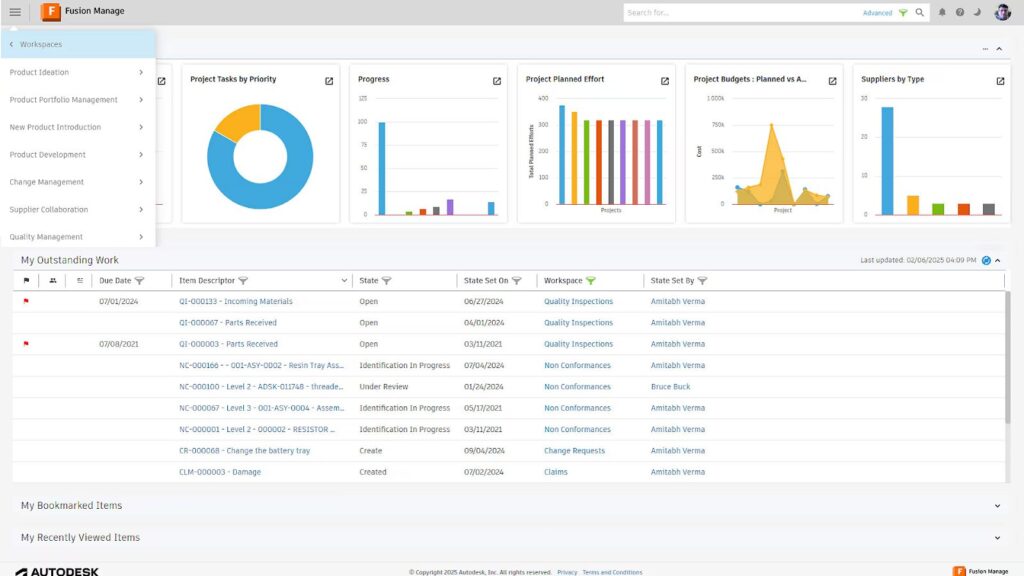
Scalability is another inherent benefit. As product complexity increases and as businesses expand into new markets, cloud PLM platforms scale without requiring a proportional investment in infrastructure. Organizations can add new users, processes, and integrations incrementally, growing their PLM capabilities only as needs evolve.
Critically, cloud PLM integrates easily with other enterprise platforms, such as ERP and CRM systems. With true ecosystem interoperability, organizations can create a true, transparent end-to-end view of the product lifecycle.
Perhaps the most powerful aspect of cloud PLM is its impact on change management. Managing engineering change orders, maintaining revision control, and tracking compliance across products and geographies are some of the most resource-intensive tasks in the product development cycle. Cloud platforms introduce automation and transparency into these workflows. The result is faster decision-making, fewer errors, and improved auditability.
PLM and the digital thread
As products become more complex, many organizations are working toward a digital thread strategy.
A digital thread is the continuous flow of product information across systems, teams, and lifecycle stages. It connects product data from initial design through engineering, manufacturing, quality, procurement, and production, helping ensure everyone is working from the same information.
Without a digital thread, product data often becomes fragmented. Engineering teams manage product designs in one system, manufacturing teams maintain separate records, and operational teams rely on completely different tools. This disconnect can lead to duplicate work, delayed decisions, and reduced visibility across the product lifecycle.
Cloud PLM plays an important role in creating the digital thread because it provides a centralized system for managing product data and workflows. Within Autodesk’s connected product development ecosystem, product designs can originate in Fusion, lifecycle processes and product structures can be governed in Fusion Manage, and approved product information can then flow into ERP and operational systems. This creates greater continuity between design, engineering, manufacturing, and business operations while reducing the need for manual data transfers and disconnected workflows.
The result is improved visibility, stronger change control, and a connected source of product information that supports decision-making throughout the lifecycle.
How Autodesk supports cloud PLM adoption
Autodesk offers some of the industry’s most powerful cloud-based PLM tools with Fusion Manage and Vault PLM.
Autodesk Fusion Manage: Connect People, Processes, and Data
Streamline workflows, enhance collaboration, and gain real-time visibility with PLM.
Fusion Manage is Autodesk’s flagship cloud PLM solution, built to empower cross-functional teams with real-time access to workflows and product data. The tool features a cloud-native architecture and highly configurable workflows that simplify submitting engineering change requests (ECRs), tracking engineering change orders (ECOs), and managing product development activities. Meanwhile, the tool automates notification and task assignments for stakeholders to stay informed and aligned throughout the product lifecycle.
Optimize Data Management with Autodesk Vault
Secure, organize, and manage your engineering data efficiently.
For organizations already using Autodesk Vault for product data management, Vault PLM offers a hybrid solution that extends existing PDM capabilities into the cloud. This includes linking design data with broader PLM functions such as bill of materials (BOM) management, new product introduction (NPI), and supplier collaboration. The combined solution allows engineering teams to stay within familiar desktop tools while stakeholders in manufacturing and procurement gain access to structured, cloud-based processes.
Change management is one place where Autodesk’s PLM tools deliver measurable value. Through Fusion Manage, every design change is automatically documented, creating a clear audit trail of what changed, when, and by whom. With high transparency and traceability, companies can reduce rework and improve product quality over time. Similarly, PLM features like impact analysis give organizations the power to evaluate the downstream effects of design changes before implementation and minimize surprises late in the process.
Change management is also one of the most practical examples of the digital thread in action. Every engineering change affects product data, documentation, manufacturing processes, suppliers, and downstream business systems. Cloud PLM helps connect these activities through structured workflows, approvals, notifications, and traceability. By maintaining visibility into changes from initial request through final implementation, organizations can reduce risk while improving collaboration across engineering, manufacturing, quality, and operations teams.
Common PLM adoption challenges
Many organizations recognize the value of product lifecycle management (PLM), but adoption can feel overwhelming. The most common challenges include:
Integration complexity
Organizations often manage product data across CAD systems, ERP platforms, quality systems, supplier portals, and spreadsheets. A common concern is whether a new PLM system will add complexity instead of reducing it.
How cloud PLM helps:
- Connects product data across systems
- Improves visibility across teams
- Reduces manual data transfer
- Creates more consistent workflows
User adoption and change management
Many teams rely on email approvals, spreadsheets, and informal processes. Adopting PLM requires both technology and process change.
How organizations improve adoption:
- Start with a high-impact business process
- Standardize workflows
- Focus on visibility and accountability
- Train teams on the business value, not just the software
Data migration
Migrating years of product data from legacy systems can seem daunting, especially when information is spread across multiple platforms.
Best practice:
- Take a phased approach
- Start with change management or BOM management
- Expand into quality, supplier collaboration, and new product introduction over time
Building a business case
Many companies struggle to justify PLM investment because benefits extend beyond engineering.
Common PLM outcomes include:
- Faster change management
- Improved collaboration
- Better traceability
- Reduced manual work
- Fewer product development errors
- Improved product quality
- Greater process visibility
- Faster time to market
Unlocking better product development
In this new world of complex products and geographically dispersed teams, Autodesk’s cloud PLM solutions offer improved agility and higher product quality. By combining powerful configuration options with user-friendly interfaces and enterprise-grade security, Autodesk is making PLM adoption practical for both mid-sized manufacturers and large enterprises.
Frequently asked questions
PLM manages product data, lifecycle processes, and product changes, while ERP systems manage operational activities such as procurement, inventory, and production planning. By integrating PLM with ERP, organizations can improve the flow of product information across departments and reduce manual data transfer between systems.
A single source of truth means there is one authoritative record for approved product information, ensuring that teams work from the same released data rather than local copies, emailed files, or spreadsheet exports.
PLM helps create this through controlled revision and change processes. In Vault and Fusion Manage, organizations can configure workflows that require review and approval activities before a new revision is released. Previous revisions remain accessible for traceability and audit purposes, while the released revision becomes the authoritative record.
This is one of the key differences between PLM and file-sharing approaches. A shared drive can centralize files, but it typically does not provide formal change control, release workflows, or product-level traceability. PDM systems manage design files and revisions, while PLM extends governance across BOMs, engineering changes, approvals, quality processes, and cross-functional business workflows.
Fusion Manage further supports distributed product development through cloud-based access, workflow automation, permissions controls, and shared visibility into released product information. Authorized teams, partners, and suppliers can work from the same controlled product records, reducing the need for manual file distribution and helping maintain consistency across the product lifecycle.
Organizations commonly use PLM to manage change management, BOM management, quality processes, supplier collaboration, new product introduction, document control, compliance activities, and product release workflows.
Cloud PLM provides a centralized environment for managing product information and workflows. By connecting product data across teams and systems, it helps maintain continuity throughout the product lifecycle and improves visibility into product development processes
Organizations often track metrics such as engineering change cycle times, product development efficiency, collaboration improvements, product quality, process visibility, and time to market when evaluating PLM success.
Companies typically measure PLM success through improvements in process efficiency, product data quality, traceability, and user adoption.
Change process efficiency
Engineering change cycle time tracks how long it takes for a change request to move from submission through review, approval, and release. Organizations use this metric to identify bottlenecks and determine whether PLM is accelerating change management. Another common KPI is first-pass approval rate, which measures how often changes are approved without requiring rework or multiple review cycles.
BOM and product data quality
Many manufacturers track BOM accuracy at release, which measures how often product structures move into downstream processes without requiring correction. Organizations may also monitor duplicate records, missing information, or orphaned files and parts that are not linked to approved product structures. These metrics help assess the reliability and governance of product data.
Compliance and traceability
A key indicator of PLM maturity is how quickly teams can produce a complete history of revisions, approvals, and engineering changes for audits, regulatory submissions, customer inquiries, or quality investigations. Strong traceability reduces the effort required to locate supporting documentation and verify product history.
User adoption
PLM only delivers value when teams use the defined processes. Organizations often measure the percentage of engineering changes processed through PLM workflows, workflow completion rates, active user participation, and reductions in spreadsheet or email-based approvals. High adoption indicates that product data and decisions are being managed through controlled, auditable processes rather than informal workarounds.
Establishing baseline measurements before implementation is critical. Without pre-deployment metrics, it becomes difficult to quantify improvements in efficiency, data quality, traceability, compliance, or collaboration after PLM adoption. Organizations often track metrics such as engineering change cycle times, product development efficiency, collaboration improvements, product quality, process visibility, and time to market when evaluating PLM success.
PLM (Product Lifecycle Management) and ERP (Enterprise Resource Planning) serve different purposes but work best together.
PLM manages product data, product development processes, engineering changes, requirements, quality, and collaboration from concept through release. It is primarily used by engineering, product development, quality, and manufacturing teams.
ERP manages operational business processes such as purchasing, inventory, production planning, logistics, finance, and order fulfillment.
A simple way to think about it is:
PLM defines what should be built.
ERP manages how it will be purchased, produced, delivered, and accounted for.
Organizations often use PLM as the system of record for product definitions and ERP as the system of record for business execution
PLM and ERP integrations ensure that approved engineering information flows seamlessly into manufacturing and business operations.
Common integration points include:
-Item master records
-Engineering and manufacturing BOMs
-Approved revisions
-Engineering change requests (ECRs)
-Engineering change orders (ECOs)
-Supplier and procurement data
When engineering releases a product or approves a change in PLM, that information can be transferred automatically to ERP, reducing manual data entry and minimizing errors.
Autodesk Fusion Manage supports integration with ERP, CRM, and other enterprise systems through open APIs and enterprise connectivity capabilities
PLM supports digital thread initiatives by connecting product data, change processes, and decision history across the product lifecycle while maintaining traceability between systems and teams.
In a Fusion Manage implementation, engineers create and iterate product designs in Autodesk Fusion, while bills of materials (BOMs), change orders, approvals, and release processes are managed in Fusion Manage. When a design is approved, product data can be connected to downstream systems such as ERP for production planning, procurement, and manufacturing execution.
Because BOMs, revisions, and engineering changes are managed within governed workflows, organizations gain a traceable record of how a product evolved. If a quality issue, compliance concern, or field failure occurs, teams can trace the affected revision back to the associated BOM, change order, approval history, and design records.
Fusion Manage strengthens the digital thread by providing cloud-based PLM capabilities for change management, BOM governance, collaboration, and workflow automation, helping distributed teams work from a common source of product information throughout the lifecycle.
PLM reduces manual handoffs by connecting product data, approvals, and change processes through controlled workflows rather than relying on emails, spreadsheets, and manually distributed files. When engineering and manufacturing teams work from the same governed product records, there are fewer opportunities for outdated information, missing approvals, or version mismatches. Fusion Manage is designed to connect product data, people, and processes through cloud PLM workflows.
In many organizations without PLM, product information moves between teams through exported BOMs, emailed drawings, spreadsheet updates, and manual data entry into downstream systems. Each handoff increases the risk that different teams are working from different versions of the same product information. PLM helps reduce these risks by providing a controlled system for managing revisions, approvals, and product records.
For example, when a design is ready for production, an engineering change order (ECO) can move through a defined review and approval workflow in Fusion Manage. Stakeholders across engineering, manufacturing, and other functions can review proposed changes, provide feedback, and track approval status before the change is released. Once approved, released product information becomes the authoritative record for downstream processes.
PLM can also connect with downstream business systems, helping ensure that production planning, procurement, and manufacturing processes are based on approved product data rather than manually maintained copies. By reducing reliance on file sharing and manual record transfers, organizations can improve consistency, traceability, and collaboration across the product lifecycle.
The result is that manufacturing teams are more likely to work from current, approved product information, while engineering gains greater visibility into how changes are reviewed, released, and communicated across the organization.
A PLM system should be configurable enough to support an organization’s product development processes without requiring teams to redesign every workflow around the software. The goal is to standardize processes where appropriate while allowing flexibility for different products, teams, regulatory requirements, and approval structures. Fusion Manage is positioned as a configurable cloud PLM platform that connects data, people, and processes through workflow-driven product lifecycle management.
The most important areas of PLM configurability for many manufacturers include:
Workflow routing
Organizations often need different approval paths depending on the type of product, change, or business process. A regulated manufacturer may require additional review and approval steps, while another organization may use streamlined workflows for lower-risk changes. Configurable workflow routing allows teams to define approval sequences, responsibilities, and process rules that align with their business requirements.
Change classification
Not every engineering change carries the same level of risk or impact. Companies frequently categorize changes based on factors such as severity, product impact, or regulatory requirements. Configurable change workflows help ensure that reviews and approvals are appropriate for the type of change being proposed.
Product structures and item management
Manufacturers often manage a range of product and component types, including finished goods, assemblies, purchased parts, and other item classifications. A PLM system should support the product structures and data relationships required by the business so product information can be managed consistently across engineering and manufacturing processes.
Notifications and escalations
Effective collaboration depends on timely action. Configurable notification and escalation rules can help keep workflows moving by alerting stakeholders when reviews, approvals, or other tasks require attention. These capabilities can improve process visibility and reduce delays caused by missed or overdue actions.
Fusion Manage includes configurable workflows, role-based permissions, and business process controls that organizations can adapt to their needs. Companies can start with standard processes and modify workflow routing, approvals, notifications, and data-management rules as their requirements evolve. This flexibility helps organizations align PLM processes with changing business needs while maintaining governance, traceability, and control over product data.
Yes. Autodesk Fusion Manage is a cloud-based PLM platform designed to help organizations manage product data, BOMs, engineering changes, quality processes, supplier collaboration, and product development workflows.
Organizations choose cloud PLM because it:
-Improves visibility across teams
-Automates workflows
-Supports change management
-Connects engineering and business processes
-Scales without maintaining on-premises infrastructure
Fusion Manage includes configurable workflows, enterprise integrations, quality management capabilities, and cloud accessibility, making it suitable for companies seeking connected product development and stronger process control.
For many small and midsize manufacturers, cloud PLM can be more affordable than traditional on-premises PLM systems because it reduces infrastructure, maintenance, and IT administration requirements.
Fusion Manage is specifically positioned as a cloud-based PLM solution that helps organizations start quickly, scale as needed, and minimize IT overhead. It offers configurable workflows without requiring extensive customization projects commonly associated with legacy PLM platforms.
For growing businesses, this can provide an accessible path to formal change management, BOM control, quality processes, and product governance without a large upfront technology investment.
Yes. Fusion Manage includes enterprise-focused capabilities such as:
-Product lifecycle management across departments
-Extensive workflow automation
-Quality management
-Supplier collaboration
-Role-based permissions
-Enterprise system integration
-API-driven extensibility
-BOM and change management at scale
It is designed to connect engineering, supply chain, quality, manufacturing, and business stakeholders while supporting integrations with ERP, CRM, PDM, and other enterprise systems.
Many organizations use Fusion Manage as part of a broader connected data and process management strategy to improve collaboration, governance, traceability, and operational efficiency across the product lifecycle.
The four most common barriers are integration complexity, user resistance, data migration, and cost justification.
–Integration complexity: PLM needs to connect to existing CAD, ERP, and MES systems that were built independently with different data models. The mapping work, including aligning part numbering schemes, BOM structures, and change state definitions across systems requires cross-functional alignment before deployment, not after. Cloud-native PLM, like Fusion Manage, reduces the infrastructure layer but does not eliminate the data mapping work.
–User resistance: Engineers often experience PLM as overhead added on top of their design work. Adoption improves when PLM access lives inside the design environment rather than as a separate system requiring a context switch. Fusion Manage is designed to work alongside Fusion, reducing the friction that makes standalone PLM feel like an administrative layer rather than a design tool.
–Data migration: Moving legacy part records, BOMs, and change history into a new PLM system is time-consuming and error-prone. The practical approach is to start with active products in development rather than attempting a full historical migration, then expand scope as the team’s PLM fluency grows. Trying to migrate everything before going live is one of the most common reasons PLM deployments stall.
–Cost justification: PLM ROI is real but indirect. Fewer ECO revision cycles, less rework, faster compliance submissions are difficult to quantify without baseline data on current change cycle time, scrap rates, and hours spent on manual BOM reconciliation. Organizations that measure before they deploy are better positioned to report impact afterward.
Cloud deployment addresses two of these: it eliminates the infrastructure and IT administration overhead associated with on-premises PLM, and it enables a faster initial deployment that gets teams into the system sooner, which accelerates both adoption and data migration scope.