 Emily Suzuki
Learn about the benefits of incorporating 3D modeling software into your product design workflow, including real-time collaboration and more.

Elevate your design and manufacturing processes with Autodesk Fusion
With advances in design and 3D CAD software, prototypes can now easily come alive on a computer screen. Modern workflows have ushered in a new class of richly functional applications that have redefined what can be designed in a given length of time. 3D modeling has resolved many shortcomings associated with outdated processes and has increased functionality across design teams. Let’s explore a few ways in which 3D modeling and 3D CAD software have vastly improved the design process.
1. Costs savings

Traditional 2D modeling makes it difficult to get a true feel for a design’s form factor during the prototyping stage of design. This forces product designers to manufacture prototype after prototype to reflect every noteworthy design change. Thus resulting in heavy resource costs, which magnify at scale when developing multiple products simultaneously. Ultimately, companies would likely prefer to save these raw materials for actual production.
3D modeling breathes life into the prototyping process. Designers can manipulate their models and inspect them from every angle in a digital environment before producing a physical prototype. Teams are no longer restricted to “flat” design, making it much easier to evaluate tweaks without expending resources.
2. Quick flaw recognition
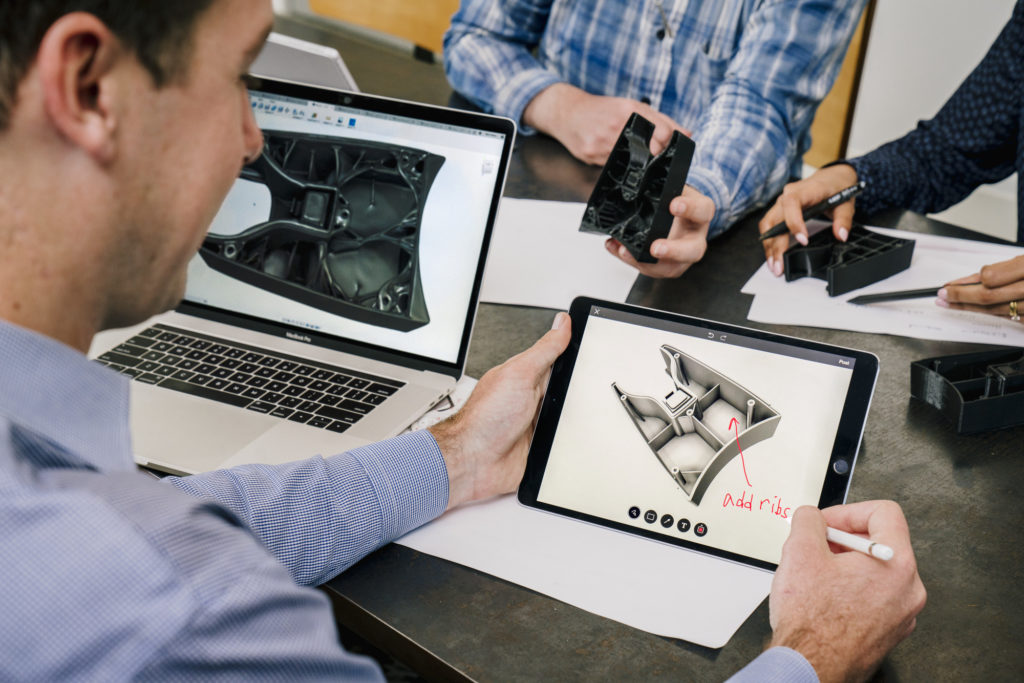
Spotting design weaknesses becomes much easier when people can apply other layers (and tests) to designs in real time. Take stress mapping, for example, where colored topography highlights areas of concern. This is key for products exposed to different stressors like heat, pressure, and torsion.
Today’s designs incorporate a variety of different geometries—complex shapes are the new norm. Unfettered inspection of models allows product designers to inspect every nook and cranny of a design, ensuring each imperfection is identifiable and correct for the next iteration.
3. Ease of use and efficiency
Digital design makes it easy to quickly apply a host of changes to each iteration, which usually involves only a click, selection, or toggle. The improved visualization offered through 3D modeling allows the user to preview these changes from all perspectives, making it easy to verify physical and functional changes and sharpen aesthetics.
While traditional 2D designs are cumbersome and take longer to make, 3D modeling allows the production of newer versions in under 15 minutes (especially with tools like configurations in Autiodesk Fusion). The exceptional user-friendliness of CAD tools like Fusion reduces the software learning curve, keeping teams agile and reducing training time.
4. Unparalleled detail and accuracy
3D models let teams construct any shape imaginable while retaining production capability and help visions come together with relative ease. 3D modeling provides a level of design depth that rough sketches or 2D designs cannot, such as improved control over details.
On the collaboration side, meticulous details make it easier to convey the specifics behind a given design. Design teams are no longer in silos. With tools like Fusion, they can easily communicate with other teams and stakeholders in real time. 3D models also let teams inject more detail, thus helping everyone stay on the same page from idea to production.
Why Autodesk Fusion?
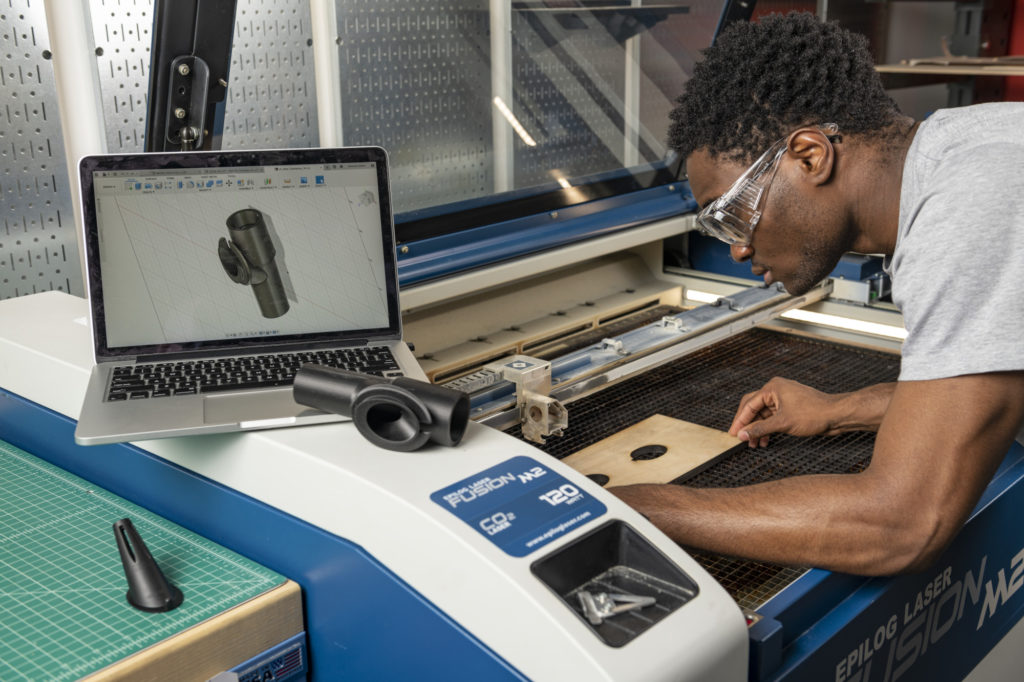
3D tools are inherently modern, and remote work is the hallmark of the modern age. Intuitive, user-friendly solutions like Fusion allow team members to communicate from afar — via real-time collaboration tools like commenting, annotations, and more. Being out of the office doesn’t mean team members have to be out of the loop. Cloud software lets you pump out design after design without being constantly at your desk.
Autodesk Fusion is for professional product designers and hobbyists alike. In addition to standard 3D modeling tools, Fusion offers an extensive list of additional features. These include parametric design, electronics design, generative design, 3D printing capabilities, and more. It also offers a variety of plugins and extensions to make your 3D modeling workflow even more seamless.
Looking for free 3D modeling software? Download a free trial of Fusion today, and check out our vast video tutorial resources for beginners over on our YouTube channel.
Frequently asked questions – 3D design & 3D modeling software
Which 3D design software is best for professional product development?
The best 3D design software for professional product development depends on workflow needs, but most teams look for tools that combine parametric modeling, simulation, and manufacturing readiness.
For many engineering and manufacturing teams, solutions like Autodesk Fusion stand out because they bring design, simulation, and CAM into one environment, reducing tool switching and speeding iteration.
How to choose 3D design software for business use?
When selecting 3D design software for business, focus on how well it supports your end-to-end workflow, not just modeling.
Key factors to evaluate:
–Integration with PDM/PLM and manufacturing systems
–Collaboration capabilities across teams
–Cloud vs on-prem flexibility
Tools like Autodesk Fusion are often chosen because they combine design, engineering, and collaboration in one system, making it easier to standardize workflows across teams.
3D modeling software is used across a wide range of industries that design or manufacture products, including:
-Manufacturing and industrial equipment
-Consumer products and electronics
-Automotive and transportation
-Aerospace and defense
-Architecture and construction
-Medical devices
In these industries, 3D modeling is used not just for design, but also for simulation, validation, and production planning. Tools like Autodesk Fusion are widely used because they support both mechanical design and downstream manufacturing workflows.
Yes, modern 3D design software is built to scale, but only if it supports multi-user collaboration, data management, and process control.
As companies grow, they need:
-Version and revision control
-Structured workflows (review, release, change)
-Cross-team and supplier collaboration
-Integration with ERP and PLM systems
Cloud-connected tools like Autodesk Fusion can scale from individual users to larger teams. This allows companies to grow without rebuilding their toolset.
There are several types of 3D modeling software, each designed for different use cases:
–Parametric CAD: precise, constraint-based design (engineering-focused)
–Direct modeling: flexible geometry editing without constraints
–Surface modeling: complex shapes and industrial design
–Mesh modeling: organic shapes and visualization
–Simulation-driven tools: testing and validation
Most professional product development teams use a combination, but tools like Autodesk Fusion bring multiple modeling approaches into one platform, allowing teams to move between concept design, engineering detail, and manufacturing without switching tools.
Yes, Autodesk Fusion is generally considered beginner‑friendly, but with all tools, there is a learning curve.
–Approachable for beginners: Fusion is designed with a modern, user-friendly interface and guided workflows that help new users start creating models quickly.
–Fast ramp to basics: Many beginners can learn core modeling concepts (sketching, extrude, assemblies) relatively quickly using tutorials and self‑paced resources.
–Gradual complexity: While basic modeling is accessible, mastering advanced features like simulation, generative design, and manufacturing workflows takes more time and practice.
What makes Fusion easier to learn than traditional CAD
–All-in-one workflow: Design, simulation, and manufacturing tools are in one environment, so you’re not learning multiple systems
–Strong learning ecosystem: Extensive tutorials, courses, and community content support self-paced learning
–Visual, parametric modeling approach: Once you understand sketches → features → history timeline, the workflow becomes repeatable and logical