& Construction

Integrated BIM tools, including Revit, AutoCAD, and Civil 3D
& Manufacturing

Professional CAD/CAM tools built on Inventor and AutoCAD
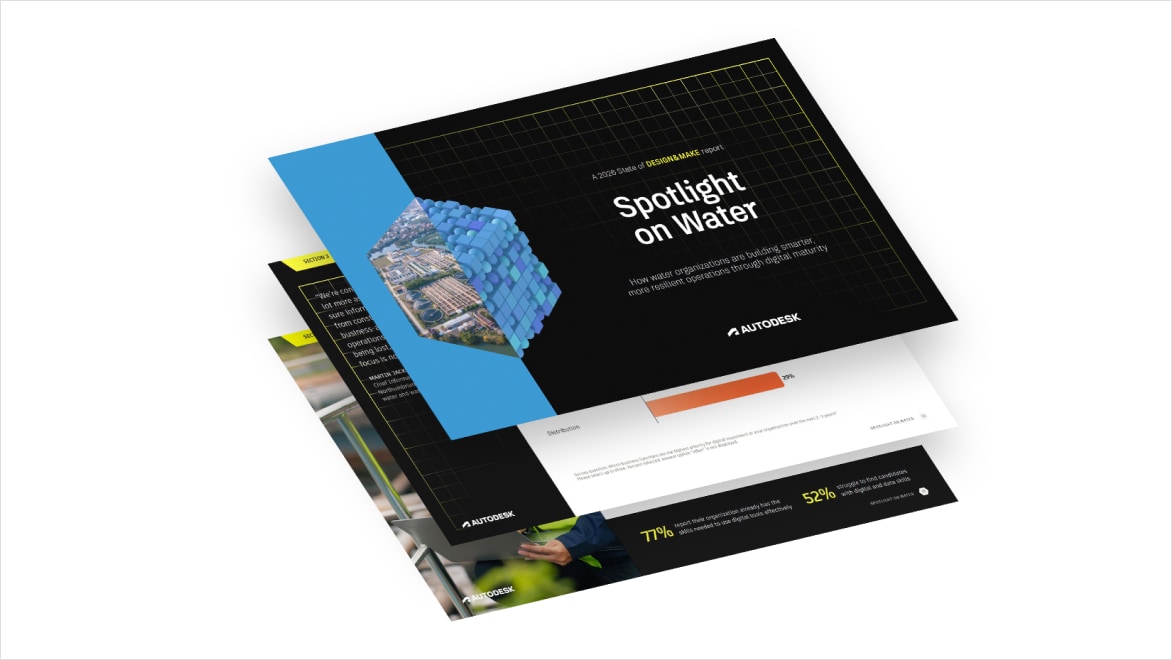
Whether your utility is building a data foundation or moving toward connected, predictive operations, this e-book provides a practical framework for understanding where you are today and what it takes to move forward.
Most water utilities have more data than they can act on because it lives in disconnected systems across planning, operations, and maintenance. Understanding your organization's digital maturity stage gives leadership a clear picture of where the technology gaps are, providing a roadmap to:
At the foundational stage, systems, data, and workflows remain disconnected, limiting visibility and coordination. Utilities focus on digitizing records, structuring data, and standardizing workflows—establishing a reliable foundation for more consistent operations and future integration.
In the emerging stage, digital tools improve insight within teams, but systems remain siloed. Utilities focus on improving data quality and standardizing workflows—enabling more reliable analysis, better coordination, and more consistent decision-making.
At the integrated stage, systems and data connect across teams, creating shared visibility into network performance. Utilities can align decisions, evaluate scenarios faster, and improve coordination—leading to more efficient operations and stronger project outcomes.
At the intelligent stage, utilities use predictive analytics and advanced modeling to support decision-making. Integrated data provides deeper insight into system performance, risk, and future conditions.
This enables teams to anticipate issues, prioritize maintenance more effectively, lowering costs and reducing unplanned failures.
At the adaptive stage, utilities operate in highly connected environments where systems continuously learn and improve. Digital twins, AI-enabled insights, and automated workflows support real-time awareness and response.
Utilities can optimize performance, improve service reliability, and respond faster to changing conditions.
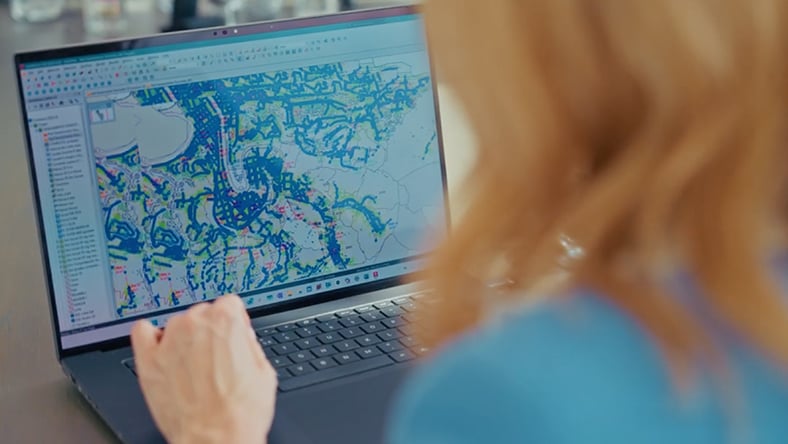
Live hydraulic network modeling is helping SA Water improve system visibility and make faster, more informed decisions—strengthening operational awareness and day-to-day network performance.
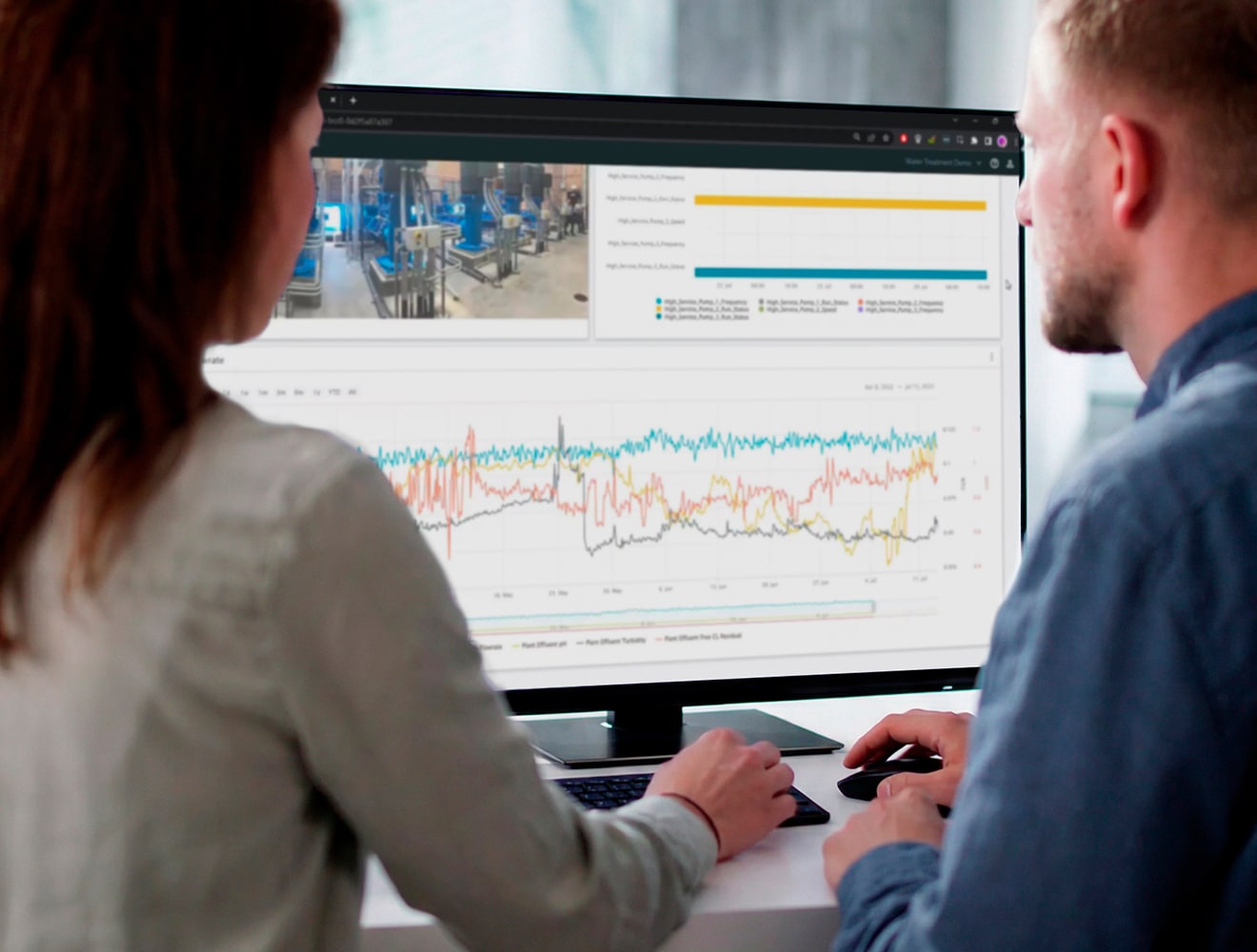
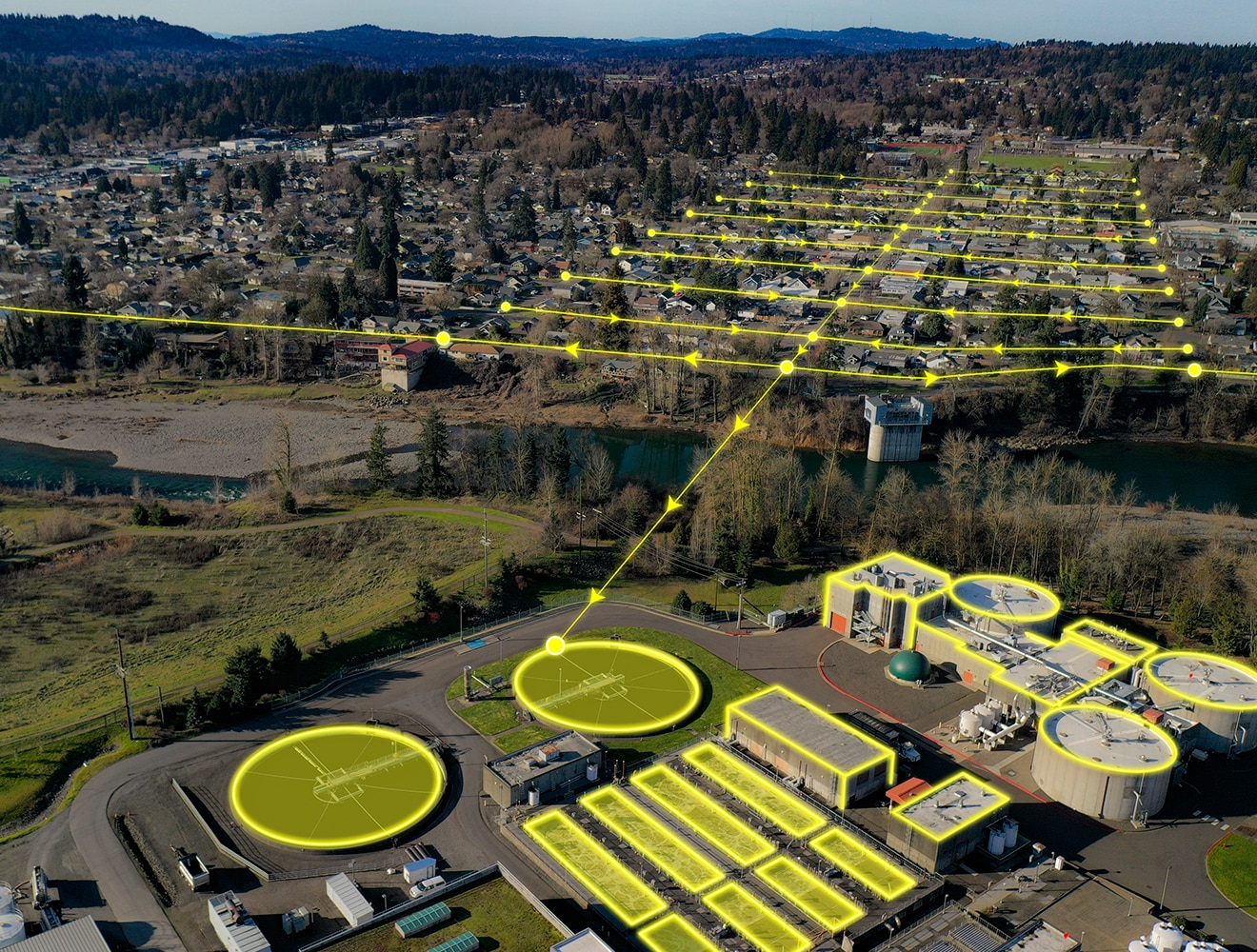
Through its digital twin strategy, Aguas de Alicante connects infrastructure data and hydraulic models to evaluate scenarios, compare outcomes, and improve planning across its water network.
OC San is strengthening wastewater system resilience through cloud-enabled asset management—improving collaboration, long-term system performance, and the reliability of capital planning.
Discover additional Autodesk resources on AI, digital twins, and data-driven water management.
Learn how artificial intelligence and advanced analytics are helping utilities improve forecasting, optimize operations, and strengthen decision-making.
Explore how digital twins connect data, models, and operational systems to provide deeper insight into network performance and infrastructure planning.
See how utilities use data to improve decisions, reduce risk, and build more resilient, efficient water systems.
Speak with an expert to assess your organization’s current digital capabilities and identify practical next steps to strengthen digital maturity across the water lifecycle.