 Kavya Jhingran
Water infrastructure around the world is being asked to perform under conditions it wasn’t designed for. Climate volatility is changing rainfall patterns and flood risk. Population growth is increasing demand. Aging assets are becoming more prone to failure.
These pressures are interconnected, which makes resilience increasingly important. More resilient water systems can help reduce water loss and energy use while limiting the environmental and economic impacts of flooding and infrastructure failure.
At the same time, utilities have access to more data than ever before—data that could help them understand risk, anticipate problems, and make better decisions. But too often, that information is missing, fragmented across systems and teams, or sitting unused in places where the people who need it can’t easily access it.
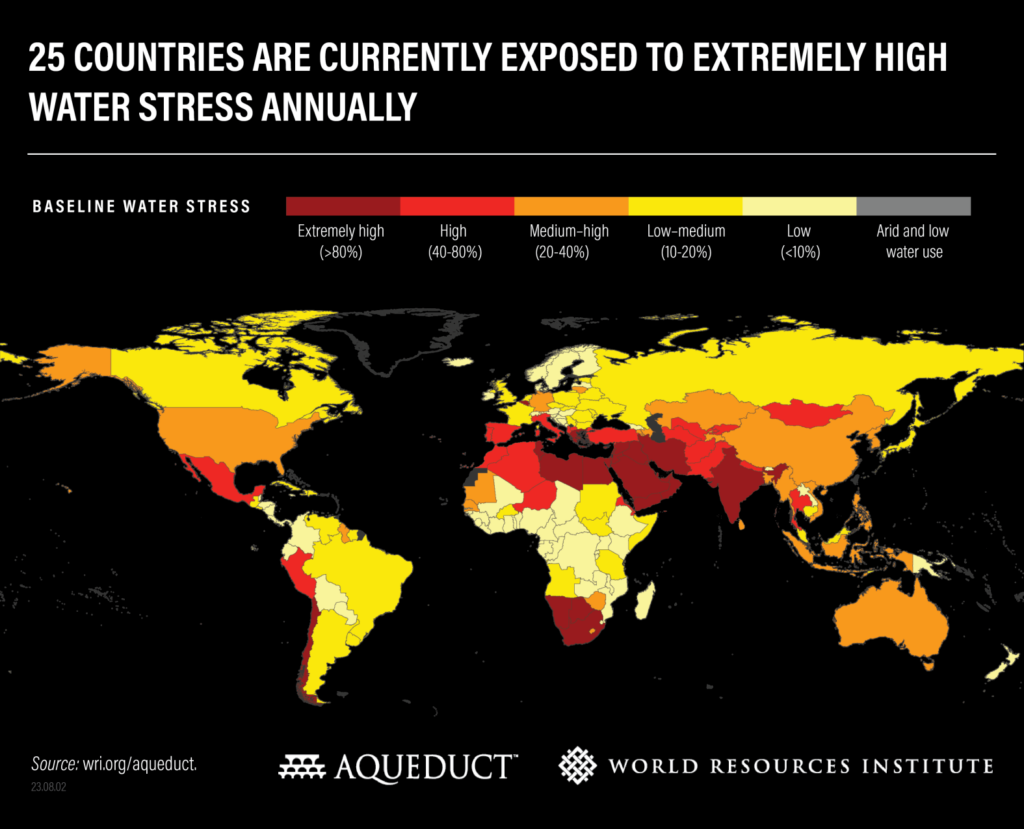
The global water crisis is already here
The World Resources Institute reports that twenty-five countries — housing one-quarter of the global population — face extremely high water stress each year, regularly using up almost their entire available water supply. At least 50% of the world’s population — around 4 billion people — live under highly water-stressed conditions for at least one month of the year.
Climate change is making it worse by altering precipitation patterns, increasing the frequency and severity of both droughts and floods. Coastal flooding and storm surges can cause pollutants and contaminants to enter the water supply, affecting water quality, adding risk to communities already under strain. Research suggests that annual flood losses in major coastal cities could rise from approximately US$6 billion in 2005 to US$52 billion by 2050 due to socioeconomic growth alone. When combined with climate change, sea-level rise, and land subsidence, losses could exceed US$1 trillion per year without significant adaptation measures.
Flooding also touches nearly 2 billion people worldwide, a number that keeps climbing as climate change and increased urbanization compounds each other. The 2022 floods in Pakistan, for instance, caused a significant death toll and affected upwards of 33 million people, causing estimated damages and economic losses US$30 billion.
The pressure isn’t only coming from changing climate. Population growth and rising demand mean that by 2050, 5 billion people could face water shortages.
Dealing with the effects of aging infrastructure
Many of the systems we depend on were never designed to cope with conditions we face today. In the United States, many cities still rely on drinking water and wastewater collection from infrastructure built over 100 years ago. These systems are understandably deteriorating. They were designed without the data needed to anticipate future conditions and without the digital tools now available to monitor performance in real time.
They were built for one version of the future, using the only planning tools available at that time. Rainfall patterns, demand curves, and population figures were treated as fixed inputs rather than as ranges or spectrums – and every one of those ranges has since moved.
The American Society of Civil Engineers estimates approximately 240,000 water-main breaks occur across the United States every year – each one a disruption to businesses, critical services, and communities.
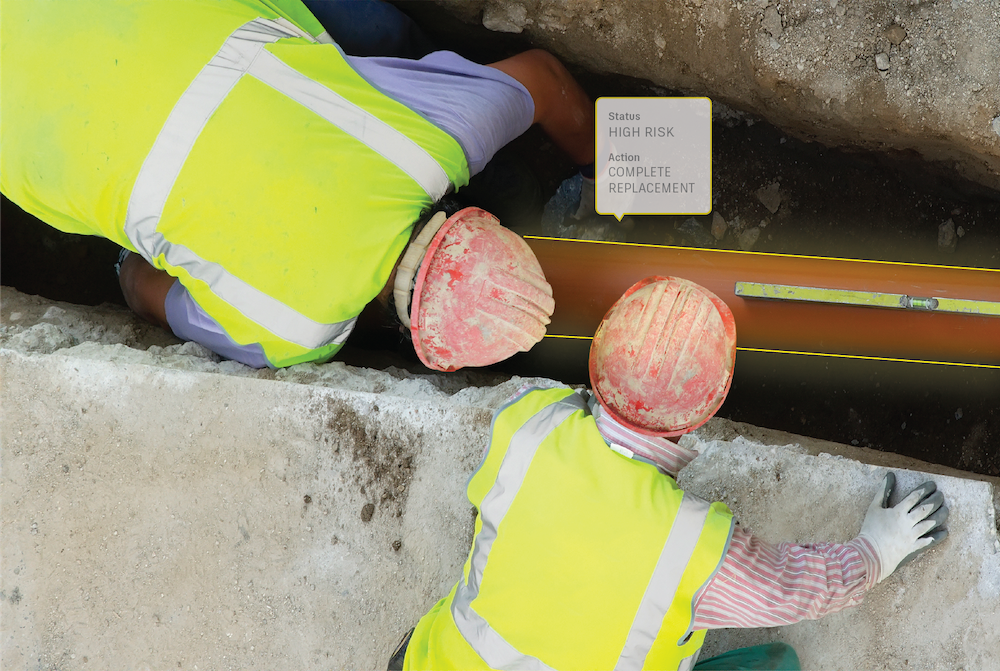
Every gallon lost carries the energy and emissions cost of having treated and pumped it in the first place. Therefore, water loss at this scale isn’t only an operational problem, it’s a sustainability issue.
Beyond water loss from pipes, drainage and sewer systems are also being pushed beyond their design limits. Urban areas, built up with impermeable surfaces – pavements, sidewalks, parking lots – cannot absorb rainfall the way natural landscapes can. Water rushes rapidly into storm drains, often overwhelming them and triggering flooding that damages property and infrastructure.
When sewer systems are overwhelmed, Combined Sewer Overflows (CSOs) release contaminated water and untreated sewage into surrounding waterways, which is a direct risk to public health and local ecosystems – which can result in stiff penalties for utilities.
The well-documented workforce challenge adds another layer of complexity. Water sector professionals who carry institutional knowledge of aging systems are retiring, while new entrants need training, tools, and access to data that legacy infrastructure was never designed to provide.
The true cost of reactive water management
Reactive water management – waiting for a failure before responding – is becoming increasingly harder to justify, both financially and operationally. Every emergency repair costs significantly more than the planned maintenance that could have prevented it.
Regulatory fines for water quality violations, sewer overflows, and missed compliance thresholds add further financial exposure. And beyond the financial, there are reputational consequences for utilities and municipalities when communities lose trust in the safety and reliability of their water systems.
But the cost of running reactively isn’t only measured in dollars. Water treatment itself is energy intensive at every stage, from collection of raw sewage to the discharge of treated effluent, which means every inefficiency in the system is also an emissions problem. This means that every gallon of water lost or inefficiently treated carries an energy and emissions cost that compounds across millions of connections and billions of liters.
One way to solve the CSO problem is to adopt an adaptive management approach powered by the data they collect in their everyday hydraulic modeling, which customers like KC Water have pursued with their Smart Sewer Program. Adaptive management saved them millions of dollars and prevented millions of gallons of sewer overflows and helped them deal with a potentially debilitating consent decree.
Data, digital systems and connected workflows
Most water leaders already know they need to move from reacting to anticipating. It starts with replacing assumptions with data that includes asset condition, system behavior, and how infrastructure will perform under conditions it hasn’t faced yet. In practice, that means layering condition data with maintenance history and operational performance, so a trend shows before it becomes a failure.
Digital technology plays a central role in enabling this shift, empowering water utilities, engineers, and operators to model complex scenarios, monitor systems in real time, make evidence-based investment decisions, and design infrastructure that is built to last.
Autodesk’s approach to water management addresses the full water lifecycle: from flood risk and drainage systems to water distribution and asset management to wastewater treatment and plant operations. The result is an integrated portfolio of tools that help organizations move from siloed, disconnected data toward connected, insight-driven operations, reducing water loss, improving water quality, managing flood risk, and lowering operational costs.
Building resilience across the water lifecycle
1. Plan: Seeing the problem before it arrives
Flood simulations combine rainfall data, terrain, and infrastructure information to show where water will accumulate, how deep, and which buildings will be affected. The same modeling can identify the exact conditions under which sewers will overflow, so mitigation can be tested before any capital is committed. With the right catchment and city modeling approaches, interventions can be sized to real risk rather than assumptions, and overflows can be prevented.
A great example of this kind of proactive approach can be seen in the experience of Scottish Canals, who repurposed their neglected canals to hold vast amounts of stormwater. Their modeling showed 10cm of canal leeway was needed to absorb surface run-off during extreme weather – a number they wouldn’t have had without an accurate simulation.
2. Design: Building for conditions that haven’t arrived yet
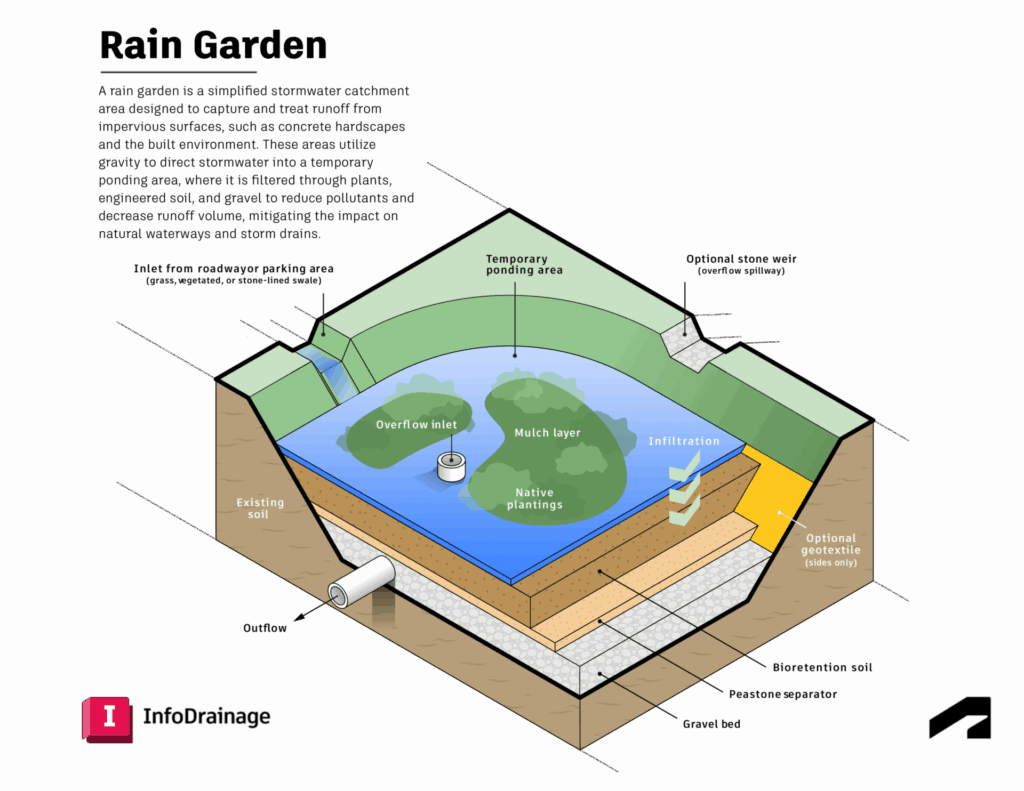
At the site design level, a sustainable drainage (SuDS) approach manages stormwater close to where rain falls, mimicking natural processes so water filters through soil and stone rather than overwhelming storm drains. Designs can be optimized for land use, performance, and environmental impact, with compliance evidence generated alongside working models.
The result is reduced flood risk and cleaner water reaching rivers and streams – plus biodiversity, urban cooling, and groundwater recharge from the same infrastructure. These are sustainability outcomes that drainage design delivers directly, without a separate initiative to achieve them.
3. Build: Keeping the model intact
Most US water infrastructure work isn’t new construction. It’s fixing systems that are already decades old. So, the real question at this stage isn’t how to build something new. It’s how to stop rebuilding the same model twice, once in design and again when the project moves forward.
AECOM’s UK drainage teams solved this by treating InfoDrainage and Civil 3D as one workflow rather than two separate handoffs, starting wherever the design already lived and carrying it forward from there. Their engineers describe it less as a feature and more as a habit: build the system as one connected model, check it early, and keep iterating instead of waiting until the end to find problems.
4. Operate and Maintain: Closing the gap between what’s happening and what you know
Real-time data and hydraulic modeling can pinpoint leaks, which is the largest source of non-revenue water – treated water that never reaches a customer. GIS-equipped sensors can locate faults precisely. Cloud-powered hydraulic models built on captured conditions can identify which assets need attention first. Treatment plants can track performance, energy impact, operational carbon, and chemical use in one place.
The result? Less water gets lost, pumping energy and emissions drop, and repair spending follows evidence rather than whatever failed most recently.
Water utilities like North Carolina’s Davidson Water do this especially well. They use InfoWater Pro to model surge behavior and to support their pipe replacement decisions, which has resulted in a 36% drop in leakage over 10 years.
Adopting this data-driven approach
Ideally, each phase generates data the next one needs. Design assumptions can reach the operators who live within the system every day. Operational reality can feed into the next planning cycle. And most importantly: data can move between these phases, instead of sitting in silos held by different teams using different tools, connected only in the memories of a few long-serving staff. When they retire, that institutional knowledge goes with them.
The transition from reactive to resilient water management is not a single step. It’s a journey, and every organization starts from a different place.
A resilient water sector anticipates rather than reacts and optimizes rather than improvises. It’s a sector where a new engineer joining a utility has access to the same quality of data and insight as the most experienced person on the team. Where a decision about capital investment is informed by real system performance instead of guesswork. And where communities can trust that the water flowing from their taps is safe, reliable, and managed with the future in mind.
Autodesk’s tools are designed to meet water professionals where they are and support them at every stage of their digital maturity journey. Understand where you are today and how we can support you in your journey.
Explore Autodesk Solutions for Water.