 Roi Otero
Addressing India’s water challenges requires a better understanding of how water moves through urban networks, which is where tools like hydraulic modeling and water distribution system analysis play a critical role. These tools can help municipalities understand and reduce non-revenue water.

“Reducing Non-Revenue Water in Urban Utilities”
A system under pressure
The World Bank estimates that India’s urban population will reach around 600 million by 2036 (about 40% of the population). As a result of this rapid urbanization, water systems are expanding to keep up with demand, but many are already under strain and much of the water they produce is still lost within the network. Much of the existing pipe network is already past its design life, and even when new infrastructure is added, service remains inconsistent.
At the center of this challenge is a persistent issue: a large share of treated water never reaches a paying customer.
This is what utilities call non-revenue water, or NRW. It includes leaks in pipelines, illegal connections, and gaps in metering or billing. On paper, it looks like a loss metric, but in practice, it acts as a signal. It reflects how well a system is built, how it is operated, and how decisions are made. In practice, reducing non-revenue water (NRW) depends on combining field data with hydraulic network models to identify losses, optimize pressure, and improve system performance.
A new joint white paper from Autodesk and Tata Consulting Engineers (TCE) explores the scale of this issue and outlines a strategic framework for addressing it through engineering best practices and digital innovation. TCE brings deep, local expertise in how water systems are designed and operated across India, while Autodesk brings experience in applying data, advanced modeling and analytics, including hydraulic modeling, digital twins, and data-driven water network analysis to better understand and manage system performance.
More than water loss
In many Indian cities, NRW levels remain significantly higher than global benchmarks. The data is clear:
- Many Indian utilities experience NRW levels between 35% and 60%, with studies showing that in some systems losses can reach 50–60% of treated water.
- The national average is often cited in the 35–40% range, with government benchmarking studies reporting urban NRW levels of around 44%.
- Globally, well-performing utilities typically maintain NRW below 15–20%, with leading cities like Tokyo, Singapore or Berlin achieving single-digit levels.
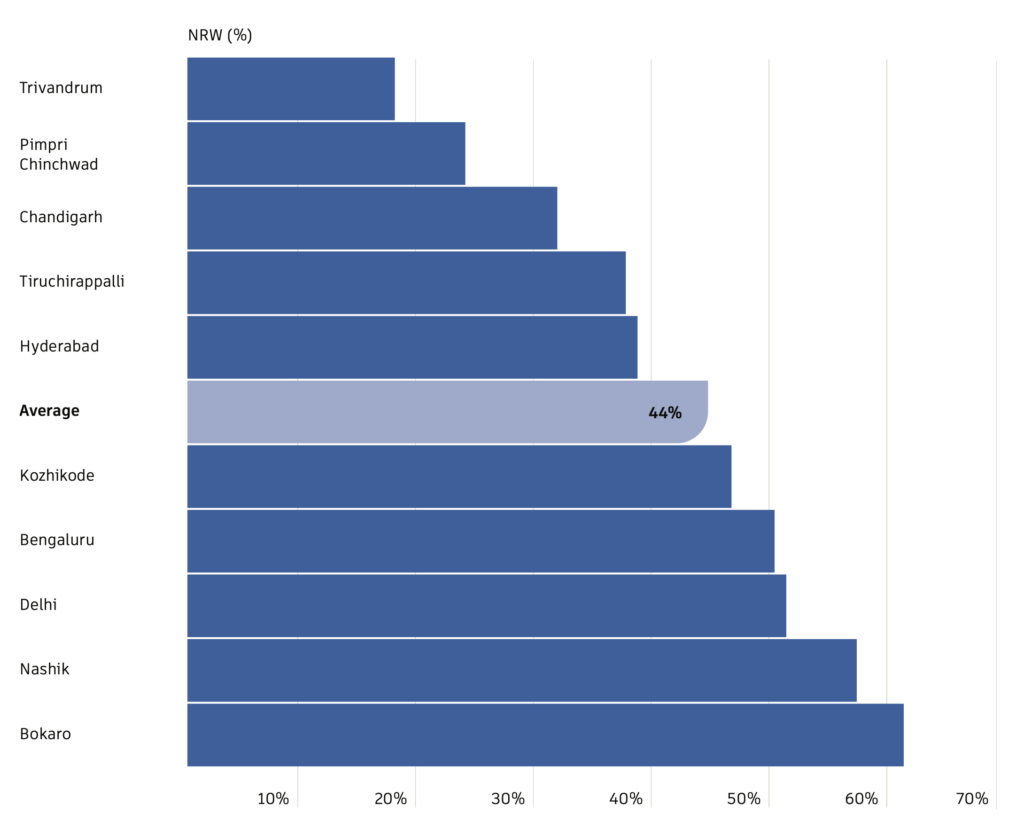
Non‑revenue water in major Indian cities. Source: ResearchGate.
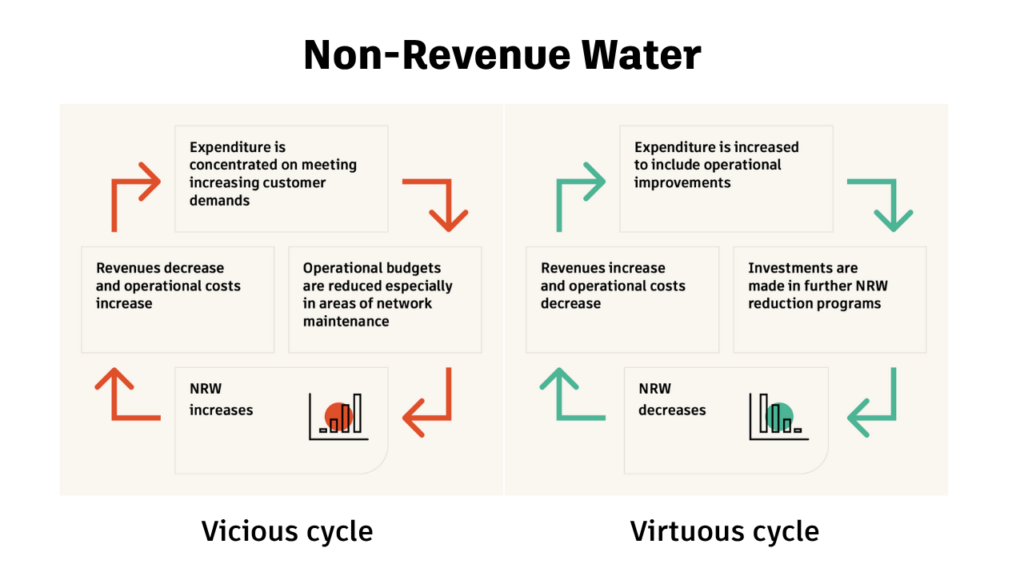
Over time, that gap begins to affect every part of the system, as maintenance gets delayed, networks deteriorate more quickly, and service becomes less reliable for the people who depend on it.
The impacts are not just operational; there are also public health and economic considerations that are hard to measure and that are often underplayed. When supply is intermittent or pressure drops, the risk of contamination increases, and households often turn to storage or alternative sources. In lower-income areas, the impact is sharper, as water becomes less predictable and often more expensive.
Why adding supply is not enough
It is easy to assume that the solution is to build more, whether that means developing new supply schemes, expanding treatment capacity, or extending the network further. But if the system is already losing a large share of what it produces, additional supply or a larger network simply increases the volume moving through the same weak points. Without hydraulic analysis and system-wide visibility, utilities risk scaling inefficiencies instead of solving them.
The white paper illustrates this in a practical way. In a city producing 1,000 Megaliters per day (MLD), reducing NRW by 10 percent can recover 100 MLD, which is enough to supply over 600,000 people without developing a new source.
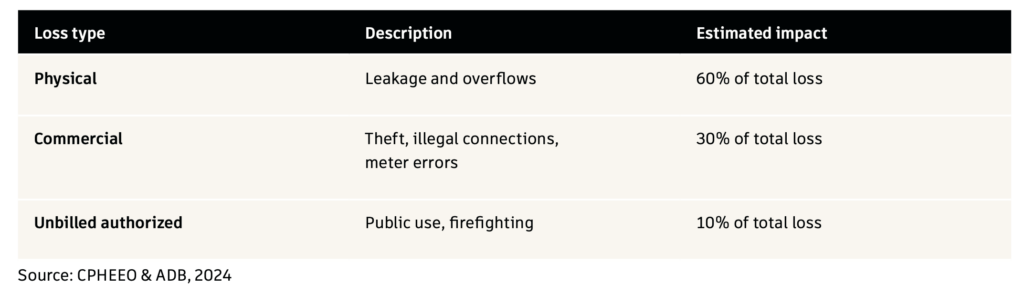
The challenge is that NRW does not come from a single cause but instead builds up over time through a mix of physical, commercial, and operational gaps. Pipes leak, meters fail, and data often sits in disconnected systems. As a result, field crews are left responding to issues after they surface rather than preventing them proactively.
Individual events on their own can be manageable, but together they make the system harder to understand and even harder to improve. This complexity explains why isolated fixes tend to fall short, and why addressing NRW requires a more connected view of how the system operates.
The role of hydraulic modeling in reducing non-revenue water
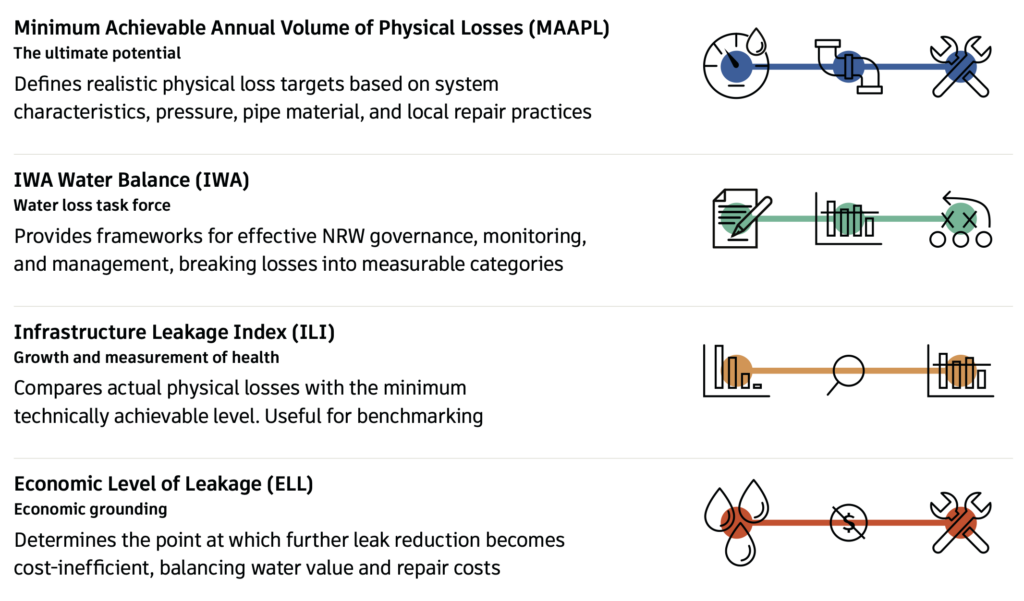
Utilities making progress on NRW are not relying on one tool alone; they are connecting different sources of data together.
Hydraulic models provide the foundation by simulating how water moves through the network and identifying where water losses are likely to occur across the water distribution system. This type of hydraulic modeling is also often combined with GIS, SCADA, and asset data to create a more complete digital representation of the network; when combined, they provide a clearer view of system performance.
When these systems are connected, they begin to function less like separate tools and more like a single operating, highly responsive environment. In more advanced cases, this evolves into a digital twin of the water system, enabling continuous monitoring, scenario simulation, and predictive decision-making.
In practical terms, this means utilities can see what is happening in the network as it happens – and simulate what could happen next. That level of visibility changes how work gets done across the organization.
Instead of reacting to bursts or complaints, teams can identify pressure zones that are likely to fail. Instead of guessing where to invest, planners can prioritize areas with the highest loss or risk. Data shifts from being reviewed after the fact to actively inform daily operations.
Crucially, as data becomes more reliable, decisions become easier to explain, which matters for utilities that need to justify investments, meet regulatory targets, or build trust with the communities they serve.
Making progress in a system that must keep running
This kind of transformation does not happen overnight. Most utilities are working within live systems that cannot pause for large-scale change, so progress tends to start with a few practical steps. That might mean building a reliable hydraulic model, improving asset visibility, or strengthening metering in key areas. This is often the first step toward more advanced capabilities like pressure management, leak detection, and real-time hydraulic simulation. From there, capabilities expand over time as data quality improves and teams become more comfortable working in a more connected way.
As that foundation takes shape, the conversation begins to shift. Attention turns to improving how the system performs as a whole; how assets are maintained, how data is used, and how decisions are made across both planning and operations. It also changes how success is measured. Lower NRW is one outcome, but it is closely tied to broader improvements in service reliability, cost recovery, energy use, and public confidence.
None of this happens in isolation. Reducing NRW requires coordination across government agencies that set policy and funding structures, utilities that manage day-to-day operations, and engineering consultants and technology providers that support implementation. When these roles are aligned, progress becomes more consistent. When they are not, even well-designed programs lose momentum.
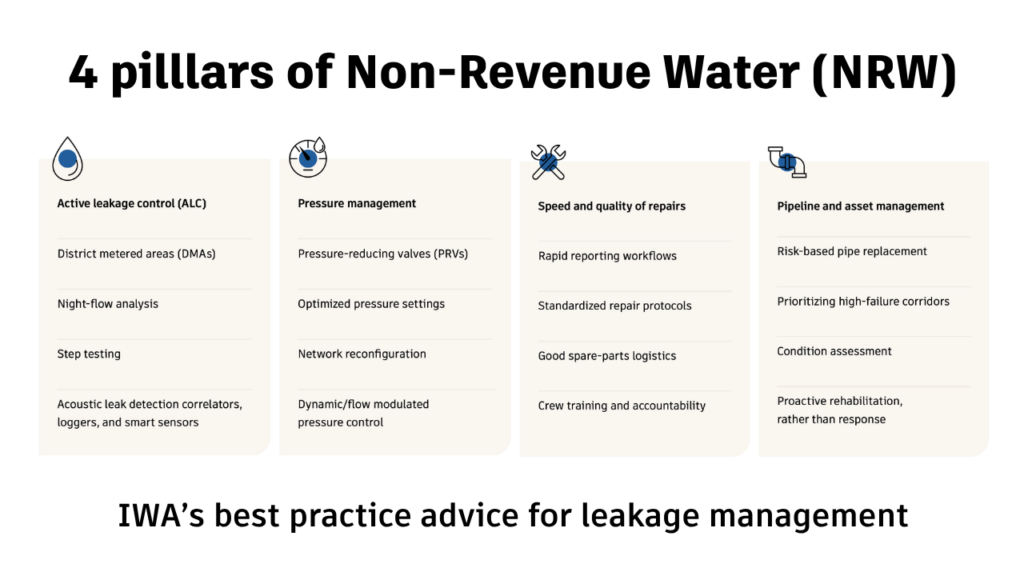
This shift is becoming more urgent. Urban populations are growing, water demand is rising, and expectations around service quality are increasing while national programs are pushing for better coverage and performance. Utilities are being asked to do more with the systems they already have, which makes issues like NRW harder to ignore.
What is changing is not the problem, but the ability to address it. Tools and approaches to connect processes and people are now more accessible and better understood. The question is less whether NRW can be reduced, and more how quickly utilities can move toward a more holistic, performance-driven model.
The white paper brings this into focus by connecting policy, engineering practice, and digital workflows in a way that reflects how utilities operate. It does not frame NRW as a single issue – but as a system challenge that requires a coordinated response.
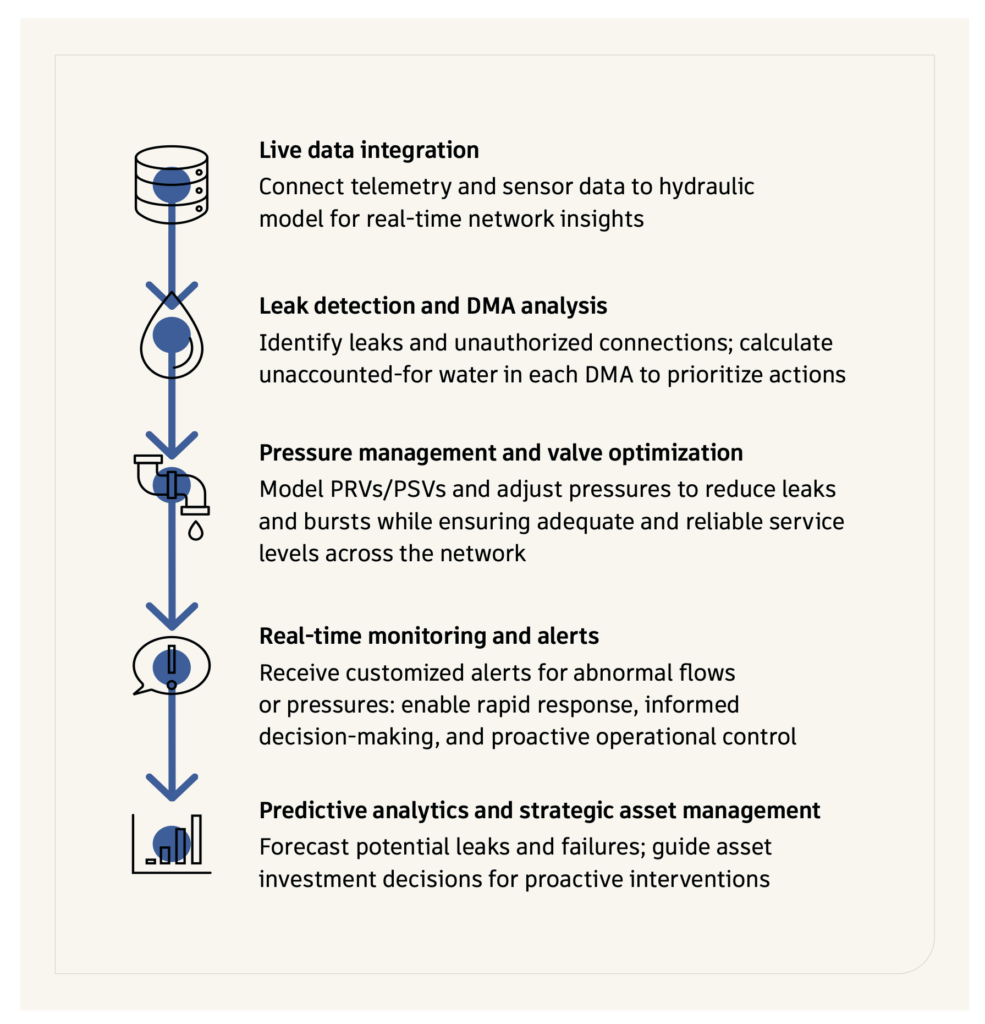
The report recommends proactive non‑revenue water management strategies.
Keep more of the water you already have
At its core, the message is simple: the most immediate source of new water is often the water you are already producing. The real question is how much of it you can keep.
Explore how utilities are reducing non-revenue water through hydraulic modeling, data integration, and practical engineering strategies by downloading the full white paper: Reducing Non-Revenue Water in Urban Utilities: A Strategic Framework for Efficiency, Equity, and Sustainability.