 Shannon McGarry
Explore how the Cost of Poor Quality (COPQ) affects manufacturing operations, how to calculate COPQ, and how tools like Autodesk Vault and Fusion Manage can help reduce it by integrating quality control into the entire product lifecycle.
In a highly competitive market, manufacturers feel the pressure to deliver reliable, defect-free products. However, despite technological advances and robust process controls, quality issues continue to erode margins and damage reputations. An important concept in quantifying these losses is the cost of poor quality (COPQ), a metric that has gained renewed attention in recent years. By identifying, calculating, and addressing COPQ, manufacturers can move from reactive to proactive quality management and drive long-term operational improvement.
What is the cost of poor quality (COPQ)?
The Cost of Poor Quality (COPQ) represents the total financial impact a manufacturing organization incurs due to producing defective or substandard products. It includes all costs related to rework, scrap, warranty claims, customer returns, lost sales, and inefficiencies caused by quality failures. Understanding COPQ is essential for recognizing how quality issues directly affect profitability and operational efficiency.
Categories of COPQ
- Internal failure costs: Expenses related to fixing defects before products reach customers—such as rework, scrap, and downtime.
- External failure costs: Costs incurred when defective products are delivered to customers—like warranty repairs, product recalls, and customer dissatisfaction.
- Prevention and appraisal costs: Investments in quality planning, training, inspections, and testing aimed at reducing failures, which are considered proactive quality expenditures but also impact overall COPQ.
Why COPQ matters
Understanding COPQ helps organizations identify inefficiencies, reduce waste, and improve profitability. It also supports strategic decisions on investing in quality improvements, automation, and process control to avoid costly defects and maintain competitive advantage.wikipedia+1
Simply put, COPQ quantifies the hidden and visible financial impacts resulting from production flaws, linking quality directly to business performance and long-term success.
Quantifying the true cost of poor quality in manufacturing
COPQ is generally broken into four categories: internal failures, external failures, appraisal costs, and prevention costs. While the latter two categories are considered investments in maintaining quality, it’s the internal and external failure costs (i.e., scrap, rework, warranty claims, and returns) that comprise the most visible and damaging aspects of COPQ.
Internal failure costs emerge before a product reaches the customer, such as when defects are identified during in-house inspections. These costs often include labor, material, and machine time wasted on defective parts. External failure costs are more severe and reputationally damaging, occurring when flawed products reach the end user. These can include warranty repairs, product recalls, legal liability, and the erosion of brand trust.

Calculating the cost of poor quality (COPQ)
Calculating COPQ requires rigorous data collection from multiple areas of production, quality control, and service. Manufacturers typically assess defect rates, yield losses, rework hours, and warranty claims, converting each into monetary terms. The cumulative value gives leadership a clearer understanding of how much revenue is being lost due to substandard quality. In mature operations, COPQ can account for as much as 15–20% of total sales.
Beyond financial losses, COPQ reduces operational efficiency and extends lead times. Engineering teams are often pulled away from new product development to investigate root causes and redesign flawed components. This creates a feedback loop where poor quality diminishes future competitiveness. Therefore, COPQ is considered to reflect the health of the entire production ecosystem.
Calculating COPQ involves summing all quality-related costs associated with poor-quality products. The formula can be simplified as:COPQ=Internal Failure Costs+External Failure CostsCOPQ=Internal Failure Costs+External Failure Costs
For example, if a production batch of 1 million units includes 4% defective products, each costing $50 to produce, the direct cost of poor quality is:40,000×50=2,000,000 USD40,000×50=2,000,000 USD
Adding inspection costs (e.g., $5 per unit for inspection) results in additional $200,000, making the total COPQ $2.2 million.
This calculation helps visualize the substantial financial impact of quality failures and underscores the need for effective quality control systems.
Hidden and long-term impacts of COPQ
The hidden and long-term impacts of Cost of Poor Quality (COPQ) extend far beyond immediate financial losses, deeply affecting operations and strategic capabilities. Increased lead times and production delays occur as defective products require rework, inspections, and additional quality checks, slowing throughput and disrupting supply chains.
Customer dissatisfaction arises when poor-quality products reach end users, eroding brand loyalty and trust—damage that can take years to repair. Engineering and quality assurance resources also get diverted from innovation and new product development toward investigating defects and implementing corrective actions, which inhibits business growth.
In addition, lapses in quality raise the risk of regulatory fines and compliance issues, leading to costly audits and legal liabilities. These hidden costs cumulatively drain working capital and undermine a manufacturer’s competitive position, making early detection and proactive quality management essential for sustainable profitability and resilience.
Strategies to reduce COPQ
Minimizing the cost of poor quality requires a proactive and data-driven approach. Effective strategies include:
- Implementing robust quality management systems (QMS) to monitor and control processes.
- Utilizing integrated PLM tools like Autodesk Vault and Fusion Manage to enhance data accuracy and traceability.
- Investing in employee training and continuous education on quality standards and best practices.
- Adopting preventive maintenance and process improvements to reduce defects before they occur.
- Leveraging automated inspection and analytics to detect issues early and reduce internal and external failures.
Reducing COPQ not only improves product quality but also strengthens an organization’s market position and profitability.
Leveraging Autodesk Vault and Fusion Manage
To meaningfully reduce COPQ, manufacturers must integrate quality management with broader product lifecycle oversight. This is where PLM systems, such as Autodesk Vault Professional and Fusion Manage, deliver value.
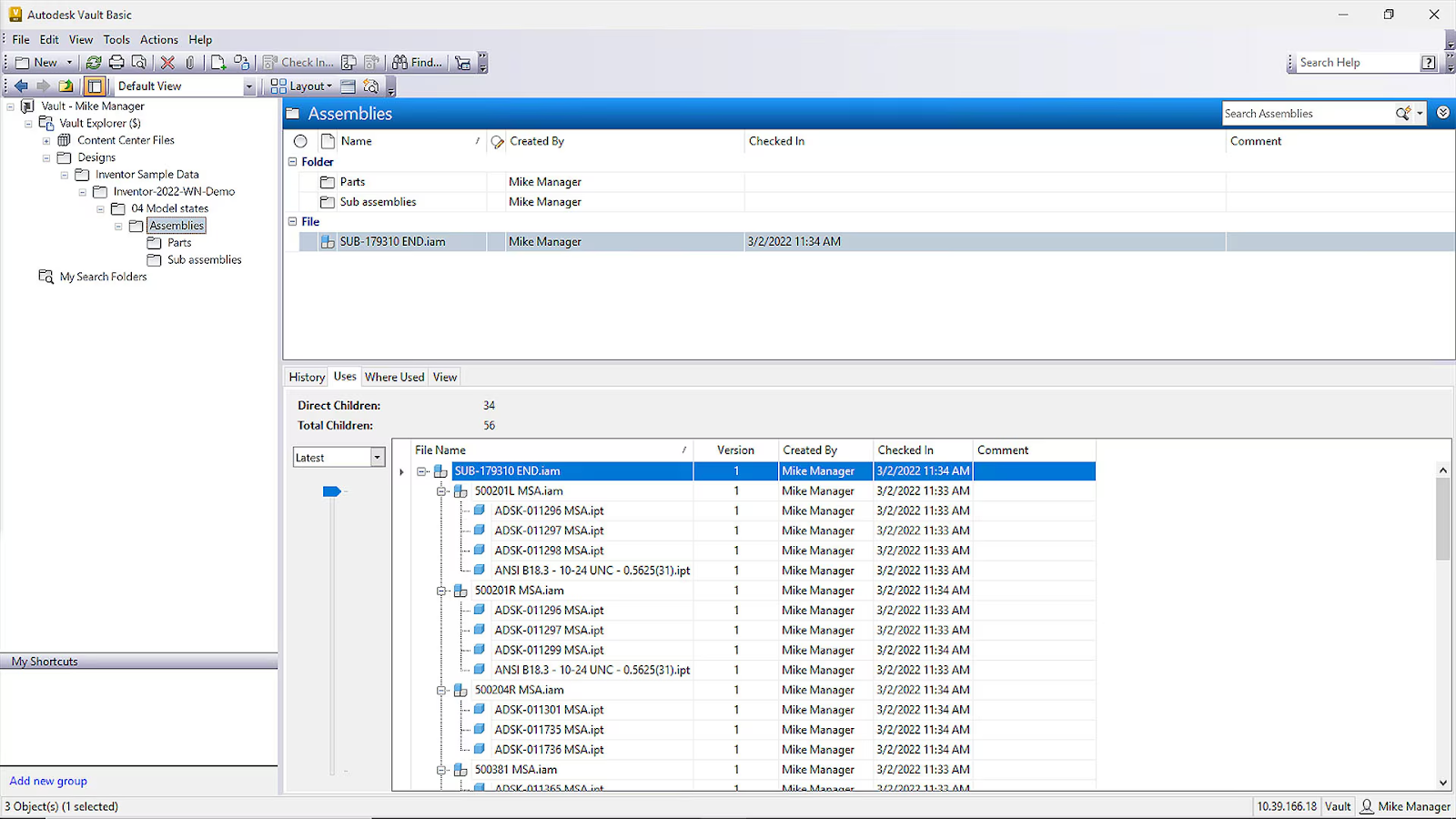
Optimize Data Management with Autodesk Vault
Secure, organize, and manage your engineering data efficiently.

Autodesk Vault improves collaboration and standardization by managing CAD data with precision. When changes occur in a design file, Vault automatically tracks revisions. This maintains a single source of truth and prevent versioning conflicts. In this way, only verified and approved designs are released for manufacturing. As a result, internal failure costs associated with outdated or incorrect drawings are minimized. Vault also integrates change order processes directly into engineering workflows. Teams can capture the full history of modifications, including who made them, why, and when. This structured change management helps identify and mitigate the root causes of recurring quality issues.
Fusion Manage extends quality control beyond the design environment into broader PLM territory by offering robust workflows for quality events, including non-conformances, corrective and preventive actions (CAPAs), and audits. This cloud-based system allows organizations to respond quickly to quality events, assign ownership, track resolution progress, and document in real-time. Fusion Manage also connects quality data with bill of materials (BOM) information so that companies can trace defects back to specific components, suppliers, or manufacturing processes. Traceability to this extent helps identify systemic issues and prevent them from repeating across future product iterations.
Autodesk Fusion Manage: Connect People, Processes, and Data
Streamline workflows, enhance collaboration, and gain real-time visibility with PLM.
By using these tools together to capture and analyze quality data, manufacturers can reduce COPQ and build a foundation for sustained operational excellence.
Staying competitive with quality resilience
The cost of poor quality is a metric that extends far beyond simple production errors. Rather, it touches every aspect of manufacturing, from financial performance to customer loyalty and brand equity. By understanding its sources and implementing strategies to mitigate it, manufacturers can improve profitability and resilience. PLM systems like Vault and Fusion Manage offer powerful frameworks for integrating quality management across the product lifecycle.
Cost of poor quality – frequently asked questions
The cost of poor quality (COPQ) represents the total financial impact of producing defective or substandard products. It includes costs such as scrap, rework, warranty claims, customer returns, and inefficiencies caused by quality failures.
Tracking COPQ helps manufacturers understand how quality issues directly affect profitability, productivity, and customer satisfaction. It highlights inefficiencies and supports better decisions about investing in prevention and process improvement.
COPQ is typically broken into four categories: internal failure costs, external failure costs, appraisal costs, and prevention costs. Internal and external failures represent the most visible and damaging quality costs.
Internal failure costs occur when defects are identified before products reach customers. These include scrap, rework, production downtime, and labor spent correcting quality issues during manufacturing.
External failure costs arise when defective products reach customers. These costs include warranty claims, product returns, recalls, and the long‑term impact on customer trust and brand reputation.
Appraisal and prevention costs are investments made to detect and prevent defects, such as inspections, testing, training, and quality planning. While they add cost, they help reduce higher failure‑related costs over time.
COPQ erodes margins by increasing material waste, labor costs, and operational inefficiencies. Many of these costs remain hidden, making it difficult for manufacturers to see how quality problems affect overall business performance.
Manufacturers calculate COPQ by identifying and quantifying costs across internal failures, external failures, appraisal, and prevention activities. This approach helps connect quality metrics to financial outcomes.
Digital tools help reduce COPQ by integrating quality data across the product lifecycle, improving traceability, and enabling earlier detection of quality issues before they become costly failures.
Autodesk Vault and Fusion Manage help reduce COPQ by managing design data, changes, and quality processes in a connected environment. This improves traceability, change control, and visibility across engineering, manufacturing, and quality teams.