 Shannon McGarry
The digital factory is changing manufacturing by making processes more agile, scalable, and resilient through real-time data, automation, and integrated design tools like AutoCAD, Inventor, and Factory Design Utilities.
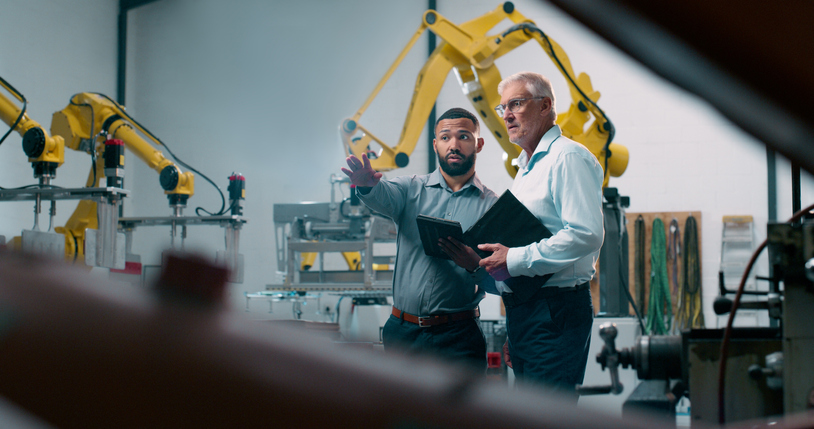
The digital factory is creating a significant shift in manufacturing. Advanced technologies and innovative software platforms have transformed traditional, rigid processes into agile, data-driven, and resilient processes. Leading this transformation are powerful Autodesk tools—AutoCAD, Inventor, and Autodesk Factory Design Utilities—which help manufacturers fully harness the potential of digital factories.
What is a digital factory?
A digital factory is an ecosystem where physical machines, sensors, and humans work together with digital system, including cloud computing, software, real-time analytics, and integrated design. Unlike traditional manufacturing, every process is monitored, optimized, and adaptable through technologies such as digital twins, IoT, and artificial intelligence. This digital representation allows manufacturers to design, build, manage, and optimize their facilities more efficiently, enabling simulations of what-if scenarios to identify improvement opportunities in the manufacturing environment.
Four ways the digital factory is disrupting manufacturing
1. Agility: In traditional manufacturing, dealing with sudden changes—like new product variations, supply issues, or customer customization requests—means complicated retooling and long wait times. Digital factories help address this with:
- Software-driven setups: Automated configuration of production lines.
- Rapid prototyping: Virtual testing and simulation of new products or workflows.
- Collaboration: Real-time visualization lets engineers, managers, and operators align quickly.
This translates into faster time-to-market and the ability to handle last minute changes with minimal downtime.
2. Quality: Conventional quality processes rely on manual inspection, which is slow and prone to error. Digital factories use:
- Automated inspection: Sensors and computer vision catch defects at the micro-level.
- Data-driven adjustments: Continuous real-time feedback loops improve yields.
- Predictive analytics: Anticipate quality issues before they happen.
As a result, defects decrease and consistent quality becomes standard, not an aspiration.
3. Scalability: Scaling a traditional factory means physical expansion—a risky and cost-prohibitive endeavor. Digital factories use:
- Modular software: Lines can be reprogrammed for different products or volumes.
- Flexible automation: Robots, conveyors, and material handling systems adapt to fluctuating demand.
- Cloud-based systems: Instantly add capacity, synchronize multiple sites, and oversee operations remotely.
Whether ramping up or down, manufacturers can match capacity to market needs with ease.
4. Resilience: Disruptions, including supplier shutdown or demand volatility can cripple traditional production. The digital factory responds with:
- Digital traceability: Full visibility into every part, supplier, and process stage.
- Simulation and scenario planning: Model responses to disruptions before they hit.
- Remote access: Teams diagnose, resolve, and optimize from anywhere.
Resilience is no longer reactive. Digital tools are here to help you be proactive when you face challenges.
How AutoCAD, Inventor, and Autodesk Factory Design Utilities enable the digital factory
The fully realize the benefits of the digital factory, manufacturers need versatile platforms that unify design, process simulation, and factory layout across departments.
AutoCAD for precise 2D planning
AutoCAD remains central for creating detailed 2D floor plans, schematic diagrams, and documentation. In the digital factory, its role expands:
- Integrating with the cloud: Share drawings instantly with engineering, maintenance, and operations.
- Faster modifications: Update layouts instantly to reflect line changes, safety improvements, or equipment additions.
- Digital records: All plans are centralized, searchable, and have version control.
Optimize Data Management with Autodesk Vault
Secure, organize, and manage your engineering data efficiently.
Inventor for flexible 3D modeling for products and equipment
Inventor excels at creating accurate 3D models of machinery, components, and systems. In a digital factory context:
- Digital twins: Create virtual representations of equipment for simulation and predictive maintenance.
- Iterative design: Test new products or process setups in a digital environment before buying hardware.
- Interoperability: Export models to other simulation and visualization tools, for better collaboration across teams.

Autodesk Factory Design Utilities for end-to-end factory visualization and optimization
Factory Design Utilities has specialized tools for factory layout, material flow, and scenario planning.
- 3D factory layout: Build a virtual copy of your shop floor, placing machinery, conveyors, and workstations to optimize flow.
- Collision and process simulation: Identify bottlenecks, spacing issues, and safety risks before physical changes.
- Rapid change management: Easily swap equipment, restructure lines, or add automation modules to respond to business needs.
By linking design, engineering, and operations, these Autodesk solutions support every stage of the digital factory journey.
A real-world digital factory using Autodesk solutions
Imagine a manufacturer needing to add a new product to their line within days. Using AutoCAD, engineers quickly update floor plans for new workstations and flow paths. With Inventor, they model new fixtures and robotic handlers, running stress tests and performance checks digitally. Then, utilizing Factory Design Utilities, they simulate the entire reconfigured production line in 3D—evaluating throughput, safety, and logistics. Instant feedback loops across teams ensure that physical changes are implemented with full confidence in the outcome, minimizing interruption and guaranteeing quality.
Why it’s important to consider the digital factory today
Manufacturing agility needs seamless integration between software and hardware—something AutoCAD, Inventor, and Factory Design Utilities excel at. Quality improves through automated, real-time inspections and digital models of every product and tool. Scalability becomes feasible with software layouts and workflows that adapt instantly to new business demands. Resilience is improved through digital traceability and the ability to foresee and prevent disruptions via simulation. Manufacturers using these Autodesk solutions break down silos, drive innovation, and stay competitive in a rapidly changing market. The digital factory isn’t just a technological upgrade—it’s a complete rethink of how manufacturing should be designed, operated, and continuously improved. The future of manufacturing is here. With the right digital foundation and integrated design tools, achieving agility, quality, and scalability is clearer—and more doable—than ever.