 Guy Buttle
Struggling with revisions, programming bottlenecks, and disconnected software? Discover how connected manufacturing workflows help increase productivity and deliver parts faster.

Elevate your design and manufacturing processes with Autodesk Fusion
For many manufacturers, the biggest threat to productivity isn’t on the shop floor. It’s in the office.
It’s the programmer waiting for an updated CAD model. The engineer emailing design revisions. The operator asking whether they’re running the correct setup sheet. The quality team tracking down the latest drawing. The production manager trying to understand why a job that should have started yesterday is still waiting.
Productivity improvements often focus on machines, tooling, and equipment. While those investments matter, shops often overlook the hidden costs created by disconnected people, disconnected software, and disconnected data. Over time, these costs can be far greater than a few minutes of machine downtime.
The impact is larger than many organizations realize. A Forrester study found that employees working in environments with data silos spend more than a quarter of their day searching for information, while inefficient data management processes can contribute to a 24% drop in productivity.
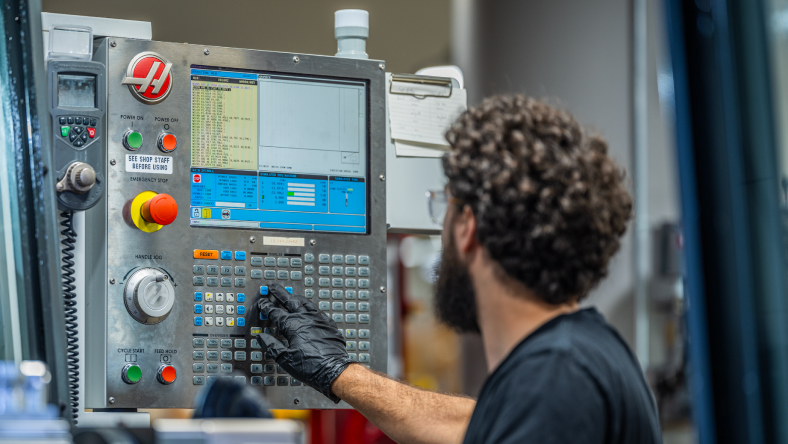
The real bottleneck isn’t your machines
You have capable equipment. You have skilled programmers. Experienced machinists. Proven processes.
Yet some jobs still get delayed. Why?
Information doesn’t always move as efficiently as the machines themselves.
📥 A customer sends a revised model.
📂 Someone downloads the new file.
⚙️ Someone else updates the setup.
🛠️ The CAM program needs to be checked.
✅ The inspection plan needs to be reviewed.
📄 The operator needs the latest documentation.
None of these steps are inherently difficult. But across dozens of jobs and multiple teams, they introduce friction that slows progress before a machine ever starts cutting.
Manufacturing moves faster than information
Modern manufacturing runs on speed and adaptability. Customer requirements evolve, new designs arrive, and changes can happen at any stage of production.
The challenge is that information often travels through multiple systems, files, and teams before it reaches the people who need it. Design updates, programming decisions, setup instructions, inspection requirements, and production documentation frequently exist in separate places, requiring manual coordination to keep everyone aligned.
As complexity increases, so does the cost of that coordination. Small communication gaps become production delays. Revision questions become bottlenecks. Teams spend valuable time managing information rather than moving work forward.
The challenge is rarely making the part. More often, it’s ensuring everyone is working from the same information at the same time.
The cost nobody calculates
Most manufacturers can easily calculate machine hourly rates. Fewer calculate the cost of workflow inefficiency.
What is the cost of:
- Rebuilding a toolpath after discovering a revision change?
- Programming from an outdated model?
- Searching for the correct setup information?
- Re-entering data into multiple systems?
- Delaying production while teams verify the latest version?
Individually, these problems seem small. Collectively, they erode profitability and limit growth.
If your team spends hours every week managing information instead of making parts, adding more work becomes increasingly difficult. At some point, workflow complexity becomes the constraint on capacity.
What connected manufacturing actually looks like
Connected manufacturing isn’t about adding more software. It’s about removing the gaps between design, programming, production, and quality.
In a modern, connected production environment, teams work from the same information, changes are visible sooner, and production data remains linked throughout the manufacturing process. Instead of relying on manual file transfers and updates, teams stay aligned around a shared source of truth.
Turning workflow efficiency into a competitive advantage
The most successful manufacturers are the ones that can respond quickly, adapt to change, and consistently deliver high-quality work on schedule.
When information flows seamlessly between teams, engineering changes are easier to manage, programming becomes more efficient, and production can move forward with greater confidence. What starts as an operational improvement quickly becomes a business advantage.
You’re now able to take on more work, support changing customer requirements, and deliver reliably in a competitive market.
When workflow complexity starts limiting growth
Many manufacturers assume they need additional machines, more programmers, or larger teams to increase capacity. In reality, workflow inefficiencies often become the first constraint on growth.
Every hour spent tracking revisions, updating toolpaths, resolving version conflicts, or coordinating changes across disconnected systems is capacity that could be used to quote new work, accelerate production, or improve delivery performance.
Before investing in additional equipment, it’s worth considering how much productive capacity is already being lost to disconnected workflows.
How Autodesk Fusion for Manufacturing helps
Autodesk Fusion for Manufacturing brings design, CAM, and manufacturing workflows together in a connected platform. Rather than moving files and information between disconnected systems, teams can work from a shared source of product and manufacturing data throughout the entire process. Design updates remain connected to downstream manufacturing workflows, helping reduce manual updates, data translation, and the risk of working from outdated information.
Instead of spending time searching for files, verifying revisions, or manually coordinating changes across systems, teams can focus on programming parts, responding to customer changes, and keeping production moving forward. Fusion’s integrated data management capabilities help ensure information remains centralized, accessible, and connected as designs evolve and production requirements change.
Advanced manufacturing capabilities, intelligent toolpaths, integrated simulation, inspection tools, and manufacturing automation also help improve productivity while maintaining quality and consistency. By connecting design, manufacturing, and data in a single environment, Fusion helps reduce workflow friction so teams can spend less time managing information and more time producing parts.
Frequently asked questions
What is a connected manufacturing workflow?
Interested in seeing connected workflows in action? Start a free trial of Autodesk Fusion for Manufacturing or explore pricing options.
What causes manufacturing delays?
Autodesk Fusion for Manufacturing helps connect design, CAM, and manufacturing workflows to reduce manual coordination and keep production moving.
How do disconnected CAD and CAM systems affect productivity?
Fusion for Manufacturing combines CAD and CAM in a connected platform, helping design updates flow directly into manufacturing workflows.
Start a free trial to explore how integrated CAD/CAM can improve productivity.
How can manufacturers improve productivity without adding more machines?
Connected manufacturing workflows help teams spend less time managing information and more time producing parts.
How does Autodesk Fusion for Manufacturing support connected manufacturing?
Start a free Fusion for Manufacturing trial or explore pricing to see how connected workflows can help your team move from customer design to finished part more efficiently.