 Shannon McGarry
Based in Coimbatore, India, Atatri Design specializes in structural design, functional performance modeling, and full-cycle product development. Using simulation-led engineering, rapid prototyping, and precise detailing, the team transforms early concepts into proven, manufacturable solutions. Their core offerings, including structural analysis, functional optimisation, and complete product engineering, enable startups, medical organizations, and manufacturers to build safer, more efficient, and custom-engineered products.

Elevate your design and manufacturing processes with Autodesk Fusion
From building special-purpose machines to developing tools for medical professionals, micro-glasses, and highly customized medical equipment, their projects demand extreme accuracy, often with razor-thin tolerances and little to no reference data.
Their prototyping and R&D lab serve as an extension for several manufacturers, where they create first proofs of concept, investigate new ideas, and tackle problems that do not have standard solutions. However, as their projects grew more complex and their fabrication demands intensified, traditional tools and fragmented workflows restricted them.
The Atatri team needed more than a CAD system. They required a platform that could work alongside them in an integrated engineering environment uniting design, iteration, simulation, and manufacturing, with the speed to keep up and drive better R&D.
The team also wanted a platform that was user-friendly and powerful, fast enough for rapid prototyping, and unified to handle design, simulation, and analysis without disrupting the workflow. Autodesk Fusion offered the complete solution.
“Teams usually take some time to adapt to new tools, while getting proficient with them could take months,” says Premsunder, Senior DFMA Engineer, Atatri Design. “Fusion’s focused toolset eliminated additional complexity and helped our engineers adapt and become proficient with the software in less than two weeks. They successfully executed big assembly and subsystem integrations much faster compared to what they accomplished on previous platforms.”
“Within two weeks of integrating Fusion into our workflow, we were able to design a complete product,” adds Devasudhan, Conceptual Design Expert, Atatri Design. “Achieving this kind of speed wasn’t possible with other software.”
Engineering and Design Complexity for OXYZEN
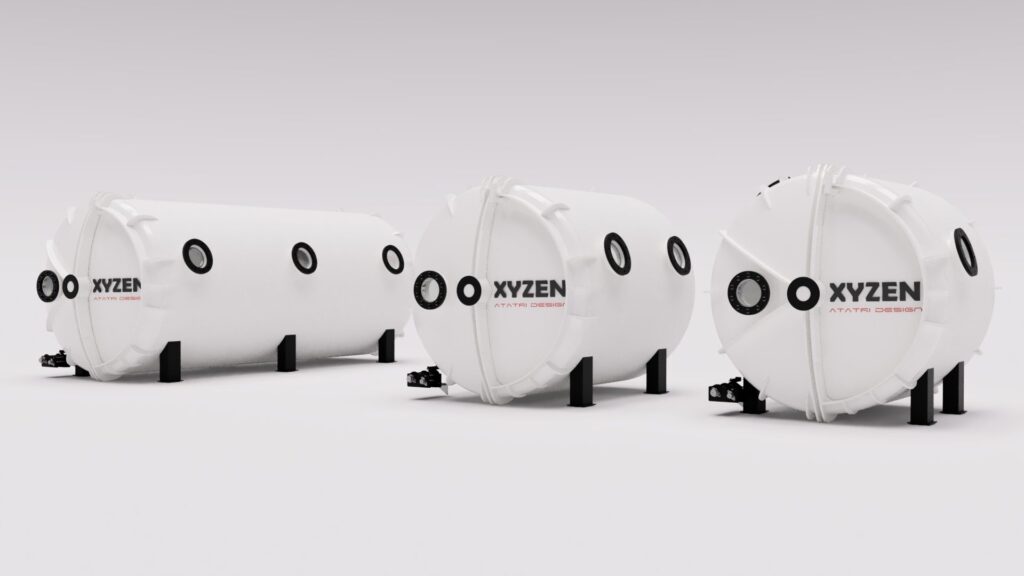
Designing OXYZEN, Atatri Design’s next-generation Hyperbaric Oxygen Therapy (HBOT) chamber, required engineering precision that extends far beyond conventional product development. HBOT is a medical treatment that utilizes high-purity oxygen in a pressurized chamber to promote healing, boost blood circulation, and help in recovery from injuries, infections, and more.
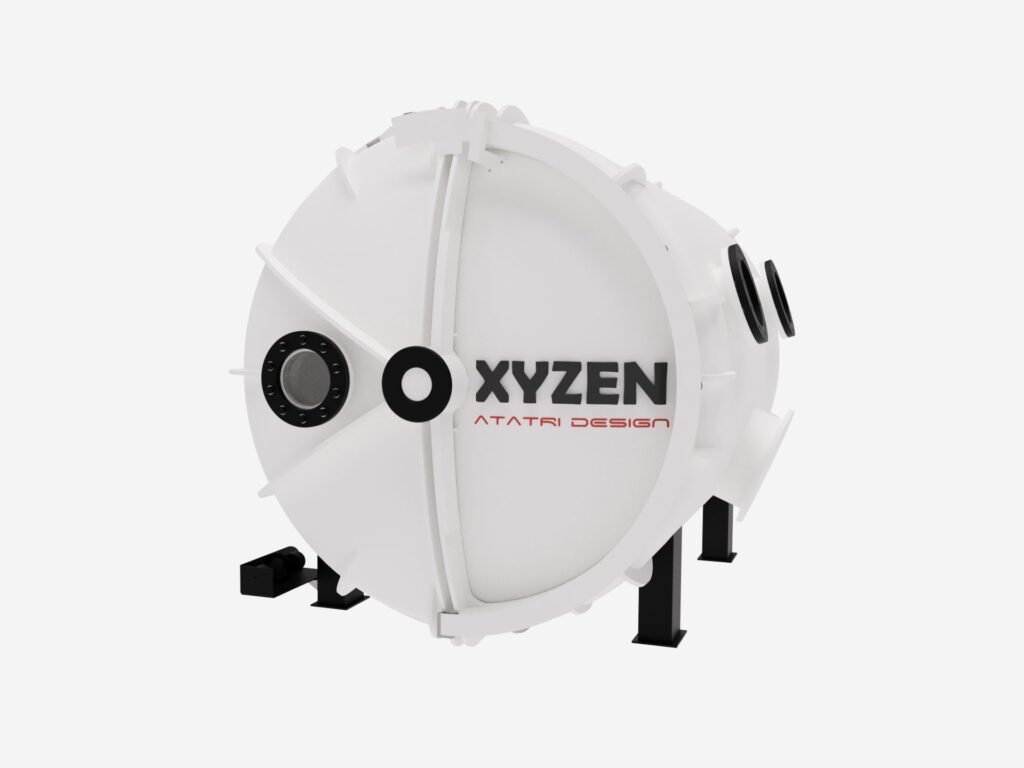
The chamber must safely contain a patient under extreme pressure while preserving structural stability, airtight integrity, and predictable performance. The primary challenge was the design and construction of a cylindrical pressure vessel capable of reliably withstanding operating pressures of 2–3 atmospheres absolute (ATA) without material fatigue or seal failure. All components, including valves, hinges, viewing ports, fasteners, oxygen pathways, and ergonomic interfaces, must endure repeated pressurization cycles while maintaining patient safety and comfort in a closed environment. The system needed to enable efficient and controlled oxygen delivery, airflow regulation, safety mechanisms, and an easy-to-use control interface.
It also required adjustable pressure settings, real-time safety monitoring, and compatibility with both cylinder-based and generator oxygen supplies. While the zero-electronic interior eliminated ignition risks, the built-in entertainment system still needed to operate safely within a sealed, pressurized chamber. To put it all together, the Atatri Design team needed to iterate quickly, validate structural performance, and deliver transparent results to physicians and regulatory stakeholders who were not engineering professionals.
Elevate your design and manufacturing processes with Autodesk Fusion
“Autodesk Fusion made it possible for us to work faster. Projects that used to take days to finish, could now be accomplished within a matter of hours. We were even able to run close to 20 simulation checks in just a couple of days. It ended up improving our workflow, aligning perfectly with how we work to, try, refine, and get the details right. We could do all of this without adding any complexities.”
– Prasanna, R&D Engineer, Atatri Design
Designing a Clinically Safe, Multi‑System HBOT Chamber with Fusion
The Atatri Design team relied on Fusion to tackle the engineering, testing, and communication challenges while designing OXYZEN. The team defined their needs and expectations for the design platform. With Fusion, they could accomplish precise CAD modeling, pressure-based simulation, manufacturable detailing, ergonomic refinement, and multi-disciplinary communication to support their desired R&D pace.
The cylindrical pressure shell, thin-wall optimization, door-locking systems, oxygen-flow mounts, and patient-interface features were rapidly iterated without using different tools or risking outdated versions. By using Fusion, they reduced prototyping cycles by almost 80 percent.
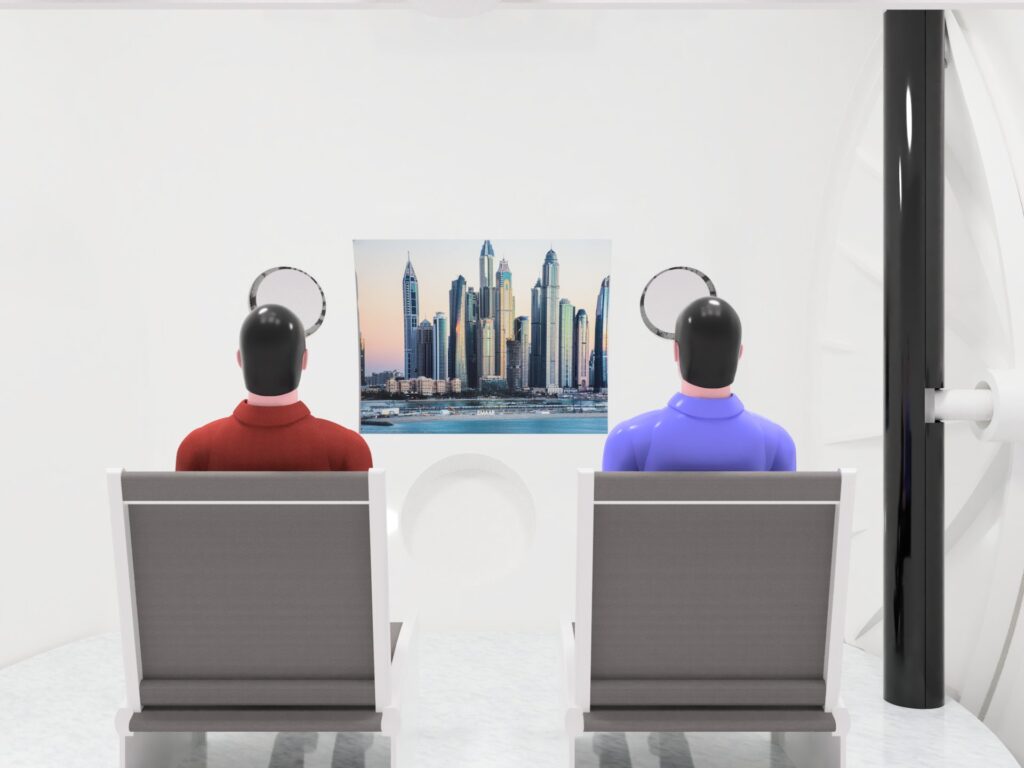
The engineering team used integrated simulation to carry out over 20 structural FEA calculations in 48 hours. These analyses included cyclic loads, hinge stress, and pressure-release behaviours, all crucial for creating a safe and clinically compliant pressure vessel. Fusion was also critical for perfecting OXYZEN’s engineering-heavy features, particularly its touchscreen control arrangement, interior space, and integrated infotainment system inside a sealed pressure vessel.
“I ran 20 analyses in 2 days, and it was incredibly helpful during the R&D phase,” Prasanna says.
Fusion helped Atatri Design streamline the entire engineering workflow for OXYZEN by bringing design, simulation, and manufacturability into a single space. With parametric modeling and CAM‑ready geometry, the team was able to quickly refine wall thickness, structural frames, and subsystem mounts while keeping production costs to less than half of imported HBOT systems. Built‑in FEA accelerated pressure‑safety and structural validation, and direct‑modeling tools added additional speed to the reverse-engineering work. With Fusion and by working in the cloud, the Atatri Design team successfully transitioned OXYZEN from a concept to a certified, manufacturable prototype in a much shorter development cycle.
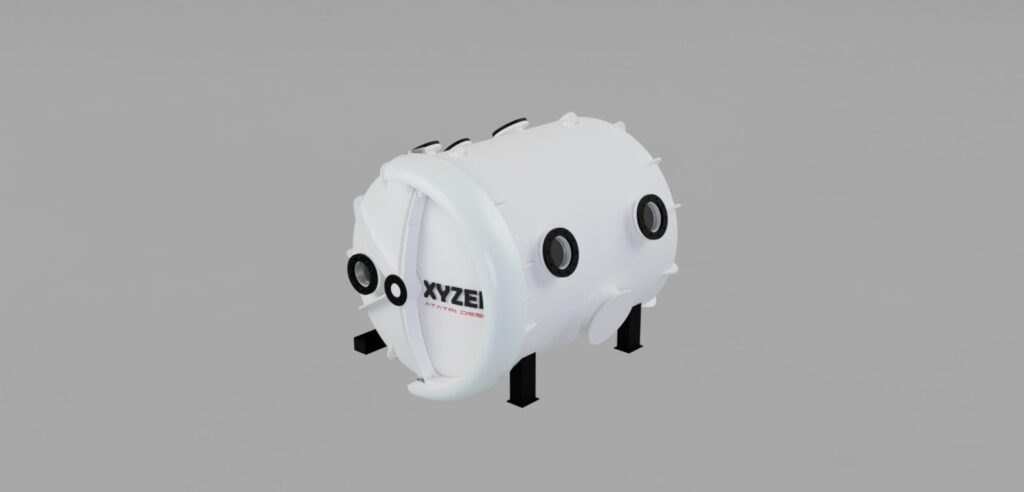
Fusion’s cloud-based workspace transformed Atatri Design’s collaboration with medical professionals, designers, and fabrication partners by providing instant access to the same model, minimizing the need for exporting and file conflicts. The reviews that formerly took days were finished within hours. Fusion also enabled the team to create high-quality animations and technical walkthroughs in a single day, making it simple to communicate pressure behavior, airflow pathways, and safety mechanisms to non-engineers, including doctors and regulatory officials.
Extending impact beyond OXYZEN
In addition to the OXYZEN HBOT system, Atatri Design engineered, simulated, and constructed a fully functioning lake-cleaning system, which is now being used in real-world environmental operations. This parallel project was entirely simulated in Fusion. It showcases the team’s versatility and the software’s capability to support both pressure-safe medical engineering and large-scale mechanical systems.
“The platform is incredibly useful and collaborative,” Premsunder says. “Overall, Fusion has altered the way we develop and verify safety-critical designs.”