 James Krenisky
Discover how AI in manufacturing is transforming decision‑making. Learn how Autodesk Fusion uses AI to reduce risk, accelerate design, and improve outcomes.
Elevate your design and manufacturing processes with Autodesk Fusion
AI in manufacturing is no longer an emerging trend, it’s a fundamental shift in how decisions are made across design, engineering, and production. As product complexity increases and margins tighten, manufacturers are under pressure to make faster, better‑informed decisions with less tolerance for risk.
Artificial intelligence is redefining manufacturing decision‑making by moving insight earlier in the process, reducing reliance on manual judgment, and enabling teams to evaluate more options with greater confidence. The result is smarter, more resilient decision‑making across the entire manufacturing lifecycle.
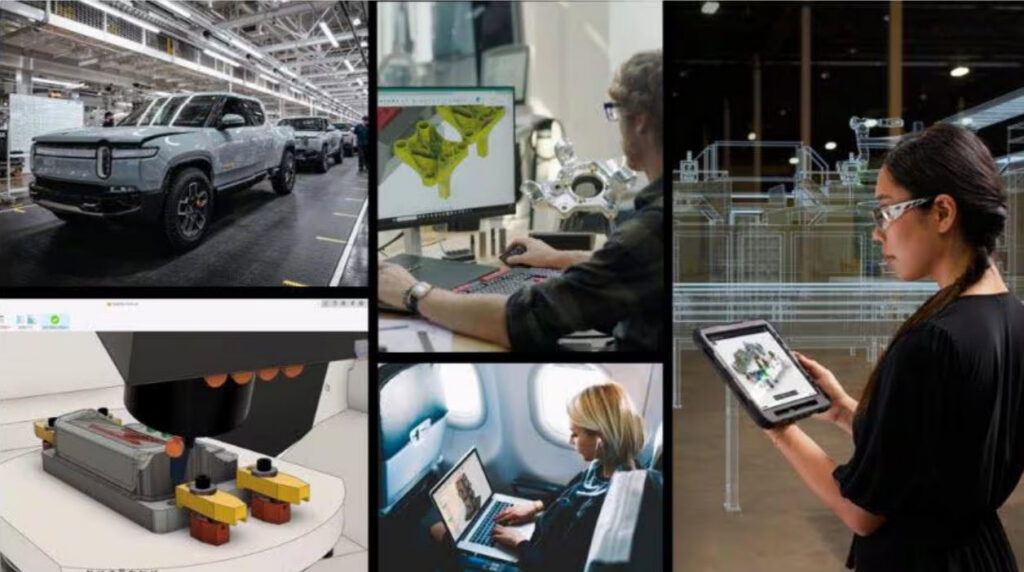
Why AI in manufacturing is changing the decision model
Traditional manufacturing decisions are often reactive. Issues are discovered late during prototyping, on the shop floor, or after production begins. This is typically when changes are costly and disruptive. Leaders are forced to make tradeoffs with incomplete information, relying heavily on experience and intuition.
AI in manufacturing changes this by enabling predictive, data‑driven decisions. By analyzing requirements, constraints, historical data, and real‑world manufacturing conditions early, AI helps teams surface risks sooner and explore alternatives before commitments are locked in.
For decision makers, this means fewer surprises, faster alignment, and higher confidence in every major choice.
AI in manufacturing design decisions: From guesswork to outcomes
One of the most visible impacts of AI in manufacturing is how design decisions are made. Instead of evaluating a handful of manually created concepts, AI allows teams to explore a broader design space, quickly and systematically.
With generative design in Autodesk Fusion, manufacturers can define performance goals, materials, cost targets, and manufacturing methods, then let AI generate multiple manufacturing‑ready design alternatives. Decision makers can compare these options based on weight, strength, cost, and manufacturability—turning subjective decisions into outcome‑based evaluations.
This transforms design reviews from “Which concept do we like?” to “Which option delivers the best business result?”
Earlier confidence through AI‑powered exploration
AI in manufacturing delivers the greatest value when applied early before downstream costs escalate.
Automated modeling in Autodesk Fusion enables rapid design exploration in minutes instead of days. By automating repetitive geometry creation, AI allows teams to evaluate more ideas earlier, when design flexibility is highest and risk is lowest.
For leaders, this means decisions are made with a fuller understanding of tradeoffs—reducing late‑stage rework and protecting schedules and margins.
Manufacturing decisions without manual bottlenecks
Manufacturing decision‑making is often slowed by manual processes and reliance on specialized expertise. CAM programming, for example, can delay feasibility analysis and production planning.
Automated toolpaths in Autodesk Fusion apply AI to CAM programming, generating toolpaths and time estimates that once took hours or days to develop. This allows manufacturing teams to assess cost, throughput, and feasibility earlier—bringing manufacturing insight directly into upstream decision‑making.
AI in manufacturing removes bottlenecks by making expert‑level insight more accessible and consistent.
Scaling AI in manufacturing without slowing the business
As organizations grow, inconsistent documentation and manual detailing become decision risks.
Automated drawings in Autodesk Fusion use AI‑powered automation to apply drawing standards, dimensioning, and layout consistently. This ensures downstream teams are working from accurate, standardized documentation—reducing interpretation errors and rework.
For decision makers, this improves execution reliability without slowing teams down.
Reducing risk with AI in manufacturing’s everyday decisions
Not all manufacturing decisions are strategic. Many are small, frequent, and cumulative and AI helps reduce risk at this level as well.
- Sketch AutoConstrain uses AI to automatically apply critical dimensional constraints, reducing sketch errors early in design.
- Fastener replacement tools use Autodesk AI to detect and update fasteners across designs when requirements change. This keeps geometry, joints, and Bills of Materials aligned automatically.
These AI‑driven capabilities reduce human error and protect downstream decisions from small but costly mistakes.
AI in manufacturing decision support, embedded in the workflow
One of the most transformative aspects of AI in manufacturing is contextual decision support.
Autodesk Assistant provides in‑context guidance inside Fusion, delivering relevant help, resources, and recommendations exactly when users need them. Rather than pausing work to search for answers, teams receive AI‑driven assistance within the flow of their tasks.
This lowers dependency on tribal knowledge and accelerates confident decision‑making across experience levels.
The future of AI in manufacturing decision‑making
AI in manufacturing does not replace human expertise, it amplifies it. By handling repetitive analysis, surfacing insights, and reducing manual effort, AI enables leaders to focus on higher‑value decisions: tradeoffs, priorities, and strategy.
With Autodesk Fusion, AI becomes part of everyday manufacturing workflows—from early design decisions to production planning—helping organizations move faster, reduce risk, and make smarter decisions at scale.
For manufacturing leaders, the question is no longer whether AI will redefine decision‑making—but how quickly it can be operationalized across the business.