 Aishwarya Balamukundan
The companies getting the most value from AI aren’t simply automating tasks. They’re reducing the time, effort, and friction required to turn ideas into outcomes.

Elevate your design and manufacturing processes with Autodesk Fusion
For decades, manufacturers have responded to complexity by adding more tools, more systems, and more steps to their process. The assumption was simple: as products become more complex, organizations need more layers of management to keep work moving.
Yet despite these investments, many product teams still struggle with slow decision-making, disconnected workflows, duplicate work, engineering-to-manufacturing handoffs, and changes that take weeks instead of days to implement. The result is a growing gap between intent and outcome.
Organizations know what they want to build, but the challenge is getting there efficiently.
The next era of product development is not about adding more steps to your process. It’s about compressing the journey from intent to outcome.
Product development has become a handoff problem
Many delays don’t happen because teams lack expertise. They emerge as work gets constantly handed from one person, team, or system to another.
A requirement becomes a design. A design becomes a review. A review becomes a change request. A change request becomes a manufacturing update. A manufacturing update becomes a production decision.
At every stage, information is transferred, translated, interpreted, and validated. Each handoff creates friction, introduces risk, and extends timelines. Many organizations spend as much time managing information flow as they do creating products.
The opportunity is not simply moving faster. It’s reducing the number of places where work slows down in the first place.
The best decisions happen earlier
The earlier product teams can make informed decisions, the better positioned they are to avoid problems later. When teams gain visibility into requirements, constraints, manufacturing implications, configuration impacts, cost tradeoffs, and potential risks sooner, they can address issues before they lead to costly rework.
Problems that surface late in development are often more expensive to fix. That’s why shortening feedback loops has become a competitive advantage. Faster insight leads to better decisions, and better decisions help products reach the market sooner.
Why connected data matters
Most manufacturers don’t have an information problem. They have a connection problem.
The information already exists. The challenge is that it’s scattered across systems, teams, emails, spreadsheets, and workflows that were never designed to work together.
Fragmentation leads to teams spending more time searching, reconciling, updating, and validating information rather than acting on it. Connected product data helps eliminate those delays.
When information remains connected throughout the product lifecycle, teams gain visibility into what has changed, why it changes, who is impacted, and what needs to happen next. This level of visibility shortens feedback loops and reduces unnecessary work.
From managing work to moving products forward
Traditional software has largely focused on helping teams complete individual tasks.
Today, this challenge is bigger. Organizations need to connect requirements, decisions, designs, changes, and manufacturing activities so work can move continuously from idea to delivery without getting stuck in handoffs, approvals, or disconnected systems.
AI is beginning to accelerate this shift by helping teams understand context, surface insights, and coordinate actions across the development process.
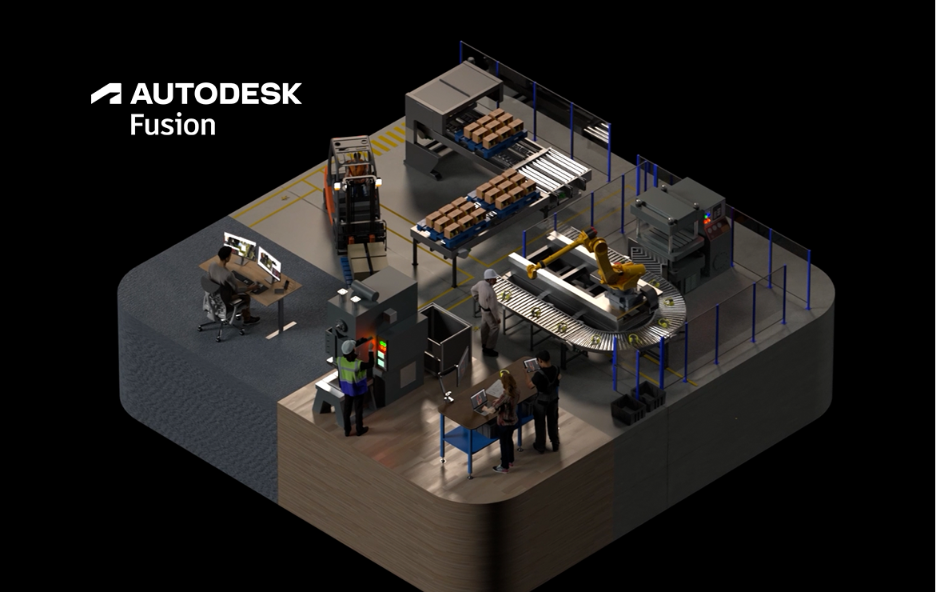
This is the idea behind Autodesk Fusion. By connecting product data, workflows, and disciplines across the product lifecycle, Fusion helps teams maintain context, respond to change more effectively, and keep work moving forward. Autodesk AI builds on that connected foundation, helping teams understand broader product context and carry it across each step in the development process.
As information remains connected:
- Teams gain a clearer understanding of product context
- Requirements stay tied to execution
- Decisions become easier to trace and validate
- Changes can be evaluated with greater confidence
- Manufacturing can adapt more quickly to evolving designs
The result is a more connected product development process where people, processes, and information remain aligned from intent to outcome.
AI expands capacity by reducing friction
Much of the conversation around AI focuses on automation. The real opportunity is to expand capacity.
Every organization has a finite amount of expertise, attention, and time. Unfortunately, too much of that time is spent searching for information, recreating work, coordinating across teams, managing handoffs…the list goes on. AI can help reduce that friction and free up more of that capacity.
Consider a common scenario: a requirement changes late in the development process. Today, an engineer may need to identify the affected components, determine which teams need to be involved, evaluate manufacturing implications, communicate the change, and reconcile feedback across multiple systems before work can move forward.
With AI working across connected product data and workflows, much of that coordination can happen faster. AI can help surface the relevant context, identify potential downstream impacts, bring the right information to the people who need it, and support the decisions required to keep the change moving.
The expertise still comes from the team. What changes is how much time that expertise spends navigating the process around the work. By reducing that friction, AI can help teams apply their expertise more effectively, giving them more time to focus on innovation, product quality, customer needs, and growth.
The future belongs to organizations that reduce friction
The future of product development won’t be defined by how many tools teams use. It will be defined by how quickly they can turn intent into outcomes.
The most successful manufacturers will be the ones that:
- Reduce friction and increase context during handoffs
- Connect workflows
- Shorten feedback loops
- Surface information earlier
- Make decisions faster
- Scale expertise across teams
Product development is ultimately a race against friction.
Every unnecessary handoff, approval cycle, and disconnected workflow increases the distance between an idea and a finished product. Connected data and AI can help close that gap by reducing the friction that slows teams down.
That’s what it means to compress the journey from intent to outcome: helping people spend less time moving information and more time moving products forward.
Frequently asked questions
Intent to outcome refers to the process of turning a product idea, requirement, or business objective into a delivered product. The concept focuses on reducing the time, friction, and complexity between identifying what needs to be done and successfully executing it.
Product development often slows because information moves through multiple systems, teams, approvals, and handoffs. Each transfer creates opportunities for delays, miscommunication, duplicate work, and decision bottlenecks that extend development timelines.
Every handoff requires information to be interpreted, validated, and transferred between people or systems. Excessive handoffs can introduce risk, create delays, and make it harder for teams to maintain visibility into product decisions and changes.
Connected data reduces time spent searching for information, reconciling versions, and validating changes. It helps engineering, manufacturing, and business teams work from a shared source of information, improving visibility and collaboration.
AI can help teams surface relevant information, identify potential downstream impacts of changes, summarize context, and coordinate workflows more efficiently. This allows engineers and product teams to spend more time solving problems and less time managing processes.
No. AI supports engineering teams by reducing administrative work and helping teams find information faster. The expertise, decision-making, and innovation still come from engineers, designers, and manufacturing professionals.
AI is most effective when it can access connected, contextual product information. When data remains connected across design, engineering, manufacturing, and lifecycle workflows, AI can provide more relevant insights and help teams make faster decisions.