 Aishwarya Balamukundan
As AI becomes embedded in design and manufacturing workflows, writing better prompts will only get organizations so far. Greater value will come from giving AI access to richer context and enabling people to focus on what they’re actually trying to accomplish.

Elevate your design and manufacturing processes with Autodesk Fusion
Most conversations about AI start with prompts: How should you phrase a request? What information should you include? How detailed do you need to be?
Those questions matter today because people often have to provide AI with everything it needs to understand the task.
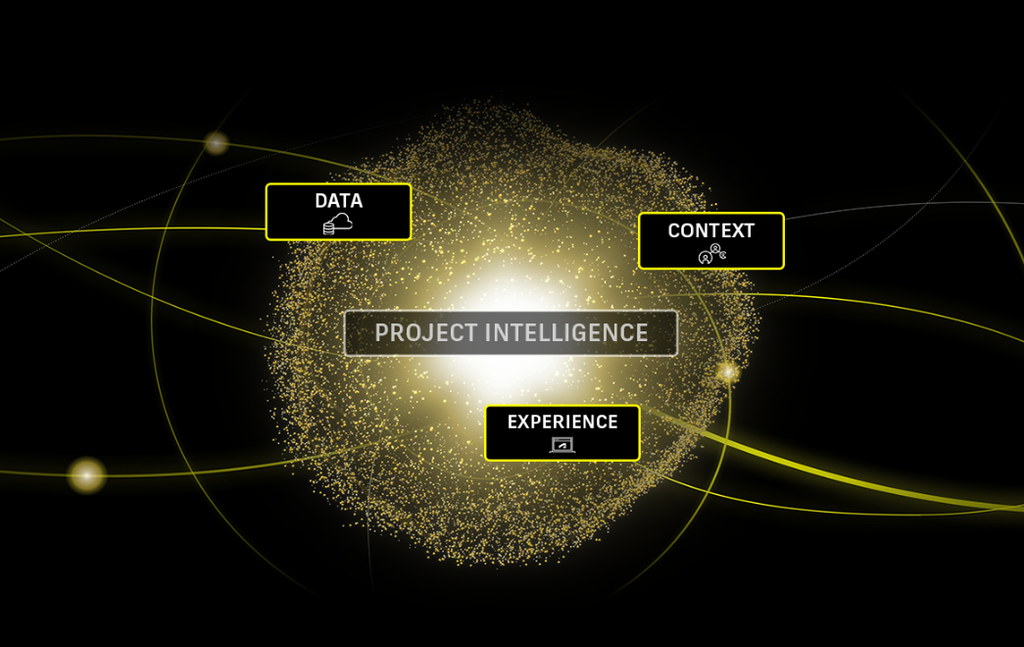
But as AI becomes more deeply integrated into the systems where work happens, that dynamic begins to change. The prompt is what you ask. Intent is what you’re trying to achieve. Context is what AI needs to understand to help you get there. And in design and manufacturing, context can make or break how useful AI actually is.
The prompt is not the work
Imagine an engineer asks an AI tool: “Optimize this bracket for manufacturing.”
For a standalone AI model, that request leaves a lot of unanswered questions. Which bracket? What manufacturing process? What materials are available? What are the cost targets, tolerances, production volumes, and performance requirements?
The engineer would need to provide much of that information before the AI could offer a useful response.
Now imagine the engineer is working inside an environment where AI already has access to:
- the actual bracket geometry
- material selection
- loads and performance requirements
- manufacturing process
- machine capabilities
- tolerances
- previous design decisions
- cost targets
- organizational standards
The request hasn’t changed; the environment around it has.
“Optimize this bracket for manufacturing” can now lead to a much more specific and actionable outcome because AI has access to the context surrounding the work.
That’s an important shift. The future of AI isn’t necessarily about people becoming increasingly sophisticated prompt writers. It’s about AI understanding more of the environment in which those prompts are made.
Intent matters more than tasks
Historically, software required people to tell it exactly what to do. Today, AI is beginning to change that dynamic. Increasingly, people can define an outcome while AI helps determine the path forward to get there.
A designer may create a CAD model to evaluate an idea. A manufacturing engineer may generate toolpaths to prepare a part for production. A product team may build configurations to meet different customer requirements, while a leader may rely on reports to make decisions about quality, throughput, or performance.
These tasks and outputs matter, but they’re usually steps toward a larger outcome. Understanding the intent behind those tasks gives AI a clearer picture of what someone is actually trying to accomplish.
Context makes intent actionable
Design and manufacturing are particularly context-rich environments. The decisions teams make depend on information such as:
- Product geometry
- Design intent
- Configuration logic
- Assembly relationships
- Performance requirements
- Manufacturing constraints
- Production workflows
- Requirements and specifications
- Cost targets
- Business objectives
A general-purpose AI model doesn’t inherently understand those relationships simply because someone asks it a question. But when AI can work within the systems and workflows where that information already exists, the possibilities change.
Access to that context changes what AI can do. Rather than simply generating options or suggesting actions, it can help teams evaluate those options against the requirements and constraints that actually shape the work.
That’s where AI for design and manufacturing becomes particularly valuable: not simply generating more content, but helping teams apply their expertise, evaluate tradeoffs, make decisions, and move work forward.
The next AI challenge is connecting context
The challenge is that product context rarely lives in one place. Design information may live in one system, manufacturing knowledge in another, while requirements, approvals, and business objectives may live somewhere else entirely.
That fragmentation limits how much context AI can draw from. Connecting these systems and workflows gives AI a better understanding of the work and reduces the need for people to repeatedly gather, translate, and provide that information themselves.
This is where Model Context Protocol (MCP) becomes increasingly important. Instead of forcing people to move information between disconnected environments, MCP allows AI to work with tools, systems, and workflows while maintaining context.
As information moves between systems, the intent and context behind the work can move with it. This gives AI a broader understanding of the workflow and creates the foundation for it to do more than respond to individual requests.
Moving from assistance to outcome-oriented workflows
Today’s AI largely operates as an assistant. A person asks a question, and the system provides an answer.
The next phase is different. AI is beginning to participate in workflows rather than simply respond to requests. Instead of helping complete individual tasks, AI can help coordinate a sequence of activities that move work forward.
That might include:
- Building product configurations
- Modifying design parameters
- Generating automation logic
- Connecting workflows across systems
- Supporting manufacturing preparation
- Coordinating actions across tools
The focus shifts from:
“What should I do next?”
to
“How do I achieve the outcome I’m after?”
This is where concepts like Autodesk Assistant, MCP, connected workflows, and agentic AI become increasingly important.
What this looks like in Fusion
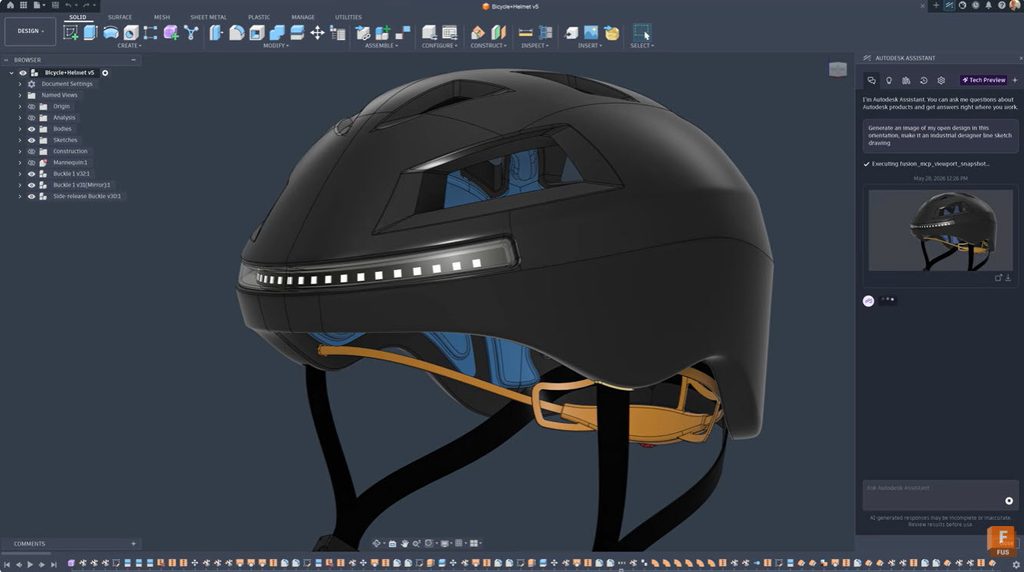
This vision is already beginning to take shape across Fusion through capabilities such as Autodesk Assistant, AI-assisted configurations, automation workflows, and MCP-enabled experiences that help connect intent, context, and execution.
The long-term opportunity is an AI experience that understands:
- What product you’re working on
- What constraints exist
- What requirements must be satisfied
- What outcome you’re trying to achieve
- What decisions have already been made
When those elements come together, AI becomes more than a tool because it helps teams apply expertise more effectively and at a greater scale.
The important shift is that users don’t necessarily have to reconstruct all of that context every time they interact with AI. The environment itself can provide more of the information AI needs to understand the work.
The future of AI Is outcome-oriented
The first wave of AI adoption taught people how to write better prompts. The next will increasingly be about giving AI the context to understand what people are trying to accomplish.
For designers, manufacturers, and product teams, generating text, creating models, or automating tasks is only useful if it helps them solve problems, weigh tradeoffs, make decisions faster, and ultimately deliver better products.
As AI becomes more deeply connected to the environments where that work happens, people won’t have to explain every detail each time they ask for help. More of that context can come from the products, systems, and workflows themselves.
That shifts the focus away from crafting the perfect prompt and toward something much more valuable: helping AI understand the work well enough to help people achieve the outcome they’re after.
Frequently asked questions
A prompt is the instruction you give AI. Intent is the outcome you’re trying to achieve. Context is the information AI needs to understand the situation and provide a useful response. In design and manufacturing, context can include product data, requirements, materials, manufacturing constraints, tolerances, workflows, and business objectives.
Prompts still matter, but they become less critical when AI can access the systems where work happens. When AI already understands product data, design history, manufacturing processes, and business requirements, users can focus on defining outcomes rather than providing every detail manually.
Manufacturing decisions depend on variables such as materials, machine capabilities, production volumes, quality requirements, costs, and delivery schedules. Without that context, AI may generate recommendations that look reasonable but are impractical or impossible to implement.
Context allows AI to evaluate recommendations against real-world constraints. Instead of suggesting generic options, AI can help teams identify solutions that align with design requirements, manufacturing capabilities, cost objectives, and operational goals.
Design intent describes why a product was designed a certain way and what requirements it must satisfy. When AI understands design intent, it can make recommendations that preserve critical functionality while proposing improvements or alternatives.
AI can help evaluate options, identify tradeoffs, and automate tasks, but engineering and manufacturing decisions still require human expertise. The most effective use of AI is to support decision-making by providing insights and recommendations based on available context.
Model Context Protocol (MCP) is an open standard that allows AI systems to connect to tools, data sources, and workflows. This helps AI access relevant context from multiple systems while maintaining awareness of the work being performed.
MCP can help AI access information across design, manufacturing, and business systems without requiring users to manually gather and re-enter data. This enables AI to work with richer context and support more complex workflows.
Agentic AI refers to AI systems that can assist with completing a sequence of tasks rather than responding to a single request. In manufacturing environments, agentic AI may help coordinate activities across design, engineering, planning, and production workflows.
Fusion brings together product design, engineering, manufacturing, data, and collaboration workflows in a connected environment. This foundation helps AI understand more of the context surrounding a product, enabling more relevant assistance and workflow automation.