 Heather Miller
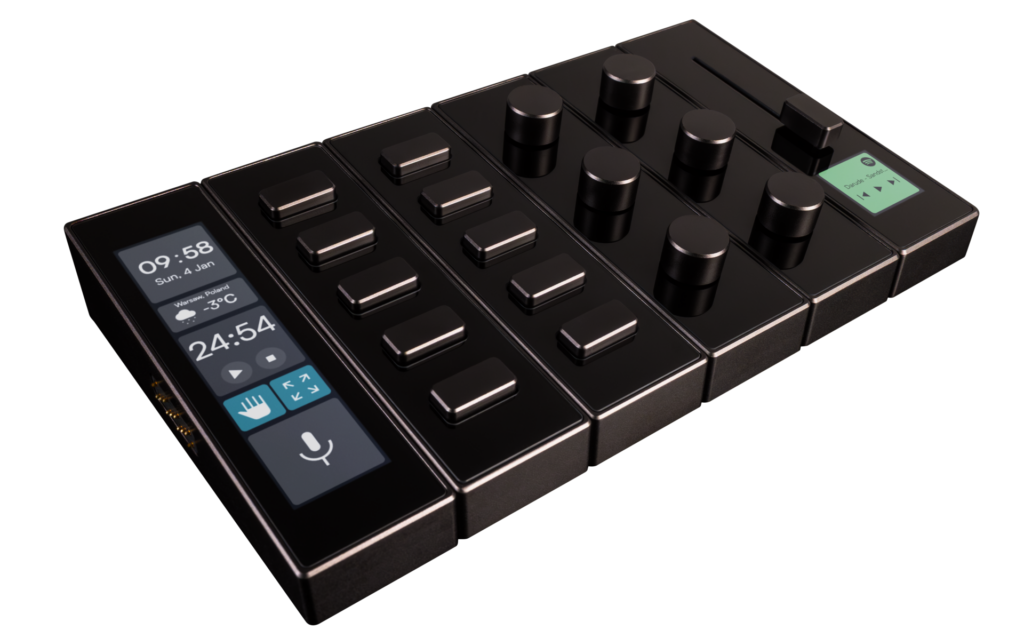
modue is creating a more intuitive way to control and personalize gaming, music production, and everyday digital workflows. Using Autodesk Fusion from the earliest concepts through prototyping and production design, the team developed a modular control deck with customizable modules. After gaining more than 50 million social media views and raising roughly $400,000 on Kickstarter, modue is now preparing for mass production. As an active member of the Hackster community, modue is committed to community feedback and development with their own SDK.
Elevate your design and manufacturing processes with Autodesk Fusion
Before modue was a hardware startup that raised hundreds of thousands of dollars on Kickstarter and began preparing for mass production, it was a student project built by gamers who wanted a better way to control their computers.
modue co-founder and CEO Jakub Popowski was studying electrical engineering at the Warsaw University of Technology when he decided to solve a problem that he and his friends were facing while gaming. They simply couldn’t control all the things in the background, and “the mouse and keyboard weren’t enough for us,” he recalls.
The first idea was simply to control volume and audio through a music mixer with motorized sliders. So Popowski started designing his first inspiration in Autodesk Fusion.
“In Fusion, it was just super straightforward for me to draw and convert my ideas into something real in the software,” he says.
As the design moved along, Popowski and his co-founders Piotr Daniel and Hubert Adamczewski also wanted to include controls for other applications like Discord, Photoshop, and Spotify. They soon realized it could be much more than a solution for gamers.
“After several discussions with potential future users, we noticed that everyone uses a computer in a different way,” Popowski says. “We wanted to give people the possibility to build their own custom hardware without all the technical work. We could give them the ‘bricks’ to customize their own control panels.”
That idea became modue: a modular control deck designed to personalize digital workflows for even greater efficiency.
From student project to viral social media moment and Kickstarter campaign
For the first couple of years, modue remained a student project during COVID. In 2023, the team received its first funding from two Polish VC firms, established the company, and reworked the device based on user research.
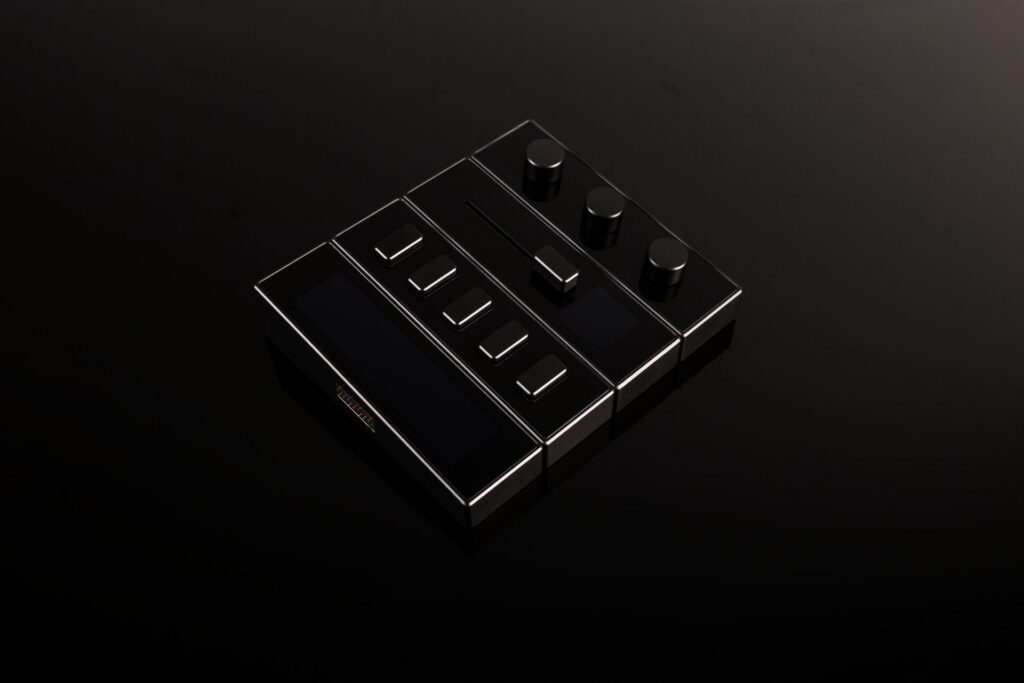
Then things really took off. Without a marketing budget, modue went viral with more than 50 million views across platforms including Instagram and TikTok, according to the team. Soon after, they started their Kickstarter campaign.
“We raised our first goal in 10 minutes and closed the campaign with around $400,000 dollars,” Popowski says. “And that’s thanks to around 1,000 backers from around the globe. After the Kickstarter campaign, our main goal was to convert the first prototypes into the product that we can mass produce.”
Designing modue with Autodesk Fusion
At its core, modue is a customizable hardware system for controlling software, audio, video, shortcuts, and apps from one place. Its current product lineup centers on One Touch as the base module that can be expanded with Slide, Spin, and Click add-ons. The appeal is broad because the device is not designed around one workflow. It’s designed around the fact that everyone’s workflow is different.
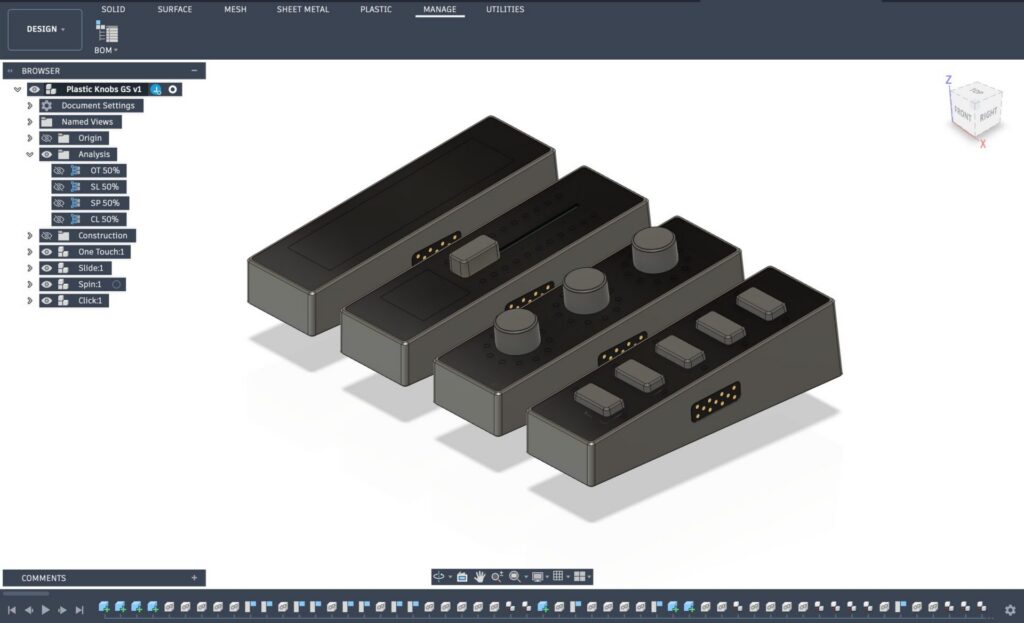
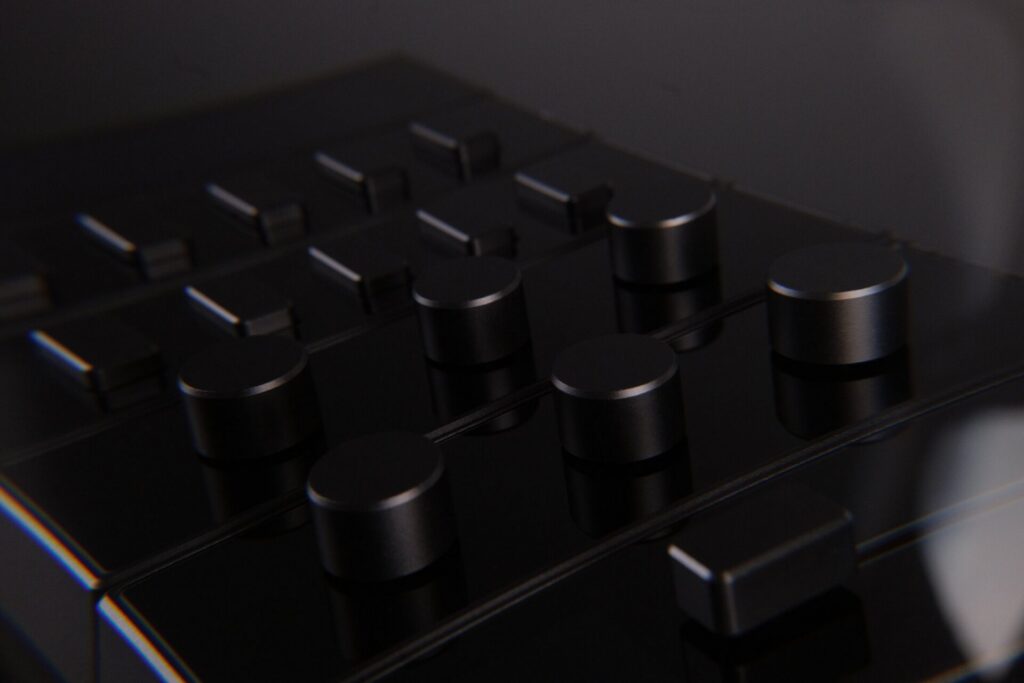
One Touch is the central unit, a touchscreen module connected by USB-C. Users can set up a grid for time, weather, calendar, app controls, shortcuts, or buttons. Slide combines a touchscreen and motorized slider, useful for audio volume, game audio, music production, or quick muting. Spin adds encoders for controls such as zoom, gradient, saturation, or other precision adjustments. Finally, Click includes five mechanical keys that can be mapped to daily actions like muting a microphone, turning a camera on or off, sharing a screen, or triggering shortcuts without hunting through menus.
“Instead of memorizing keyboard shortcuts, switching windows, or breaking focus to move between tools, users can simply press an assigned button and complete an action without disruption,” Popowski says.
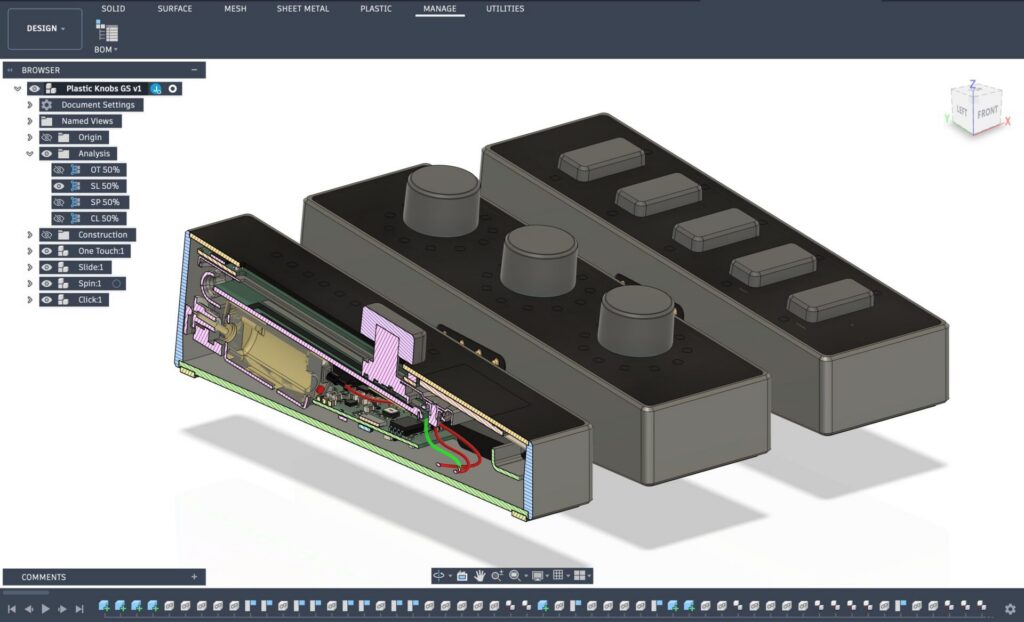
From the beginning, Autodesk Fusion has been central to modue’s development “I’ve been using Fusion since the very first day of designing modue,” Popowski says. “It became the backbone of how we go from idea to the physical device.”
Today, most of modue’s mechanical work happens in Fusion, including the aluminum body and internal components. Parametric modeling has been a particular advantage in the development.
“I can easily work on different parts of the design and variations without needing to create several sketches or revisions,” he says. “I can simply set the crucial parameters, assign different equations and parameters, and see from the analytical perspective how changing one thing impacts, for example, the design of the front panel of our device.”
Rendering has also helped the team make faster decisions. Instead of waiting for a physical prototype to review an idea, the team can generate a visualization in minutes and share it with teammates and management.
“I can create proof of concept inside the software and see the final visualization in five or 10 minutes,” Popowski says. “I can also showcase it to my colleagues to management and decide if we will go with it or if we will not go with it.”
Rapid prototyping for accelerated and accurate product design
Fusion has also helped modue move quickly through physical prototyping. Early versions were 3D printed, while 2D files were laser cut.
“It’s super, super simple to prototype with Fusion,” Popowski says. “It’s great that with just one click, I can export all the parts into the STL format and 3D print them.”
For a modular product, the team had to understand how everything would fit together in the real world, too.
“Fit was the most important thing,” he adds. “We needed to make sure all the components came together correctly, there were no collisions or assembly issues, and that we were ready to move forward with prototypes using the final materials.”
Community as the product differentiator
For modue, community became part of the product development process from the very beginning. The team gathered early followers in Discord, where interest quickly turned into conversations about how people actually use their computers every day. Those conversations changed the direction of the product. Through in-depth reviews, the team heard what users wanted to add or avoid.
That same approach continues today. As the team develops its fifth module, backers are helping make decisions about the hardware itself, including which front panel design should move forward. For modue, that kind of participation is a product and competitive differentiator.
“The people influencing the product are also the people who will use it, customize it, and push it into new contexts,” says Hubert Adamczewski, Chief Operating Officer and co-founder, modue. “That is especially important for a product built around personalization. We can’t predict every workflow, streaming setup, creative process, or niche use case, but a strong community can show us what they need.”
As part of their outreach to the community, modue has developed a full SDK, complete with instructions and documentation. Already, people are taking the product in directions the team couldn’t imagine.
“Right now we have a few developers in our community who are writing their own plugins and integrations on our system,” Adamczewski says. “One cool example is that right now people are using modue for streaming Pokémon card tournaments. It’s just something we could never expect.”
That kind of community-driven innovation is something Hackster sees across its engineering ecosystem every day. Hackster is Avnet’s global community for engineers, developers, and makers, providing a place to learn, build, and share real-world technology projects. Through technical content, educational programs, design challenges, and hands-on project development, Hackster helps people explore new technologies, develop practical skills, and bring ideas from concept to product.
As an active member of the Hackster community, modue is part of a broader ecosystem of innovators solving engineering challenges and sharing what they learn along the way.
“What stands out about modue is how closely their journey reflects the way many successful products come to life today,” says Joey DuBiel, Strategic Account Manager, Hackster. “Throughout the development of modue, user feedback helped shape the product, challenge assumptions, and uncover new use cases. That’s the kind of learning-by-building mindset we see every day across the Hackster community.”