 Shannon McGarry
Learn how small manufacturers can improve efficiency, reduce costs, accelerate product development, and compete with larger companies using modern design and manufacturing technology.

Elevate your design and manufacturing processes with Autodesk Fusion
Large manufacturers often have bigger budgets, dedicated engineering teams, specialized software, and extensive supply chains. For smaller manufacturers, competing against that scale can feel overwhelming.
Yet some of the most innovative products on the market come from small businesses. They succeed because they move faster, adapt more quickly, and make smarter use of the resources they have.
Today, technology is helping level the playing field. Modern design and manufacturing tools allow small teams to work more efficiently, reduce costly mistakes, and bring products to market faster than ever before.
The challenge isn’t necessarily having more resources—it’s maximizing the resources you already have.
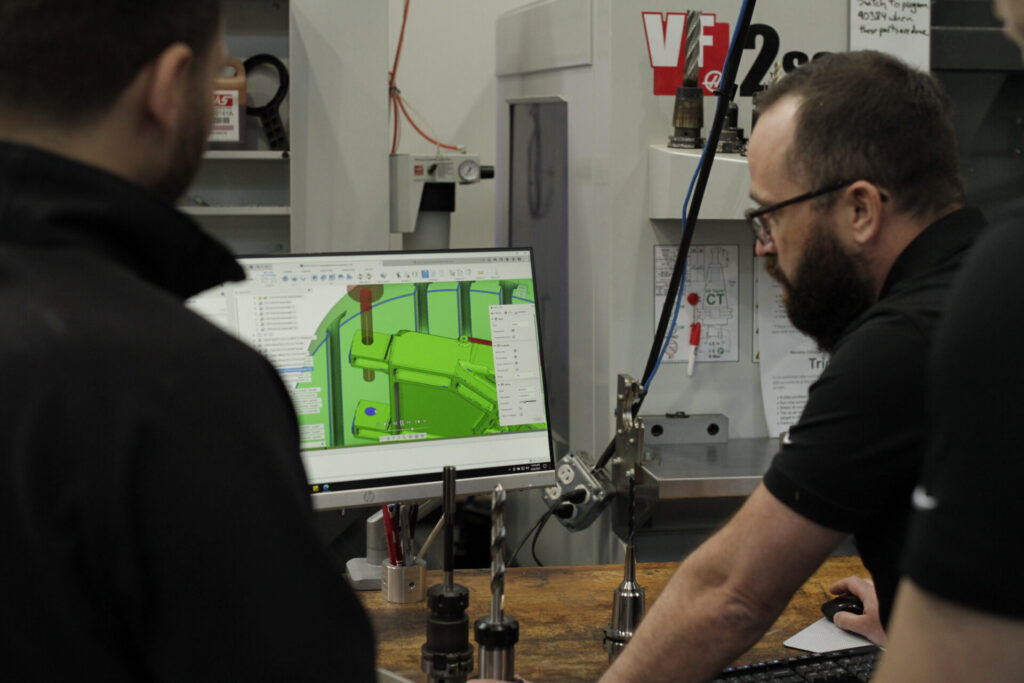
The challenges small manufacturers face
Most small manufacturing businesses operate under similar constraints:
- Limited engineering and manufacturing staff
- Tight budgets
- Pressure to reduce production costs
- Increasing customer expectations
- Shorter product development timelines
- Growing competition from larger companies
A single employee may be responsible for product design, prototyping, supplier coordination, and production planning. When every team member wears multiple hats, inefficiencies add up quickly.
This is why many successful small manufacturers focus on improving processes rather than simply adding headcount.
Focus on speed, not size
Small manufacturers rarely win by being bigger. They win by being faster.
Large organizations often face lengthy approval processes, departmental handoffs, and complex workflows. Small teams can make decisions quickly and adapt to changing customer needs with minimal bureaucracy.
To take advantage of this, manufacturers should look for ways to:
- Reduce design iterations
- Accelerate prototyping
- Simplify product reviews
- Minimize communication bottlenecks
- Streamline production planning
Every day saved during product development can create a significant competitive advantage.
Reduce errors before production
Discovering a design issue after production begins ends up being extremely expensive. Engineering changes, scrap material, production delays, and rework can quickly consume limited budgets.
By incorporating simulation, design reviews, and manufacturability checks before products reach the shop floor, teams can identify problems while they’re still easy and inexpensive to fix.
When issues are caught digitally instead of physically, businesses reduce risk and improve profitability.
Design with manufacturing in mind
Many manufacturing challenges originate during design. A part that looks great on screen may be difficult, expensive, or time-consuming to produce.
Design for Manufacturability (DFM) helps small teams avoid this problem by considering manufacturing requirements from the beginning.
Key questions include:
- Can this part be machined efficiently?
- Does it require unnecessary setups?
- Can tolerances be simplified?
- Will assembly be straightforward?
- Can material costs be reduced?
Small improvements at the design stage often translate into substantial savings throughout production.
Eliminate software silos
Many small manufacturers still rely on disconnected systems for design, manufacturing, documentation, and collaboration. When data is spread across multiple tools, teams often experience version control issues, duplicate work, miscommunication, files and delays due to data translation.
An integrated workflow helps reduce errors by keeping design, engineering, and manufacturing teams working from the same source of truth. Instead of managing multiple file formats and software packages, manufacturers can focus on getting products out the door.
Make better decisions with real-time collaboration
Small teams often work closely with suppliers, machine shops, contract manufacturers, and remote stakeholders and effective collaboration can become a competitive advantage.
When everyone has access to the latest design information, teams can:
- Resolve issues faster
- Reduce revision cycles
- Improve supplier communication
- Shorten approval times
- Accelerate production readiness
Modern cloud-based collaboration tools make it easier than ever for distributed teams to stay aligned throughout the product development process.
Use technolog to multiply team capacity
Small manufacturers may not be able to hire specialists for every role, but they can use technology to increase productivity.
Automation, simulation, and AI-assisted workflows help teams accomplish more with fewer resources. Instead of spending hours on repetitive tasks, engineers can focus on higher-value work such as innovation, process improvement, and product optimization.
The goal isn’t to replace expertise. It’s to help existing teams perform at a higher level.
How Autodesk Fusion helps small manufacturers compete
For many small manufacturers, growth is limited by fragmented workflows and disconnected tools, not talent or opportunity.
Autodesk Fusion helps address these challenges by bringing design, engineering, electronics, simulation, manufacturing, and data management together in a single platform.
Instead of moving between separate CAD, CAM, CAE, and collaboration systems, teams can work from a unified environment that supports the entire product development process.
With Autodesk Fusion, small manufacturers can:
- Design and manufacture products using a connected workflow
- Create CNC toolpaths directly from design data
- Validate designs with built-in simulation tools
- Collaborate with suppliers and stakeholders in the cloud
- Reduce costly engineering changes
- Improve productivity without adding complexity
For small teams competing against larger organizations, efficiency matters. By eliminating unnecessary handoffs, reducing errors, and accelerating product development, Autodesk Fusion helps manufacturers do more with the resources they already have.
Frequently asked questions
Small manufacturers can compete by focusing on speed, efficiency, customer responsiveness, and technology adoption. Streamlined workflows and digital tools enable smaller teams to bring products to market faster while reducing operational costs.
Integrated design and manufacturing software, cloud collaboration tools, simulation technology, and workflow automation platforms, like Autodesk Fusion, can significantly improve productivity and help small manufacturers operate more efficiently.
Manufacturers can reduce costs by validating designs earlier, minimizing engineering changes, reducing prototyping cycles, improving collaboration, and adopting integrated design-to-manufacturing workflows.
Many small manufacturers choose Autodesk Fusion because it combines CAD, CAM, CAE, electronics, collaboration, and data management in a single platform, helping teams improve efficiency while reducing software complexity and costs.