 James Krenisky
Design for Manufacturing (DFM) helps teams reduce costs, improve quality, and scale production by aligning design decisions with real-world manufacturing processes. Learn how it works.

Elevate your design and manufacturing processes with Autodesk Fusion
Most product failures don’t happen because of bad ideas. They happen because designs don’t translate cleanly into production.
A part may look perfect in CAD but be difficult to machine. A PCB may function but fail during assembly. A prototype may work once but fall apart when scaled.
Design for Manufacturing exists to prevent this. DFM is a way of designing with production in mind from the very beginning, so what is built matches intent.
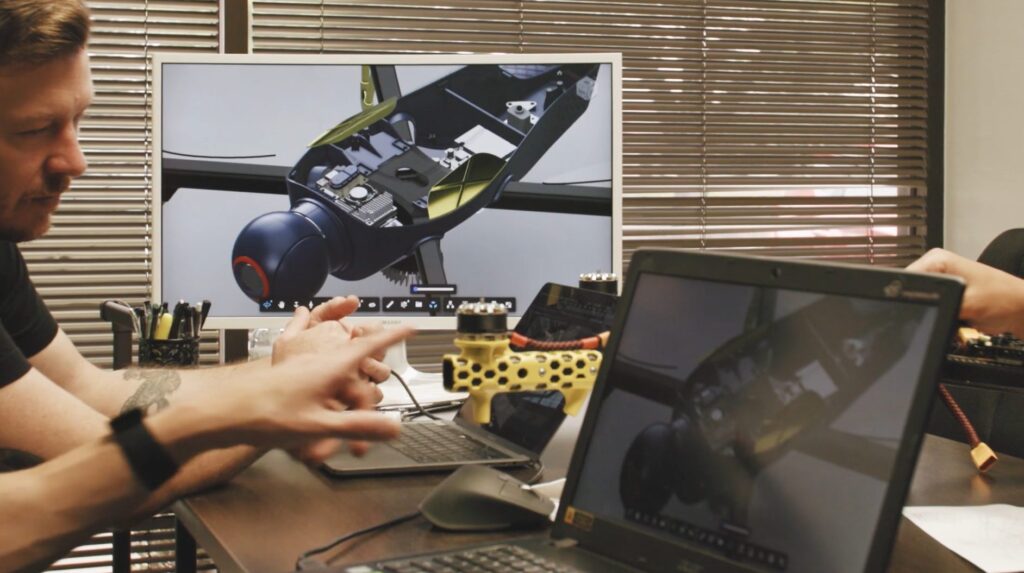
Designing with manufacturing in mind from the beginning
DFM starts earlier than most teams expect. Too often, manufacturability is a downstream validation step. By that point, changes are expensive, timelines are tight, and tradeoffs are limited.
It’s most effective when it shapes decisions during concept and early design:
- Geometry is defined with tooling and processes in mind
- Materials are selected based on availability and performance in production
- Constraints from machining, forming, or fabrication are upfront
This shift reduces friction later, when changes are harder to absorb.
Why DFM matters more now
Products have become more complex and more constrained. Devices are smaller. Assemblies are tighter. Electronics and mechanical systems are no longer separate. They coexist within the same physical space.
That complexity leaves little margin for error. A few millimeters in the wrong direction, a tolerance stack-up that isn’t considered, or a poorly placed connector can cascade into redesign cycles.
Without DFM, these issues tend to surface late, during prototyping or even production. With DFM these issues can occur during design.
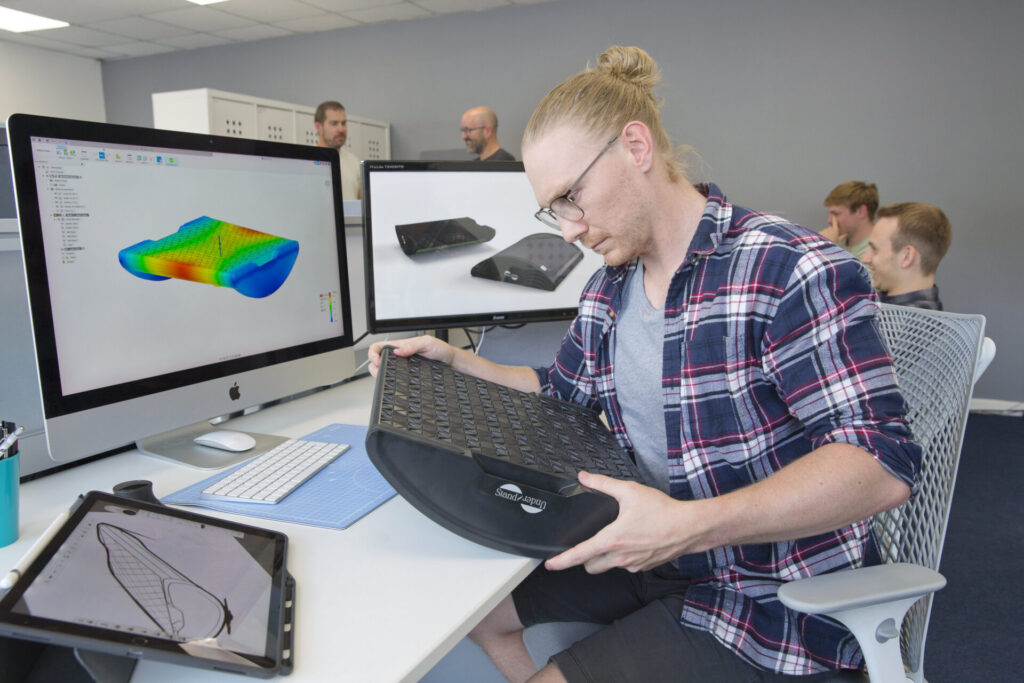
From functional to manufacturable design
A design can be technically correct and still fail in production. DFM bridges that gap by focusing on how to make parts by encouraging:
- Simpler geometries that are easier to produce
- Alignment between design intent and manufacturing processes
- Realistic tolerances based on process capability
- Reduced part counts and easier assembly
The problems DFM quietly solves
Many of the most common product development issues trace back to a lack of manufacturing awareness during design:
- Parts that require custom tooling or inefficient setups
- Designs that are not manufacturable without modification
- Excessive iteration between engineering and production
- Unexpected collisions or clearance issues
These issues rarely arise due to poor engineering. They are usually the result of disconnected workflows where design and manufacturing operate in parallel rather than together. DFM reconnects those decisions.
Designing for real-world processes
DFM isn’t one-size-fits-all. It changes depending on how the part will be made.
CNC machining
Machined parts benefit from designs that respect tooling realities:
- Avoid deep, narrow features that are difficult to reach
- Use standard tool sizes and radii
- Minimize setups by simplifying part orientation
Design decisions directly influence cycle time, tool wear, and cost.
Sheet metal fabrication
Sheet metal introduces its own constraints:
- Bend radii must align with material properties
- Sharp internal corners can lead to cracking
- Hole placement near bends affects structural integrity
Here, DFM ensures parts can be formed reliably, not just modeled.
Additive manufacturing
Additive flips traditional constraints:
- Geometry is less limited, but orientation matters
- Support structures must be considered and minimized
- Material usage and build time become key cost drivers
DFM in additive is about taking advantage of what the process enable, not imposing constraints from traditional manufacturing.
PCB design
In PCB design, manufacturability is inseparable from performance:
- Trace widths and spacing must meet fabrication limits
- Component placement affects assembly and testing
- Thermal constraints influence layout decisions
Small oversights here can result in board failures, assembly defects, or yield loss.
DFM and the path to scale
What works once doesn’t always work at scale. A prototype can tolerate inconsistency. Production cannot. DFM helps teams move from “it works” to “it works every time” by:
- Standardizing materials and components
- Reducing reliance on manual adjustments
- Designing for repeatable processes
This is where DFM has its biggest impact, ensuring products can be produced reliably in volume.
The connection to quality and cost
Cost and quality are often seen at as competing forces. DFM aligns them. When designs are matched to manufacturing processes, there is:
- Less defects
- Less material waste
- Less rework
- More predictable production
The result is lower cost and higher quality, not a tradeoff between the two.
DFM as a mindset, not a phase
The most successful teams don’t “do DFM” at a specific stage. They build it into how they work:
- Collaborate earlier across disciplines
- Validate continuously rather than at handoff points
- Make decisions with production constraints in mind
The shift, from reactive to proactive, changes how products are built.
Where modern tools fit in
DFM becomes significantly easier when design and manufacturing workflows are connected.
Instead of working in separate environments and exchanging files back and forth, teams benefit from working within a system where:
- Design decisions reflect manufacturing constraints in real time
- Changes can be evaluated immediately
- Manufacturing processes are part of the design workflow, not an afterthought
Solutions like Autodesk Fusion bring these capabilities together—connecting design, engineering, and manufacturing in a single environment so teams can apply DFM continuously, not retroactively.
Design for manufacturing (DFM) frequently asked questions
What is Design for Manufacturing?
When should DFM be applied in the design process?
Why is DFM important in product development?
How does DFM support robust design?
What are core DFM principles?
-Simplifying geometry and reducing part count
-Using standard components and processes
-Designing for the selected manufacturing method
-Applying appropriate tolerances
-Optimizing parts for efficient assembly
These principles are more actionable when manufacturing considerations are part of the same workflow, as they are in Autodesk Fusion.
What problems does DFM solve?
-Designs that are difficult or impossible to manufacture
-High production costs and inefficiencies
-Excessive rework and iteration cycles
-Quality defects and variability
-Delays from late-stage design changes
Many of these problems stem from disconnected workflows. Integrated design-to-manufacturing platforms like Autodesk Fusion are designed to reduce these issues.
How does DFM reduce manufacturing costs?
How does DFM impact product quality?
How does DFM support scalable production?
What DFM considerations apply to CNC machining?
-Designing for tool accessibility
-Minimizing setups and repositioning
-Using standard tooling sizes and radii
-Avoiding complex or inefficient geometries
Integrated CAM tools in Autodesk Fusion allow teams to validate toolpaths during design, helping identify inefficiencies early.
How does DFM apply to sheet metal design?
-Maintaining consistent bend radii
-Accounting for material thickness and bend allowances
-Avoiding deformation-prone features
-Optimizing hole and flange placement
Sheet metal workflows in Autodesk Fusion help ensure designs translate accurately into flat patterns and formed parts.
How does DFM change for additive manufacturing?
-Optimizing part orientation
-Minimizing support structures
-Reducing material usage and build time
-Leveraging complex geometries
Designing directly for additive processes is supported by tools like Autodesk Fusion, which help evaluate these constraints during modeling.