 Shannon McGarry
Consumer trends influence product design decisions around cost, speed, and sustainability. Learn how to adapt design strategy to change.

Elevate your design and manufacturing processes with Autodesk Fusion
Consumer behavior used to evolve gradually. Today, it shifts in waves, driven by economic pressure, digital expectations, sustainability concerns, and cultural change. For decision makers, this has changed the role of product design entirely.
Design is no longer just about form and function. It’s a strategic lever that determines speed to market, brand relevance, cost control, and long‑term differentiation. Organizations that treat consumer trends as isolated marketing inputs tend to react too late. Those that translate trends into design decisions early move faster, and win more often.
So how exactly do consumer trends influence product design today?
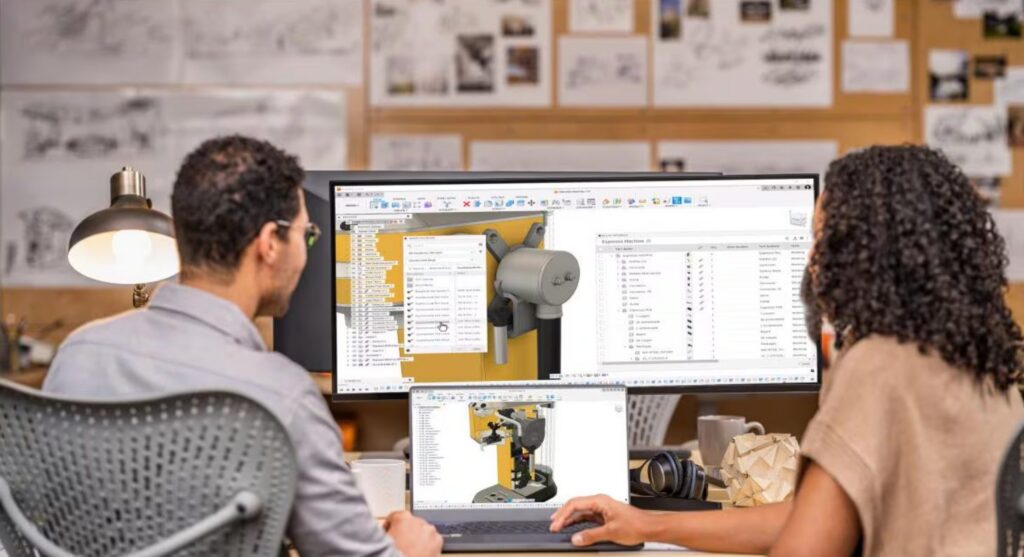
Consumer trends now set the constraints for product design
Modern consumers don’t just influence what products look like—they increasingly define how products must be designed, built, delivered, and supported.
Across industries, several persistent consumer trends are shaping design decisions at the executive level:
- Demand for value and optionality: Consumers are making trade‑offs, seeking affordability in some areas while expecting premium quality or experiences in others. This forces design teams to optimize for cost, performance, and flexibility simultaneously.
- Expectation of speed and responsiveness: Faster delivery cycles and frequent product refreshes mean design can’t be linear or slow. Products must be designed for rapid iteration and change, not long, rigid development timelines.
- Sustainability as a baseline requirement: Environmental impact is no longer a differentiator, it’s an expectation. Material choices, manufacturing methods, and end‑of‑life considerations increasingly influence design viability.
- Personalization and relevance: Consumers expect products that align with their specific needs, values, or contexts. This pushes product teams toward modularity, configurability, and smarter design tradeoffs.
For teams, the implication is clear: consumer trends become design constraints long before they show up as performance issues or missed revenue.
Product design decisions are becoming risk decisions
As consumer expectations rise, the cost of getting product design wrong increases.
A design misaligned with consumer priorities doesn’t just underperform, it can result in excess inventory, supply chain inefficiencies, costly rework, or brand erosion. That’s why more organizations are elevating design decisions into broader risk and investment conversations.
Key questions executives are now asking include:
- Can we validate design choices faster, before committing tooling or production capacity?
- Can we explore tradeoffs—cost, sustainability, performance—earlier in the process?
- Can we adapt designs quickly as consumer expectations shift?
The answers increasingly depend on how connected and flexible the design process is, not just on creativity or tooling spend.
Consumer-driven design favors iteration over certainty
One of the biggest shifts driven by consumer trends is the move away from “get it right the first time” design thinking.
When consumer behavior was predictable, long planning cycles made sense. Today, uncertainty is the constant. Leading organizations design for learning, not just delivery.
This means product teams must be able to:
- Explore multiple design options early
- Evaluate performance, cost, and manufacturability tradeoffs fast
- Respond to feedback and market signals without restarting programs
Design systems that support iteration and agility are what allow companies to stay aligned with evolving consumer expectations.
Why design and manufacturing must stay tightly connected
Consumer trends don’t stop at design, they flow throughout manufacturing, supply chains, and after‑sales experiences.
Sustainability expectations affect materials and processes. Speed expectations affect production planning. Personalization expectations affect configuration and change management. When design decisions are disconnected from downstream realities, organizations feel the friction later, when changes are expensive and slow.
For decision makers, this is less about choosing “better CAD” and more about enabling connected product development, where design, engineering, and manufacturing work from a shared source of truth.
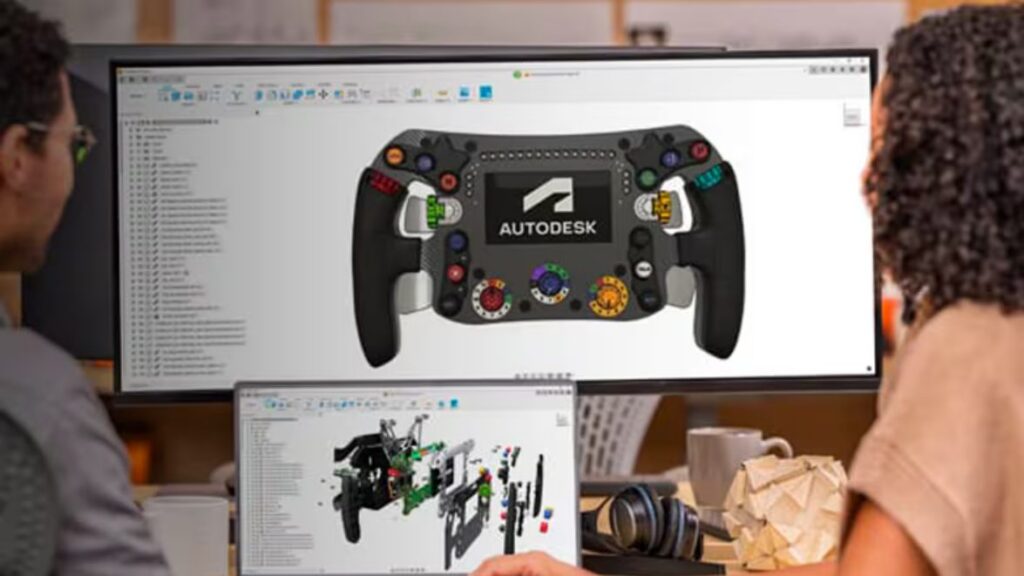
Where Autodesk Fusion fits into the equation
This is where platforms like Autodesk Fusion become strategic, not tactical.
Fusion brings together design, engineering, simulation, manufacturing, and data management in a single, connected environment. That matters because responding to consumer trends requires more than faster modeling—it requires faster decision‑making.
With Fusion, teams can:
- Explore and compare multiple design options earlier in the process
- Evaluate tradeoffs across cost, performance, and manufacturability before committing
- Iterate quickly as consumer expectations shift
- Keep design and manufacturing aligned as products evolve
Rather than treating consumer trends as downstream inputs, Fusion helps organizations incorporate them directly into how products are conceived, tested, and delivered.
Those who choose to invest in connected, flexible design platforms are better positioned to translate consumer insight into competitive advantage. And in a market defined by constant change, that ability is quickly becoming non‑negotiable.
Frequently asked questions about consumer product design software and processes
The best software for consumer product design is one that supports the full workflow—from concept and industrial design through engineering, visualization, and production.
For physical consumer products, teams typically need:
-3D CAD for precise geometry and manufacturability
-Simulation and validation tools
-Photorealistic rendering for stakeholder and consumer review
-Collaboration and data management across design and manufacturing teams
Integrated platforms that combine these capabilities reduce handoffs, minimize rework, and preserve design intent as products move from concept to production. Tools such as Autodesk Fusion are commonly used because they bring design, engineering, simulation, manufacturing, and visualization into a single, connected environment.
Design intent is preserved through production by maintaining a single, connected source of product data from design through manufacturing.
Design intent includes functional requirements, tolerances, relationships between components, materials, and manufacturing constraints. It is most often lost when teams rely on disconnected files, manual handoffs, or static documentation.
Best practices for preserving design intent include:
Parametric CAD modeling that clearly defines relationships and constraints
-Early use of design‑for‑manufacturing principles
-Shared bills of materials (BOMs) that stay synchronized with design changes
-Digital product definitions that align engineering and manufacturing
Connected product development platforms, like Autodesk Fusion help ensure that changes made in design are reflected downstream, reducing misinterpretation and rework during production.
Rendering and visualization are critical in consumer product design because they support design validation, faster decision‑making, and market readiness.
Visualization allows teams to:
-Evaluate form, materials, and finishes before physical prototypes exist
-Communicate design intent clearly to stakeholders, partners, and executives
-Test consumer response and marketing concepts early
-Reduce costs associated with physical prototyping and reshoots
For consumer products, where appearance, emotional response, and brand perception matter, photorealistic rendering plays a key role in both product development and go‑to‑market activities.
The consumer product design process typically follows a series of iterative stages that move from idea to market‑ready product.
While terminology varies by organization, common stages include:
-Research and problem definition
-Concept development and industrial design
-Detailed design and engineering
-Prototyping and design validation
-Design for manufacturing and cost optimization
-Production readiness and launch
Modern teams often revisit earlier stages as consumer feedback, manufacturing constraints, or market conditions change. Software that supports iteration across all stages helps teams respond without restarting the process.
Top consumer product development solutions combine design, engineering, visualization, collaboration, and data management in a single workflow.
Leading solutions typically include:
-Industrial and mechanical CAD for physical products
-Simulation and validation tools
-Rendering and visualization
-BOM management and change tracking
-Cloud collaboration for cross‑functional teams
Platforms such as Autodesk Fusion are commonly used, with integrated solutions increasingly preferred over fragmented toolchains because they reduce complexity and accelerate decision‑making.
Cloud‑based product design software, like Autodesk Fusion, is often better for collaboration, iteration, and distributed teams, while desktop software may offer advantages for specialized or offline workflows.
Cloud‑based design software enables:
-Real‑time collaboration and version control
-Access from any location or device
-Automatic updates and centralized data management
Desktop software may still be preferred for:
-Highly specialized or hardware‑dependent workflows
-Environments with strict offline requirements
Many modern product teams adopt cloud‑enabled or hybrid approaches to balance performance with flexibility and collaboration. The choice depends on team structure, security requirements, and how often designs change across the product lifecycle.