 Mouncey Ferguson
Sponge cities are urban areas designed to absorb, store, filter, and reuse rainwater through green infrastructure, wetlands, permeable surfaces, and sustainable drainage systems. Instead of rapidly channeling stormwater away through pipes, sponge cities work with natural water cycles to reduce flooding, improve water quality, recharge groundwater, and increase climate resilience.
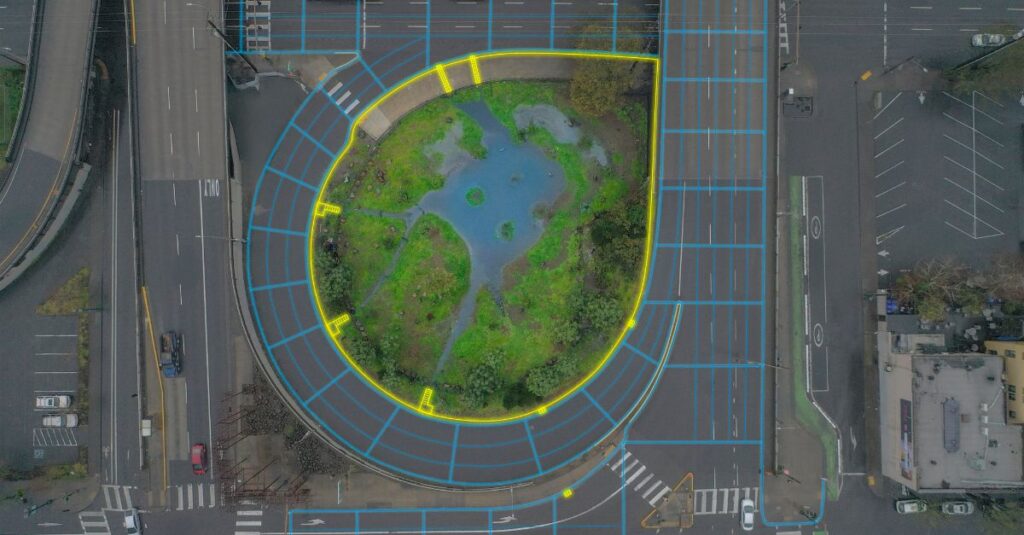
Cities are facing two contradictory crises at once: too much water and not enough. Across the world, heavier downpours are overwhelming drainage systems and flooding streets, homes, and critical infrastructure. Yet many of those same cities are also grappling with longer droughts, depleted groundwater supplies, and growing pressure on freshwater resources. The challenge is no longer simply how to move water away. Increasingly, it is how to manage water more intelligently throughout the entire urban system—to create “sponge cities” that soak up water and store, clean, and release it slowly, in a controlled way.
First named and championed by Chinese landscape architect and scholar Kongjian Yu, sponge cities are about more than specific interventions or tactics. They represent a broader shift toward an integrated, system-level approach to water management—one that recognizes water as part of a connected urban ecosystem rather than a challenge to be managed by pipes alone.
The making of a water visionary: Who was Kongjian Yu?
To understand sponge cities, it helps to understand the person who coined the term.
Kongjian Yu was born in 1963 in Dongyu Village in China’s Zhejiang Province. He grew up in a farming community surrounded by forests, rivers, and agricultural landscapes. As a child, he saw firsthand how water moved across the land through the seasons and how vegetation, soils, and wetlands naturally moderated its flow. He also witnessed the degradation that accompanied pollution and increasingly engineered approaches to stormwater management. Those early experiences would become the foundation of his professional philosophy.
Yu studied landscape architecture at Beijing Forestry University before earning a Doctor of Design degree from the Harvard Graduate School of Design. At Harvard, he was influenced by two thinkers who would shape his worldview: ecological planning pioneer Ian McHarg and urbanist Jane Jacobs. Together, they reinforced the idea that cities must be designed in harmony with natural systems while remaining vibrant places for people to live.
In 1998, Yu founded Turenscape, an interdisciplinary design practice that would go on to complete more than 1,000 projects across more than 200 cities. Throughout his career, he argued that resilience, functionality, and ecological performance should take precedence over purely ornamental design. His research, writing, and built work helped establish nature-based solutions as a credible alternative to conventional modern infrastructure approaches and ultimately led to the development of the sponge city concept.
From catastrophe to national strategy
Yu’s ideas gained national prominence in China following devastating flooding in Beijing in 2012. The disaster killed dozens of people, destroyed thousands of homes, and caused billions of dollars in damage.
In response, China’s leadership elevated sponge cities to a national priority. The country’s strategy called for combining traditional drainage infrastructure with “natural accumulation, natural infiltration, and natural purification.” Ambitious targets followed, including goals for urban areas to capture and reuse a significant percentage of stormwater runoff.
What is a sponge city?
In its essence, a sponge city is an urban environment designed to behave more like a natural landscape. Instead of rapidly collecting rainfall and moving it downstream through channels, pipes, and culverts, sponge cities seek to retain water close to where it falls. They distribute and store water at the source, slow runoff as it moves through the landscape, filter pollutants naturally, and create space for water when accumulation occurs.
There is no single universal sponge city template. Every city has different geology, rainfall patterns, waterways, and cultural context. Effective designs must reflect and respond to local conditions. What connects them is the belief that urban landscapes themselves can function as infrastructure.
“Blue” and “green” versus “gray”
Traditional stormwater systems—at least since the start of the Industrial Revolution—typically follow a simple logic: collect water, move it into pipes, and discharge it elsewhere as quickly as possible. Yu called this “gray” infrastructure.
“When we talk about gray infrastructure, we talk about road, pipe, and water drainage systems which are based on artificial human technology,” Yu said in an interview with Metropolis Magazine in 2023. “In the past centuries, we have been trapped in a misconception that industrial technology can solve humanity’s problems. But based on my village experience in working with nature, I understand that the industrial revolution, while having brought so many blessings for human beings, at the same time is destructive, and is killing the natural systems.”
The goal is not to eliminate gray infrastructure. Cities still need pipes, pumps, and flood protection systems. Rather, the goal is to use natural processes wherever possible so that engineered systems are not forced to carry the entire burden.
It’s a model with an instructive parallel in highway engineering: widening a highway to ease congestion rarely solves the underlying problem for long, because more capacity simply invites more flow until the system is overwhelmed again. Moving water away faster doesn’t address where it ultimately needs to go, it just relocates the bottleneck.
Sustainable drainage approaches take a different tack: slowing runoff, storing it in natural catchments, and letting it infiltrate the ground or evaporate—all while filtering out pollutants along the way, something a concrete pipe was never designed to do.
Although the term “sponge city” originated with Yu in China – the characters 海绵城市 literally translate to “sponge city” – the underlying principles have been embraced around the world under different names.
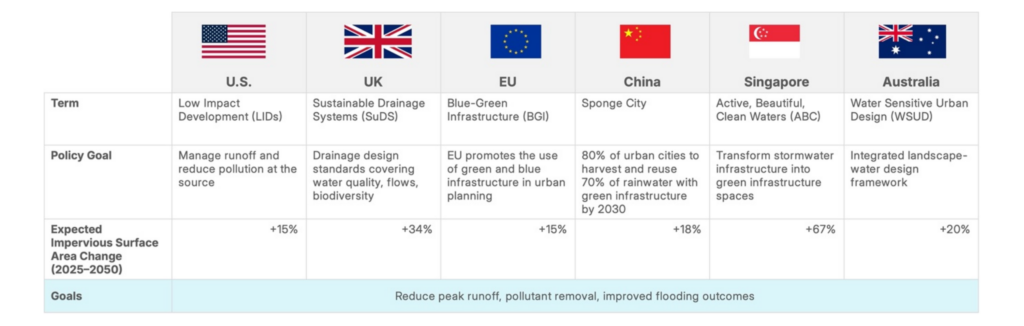
In Australia, practitioners often refer to Water Sensitive Urban Design (WSUD). In the United Kingdom, the concept is widely known as Sustainable Urban Drainage Systems (SuDS). In the United States, related approaches include Low Impact Development (LID), Best Management Practices (BMPs), and various forms of green infrastructure planning.
Other regions use terms such as nature-based solutions or natural infrastructure. But while terminology varies, the objective is largely the same: restore natural water processes within urban environments.
Why sponge cities matter now
The reason sponge cities have moved from interesting case study to urgent priority comes down to a few converging pressures.
Climate change is already altering precipitation patterns – heavier downpours in some seasons, deeper droughts in others – and the United Nations links up to 40% of global weather-related disasters to flooding. In the United States, average precipitation has risen roughly 0.2 inches per decade since 1967, with some regions seeing sharper increases still.
At the same time, urbanization is accelerating. Long-term analyses from the European Commission’s Global Human Settlement Layer show that the world’s built-up surface has expanded dramatically since 1975 – with many regions seeing impervious surface cover rise by anywhere from 15% to more than 60%. This is projected to continue growing through the end of the century. Every acre of pavement added along the way is an acre of ground that can no longer absorb rainfall in a storm–which means the systems built to handle that water have to work harder, even as the storms themselves intensify.
How sponge cities work
Sponge cities employ a diverse toolkit of nature-based interventions designed to mimic natural hydrologic processes. These include:
- Permeable pavements that allow water to infiltrate into underlying soils rather than immediately running off.
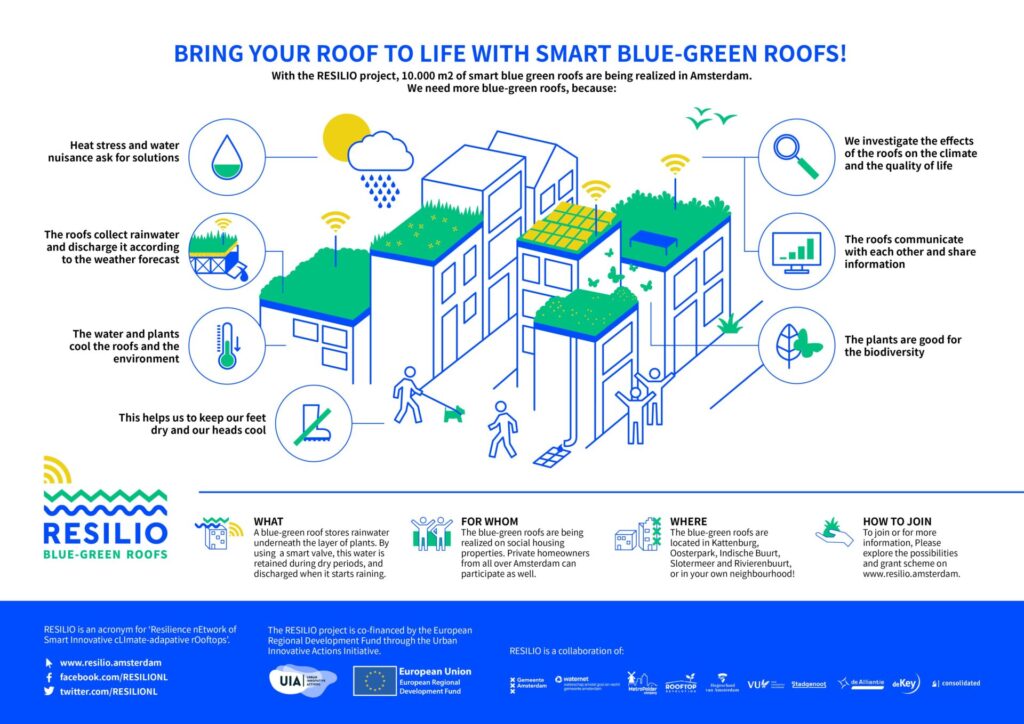
- Green and blue-green roofs that capture rainfall, reduce runoff, provide cooling benefits, and can incorporate additional storage layers for water retention.
- Rain gardens and bioretention systems that collect, filter, and slowly release stormwater.
- Vegetated swales and bioswales that convey runoff while trapping sediment and pollutants.
- Artificial wetlands that provide both storage and natural water treatment.
- Retention ponds and infiltration basins that reduce flood risk while creating recreational and ecological amenities.
Together, these features do more than prevent flooding, although that’s the headline benefit: they recharge groundwater, reduce pollutant loads reaching rivers and lakes, create habitat for urban wildlife, and in dry periods can provide an alternative water source that takes pressure off municipal supply—a multi-functional approach that gray systems, built for a single purpose, were never designed to deliver.

Sponge city examples from around the world
Sponge city principles have already moved well beyond pilot projects.
Copenhagen is one of the most frequently cited examples of a city deliberately rebuilding itself to behave like a sponge, redesigning streets and public spaces to direct and absorb stormwater after severe flooding. In Amsterdam, blue-green roofs have become a creative retrofit: a standard green roof elevated over a crate system that adds real water storage capacity, with valves that let building managers actively control water levels underneath the vegetation—and even reuse that precious water where possible.
In Glasgow, Scotland, a 250-year-old canal has gotten a 21st-century upgrade – sensors and predictive weather technology let operators lower water levels ahead of forecast storms, opening tens of thousands of cubic meters of extra flood capacity. In Houston, Texas, where Hurricane Harvey exposed the limits of the city’s gray drainage network, city planners are turning underused land into rain gardens, wetlands, and detention basins that take pressure off the pipes.
And in Madrid, the newly built Fuenlabrada Fairground Park is a particularly instructive case because drainage wasn’t an afterthought—it was a core design driver from the earliest sketches, on equal footing with landscape and public use. The nineteen-hectare park incorporates rain gardens, bioretention areas, vegetated swales, and infiltration basins throughout the site. “The goal was for the park to behave like a sponge,” says Miguel Rico, Production Director at Green Blue Management, who worked on the project. “Instead of pushing water out of the site as quickly as possible, we wanted to retain, slow, and infiltrate it across the entire system.”
Challenges and tradeoffs
None of this comes for free, of course. Designing genuinely effective green infrastructure requires a multidisciplinary effort coordinating diverse municipal departments and building detailed datasets on watershed behavior, soil conditions, rainfall, wind, and solar exposure to design interventions. Retrofitting existing areas with permeable surfaces and wetlands comes with a price tag, and these systems need ongoing maintenance.
And even well-designed sponge infrastructure has limits: an unusually severe downpour can still exceed its capacity. None of this argues against the approach—it just argues for treating it with the same planning rigor and long-term commitment that gray infrastructure has always demanded.
From scattered interventions to “systems thinking”
This is, in many ways, the central insight sponge cities offer professionals in the field: Water doesn’t recognize the boundaries between a rain garden, a storm drain, a floodplain, and a reservoir; it moves through all of them as part of one connected system. Treating any single intervention—a permeable parking lot here, a bioswale there—as a standalone fix misses the point. The opportunity is to design and manage water at the level of the whole system, where green, blue, and gray infrastructure work together rather than in isolation.
That shift toward systems thinking is happening on the technology side of the industry, too. For years, much of drainage design has relied on disconnected tools—engineers moving between CAD platforms, hydrologic and hydraulic modeling software, and spreadsheets, often rebuilding essentially the same design across different systems.
A growing number of US cities and engineering teams are moving away from that fragmented, study-by-study model toward integrated platforms that support planning, design, and flood analysis together—an approach that research suggests can deliver project timelines 21% faster, with better cross-team coordination and more reliable designs.
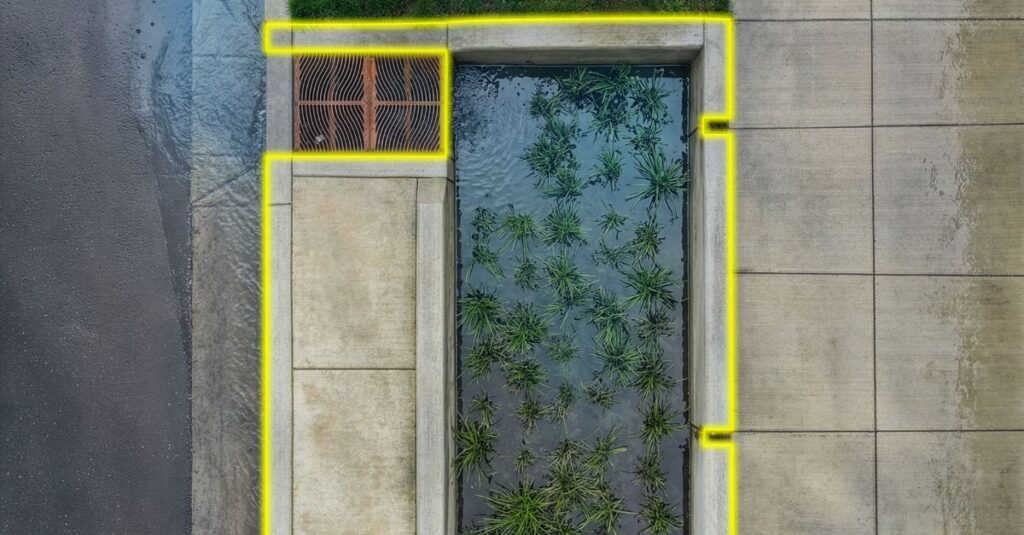
Digital tools play an important role in that transition. Hydraulic modeling applications such as Autodesk InfoDrainage enable engineers to evaluate how sustainable drainage features perform as part of an entire network. SuDS components like swales, ponds, and basins can be represented within integrated hydraulic models, allowing teams to compare alternatives, test climate scenarios, and better understand system-wide impacts.
Integrated within applications like Civil 3D, InfoDrainage lets teams compare design alternatives quickly rather than rebuilding a model from scratch every time an assumption changes. The objective is not simply to add green infrastructure. It is to understand how every intervention contributes to the performance of the overall water system.
Making friends with water
On September 23, 2025, Kongjian Yu and three others were tragically killed when their small plane crashed in the Pantanal wetlands of Brazil’s Mato Grosso do Sul state. He was 62, and had traveled to the country for the São Paulo International Architecture Biennale, where he had just spoken about the ideas that defined his career. The loss was felt globally—tributes came from heads of state and design institutions alike, a measure of how far his thinking had traveled from that farm in Zhejiang Province.
Yet his influence continues to expand. Today, hundreds of sponge city projects are operating across China, while similar approaches are being adopted around the world under different names and frameworks. Engineers increasingly model sustainable drainage systems across multiple climate scenarios. Planners are integrating green infrastructure into master plans. Utilities are looking beyond conveyance toward watershed-scale resilience.
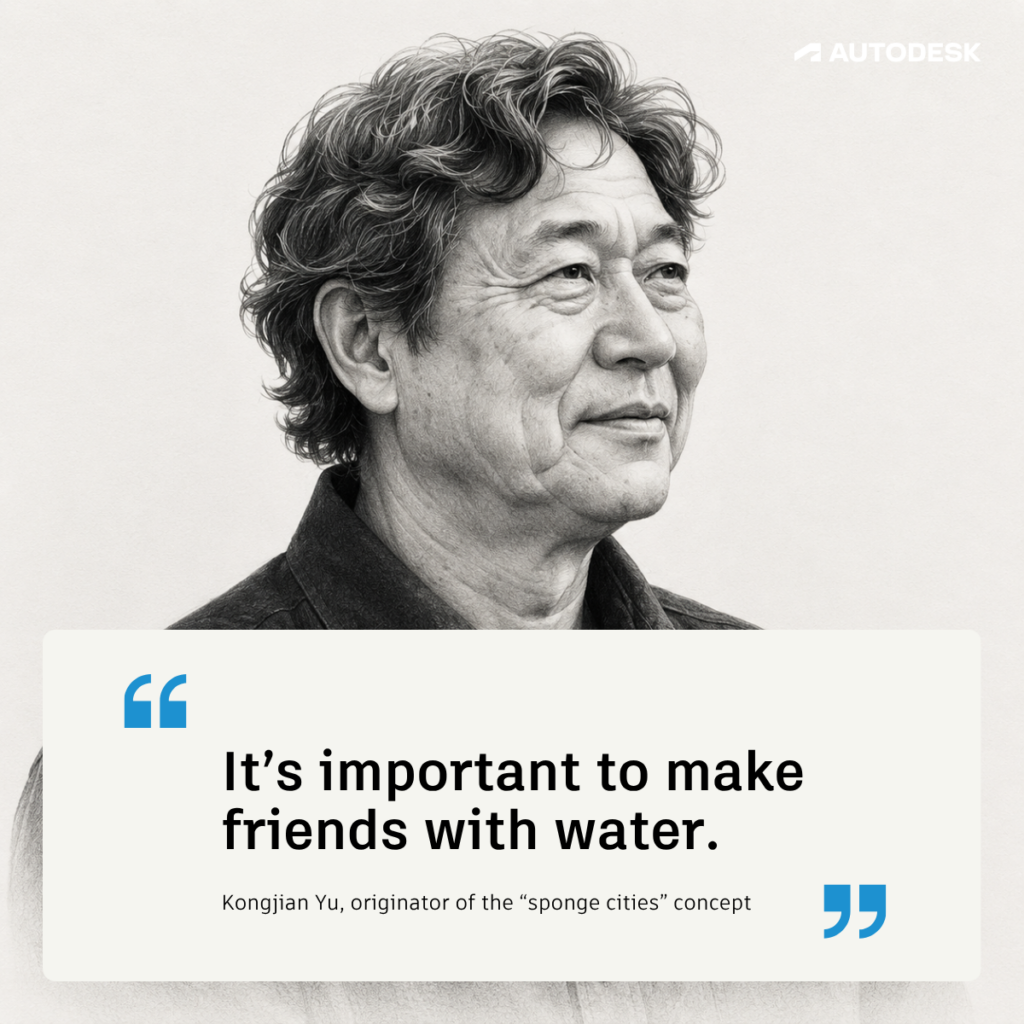
His philosophy was simple: “It’s important to make friends with water.” Rather than treating water as an enemy to be confined and expelled, urban communities can work with natural processes to absorb, store, clean, and reuse it.
“We are not throwing away past civilization, but we have a more science-based and nature-based understanding of our cultural heritage and ancient wisdom,” Yu said in an interview with the American Society of Landscape Architects. “This new civilization is wiser than the past primitive agricultural era, and much more ingenious than the industrial revolution, which was against nature. And we are coming to a new epoch where men and nature become friends.”
By combining ecological wisdom with data-driven planning, sponge cities offer a vision of urban stormwater management that is more resilient, more adaptive, and ultimately more aligned with the natural systems on which cities depend.
They also remind us that progress doesn’t always mean inventing something new. Sometimes it means rediscovering what has worked for centuries, learning from nature, and adapting that wisdom for the challenges of the future. Indeed, some of the best ways forward involve looking backward—recovering water management approaches that predate concrete and pipes, then adapting them, with better data and better design, to a climate and a century Kongjian Yu spent his life trying to help us prepare for.
Frequently asked questions about sponge cities
What is a sponge city?
A sponge city is an urban area designed to absorb, store, filter, and reuse rainwater through green infrastructure, sustainable drainage systems, wetlands, parks, and permeable surfaces. Rather than quickly channeling stormwater away through pipes, sponge cities work with natural water cycles to reduce flooding, improve water quality, recharge groundwater, and increase climate resilience.
Who invented the sponge city concept?
The term “sponge city” was coined by Chinese landscape architect and scholar Kongjian Yu. Drawing on lessons from traditional agricultural landscapes and ecological planning, Yu developed the concept as a way to help cities manage water more naturally. His ideas later influenced China’s national Sponge City Program and have inspired similar approaches worldwide.
Why are sponge cities important?
Sponge cities help communities address some of the most pressing water challenges of the 21st century, including urban flooding, drought, water pollution, and climate change. By slowing, storing, and treating rainwater close to where it falls, sponge cities reduce pressure on drainage infrastructure while creating greener, healthier, and more resilient urban environments.
How do sponge cities reduce flooding?
Sponge cities reduce flooding by capturing rainfall before it overwhelms drainage systems. Features such as rain gardens, bioswales, permeable pavements, green roofs, wetlands, and retention ponds allow water to infiltrate into the ground or be stored temporarily. This slows runoff and reduces peak flows during storms.
What are examples of sponge cities?
Examples of sponge city projects can be found around the world. China has invested heavily in sponge city initiatives through its national program, while cities such as Copenhagen, Amsterdam, Glasgow, and Houston have implemented similar strategies using green infrastructure, sustainable drainage systems, and nature-based solutions to improve flood resilience.
Are sponge cities the same as sustainable drainage systems (SuDS)?
Not exactly. Sustainable Drainage Systems (SuDS) are specific techniques used to manage stormwater, such as swales, detention basins, permeable pavements, and rain gardens. A sponge city is a broader urban planning approach that often incorporates SuDS alongside other forms of green, blue, and gray infrastructure to manage water at a city-wide scale.
What is China’s Sponge City Program?
China’s Sponge City Program is a national initiative launched in 2015 to improve urban flood resilience and water management. The program encourages cities to use natural infiltration, storage, and purification processes alongside traditional drainage infrastructure. Hundreds of projects have since been implemented across China, making it one of the world’s largest urban water management initiatives.
Can sponge cities help with droughts as well as floods?
Yes. While sponge cities are often associated with flood prevention, they can also improve water security during dry periods. By storing rainwater, recharging groundwater, and supporting water reuse, sponge city infrastructure helps cities make better use of available water resources and become more resilient to drought.