 Daniel Moreira
Engineers working in hydraulic modeling are increasingly turning to GitHub, scripting, and AI tools to automate workflows and extend their models – including our customers.

GitHub has become the world’s largest platform for sharing open-source code. Engineers, researchers, and developers use it to publish everything from small scripts to full software projects. Many widely used engineering tools live there: from small utility scripts to full-featured modeling software relied on by utilities and consultants worldwide.
In 2021, our Autodesk Water Customer Success team started using GitHub for a much simpler reason: We were tired of emailing the same Ruby scripts to customers again and again. What began as practical fix for a small annoyance has since grown into something we did not fully anticipate – a shared engineering resource with 220,000+ views and contributions spanning six products.
Why engineers use GitHub for hydraulic modeling
Before explaining how our repository grew, it helps to understand why GitHub matters to engineers.
At its core, GitHub is a hosting platform for code. If you have a script or a tool you want to share, GitHub gives you a permanent, version-controlled home for it. Anyone with the link can access it, download it, and – critically – raise issues or suggest changes. When our team updates the code, everyone who visits the repository gets the latest version automatically.
This makes it fundamentally different from an email or a support ticket. When you send a script by email, you lose control the moment you hit Send. If you find a bug, you have to email everyone again. If you want to improve it, you have to track down who has which version. GitHub removes all of that friction.
EPANET is a well-known example of what GitHub enables at scale: a complex, widely adopted piece of engineering software maintained openly, updated by a community of contributors, and trusted by professionals globally. Our ambitions were much smaller, but the underlying logic was the same.
How our GitHub repository started
The Autodesk Water Customer Success team started with InfoWorks ICM. Whenever we needed to share a Ruby script, we would publish it in our GitHub repository. It was organized by task, with documentation explaining what each one did.
From then on, customers could find those scripts directly, and we could update them in one single place. If anyone spotted a bug or had a suggestion for an improvement, they could submit an Issue or a Pull Request, contributing back to something that would benefit everyone.
Some of the first scripts we uploaded covered areas such as:
- Connectivity: Assign every subcatchment in a model to its nearest node automatically
- Calibration: Adjust roughness values across all river reaches in a single pass
- Setup: Run simulations from scratch – on a schedule or triggered by an event – with no manual intervention
- Migration: Move entire models between platforms with automatic data matching
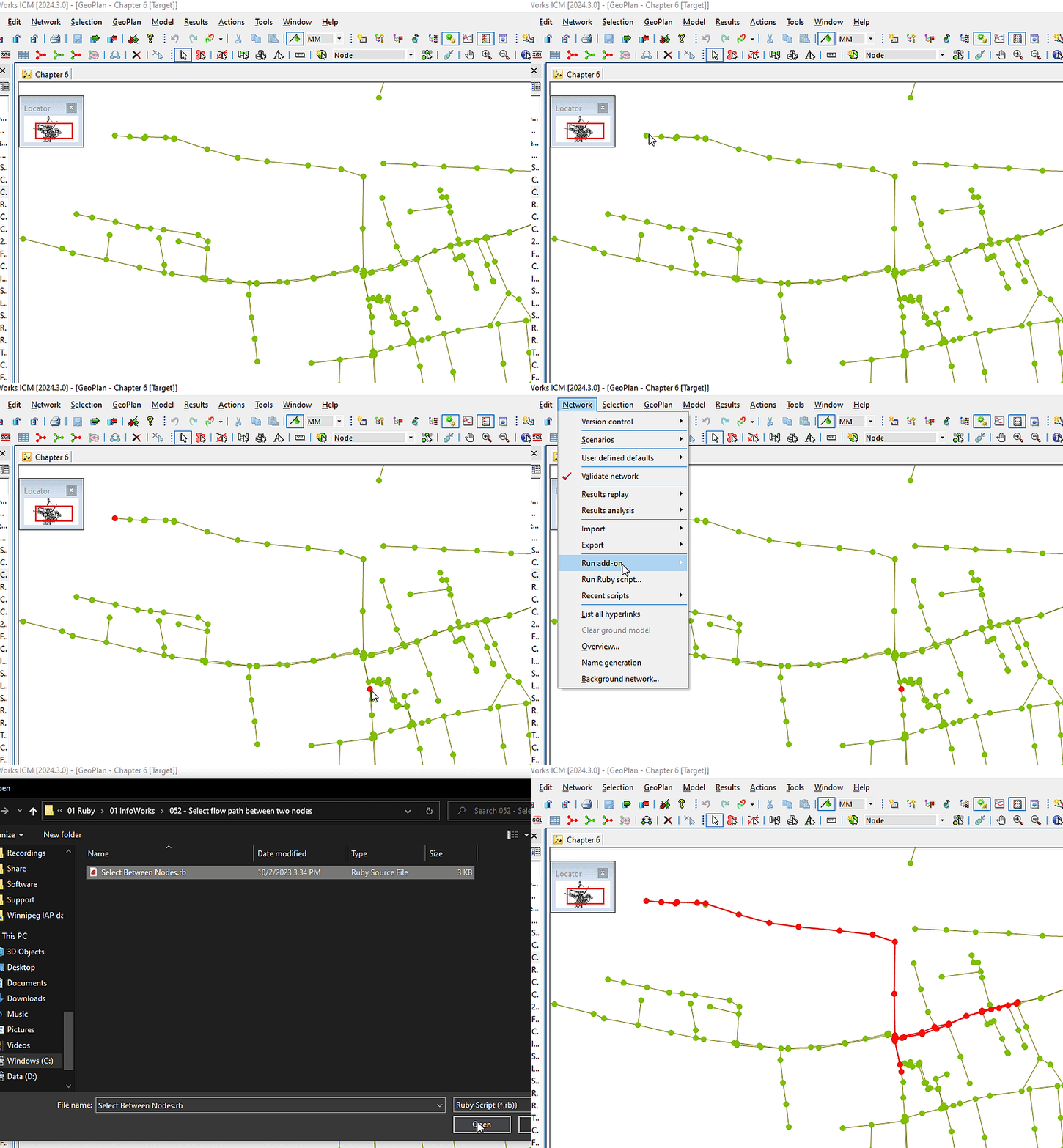
How scripting and automation scaled across water modeling tools
The early months were modest. In our first year, the repository received around 8,700 views. Steady, but not dramatic.
Growth accelerated in 2022 and 2023 as more Autodesk Water Infrastructure teams began contributing. What started as a collection of InfoWorks ICM Ruby scripts expanded to cover six products and multiple programming languages:
- InfoWorks ICM: Ruby, SQL, and Python scripts for integrated catchment modeling
- InfoAsset Manager: Ruby and SQL tools for asset management workflows
- ICMLive: Time-series database scripts and data formats for real-time operational platforms
- InfoWorks WS Pro: Ruby, SQL, and VBScript for water distribution modeling scripts
- InfoWater Pro: Python integration tools for ArcGIS-based water modeling
- XPSWMM: Tutorials and resources for stormwater and flooding analysis
Today, the repository contains more than 700 scripts and tools. Everything grew organically, driven by real customer questions and real use cases.
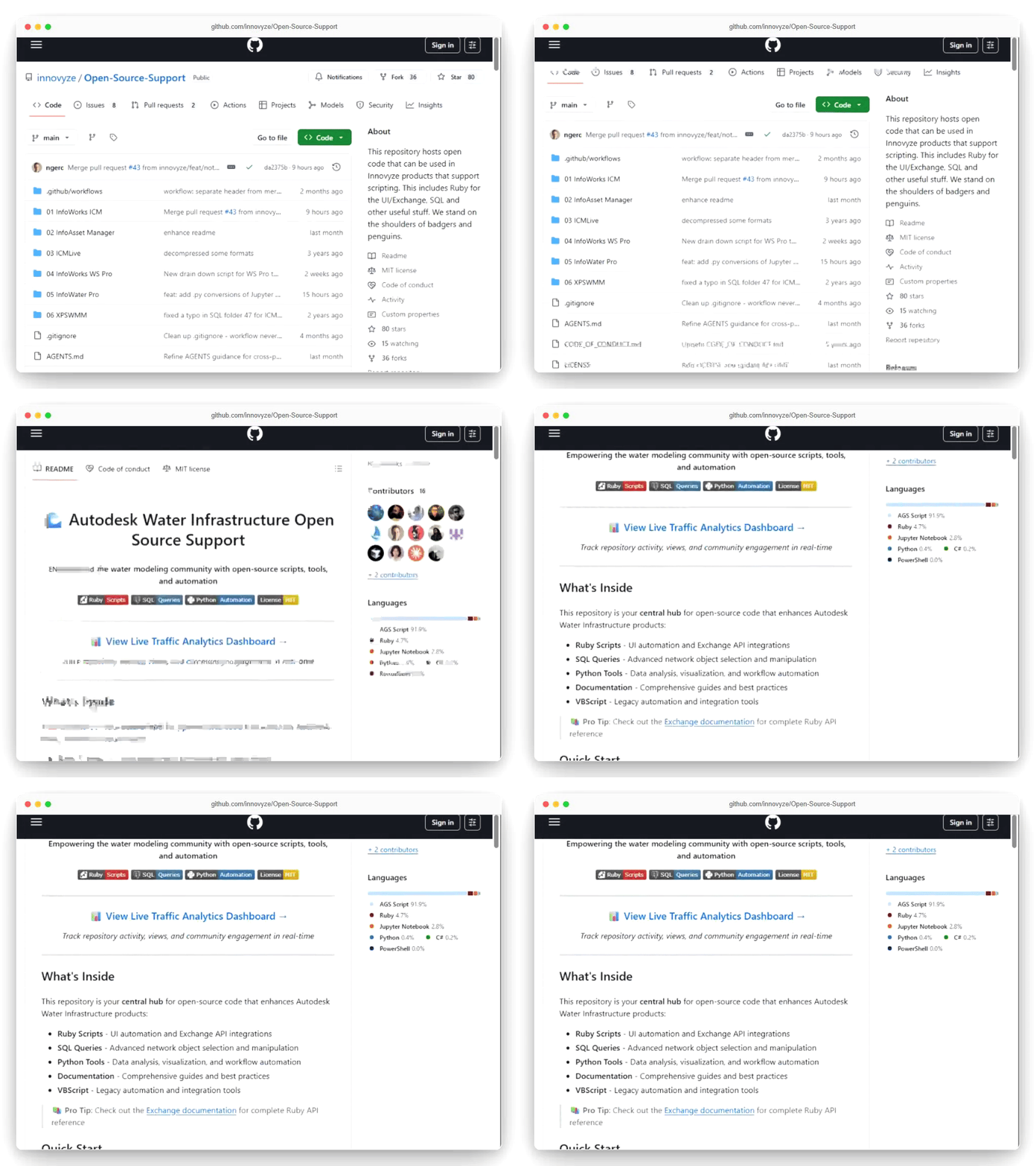
What the data shows about adoption
We have tracked the repository’s traffic since launch through a live analytics dashboard. As of March 2026, the headline figures are:
- 220,000+ total views
- 19,000+ unique visitors
- 4,000+ full repository downloads (clones)
- 130+ average daily views
- 3,000+ peak single-day views
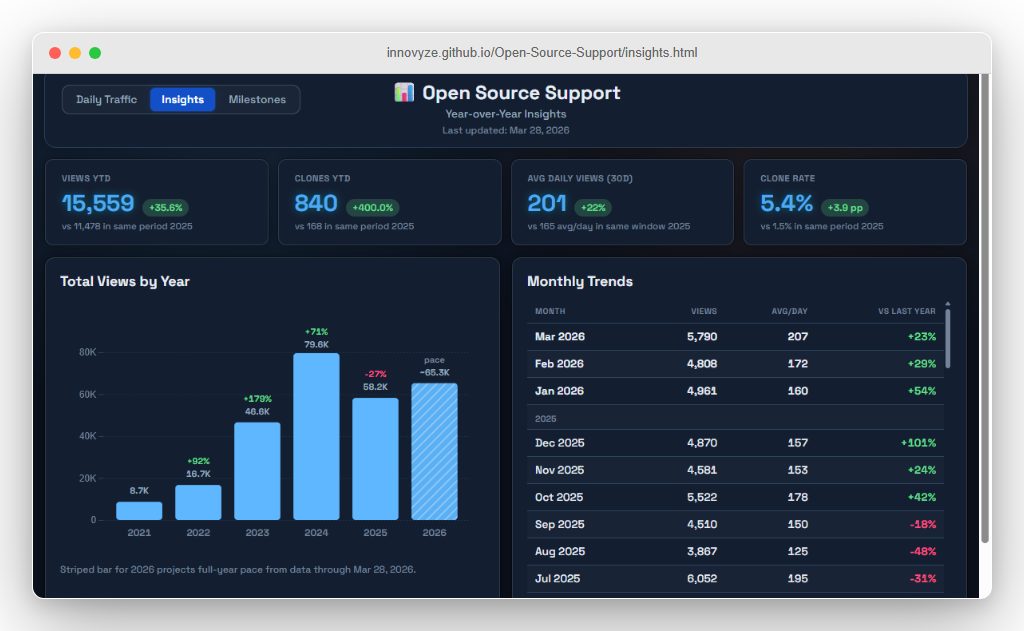
The year-over-year growth pattern is striking:
- 2021: Around 8,700 views in the first year
- 2023: Grew to 46,600, a 179% increase on 2022
- 2024: Another 79,600 views, up 71% on the previous year
- 2026 Q1: Already ahead of the same period in 2025
📈 Clone rate reflects intent: A rate four times higher than the same period last year tells us engineers are not just copy-pasting the occasional script; they are downloading the full repository and putting the code to work.
How AI is accelerating hydraulic modeling automation
If you look at the traffic data alongside the timeline of major AI releases, a pattern emerges. Traffic spikes correlate closely with landmark moments in AI coding tools.
We even track this correlation publicly. Here are the highlights:
- GitHub Copilot (mid-2021): Public preview coincided with a noticeable uptick in repository activity.
- ChatGPT (late 2022): Launch drove further growth as engineers used it to write and adapt scripts.
- GPT-4 (March 2023): Monthly views jumped from around 1,600 to more than 4,500 within months.
- Claude 3 (early 2024): Views peaked at near 10,000 in a single month.
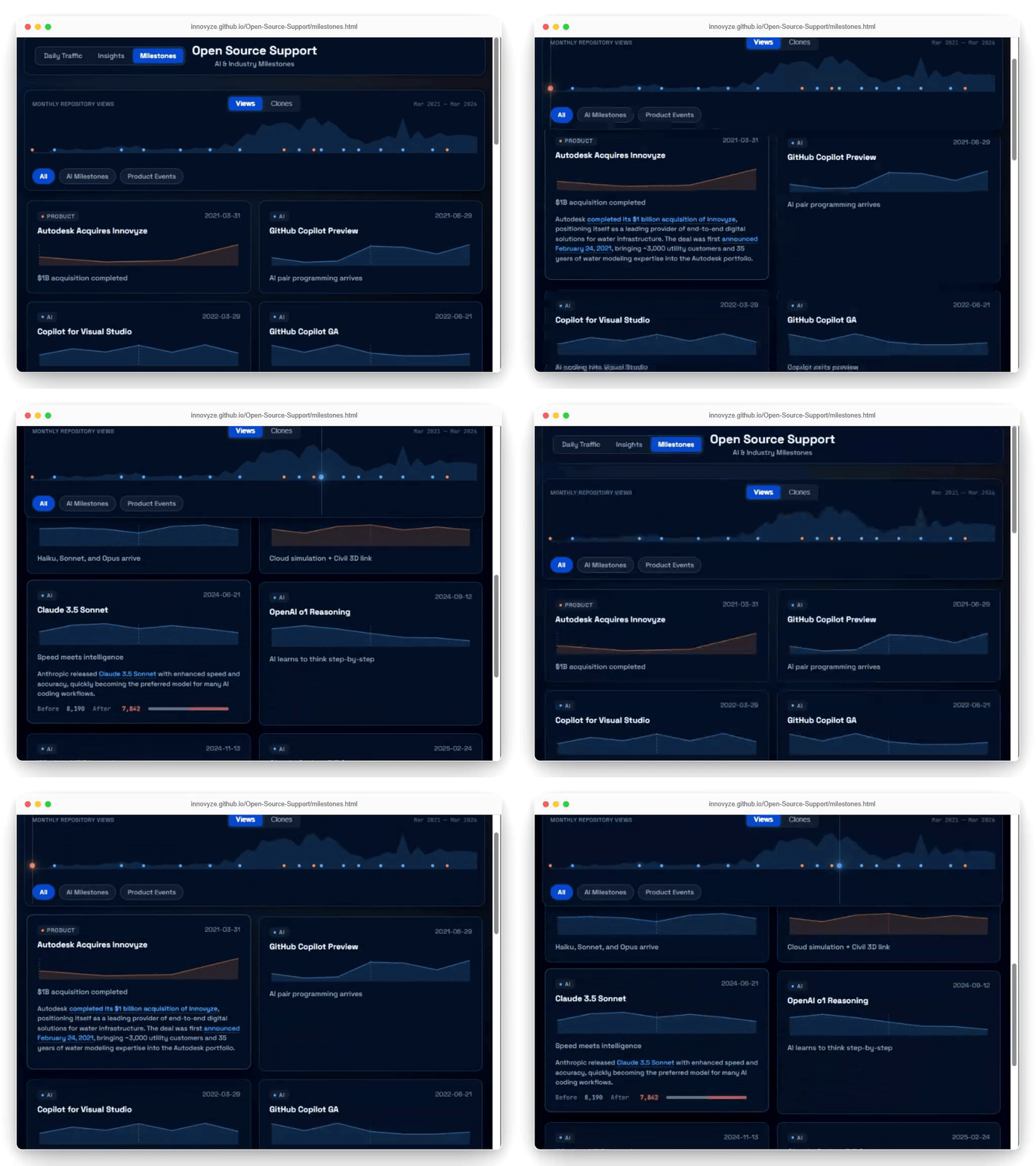
As AI lowers the barrier to writing and understanding code, more engineers are discovering our repository and using the scripts as starting points for their own automation. Some run them directly; others adapt them; others feed them to AI assistants to generate new variations tailored to their workflows.
This reflects a broader shift in how users interact with software. There is real and growing appetite in the water engineering community for practical automation, and AI is making that accessible to more people.
📚 We explored this idea directly in a recent post on using AI agents with Ruby scripting to explore hydraulic modeling automation.
Engineering knowledge raises the ceiling. AI tools don’t replace domain expertise, but they do accelerate how it’s applied. Workflows that once took days to prototype can now be drafted in minutes.
The shift toward programmable water modeling
Every script in the repository represents a manual process that used to require deep scripting knowledge or a call to our Customer Success to automate. These are not exotic capabilities, they are tasks engineers routinely need to do. And when stringed together, they enable more complex workflows to emerge.
If you have been curious about scripting but weren’t sure where to start, the repository is a good entry point. You don’t need to understand every line of code to use these scripts productively. If you want to learn, the examples are concrete and well-documented.
What’s next for automation in water engineering
The repository keeps growing, and the community is growing with it. As AI makes coding more accessible, our role is evolving: from a library of ready-made solutions to a reference point for engineers building their own automations. That’s the community we’re building for.
None of this would exist without the people who built it. A huge thank you to our contributors:
- Alex Grist
- Chaitanya Lakeshri
- Dave Watts
- Kate Maschmann
- Krzysztof Tchorzewski
- Mel Meng
- Nathan Gerdts
- Oli Moravszky
- Robert Dickinson
Along with every engineer who has submitted a pull request, reported an issue, or shared a script with a colleague.
💡 Pro tip: Point your AI coding assistant (GitHub Copilot, Claude, ChatGPT, or similar) at our repository. The scripts are built for real workflows, which gives AI tools grounded context for generating accurate automation tailored to your specific needs.
Explore our GitHub resources and automation tools
The Autodesk Water GitHub repository is open to everyone. Whether you’re looking for a specific script, want to contribute, or just want to see what’s there, we’d love for you to take a look.
- Browse our live GitHub repository
- View the live analytics dashboard.
- Almost ready to get started with AI? Read the article Using Ruby scripting with AI agents to extend and improve your hydraulic models.