 Markus Cueva
Learn what discrete event simulation is, how it works, and why manufacturers use it to improve throughput, reduce risk, optimize factory layouts, and make better operational decisions.
FlexSim: 3D Discrete Event Simulation Software
Easy-to-use 3D simulation modeling and analysis software with high-end capabilities. Predict and optimize production processes with realistic 3D visuals and data-driven scenarios.
What is discrete event simulation?
Discrete event simulation (DES) is a modeling technique that represents a real-world system as a sequence of events occurring over time. In manufacturing, those events might include materials arriving, machines starting or stopping, operators completing tasks, equipment failures, or products moving between workstations. Each event changes the state of the system and affects overall performance.
By simulating these events in a virtual environment, manufacturers can analyze workflows, test process changes, and predict outcomes before making costly changes on the shop floor. Rather than relying on assumptions, spreadsheets, or trial-and-error, DES enables data-driven decision-making based on how operations are likely to behave in the real world.
For manufacturers facing increasing pressure to improve efficiency, reduce costs, and scale production, discrete event simulation has become a foundational technology within the digital factory.
Why traditional planning methods often fall short
Manufacturing environments are rarely predictable. Machine breakdowns occur. Material deliveries arrive late. Demand shifts unexpectedly. Workers operate at different speeds. Upstream delays create downstream bottlenecks.
The challenge is that these variables interact with one another over time. A decision that appears beneficial in a spreadsheet may produce unexpected consequences once variability, resource constraints, and process dependencies are introduced.
Traditional analysis tools often struggle to account for three critical manufacturing realities:
- Variability: Real-world operations are influenced by uncertainty and random events.
- Interdependency: Resources, machines, processes, and people affect one another.
- Time: Problems often emerge over hours, days, or weeks rather than in a static snapshot.
Discrete event simulation captures these factors, allowing manufacturers to see how a system behaves dynamically rather than relying on assumptions.
How discrete event simulation works
A DES model typically includes three key elements:
- Entities: The items moving through the system, such as products, components, pallets, vehicles, or customers.
- Resources: The assets required to perform work, including machines, operators, conveyors, forklifts, robots, and workstations.
- Events: The actions that change the state of the system, such as a machine finishing a cycle, a shipment arriving, a product entering a queue, or a robot completing an operation.
Once a model is built using operational data such as cycle times, production rates, capacities, and equipment availability, manufacturers can run simulations to evaluate different scenarios and compare outcomes.
What can manufacturers use DES for?
Discrete event simulation supports a wide range of manufacturing applications.
Factory layout validation
Before moving equipment or redesigning a facility, manufacturers can simulate proposed layouts to identify bottlenecks, validate throughput targets, and understand material flow impacts without disrupting production.
Throughput analysis
Manufacturers often use DES to determine whether a production line can meet demand, identify capacity constraints, and understand the impact of changes on output.
Buffer and inventory optimization
Simulation helps teams determine optimal buffer sizes, work-in-progress levels, and inventory strategies by evaluating how materials move through the system.
Capital investment decisions
Before purchasing new equipment or expanding a facility, manufacturers can test multiple scenarios virtually to understand expected performance and ROI. This reduces risk while supporting more confident investment decisions.
Material handling and logistics
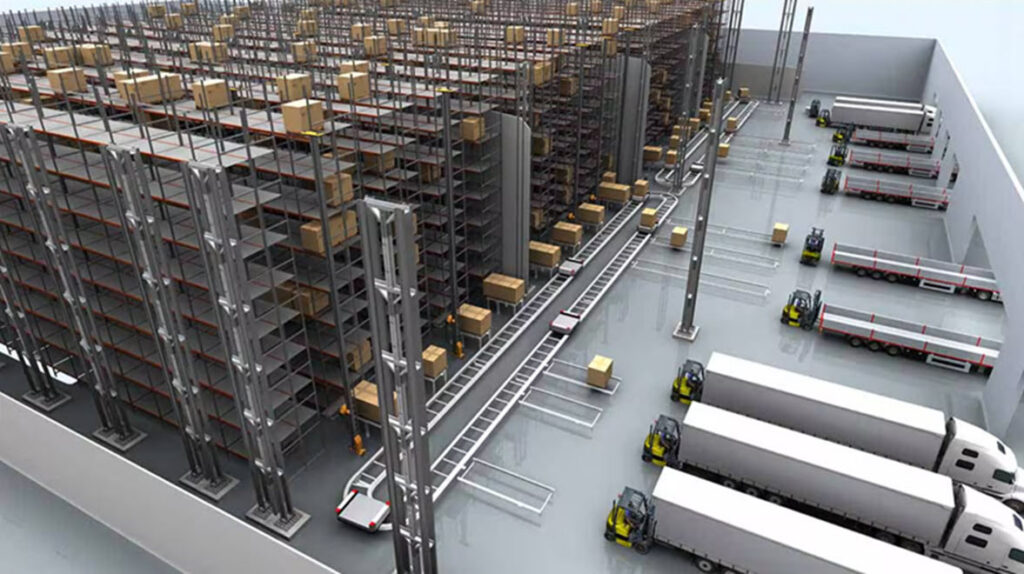
DES can model warehouse operations, automated guided vehicles (AGVs), conveyors, and transportation systems to optimize movement throughout a facility.
Workforce planning
Simulation can also evaluate operator assignments, workforce utilization, travel paths, and labor requirements to improve productivity.
The benefits of discreve event simulation
Manufacturers increasingly adopt DES because it helps answer important operational questions before changes are implemented. Key benefits include:
- Reduced risk: Test operational changes virtually before making real-world investments.
- Improved throughput: Identify bottlenecks and understand how changes affect production output.
- Better resource utilization: Optimize equipment, labor, and facility resources based on actual system behavior.
- Faster decision-making: Evaluate multiple scenarios quickly without disrupting production schedules.
- Lower costs: Avoid unnecessary capital expenditures and reduce operational inefficiencies through data-backed planning.
Discrete event simulation and the digital factory
As manufacturers pursue digital transformation initiatives, discrete event simulation is becoming a core component of the digital factory.
Modern manufacturers are connecting design data, production systems, facility information, operational data, and simulation models to create virtual representations of manufacturing environments. Simulation allows teams to evaluate future-state scenarios before implementing them physically.
This approach helps organizations move from reactive decision-making to proactive optimization.
Rather than asking:
“Why did this bottleneck happen?”
Manufacturers can ask:
“What will happen if we add another machine?”
“Will this factory layout support future demand?”
“How will equipment downtime affect production?”
“What happens if order volume increases by 20%?”
DES provides a structured framework for answering those questions before costly decisions are made.
How Autodesk FlexSim supports discrete event simulation
For manufacturers looking to implement DES, Autodesk FlexSim provides 3D simulation capabilities for modeling, analyzing, and visualizing manufacturing and logistics processes. Internal Autodesk resources describe FlexSim as a discrete event simulation platform used to optimize factory operations, warehouse processes, material handling systems, production lines, and workforce utilization.
With simulation models built from real operational data, teams can evaluate different scenarios, validate process changes, identify bottlenecks, and improve decision-making before changes reach the shop floor.
See how Autodesk FlexSim helps manufacturers simulate production systems, identify bottlenecks, and optimize operations before changes reach the factory floor.
Frequently asked questions
Discrete event simulation is a modeling method that represents manufacturing operations as a sequence of events occurring over time. It helps manufacturers analyze processes, predict outcomes, identify bottlenecks, and evaluate changes before implementation.
A discrete event simulation model focuses on how processes behave over time and under different conditions. A digital twin is a broader virtual representation of a physical asset, system, or facility that may incorporate simulation, operational data, sensors, and real-time feedback.
Manufacturers use DES to improve throughput, optimize factory layouts, reduce capital investment risk, validate production changes, and make better operational decisions using data rather than assumptions.
Yes. One of the primary uses of DES is identifying bottlenecks and understanding how process changes impact flow, equipment utilization, and production output.
DES is commonly used across automotive, aerospace, industrial machinery, electronics, logistics, warehousing, consumer products, and other manufacturing sectors where operational performance depends on complex, interconnected processes