 Jim Byrne
Learn how PHS West scaled design automation and product configuration with Autodesk Inventor, reducing errors and cutting sales drawings from hours to minutes.
PHS West, a leading manufacturer of highly configurable medical carts and large-scale data center infrastructure solutions, has built its reputation on quality, customization, and close collaboration with customers. As product complexity and demand for rapid response increased, the company faced a familiar challenge: how to scale engineering support for sales without sacrificing accuracy, speed, or innovation.
As Andrew, a lead designer at PHS West, explains:
“My goal has been to relieve the pressure on the back end so we can concentrate more on the specific niche things that customers are asking for.”
By standardizing on Autodesk Inventor, Vault Professional, and the Product Design & Manufacturing Collection and by applying advanced design automation, iLogic, and multi-body modeling techniques, PHS West fundamentally transformed its engineering workflows. The result is a highly scalable, resilient configuration system that reduces sales drawing turnaround from hours to minutes, minimizes errors, and frees engineering talent to focus on innovation rather than repetitive tasks.
About PHS West
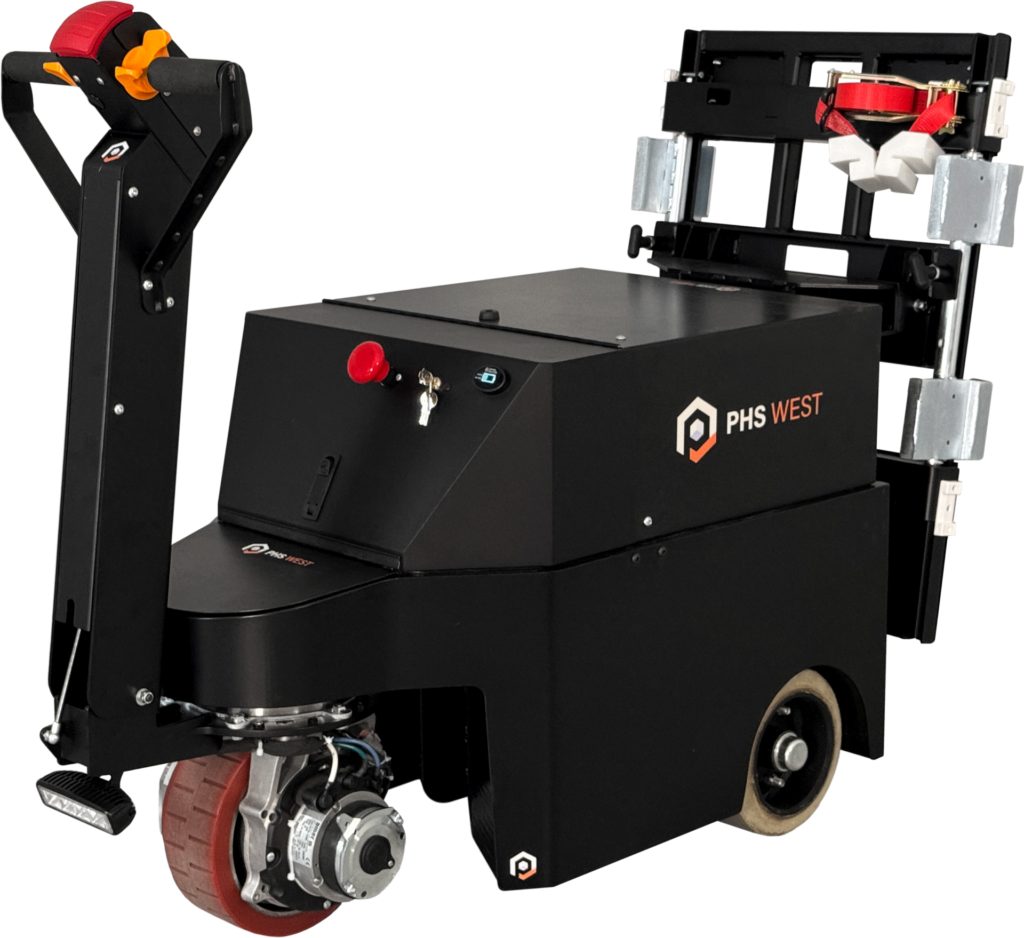
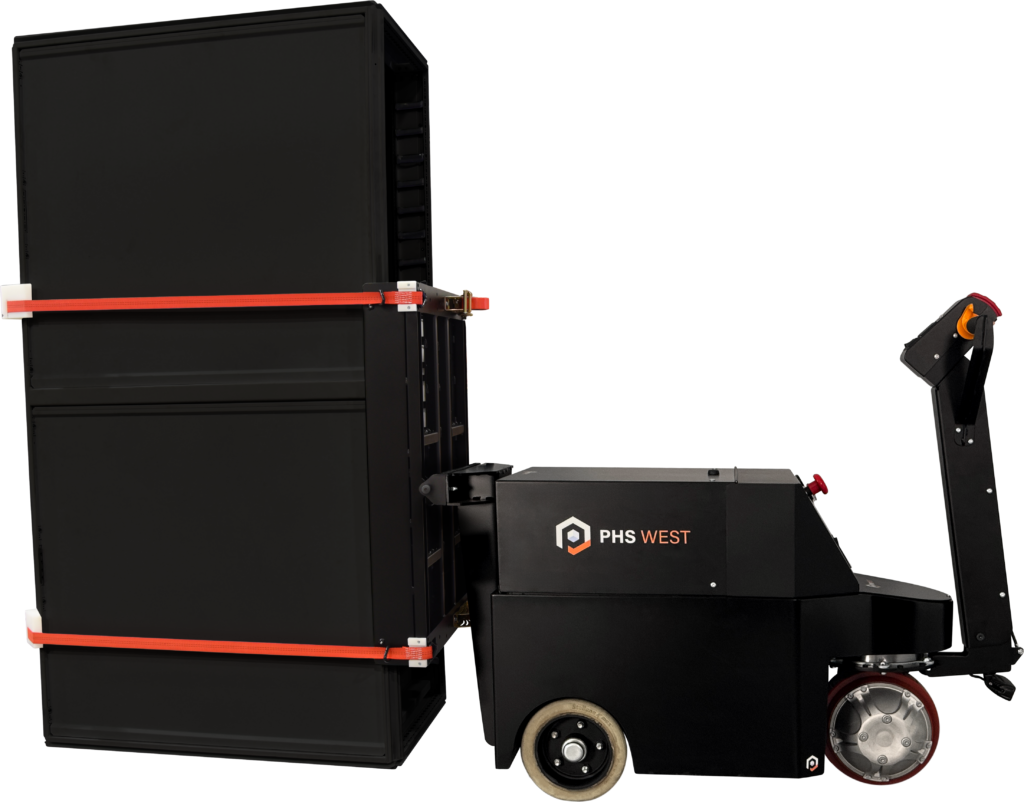
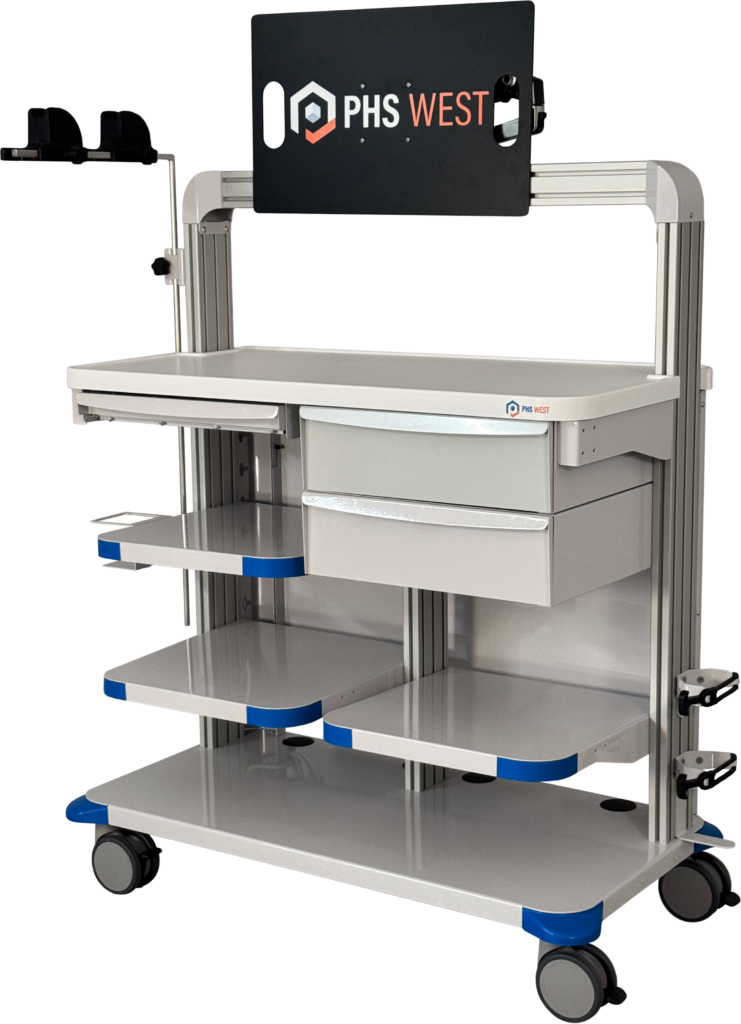
Founded nearly 30 years ago, PHS West designs and manufactures premium solutions for healthcare environments and data centers. In healthcare, its configurable endoscopy carts are deployed in hospitals where ergonomics, reliability, and customization are critical. In data centers, PHS West delivers massive, highly engineered server rack tug systems that can move racks weighing more than 5,000 pounds and must meet exacting structural and manufacturing requirements. Allowing their customers to easily move the server racks through their facility.
Customization is central to PHS West’s value proposition. Rather than selling fixed products, the company offers configurable systems tailored to each customer’s workflow. That flexibility, however, places heavy demands on engineering, especially during the sales cycle, when fast, accurate visualizations and bills of materials are essential.
The challenge: Scaling sales support without scaling errors
Historically, PHS West relied on a manual and semi-automated “sales to CAD” process. Sales requests included hand-marked drawings, checklists, and written notes that engineers interpreted to produce sales drawings.
Andrew describes the issue:
“There were two points of human contact, and that’s where contention crept in. What monitor arm are you asking for? What basket are you asking for? And if it wasn’t clear, it created this loop of unanswered problems.”
While the approach worked, it introduced long turnaround times, interpretation errors, and systems that were difficult to maintain or scale. Some sales configurations took up to three hours to complete, often tying up experienced engineers in repetitive work.
“Everything required human interpretation,” Andrew says. “And that’s where mistakes happen, not intentionally, but because people are busy.”
As sales volume and product complexity increased, it became clear that incremental improvements would not be enough. PHS West needed a system that could reliably scale.
The solution: Inventor-driven configuration and design automation
PHS West reimagined its sales engineering workflow around iLogic in Autodesk Inventor and data management in Vault Professional.
Data-driven configuration
Instead of relying on human interpretation, Andrew created a custom Excel-based configuration interface for sales. Sales representatives select options such as cabinet styles, drawers, monitor arms, shelves, and accessories through a guided form that enforces valid combinations.
Andrew explains why Excel was critical:
“We already had a lot of data. Excel made sense because it’s familiar, it’s powerful, and Inventor can read it directly.”
Once completed, the Excel file becomes the single source of truth. Inventor reads the data and builds the configuration automatically. This approach eliminates ambiguity and ensures that what sales specify is exactly what engineering delivers.
“It takes about 45 seconds,” Andrew says. “Your CAD is done. After that, it’s just a little bit of finesse.”
Advanced use of model states
To support configurability at scale, PHS West adopted an advanced model state strategy. Multiple fully defined configurations, including complete bills of materials that are housed within a single Inventor model using model states. Custom logic dynamically selects the correct state without requiring users to know internal naming conventions.
This method ensures:
- Accurate BOM control
- Repeatable placement and orientation of components
- Scalable addition of new options without rewriting core logic
Robust error handling
Unlike earlier automation tools that failed silently, the new system includes segmented, repeatable code with built-in error handling. If one component encounters an issue, the system continues building the rest of the assembly and reports the error for follow-up, keeping sales and engineering moving forward.
Integrated advanced simulation
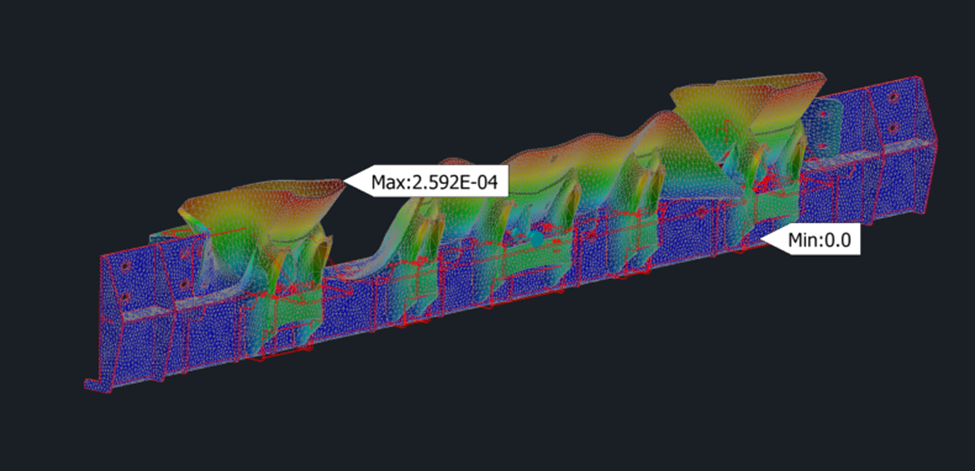
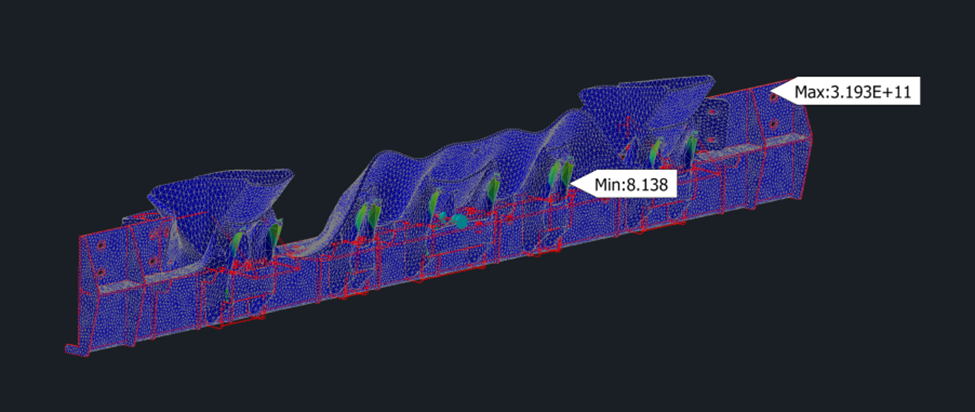
“NASTRAN is a critical tool for my work. Being able to quickly and easily check a new design’s integrity before even ordering prototype parts is the typical use case of simulation tools, but I am regularly running into more ways NASTRAN helps me. In the industry we serve, things are constantly moving towards bigger, heavier, more complicated loads. In one particular case, our old design is no longer able to handle the new standard load, so I was able to use NASTRAN to find the areas of the old design that needed additional support, which allowed me to create a field-serviceable retrofit that adequately increased the rating of the product, drastically shortening the lead time for a solution for our customers.”
-PJ Heller Product Design Engineer, PHS West
Multi-body modeling: Accelerating complex design with Inventor
Beyond sales automation, PHS West has embraced multi-body modeling in Autodesk Inventor to accelerate the design of complex products, particularly in sheet metal and structural systems.
For large assemblies such as next-generation data center units, engineers create master multi-body models that define geometry, clearances, and interfaces. Individual components are then derived downstream.
This approach delivers significant benefits:
- Rapid iteration during early design phases
- Consistent geometry across all dependent parts
- Dramatically reduced revision errors
- Faster transition from concept to production drawings
In practice, initial design cycles that once took weeks can now be completed in less than half the time.
Vault Professional: Controlling data, enabling agility
Vault Professional plays a critical role in PHS West’s success. With controlled lifecycles, permissions, and a centralized Content Center, Vault ensures that all users work from the same, validated data.
Key benefits include:
- Protection against accidental changes to released designs
- Easy rollback of revisions when requirements change
- Centralized management of material libraries, sheet metal styles, and iLogic rules
- Rapid deployment of updates across the engineering team
By storing automation logic and design standards in Vault, PHS West can update workflows centrally and keep every user aligned.
Business impact
The transformation has delivered measurable and strategic results:
- Sales drawing turnaround reduced from hours to minutes
- Engineering time savings of at least 30 minutes per sales request
- Significant reduction in errors and rework
- Improved customer responsiveness, often within the same business day
Andrew summarizes the impact this way:
“If we can take a process that was three hours and turn it into fifteen minutes, we give that time back to engineering and that changes everything.”
The benefits extend beyond engineering. Faster, more accurate responses allow sales teams to engage customers more effectively and strengthen long-term relationships.
“The feedback we get is always the same,” Andrew adds. “Thank you for the fast response. Thank you for the accuracy. And thank you for pointing out something we didn’t think about.”
Looking ahead
PHS West continues to explore future opportunities with Autodesk technologies, including scaling automation to higher levels, add-in development, and potential integration with cloud-based platforms.
By combining technical expertise with Autodesk Inventor advanced capabilities, PHS West has turned design automation into a strategic advantage, proving that speed, accuracy, and customization can coexist at scale.