 Jim Byrne
Discover why manufacturers are adopting Model-Based Definition (MBD) to replace traditional 2D drawings, reduce errors, improve collaboration, and streamline product development with Autodesk Inventor.
Enhance Your Engineering Workflows
Precise, powerful, and ready for innovation with Autodesk Inventor.

For decades, engineering drawings have been the universal language of manufacturing. Detailed 2D drawings have communicated dimensions, tolerances, notes, and manufacturing requirements from design teams to production floors around the world.
As products grow more complex and development cycles become shorter, many organizations are discovering that traditional drawings create bottlenecks, introduce interpretation errors, and require significant manual effort to maintain. Increasingly, manufacturers are shifting toward Model-Based Definition (MBD), a methodology that uses the 3D CAD model as the primary source of product information.
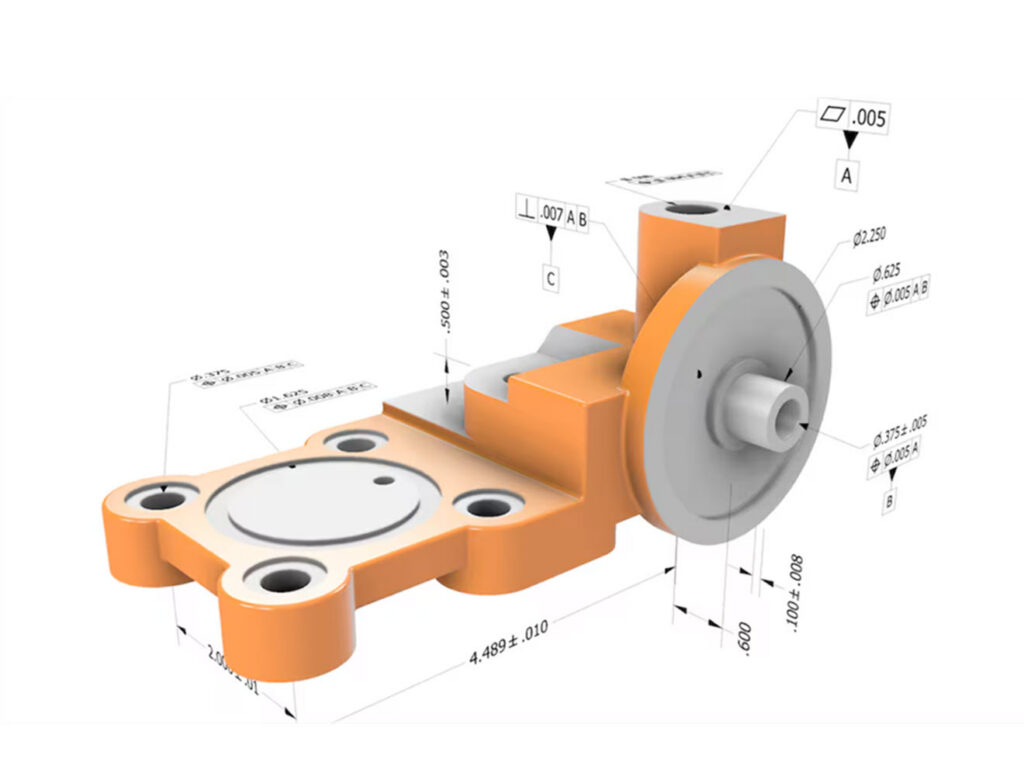
Instead of creating and maintaining separate 2D documentation, engineers embed dimensions, tolerances, annotations, and manufacturing information directly into the 3D model.
This leads to a more connected, accurate, and efficient way to communicate product requirements across the entire product lifecycle.
What is model-based definition (MBD)?
Model-Based Definition (MBD) uses a 3D CAD model as the authoritative source of product definition information (PDI).
The model contains:
- Geometric dimensions
- Geometric dimensioning and tolerancing (GD&T)
- Surface finish requirements
- Manufacturing notes
- Material specifications
- Assembly information
- Inspection requirements
Rather than referring to separate drawings, stakeholders can access all relevant product information directly from the model.
MBD is a foundational component of broader digital transformation initiatives, including:
- Model-Based Enterprise (MBE)
- Digital thread strategies
- Digital twins
- Industry 4.0 initiatives
- Connected manufacturing workflows
Why traditional 2D drawings are becoming a challenge
Engineering drawings have served manufacturing for generations, but they present challenges in modern product development environments.
Duplicate work
Creating a 3D model is only the first step. Engineers often spend additional hours creating and maintaining drawings that duplicate information already contained within the design.
Whenever the model changes, drawings must also be updated, reviewed, and redistributed. This results in additional labor and increases the risk of inconsistencies.
Interpretation errors
Even highly detailed drawings are vulnerable to misinterpretation. Manufacturing teams may misunderstand:
- Design intent
- Tolerance requirements
- Inspection criteria
- Assembly instructions
Different stakeholders can interpret the same drawing differently, increasing the likelihood of quality issues and rework.
Data silos
Many downstream systems increasingly rely on 3D data.
Today, CNC programming, simulation, inspection planning, and visualization tools often consume 3D models directly. Yet many organizations still use drawings as the primary documentation vehicle, creating unnecessary process handoffs and disconnected workflows.
Difficulty supporting complex products
As products become more intricate, drawings become increasingly crowded and difficult to manage. Complex assemblies may require:
- Multiple drawing sheets
- Hundreds of dimensions
- Layered notes
- Extensive revision management
This complexity can slow both engineering and production teams.
The benefits of adopting Model-Based Definition
Organizations implementing MBD often see improvements across engineering, manufacturing, and quality processes.
A single source of truth
One of the biggest advantages of MBD is the elimination of duplicate documentation.
Instead of maintaining separate drawings and CAD models, the 3D model becomes the authoritative reference for everyone involved in product development. This reduces:
- Version control issues
- Documentation discrepancies
- Communication gaps
- Change management complexity
Improved manufacturing accuracy
With annotations and tolerances embedded directly in the model, manufacturers can better understand design intent.
Rather than interpreting information from multiple views across several drawing sheets, machinists and production engineers can interact directly with the annotated model. This helps reduce:
- Manufacturing mistakes
- Tolerance violations
- Scrapped parts
- Rework costs
Faster product development cycles
Creating and maintaining detailed engineering drawings can consume significant engineering resources. By reducing reliance on traditional drawings, teams can:
- Release designs faster
- Accelerate approvals
- Simplify revision processes
- Move products to production sooner
This can be particularly valuable for organizations managing frequent engineering changes.
Better collaboration across departments
Modern manufacturing teams are distributed across engineering, quality, supply chain, and production.
MBD allows all stakeholders to work from the same digital product definition, improving collaboration and reducing ambiguity.
Stronger digital manufacturing workflows
Many advanced manufacturing technologies function best with rich 3D data. MBD supports:
- CAM programming
- Coordinate measuring machine (CMM) inspection
- Simulation
- Product lifecycle management (PLM)
- Digital thread initiatives
Instead of relying on manual translation from drawings, information flows directly from design into downstream systems.
Industries leading the shift to Model-Based Definition
While MBD adoption continues to grow across manufacturing, several industries have been early adopters:
- Aerospace: Aerospace manufacturers often manage highly complex products with strict compliance and traceability requirements. MBD helps streamline communication while supporting quality and regulatory needs.
- Automotive: Automotive organizations use MBD to accelerate product development while improving consistency across global teams and suppliers.
- Industrial equipment: Machine builders and industrial equipment manufacturers increasingly use MBD to improve collaboration between design, manufacturing, and service teams.
- Medical devices: Medical product companies benefit from improved documentation consistency and traceability throughout development and production.
How Autodesk Inventor Supports Model-Based Definition
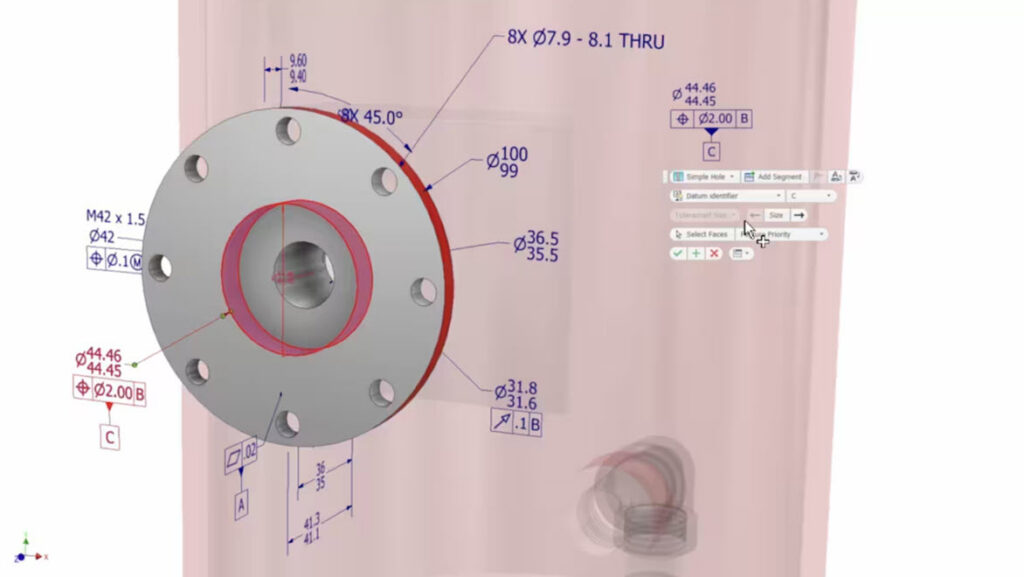
Autodesk Inventor provides the tools needed to create, manage, and share model-based product information. It enables engineering teams to:
- Create detailed 3D product models
- Apply GD&T annotations directly to models
- Embed manufacturing information within product designs
- Generate standards-based product documentation
- Share rich digital product data across teams
Because Inventor integrates design, documentation, and manufacturing workflows within a connected environment, teams can transition from drawing-centric processes toward a model-based approach without disrupting productivity.
Organizations using Inventor can establish a more efficient digital workflow while maintaining the flexibility to support suppliers and stakeholders that still require traditional documentation.
Is MBD replacing drawings completely?
No. Many manufacturers continue to use drawings due to customer requirements, supplier capabilities, regulatory considerations, or established internal processes.
However, increasingly manufacturers are treating the 3D model as the primary source of truth while generating drawings only when needed. As digital manufacturing technologies continue to mature, the industry is steadily moving toward model-centric workflows.
For many organizations, MBD is not about eliminating drawings overnight. It’s about reducing dependency on them and enabling more accurate, connected, and efficient product development processes.
The future of manufacturing is model-based
As manufacturers pursue digital transformation, the need for a reliable and connected product definition strategy becomes increasingly important.
Model-Based Definition helps organizations move beyond static documentation by placing product information directly within the design model itself. By reducing duplication, minimizing errors, and improving collaboration, MBD creates the foundation for faster and more efficient manufacturing workflows.
For teams looking to modernize engineering processes and prepare for the future of digital manufacturing, Autodesk Inventor provides a practical path toward Model-Based Definition and model-centric product development. Get started today with a 30-day free trial.
Frequently asked questions about Model-Based Definition
Model-Based Definition (MBD) is a manufacturing approach that uses a fully annotated 3D CAD model as the primary source of product information. Instead of relying on separate 2D drawings, MBD embeds dimensions, tolerances, geometric dimensioning and tolerancing (GD&T), material specifications, notes, and other product manufacturing information (PMI) directly into the model.
Traditional workflows use 3D CAD models for design and 2D drawings to communicate manufacturing requirements. MBD consolidates both into a single digital product definition. With MBD, dimensions, tolerances, annotations, and manufacturing instructions live within the 3D model itself, reducing the need to create, update, and interpret separate drawings.
Manufacturers adopt MBD to improve communication, reduce errors, accelerate product development, and streamline collaboration between engineering, manufacturing, and quality teams. By working from a single digital source of truth, teams can reduce rework, improve consistency, and eliminate misunderstandings caused by outdated or misinterpreted drawings.
Not always. Many organizations use MBD to significantly reduce their reliance on drawings, while others continue to maintain 2D drawings for regulatory, supplier, customer, or documentation requirements. MBD often supplements or replaces drawings depending on industry standards and downstream manufacturing processes.
Yes. Autodesk Inventor includes dedicated MBD capabilities that allow engineers to add 3D annotations, GD&T, datum features, tolerances, and PMI directly to a model. Inventor also supports Tolerance Advisor, Tolerance Analysis, 3D PDF publishing, and standards-based data exchange formats such as STEP 242, helping teams adopt model-based workflows without abandoning established engineering processes.
MBD can support sustainability by reducing paper-based documentation, minimizing manufacturing errors, lowering scrap and rework, and helping teams produce higher-quality parts on the first attempt. More efficient digital communication also reduces duplicated effort throughout the product lifecycle.
MBD embeds manufacturing-critical information directly into the 3D model, allowing machinists, inspectors, suppliers, and manufacturing engineers to reference the model itself rather than a separate drawing package. This eliminates many drawing creation, revision, and interpretation steps while improving confidence that everyone is viewing the latest information
When evaluating MBD software, look for:
-Native 3D annotation and PMI capabilities
-GD&T support based on industry standards
-Tolerance analysis tools
-Standards-compliant exports such as STEP 242
-Collaboration and data-sharing capabilities
-Integration with PDM and PLM systems
-Revision control and traceability
-Support for inspection and quality workflows
Autodesk Inventor includes many of these capabilities within a single engineering platform.
The best MBD software depends on your industry, workflow, and manufacturing requirements. Organizations should prioritize solutions that support standards-based PMI, GD&T, interoperability, collaboration, and downstream manufacturing processes. Autodesk Inventor is a strong MBD solution for manufacturers because it combines 3D CAD, MBD tools, tolerance analysis, documentation, and product lifecycle integrations in a connected workflow.
MBD improves collaboration by providing a shared digital model that contains both geometry and manufacturing intent. Engineers, machinists, suppliers, inspectors, and quality teams can access the same information without relying on multiple documents or disconnected file versions, reducing communication gaps and interpretation errors.
MBD improves manufacturing accuracy by associating dimensions, tolerances, GD&T, and inspection requirements directly with model geometry. This reduces ambiguity, helps manufacturers understand design intent more clearly, and minimizes mistakes that can occur when translating information from drawings into production.
MBD replaces or supplements drawings by carrying manufacturing information directly within the 3D model. In fully digital workflows, the model becomes the primary deliverable. In hybrid environments, organizations may continue producing 2D drawings while using MBD data to improve communication, inspection, and manufacturing processes.
MBD stands for Model-Based Definition. It is the practice of creating a complete digital product definition within a 3D CAD model, including geometry, tolerances, annotations, material specifications, and other manufacturing information.
Companies use MBD software to:
-Create a single source of truth for product data
-Improve communication across teams
-Reduce manufacturing errors and rework
-Accelerate design-to-production workflows
-Improve quality and inspection processes
-Enhance digital transformation initiatives
-Reduce dependency on traditional drawings
These benefits help organizations move toward more connected and efficient model-based enterprise workflows.
MBD improves traceability by keeping dimensions, tolerances, PMI, and design intent associated directly with the model throughout its lifecycle. When integrated with data management solutions, teams can better track revisions, maintain design history, support audits, and ensure that manufacturing and inspection activities align with approved product definitions. Inventor’s integration with data management and tolerance analysis workflows can help organizations maintain consistency and compliance across engineering and manufacturing processes.