 Shannon McGarry
Rapid iteration helps companies develop, test, and refine products quickly, meeting customer expectations and staying competitive. Learn how Autodesk Fusion can help.
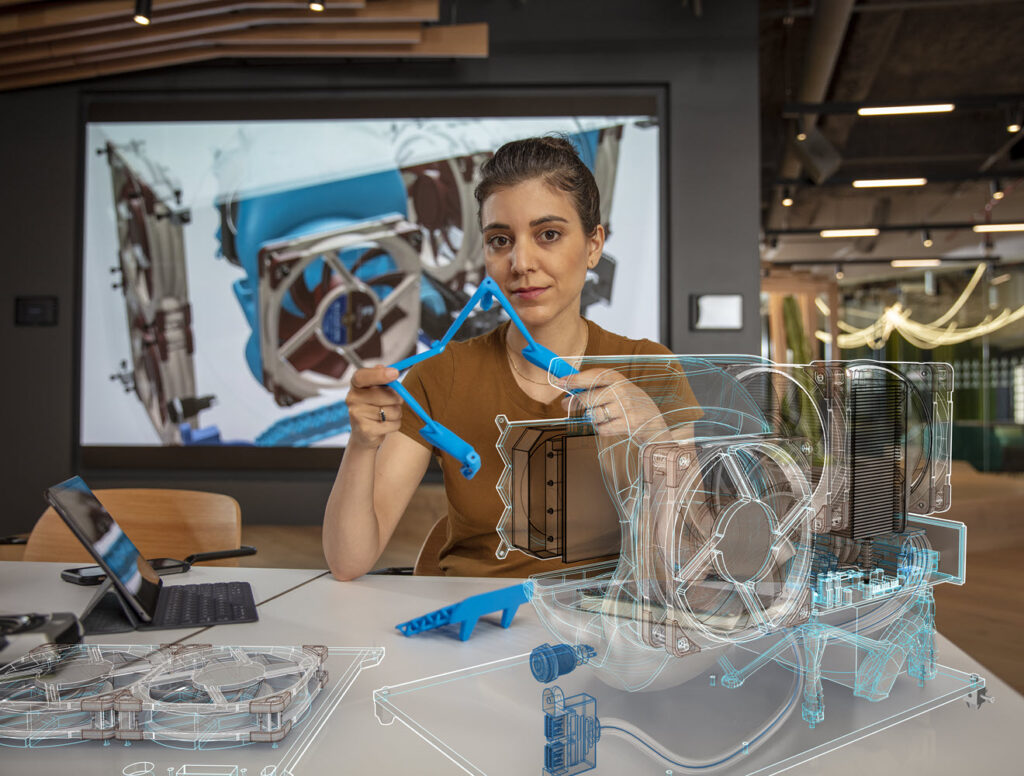
The speed at which a company can develop, refine, and launch new products is key to winning new business and sustaining growth. Being able to quickly turn concepts into market-ready solutions is what separates the leaders from the followers. Autodesk Fusion makes agile product development easy, offering rapid prototyping and agile product design iteration, that is easily scalable and directly tied to tangible business results.

Elevate your design and manufacturing processes with Autodesk Fusion
Why rapid iteration is important for winning business
Businesses are facing increasing pressure to deliver value faster, meet ever-changing customer expectations, and keep up with technological advances. Consumers demand innovation, quality, and speed—and the companies that deliver new solutions faster often capture the greatest share of the opportunity. Being able to iterate faster allows teams to adapt to feedback, reduce time spent on ineffective ideas, and capitalize on trends ahead of competitors.
Agility is the foundation of this process. Without the ability to rapidly prototype, test, and refine, organizations risk falling behind, losing customer loyalty, and missing revenue goals.
Challenges slowing design and development cycles
Despite its importance, many organizations struggle with fast iteration due to:
- Siloed teams and lack of proper collaboration channels
- Legacy tools that lack integration and automation
- Cumbersome, manual processes for prototyping and validation
- Difficulty incorporating customer or stakeholder feedback in real time
These bottlenecks lead to duplicated efforts, more errors, higher project costs, and slower delivery—which leads to lost business.
Transforming business processes with Fusion
Autodesk Fusion allows you to meet these challenges head on. By merging advanced modeling, prototyping, simulation, collaboration, and data management tools into a single solution, Fusion removes barriers and enables seamless iteration across all phases of product development.
1. Integrated prototyping
Teams can quickly turn digital concepts into prototypes. Whether creating detailed 3D models for real-world testing or running simulations to troubleshoot virtually, Fusion allows for the rapid exploration of ideas. Engineers and designers can try out multiple concepts, validate product performance, and identify the best solutions—often before a single physical part is produced.
Virtual prototyping significantly reduces both time and material waste. By identifying flaws early and making quick refinements, products are ready to go to market faster and at less cost.
2. Unified workspace
The unified workspace in Fusion centralizes designs, feedback, simulation data, and documentation within a single source of truth. There’s no need to track down files across multiple systems. Fusion’s version control keeps project history organized, making it easy to revert, compare, or incorporate previous ideas.
3. Cloud-based collaboration
Collaboration is foundational to rapid iteration. The cloud-based nature of Fusion means that every stakeholder has instant access to the latest design versions. Teams can share feedback directly within the same tool, resolve issues collaboratively, and avoid miscommunications and errors that come from scattered documents or lengthy email chains.
Because Fusion centralizes all design data, projects remain organized and transparent. This improves decision-making and speeds up review cycles, allowing for more iterations without increasing project timelines.
4. Streamlined workflows and automation
Workflows in Fusion, such as automated drawings and AutoConstrain help minimize manual steps and reduce repetitive tasks. Designers spend less time on manual, redundant processes—and more time on creative problem-solving. Automation also helps reduce the risk of human error, leading to higher-quality outcomes and greater consistency across product lines.
5. Simulation tools
Powerful simulation tools allow engineers to test physical forces, material stress, manufacturability, and more in real-time. Being able to identify and solve issues early-on allows products to get to market faster.
6. CAD/CAM integration
Fusion also features tight integration with manufacturing, bridging the gap between design and production. Once a design is finalized, it can be seamlessly handed off for 3D printing, CNC machining, or other fabrication methods.
Watch this webinar recording to learn how leading consumer product companies are using Fusion to turn failure into fuel for faster development.
Real-world rapid iteration applications
Rapid iteration delivers tangible competitive advantages in practical scenarios:
- Shorter lead times: With the ability to move from concept to prototype, companies can present new ideas to customers well ahead of competitors. Quicker lead times mean responding to quotes and RFPs sooner, capturing business that could have been lost to more agile firms.
- Better alignment with customer needs: Rapid prototyping, together with the integration of customer feedback makes it possible to tailor products with greater accuracy. By incorporating user feedback throughout development, designs are more likely to meet—or exceed—market expectations the first time.
- Greater ability to pivot:The iterative workflows in Fusion mean teams can quickly pivot away from failing approaches or obstacles, and redirect their energy toward solutions with the highest impact.
Best practices for achieving rapid iteration
To fully realize the benefits of fast iteration, it’s important that teams:
- Develop a culture of openness: Encourage team members to share ideas early and often, and to treat failures as learning opportunities.
- Prioritize data and feedback: Use simulation results, user testing, and customer feedback loops to guide each iteration cycle.
- Automate where possible: Identify repetitive or error-prone tasks in the workflow and automate them using Fusion’s tools.
- Promote cross-functional teams: Involve stakeholders from design, engineering, marketing, and manufacturing from the start to ensure holistic feedback and faster alignment.
Building momentum for adopting rapid iteration processes with Fusion
As digital transformation accelerates, the need for faster, smarter product development will only continue to increase. Fusion is here to support your businesses with agile, integrated, and intelligent tools for product development. With Fusion your business can move faster, respond smarter, and win more consistently in a space where speed and flexibility are the key differentiators.
Whether you’re just starting your journey or looking to push your innovation process further, Fusion lays the foundation for rapid iteration and agile product development that keeps your company out in front, time and again.