 Guy Buttle
Evaluating CAM software for your CNC shop? Learn what matters most, from post processors and 5-axis machining to mill-turn support, simulation, CAD associativity, and production workflow fit.

Elevate your design and manufacturing processes with Autodesk Fusion
Most machine shops don’t switch CAM software because they’re looking for new features. They switch because something is slowing them down.
Maybe programmers spend too much time editing posts. Maybe a new 5-axis machine is sitting underutilized because the software can’t support advanced toolpaths efficiently. Maybe operators don’t trust the code coming off the floor. Or maybe every new part seems to require starting over from scratch.
The problem is that CAM software demos are often filled with impressive toolpaths and technical buzzwords. What actually matters is whether the software helps the shop program parts faster, reduce setup time, prevent crashes, and keep spindles making chips.
If you’re evaluating CAM software, here’s the checklist that matters most.
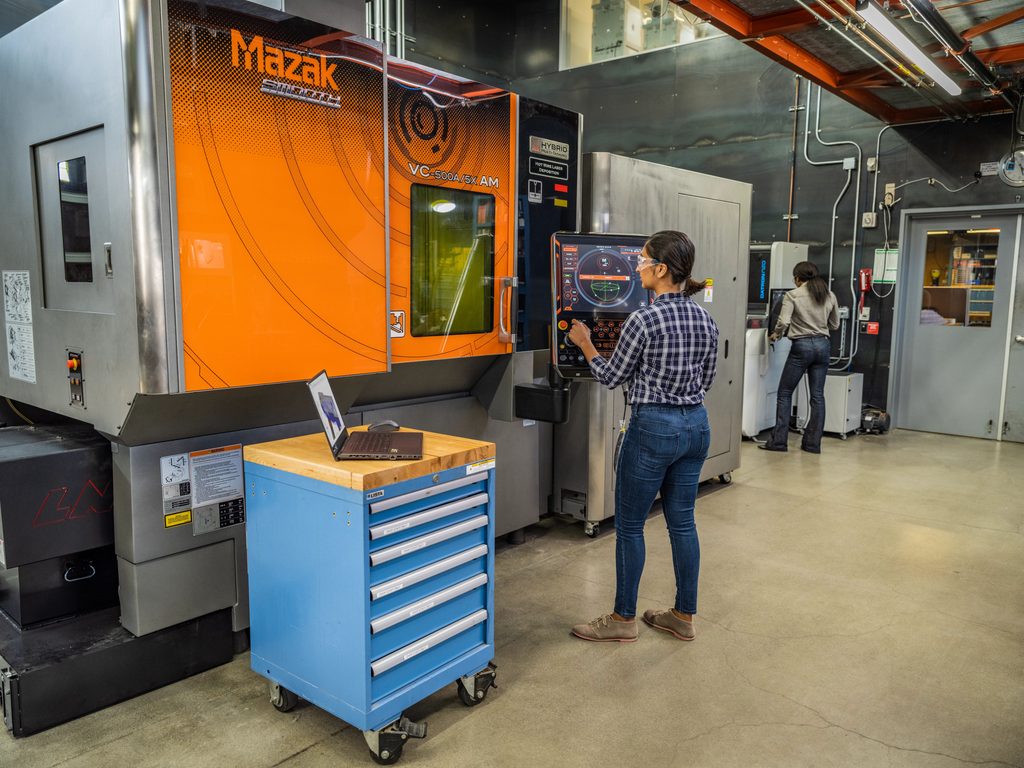
1. Does it support your machines today and in the future?
This sounds obvious, but it’s where many evaluations fail.
A CAM system may handle a standard 3-axis mill perfectly well, but the real question is whether it can support the machines that drive the highest-value work in your shop.
Consider:
- 3-axis mills
- 4-axis machines
- 3+2 machining
- Simultaneous 5-axis machines
- Swiss machines
- Mill-turn equipment
- Multi-tasking machines
The more diverse your equipment becomes, the more important it is to have a CAM platform that can grow with you.
Why it matters: Shops often outgrow software before they outgrow machines. Buying a new machine only to discover your CAM system can’t fully utilize it is an expensive mistake.
2. How good are the post processors?
If there’s one thing experienced CNC programmers know, it’s this:
A great toolpath is useless if the posted code doesn’t run correctly.
Controller-specific post processors are one of the most important factors in any CAM evaluation.
Look closely at support for:
- FANUC
- Haas
- Siemens
- Heidenhain
- Mazak
- Okuma
- Mitsubishi
Ask vendors:
- How customizable are post processors?
- Can modifications be made internally?
- Who supports post development?
- How often are updates released?
In Autodesk Fusion, post processors are a significant strength because they are designed around specific machine controllers rather than forcing generic output across every machine configuration.
Why it matters: Every manual edit introduces risk, wasted time, and opportunities for mistakes.
3. Does it support both 3+2 and simultaneous 5-axis machining?
Many shops reach a point where 3-axis simply isn’t enough, so it’s important to consider if you’ll need advanced machining in the future.
Look for:
3+2 positioning
Ideal for reducing setups and accessing difficult areas while maintaining simpler programming workflows.
Simultaneous 5-axis
Critical for:
- Aerospace components
- Medical devices
- Complex molds
- Turbine components
- High-value precision parts
Why it matters: Shops increasingly compete on lead time. Fewer setups often mean faster jobs, better accuracy, and higher machine utilization.
4. How well does it handle mill-turn programming?
Mill-turn machines promise enormous productivity gains, while also creating some of the most challenging programming workflows in manufacturing.
Many shops struggle with:
- Synchronization issues
- Turret timing conflicts
- Spindle coordination
- Long prove-out times
Your CAM software should allow programmers to visualize and synchronize operations before anything reaches the machine.
Evaluate:
- Multi-channel programming
- Synchronization tools
- Machine simulation
- Transfer operation support
- Sub-spindle workflows
Why it matters: The programming complexity of mill-turn equipment can erase the productivity gains the machine was purchased to achieve.
5. Can it prevent crashes before it reaches the shop floor?
Collision checking and material-removal simulation should be mandatory requirements, not optional features.
Consider CAM solutions that include?
- Tool collision detection
- Holder collision detection
- Fixture collision detection
- Machine component collision checking
- Stock verification
- Material-removal simulation
The best systems simulate what will actually happen on the machine, not simply the programmed toolpath.
Fusion’s simulation capabilities help shops verify programs before production, reducing prove-out time and increasing confidence in posted code.
Why it matters: One crash can cost more than the CAM software itself.
6. Does it automate programming through feature recognition?
Many shops are dealing with a talent shortage and experienced programmers are spending too much time programming parts they’ve programmed hundreds of times before.
Feature recognition helps identify common manufacturing features such as:
- Holes
- Pockets
- Slots
- Bosses
- Chamfers
Instead of manually selecting geometry and rebuilding strategies repeatedly, the software can automatically identify features and apply machining operations.
Why it matters: The goal isn’t replacing programmers. It’s letting programmers focus on difficult work rather than repetitive work.
7. How strong are the tool libraries and feeds & speeds?
Program quality depends heavily on process consistency. Without centralized tool data, different programmers often create different results for similar jobs.
Look for CAM software that includes:
- Centralized tool libraries
- Manufacturing standards
- Approved tool management
- Feed and speed recommendations
- Reusable machining templates
Autodesk Fusion allows teams to standardize tooling and machining practices across multiple programmers and locations.
Why it matters: Consistency drives profitability. Shops shouldn’t reinvent feeds, speeds, and tooling strategy for every job.
8. Does it stay connected to CAD?
Design changes happen, customers revise parts, and engineers update models.
Unfortunately, disconnected workflows often force programmers to recreate work from scratch.
Associative CAD/CAM workflows allow manufacturing updates to remain linked to design changes.
When models change, toolpaths can be updated instead of rebuilt.
Fusion’s integrated CAD and CAM environment is especially valuable here because design and manufacturing workflows exist within the same platform.
Why it matters: Shops make money producing parts, not rebuilding CAM programs every time a customer sends Revision C.
9. Is it built for your production environment?
High-mix volume shops
Not every shop runs the same way. High-volume production shops typically prioritize:
- Repeatability
- Standardized processes
- Automation
- Cycle time optimization
- Lights-out manufacturing
High-mix, low volume shops
While high-mix, low-volume shops often prioritize:
- Fast programming
- Rapid quoting support
- Flexibility
- Short setup times
- Frequent job changes
Fusion is particularly strong for high-mix environments because it combines CAD, CAM, simulation, tool management, and collaboration within a single platform. Teams can move from design changes to manufacturing without jumping between disconnected systems.
At the same time, larger production organizations use Fusion to standardize workflows across teams and facilities.
Why it matters: The best CAM software isn’t the one with the longest feature list. It’s the one that matches how your shop actually operates.
Evaluating CAM software
CAM software should make chips easier to produce, not create more work.
As you evaluate solutions, focus less on marketing claims and more on the daily frustrations your programmers, setup personnel, and machinists face.
Can the software support your machines?
Can it produce reliable code?
Can it prevent crashes?
Can it reduce programming time?
Can it adapt as your shop grows?
If the answer is yes, you’ve probably found the right platform.
Try Fusion, free for 30-days to see if it’s a good fit for your team.