 Heather Miller
Autodesk Fusion helped BluArmor bring a complex, motorcycle helmet-mounted device to life by unifying design and engineering on a single platform. Using parametric modeling, real-time collaboration, and integrated simulation, the team rapidly iterated complex designs, validated performance for harsh riding conditions in India, and scaled products while reducing prototyping and time to market.

Elevate your design and manufacturing processes with Autodesk Fusion
Based in one of the world’s largest two-wheeler markets, BluArmor develops motorcycle helmet communication accessories with a vision to position India as a leader in technology consumer products. Focused on enhancing the riding experience, the company addresses real-world rider challenges and unmet safety needs.
When BluArmor set out to build a system that could perform reliably in harsh, real-world conditions, including dust, rain, vibration, heat, and heavy traffic, the team knew they had to rethink everything from design to engineering. It was no longer about adding features but about building a compact, tightly integrated device that could be mounted across helmet types.
“We weren’t trying to miniaturize car technology,” says Arvind Prabhakar, Head of the Design & Engineering Team, BluArmor “We were rethinking mobility from every rider’s point of view. For Indian riders, safety is about visibility, awareness, and reducing fatigue in everyday chaos. It’s different from the predictable highways most Western technologies are designed for. Our reality has shaped everything we built.”

Tackling design challenges
Designing a compact, helmet-mounted electronic system that could handle tough road conditions while maintaining communication, visibility, and safety was already a huge challenge. But ensuring that the communication, LED visibility, sensors, batteries, audio, and docking mechanisms all fit into a single compact enclosure without compromising ergonomics, aerodynamics, or rider comfort made it even greater.
All of these considerations were in play for the design of BluArmor’s flagship C60 Pro, a smart, helmet-mounted Bluetooth communication system that integrates intercom, audio, and safety features into a compact device. Riders can communicate through mesh or Bluetooth intercom over distances of up to 1.2 km, while connecting to smartphones or GPS devices for calls, music, and navigation. Built-in speakers and a microphone are designed to deliver clear audio even in windy conditions, while features such as crash detection, automatic emergency alerts, brake-activated LED lights, and adaptive audio control add another layer of safety and convenience.
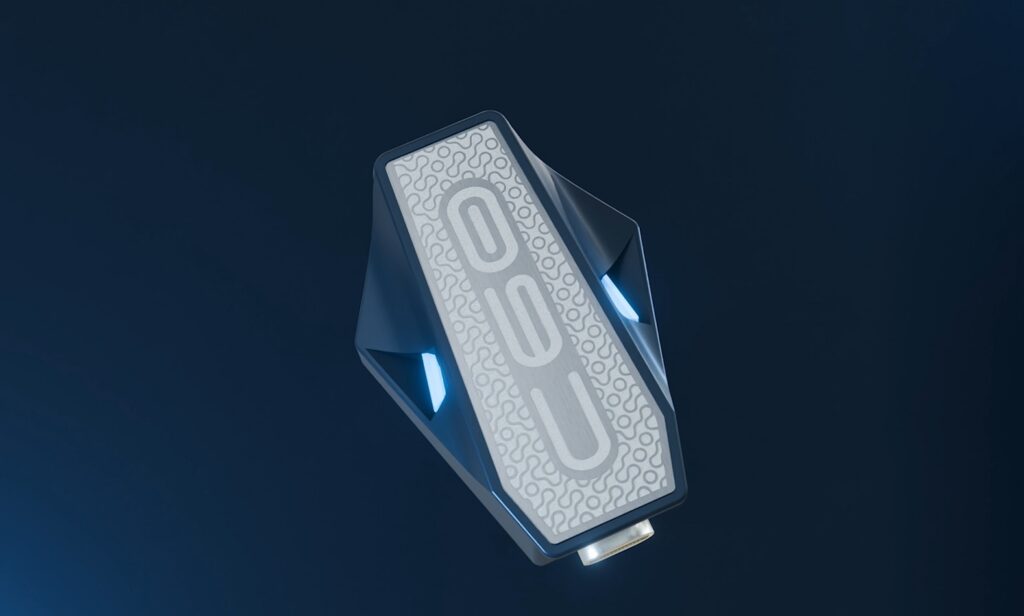
“Positioned behind the helmet, the C60 Pro needed to be aerodynamically aligned and easily detachable, balancing IP67 sealing with docking usability, where waterproofing and ease of removal had to coexist,” Prabhakar says. “At the same time, rider interaction had to remain effortless. At every product development stage, we had to balance space, safety, weather, usability, and manufacturing, sometimes all at once. However, one aspect was clear. The tool we chose had to keep up with that complexity.”
Moving forward with Fusion
To bring the C60 Pro to life, BluArmor relied on Autodesk Fusion. With Fusion, the team created a unified model for design, mechanics, and electronics. Parametric layouts provided control over key components, including the PCB, battery, and docking system, while built-in tools for sectioning and simulation enabled faster and more reliable design decisions.
Fusion allowed the team to approach the C60 Pro as a connected system, allowing internal components and external interfaces to be refined together without disturbing the overall design. This helped them optimize tight internal packaging, improve sealing strategies, and fine-tune interaction elements, while validating weak points in docking and thin-wall areas digitally without the need for physical prototypes.
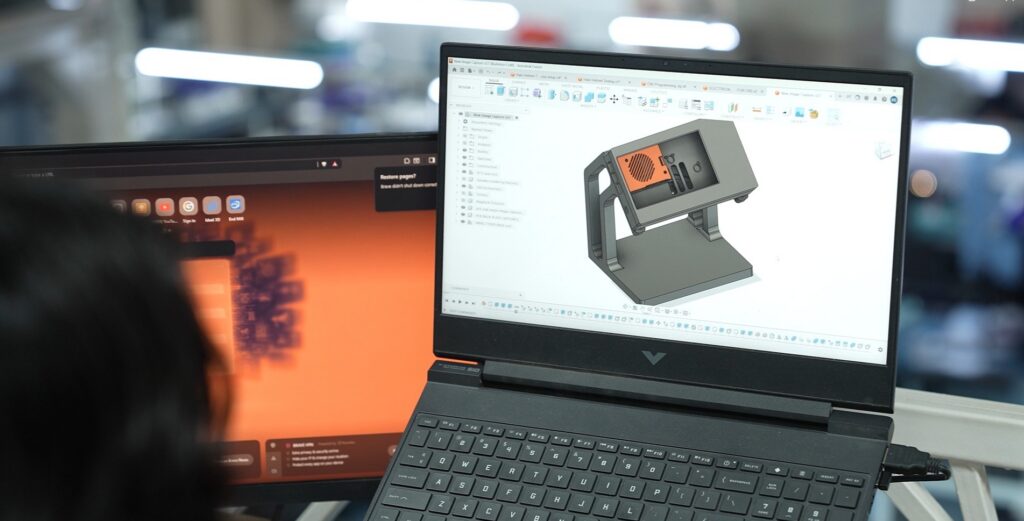
The three-button modular interface and wireless T-Stick were designed for intuitive use even with gloves and without diverting a rider’s attention. The design required careful shaping of ridges, chamfers, and how the button feels when pressed. Fusion enabled continuous modeling of button geometry and spacing with rapid prototyping. Multiple variations were tested, ensuring the controls were easy to use in real-world riding conditions.
Integrating RIDEAURA™ LED visibility technology as a safety feature required precise control over LED placement, diffusion, and visibility angles. Fusion’s design tools facilitated iteration until the perfect balance between clarity, visibility, and seamless integration was achieved.
Elevate your design and manufacturing processes with Autodesk Fusion
Fusion also supported a platform-based approach across the C-series (C20, C40, C50, and C60). The parametric core design ensured that BluArmor could reuse and adapt key elements like PCB layouts, battery sizes, and docking systems across different models without having to start from scratch. This helped them solve multiple engineering challenges while building a scalable product ready for manufacturing, all within one unified design environment.
“Fitting communication systems, batteries, LEDs, and docking mechanisms into a small helmet-mounted device while keeping it comfortable and with an aerodynamically friendly design was a huge challenge,” says Saheem Saleem, Senior Industrial Designer, BluArmor. “Fusion helped us treat the product as a complete system, allowing the design, mechanical, and electronics teams to work on the same model, check clearances, and iterate quickly without losing design intent.”
“It allowed us to digitally test sealing, component placement, and button ergonomics and simulate stresses before building prototypes,” he adds. “Ultimately, it helped us refine durability and rider usability faster and more reliably.”
Solving the MagDock sealant challenge
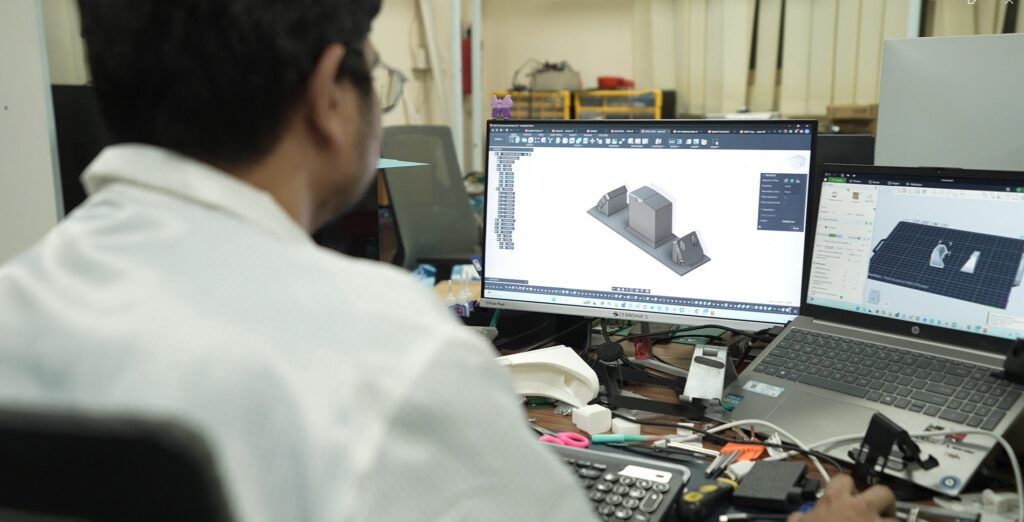
A key extension of BluArmor’s designs is the MagDock 2.0, designed to facilitate quick docking and swapping between helmets. The challenge in the design was to ensure the interface retained the IP67 sealing while supporting magnetic docking at a very specific angle. It also needed dependable electrical connections that support effortless undocking while staying visually appealing in a compact design.
To solve this, the BluArmor team used Fusion’s parametric modeling to control key factors, like seal compression, housing thickness, and overall geometry. This helped them enable rapid iterations across multiple design options and find the right balance between sealing, magnetic alignment, and fit. Simulation in Fusion further reduced the need for physical prototypes.
“That one parametric setup in Fusion saved us weeks of physical prototyping and led us to a manufacturable, robust, and premium-looking solution,” says Pradeep Rao, Senior Principal Engineer, BluArmor.
Seeing the results
With Fusion, BluArmor is able to scale with new growth and design exploration. As the company expands its product line, having a unified platform helps the team manage increasing product complexity while continuing to iterate quickly.
“Fusion will be central to a few directions we’re exploring,” Prabhakar says. “As our rider-tech products get smarter with better lighting, more sensors, and advanced functions, Fusion will continue to offer a uniform platform for CAD, simulation, and collaboration. For startups building novel hardware, especially in safety-critical domains, investing early in a unified design platform like Fusion can be a game changer.”