 Hailey Wheeler
From reimagining accessibility to making sustainable living more practical, the winners of the Fusion Forward: Design for Home competition show how creative thinking and Autodesk Fusion can bring new product ideas to life.
What if a wheelchair user could put on a head-controlled computer mouse without assistance? What if a compact system could turn organic waste into valuable resources through snail farming? Or what if a simple hand warmer could be redesigned to fit more naturally into someone’s daily routine?
These are the kinds of questions that lead to better products. And they’re exactly what inspired the designers who participated in Fusion Forward: Design for Home, a global design competition hosted by Core77 in partnership with Autodesk Fusion.
The challenge invited designers to rethink products for the home, considering not just how something looks or functions, but how it’s made, how it’s used, and the difference it could make in people’s lives.
Nine projects were recognized across three categories: Home & Yard Maintenance, Personal Fitness & Wellness, and Smart Home Devices.
The results demonstrate the range of problems product designers are taking on today, and the role tools like Autodesk Fusion can play in developing solutions.
Home & Yard Maintenance
Winner: EscarGrow Bio-Hub
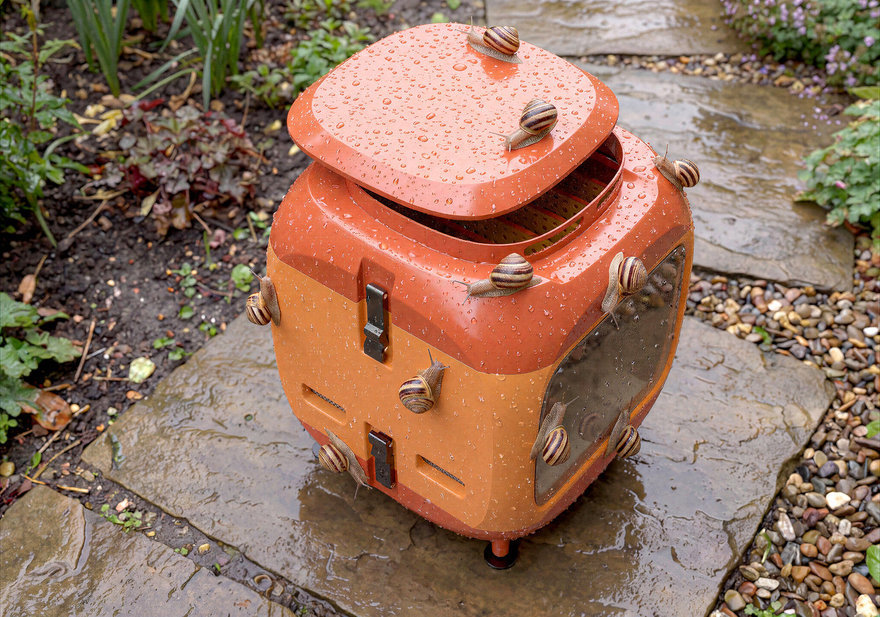
Sustainable design doesn’t always mean inventing an entirely new material or manufacturing process. Sometimes, it starts with finding a better way to use what’s already available.
Oleg Vereshchagin, winner of the Home & Yard Maintenance category, took an unconventional approach with EscarGrow Bio-Hub, a compact, automated snail farming system. The concept brings several processes into a single enclosed system, including organic waste processing, snail habitat management, automated collection, and the production of compost and protein.
Designed with modularity in mind, EscarGrow explores how a closed-loop agricultural system could work in different environments, from rural settings to urban educational gardens.
Vereshchagin developed the project in Fusion using solid modeling and T-Spline tools. He also created EscarGrow Mini, a smaller version incorporating custom 3D-printed parts for STEM education and prototyping. While the scale and application differ, both versions explore how design and engineering can make complex systems more accessible.
Runner-up: NIDO
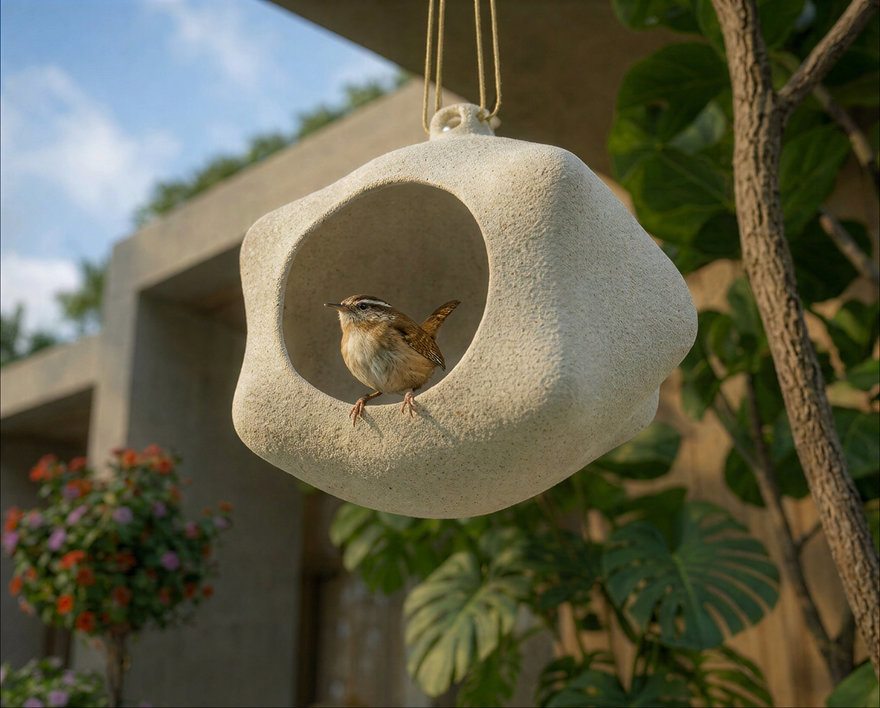
NIDO takes a unique approach to sustainability. Manuel Ovalle’s 3D-printed birdhouse was designed specifically for FDM printing, with geometry that eliminates the need for support structures, which helps reduce material waste and post-processing. Ovalle developed the organic form in Fusion using Direct Modeling, Edit Face, Extrude, Fillet, Shell, and Combine tools.
Runner-up: Low-Cost Apartment Hydroponic Tower Garden
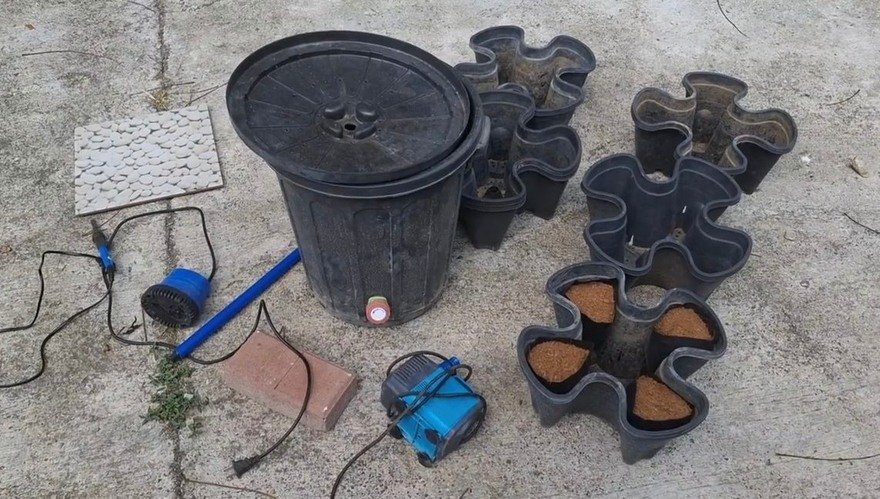
John Phillips’ Low-Cost Apartment Hydroponic Tower Garden explores how to grow food without access to traditional outdoor space. The vertical hydroponic garden was designed for people without a yard or garden, and can be constructed from common household materials for less than $20.
Personal Fitness & Wellness
Winner: Everwarm
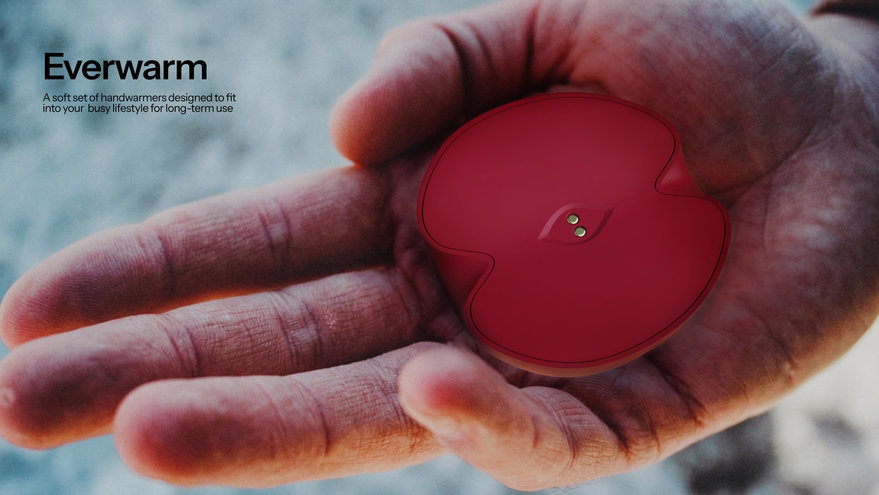
Cold hands are a relatively simple problem, but many existing heating products can be inconvenient to carry or uncomfortable to hold. Anika Srivastava, winner of the Personal Fitness & Wellness category, set out to create a hand warmer people would actually enjoy keeping close.
Everwarm reimagines the traditional electric hand warmer as a rechargeable product designed to easily become part of everyday life. Its fruit-inspired form separates into two warming halves and a central charging core, allowing someone to use one warmer while the other recharges. A built-in USB-C charging cable doubles as a stem that can attach the device to a bag or backpack.
Srivastava developed Everwarm in Fusion, using its modeling capabilities to quickly iterate on the design, modify existing elements, and explore solid forms as the concept evolved. She also prototyped the warmers with a soft, squeezable feel that deliberately contrasts with the hard plastic typically associated with electric hand warmers. Everwarm is a reminder that product innovation can mean making an existing experience simpler, more comfortable, and more enjoyable.
Runner-up: PHAS: Eye-Gaze Mobility System
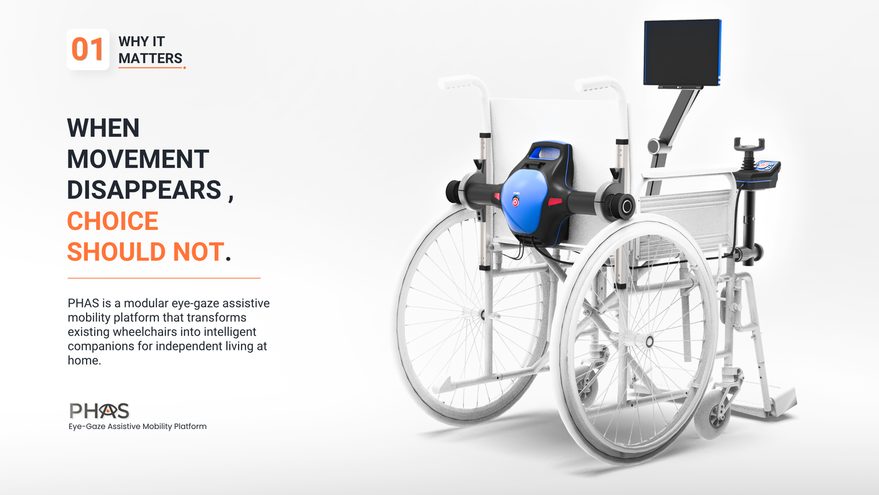
The PHAS: Eye-Gaze Mobility System is a modular system that converts an existing manual wheelchair into a powered one for people with severe motor impairments. It combines powered mobility, eye-gaze navigation, and manual caregiver controls.
Building the first full assembly in Autodesk Fusion helped the team—comprised of Aivin Thankachan K, Parthiv Keloth, Hanock Issac, and Stanley Raphel—identify issues with tire contact and handle ergonomics before building the hardware. Those discoveries ultimately informed changes to the mobility module and battery compartment, and is an example of how working through a digital design can help teams identify potential problems earlier in the development process.
Runner-up: Curved Plywood Fitness Bench

The Curved Plywood Fitness Bench, designed by Nicole Leal Flores and Isabella Córdoba Inzunza, reimagines traditional home exercise equipment as beautiful, functional furniture. Designed for smaller living spaces, the bent-plywood bench includes an adjustable backrest and integrated wheels for easier movement and storage. The team used parametric modeling in Fusion to explore proportions and variations without rebuilding components.
Smart Home Devices
Winner: HaloDock: Hands-Free Head Mouse with Self-Donning Dock
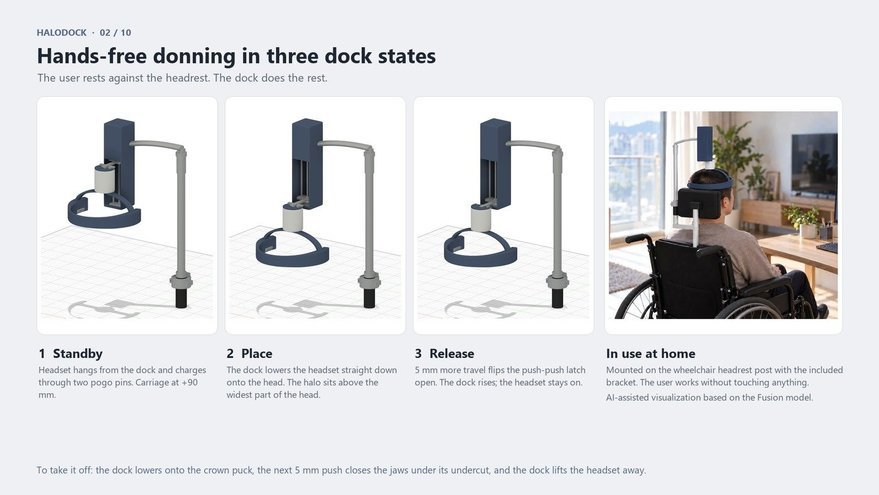
HaloDock, created by Dongwook Lee, addresses a challenge faced by people with high-level spinal cord injuries who use head-controlled computer mice. While these devices can provide greater independence when interacting with a computer, putting the devices on, removing them, and charging them may still require caregiver assistance.
HaloDock was designed to remove that barrier. The gyro head mouse pairs with an overhead dock mounted to a wheelchair headrest that can lower the headset onto the user’s head, release it with a small push, and return it to the dock for charging. designed to let users manage those tasks themselves.
The device pairs a gyro-controlled head mouse with an overhead dock mounted to a wheelchair headrest. A mechanical system allows the headset to be placed on the user’s head, released, and returned to its dock for charging.
Lee developed HaloDock in Autodesk Fusion, using T-Spline modeling to refine its form, stress analysis to evaluate components, and generative design and manufacturing tools to develop the mounting bracket. Testing the gyro system also led to a 39% reduction in cursor jitter.
Runner-up: i.n.o: Interactive Note Obliterator
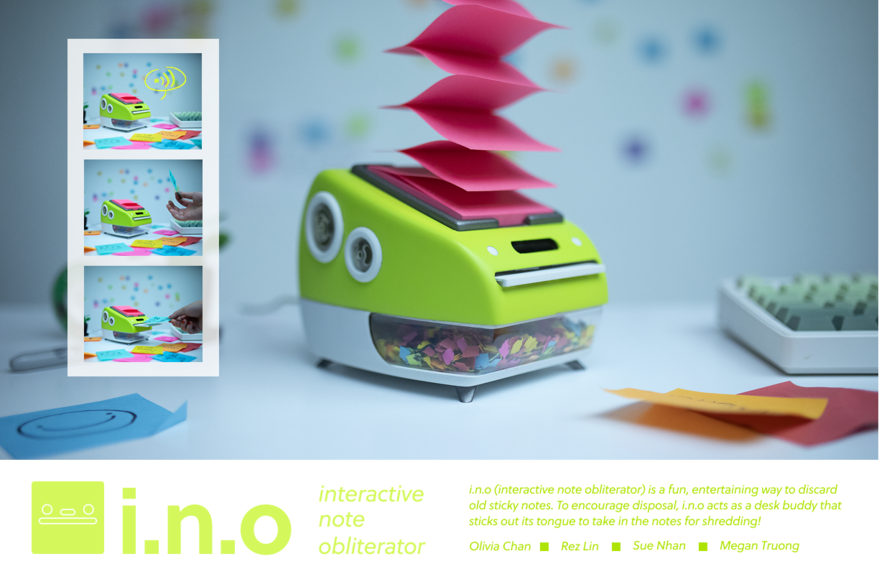
i.n.o: Interactive Note Obliterator turns the ordinary act of discarding sticky notes into a playful desktop interaction. Designers Olivia Chan, Rez Lin, Sue Nhan, and Megan Truong created a desktop device that senses a sticky note and extends a tongue-like platform to pull it into the shredder. The team used Fusion joints to validate the mechanical movement of the mechanism and developed a compact system that powers both the turbine and shredder with a single motor, helping reduce space and power requirements.
Runner-up: Truss
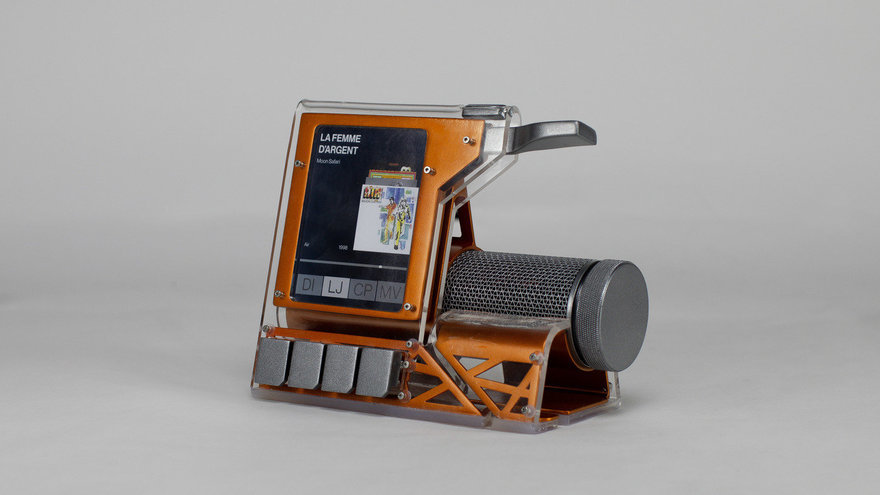
Truss, a connected speaker designed by Lauren Johnson, Daniel Imbert, Chiara Peluzzo, and Malena Vila, brings the tactile experience of records and mixtapes to a connected digital speaker. Physical controls and NFC technology let up to four people bring their own playlists to the device.
The team used Fusion sheet metal tools to develop the thermoformed acrylic shell, patterns for the speaker grille, joints to test the controls, and assembly constraints to bring components modeled by four different team members together.
From creative exploration to real-world impact with Autodesk Fusion
Behind every great product is a problem worth solving. As the Fusion Forward winners and runners-up demonstrate, meaningful innovation isn’t always about creating something entirely new. Sometimes, it’s about finding a better way to approach a familiar problem.
Throughout the competition, designers were encouraged to think outside the box and consider how their ideas would function in the real world. That meant balancing creativity with practical considerations like usability, accessibility, materials, manufacturing, and cost. Whether developing assistive technology that supports greater independence, finding ways to reduce waste, or making everyday products more intuitive, each project reflects the value of designing with purpose.
Bringing those ideas closer to reality takes experimentation, iteration, and the ability to work through challenges as they arise. With Autodesk Fusion, designers can explore different approaches, refine their designs, and evaluate how a product might function and be made. From parametric modeling and generative design to simulation and manufacturing, Fusion connects the tools and workflows that help designers move from early concepts toward production.
The Fusion Forward projects show how those capabilities can support different approaches to product development, whether it’s a single designer exploring a new idea or a team collaborating on a complex assembly. More importantly, they highlight what can happen when creative thinking is paired with the tools to test, improve, and develop those ideas.
Congratulations to all of this year’s Fusion Forward winners and runners-up, and thank you to everyone who shared an idea.
Explore the complete Fusion Forward winners gallery to learn more about the projects and the designers behind them.
Inspired by what you saw here? Learn more about Autodesk Fusion, and get started with free, self-paced Fusion tutorials.