 Selin Cinemre
In the rapidly evolving arena of product development, manufacturers are perpetually on the hunt for methods to expedite processes and augment efficiency. A pioneering methodology causing a stir in this domain is Computer-Aided Engineering (CAE). CAE is a groundbreaking technology that assists engineers in simulating and authenticating product designs prior to manufacturing, thereby curtailing time-to-market, economizing costs, and fortifying product quality.
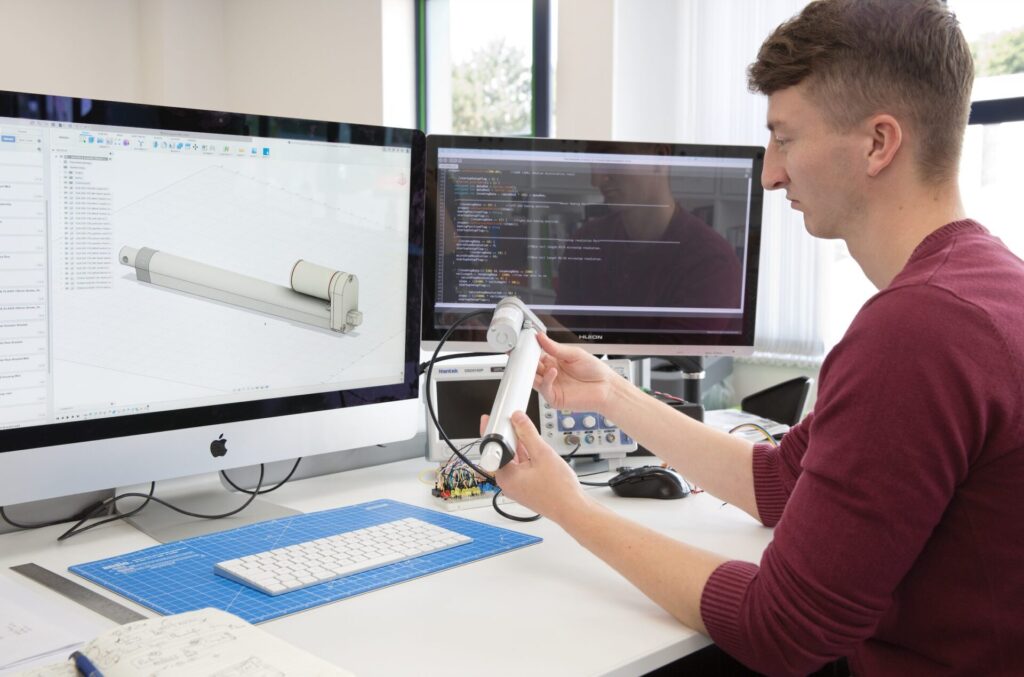
One pivotal advancement in the CAE landscape is the integration of these tools within the product development process. This integration facilitates a smoother transition between design, analysis, and manufacturing stages, reducing the effort and time typically associated with these transitions.
Autodesk Fusion as a symbol for integration
Autodesk Fusion is a prime example of software that epitomizes this integration. Fusion is a cloud-based 3D CAD, CAM, CAE, PCB and data management tool that integrates industrial design, simulation, collaboration, and machining. It’s a comprehensive solution for product development, fostering team synergy across design, engineering, and manufacturing.
Fusion amplifies CAE by allowing engineers to simulate their designs within the same environment they were conceived. This obviates the need to alternate between different software tools, substantially reducing errors and conserving precious time. Engineers can conduct structural, thermal, and modal analyses, among others, right within the design tool.
Real-world performance
Fusion’s Computer-Aided Engineering (CAE) capabilities provide engineers with an extensive toolset for simulation that goes beyond basic performance checks. This includes the ability to analyze part performance, assess manufacturability, and explore generative design capabilities, all within a single platform. Generative design, a key component of Fusion’s CAE capabilities, can aid in discovering weight reduction opportunities and performance enhancements, contributing to the development of more efficient and high-performing products.
Fusion’s CAE suite encompasses a variety of simulation study types, including but not limited to, structural, thermal, and explicit simulations. Structural simulations allow engineers to evaluate the strength and durability of their designs under various loads, crucial for determining a design’s ability to withstand real-world stresses. Thermal simulations provide the ability to analyze how different heat and cooling conditions would impact the design, essential in industries where temperature changes can affect product performance. Explicit simulations are particularly useful for studying the effects of short, severe load cases like impacts and crashes, thus ensuring the product’s reliability under extreme conditions.
Furthermore, Fusion’s CAE capabilities also extend to machine simulation. Engineers can use this feature to simulate and optimize toolpaths on a machine’s digital twin, enhancing manufacturing processes. Fusion aids in preventing potential manufacturing errors by ensuring toolpaths are safe and accurate.
AI-assisted simulation and engineering workflows
Artificial intelligence is becoming an increasingly important part of modern computer-aided engineering (CAE), helping engineers analyze designs faster, automate complex tasks, and make simulation more accessible to a broader range of teams. Autodesk Fusion incorporates AI-assisted capabilities throughout the product development process, enabling design and manufacturing teams to move from concept to validated product more efficiently.
One example is generative design, Fusion’s AI-driven topology optimization technology. Engineers can define performance requirements, manufacturing constraints, materials, and loading conditions, and Fusion automatically generates multiple optimized design alternatives. This helps teams reduce weight, improve performance, and identify innovative solutions that might not be discovered through traditional design approaches.
Fusion also leverages cloud-accelerated solving to help engineers complete simulation studies more efficiently. By utilizing cloud computing resources, teams can run complex analyses without relying solely on local hardware, accelerating design exploration and allowing engineers to evaluate more design alternatives within project timelines.
Another important capability is AI-assisted meshing, available through Fusion for Design or the Fusion Simulation Extension. Automated mesh generation helps reduce the time and expertise traditionally required to prepare simulation models, making advanced CAE more accessible to design engineers who may not have specialized simulation backgrounds. Teams can validate product performance earlier in development and identify issues before they reach manufacturing.
These AI-assisted capabilities help engineers perform simulation-driven design more efficiently, enabling faster iteration, improved product performance, and more informed engineering decisions within a unified development environment.
Enhanced collaboration
The cloud-based characteristic of Fusion boosts collaboration among team members. Irrespective of their location, team members can access designs and simulations, amplifying efficiency and fostering improved communication. Engineers can effortlessly share their designs, garner feedback, and implement modifications in real-time, nurturing a collaborative atmosphere that spurs innovation.
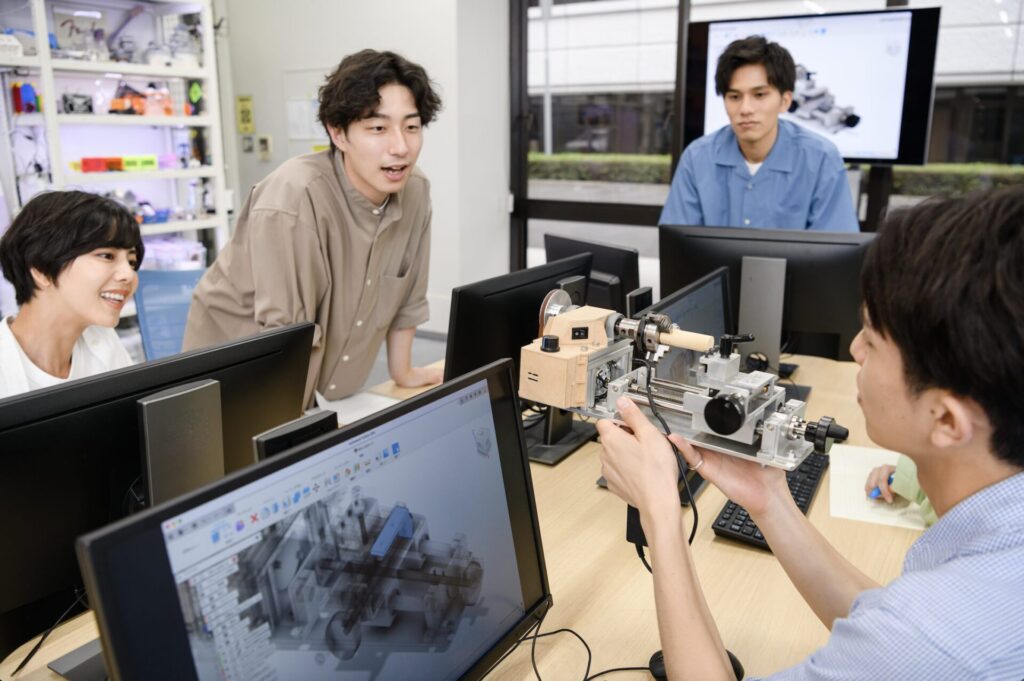
In addition to enhanced collaboration, Fusion empowers engineers to broaden their expertise. Traditionally, engineers might have specialized in a single domain, but with Fusion, they can venture into new areas like manufacturing or electronics design, becoming jacks-of-all-trades. This flexibility not only makes them more versatile but also allows for more holistic design and problem-solving approaches.
The expansion of the consumer products industry, in particular, underscores the importance of this cross-disciplinary understanding. Mechanical and electronics engineers need to work in harmony to meet the demands of this burgeoning field. Fusion’s ability to bridge these two disciplines fosters seamless communication, enabling the creation of specially tailored solutions. For instance, mechanical and electronics engineers can collaborate to create innovative smart collars for the expanding wearable tech market. This kind of synergy is the future of engineering, and Fusion is at the forefront of facilitating this shift.
Fostering innovation
Possibly one of the most substantial benefits of Fusion’s integrated approach is its influence on innovation. By offering a single, unified platform for the entire product development process, Fusion allows teams to iterate more swiftly, explore more design alternatives, and eventually create superior products. This integrated approach eliminates obstacles that can hamper creativity, empowering designers and engineers to push the envelope of what’s feasible.
The incorporation of CAE tools into the product development process, as exemplified by Fusion, signifies a considerable leap in the field of engineering. This approach enables companies to streamline their design processes, enhance product quality, and stimulate innovation. In today’s accelerated manufacturing landscape, securing these competitive advantages is more crucial than ever. As we gaze into the future, it’s evident that integrated tools like Fusion will continue to sculpt the landscape of product development and manufacturing.