 Muna Idriss
Explore how the Vizcom and Autodesk Fusion integration helps product teams move from AI-powered concept exploration to engineering and manufacturing while preserving design intent and reducing workflow friction.

Elevate your design and manufacturing processes with Autodesk Fusion
Ideas rarely start in CAD. For as long as digital product development has existed, there has been a gap between early creative exploration and the engineering tools used to bring products to life. Designers imagine possibilities. Engineers build manufacturable solutions. Somewhere in between, concepts are translated, revised, and often recreated from scratch.
As AI becomes part of the product development workflow, teams are finding new ways to connect concept exploration with engineering execution. The integration between Vizcom and Autodesk Fusion reflects this shift, creating a more direct path from early visual thinking to product development.
Instead of treating ideation and engineering as separate phases, teams can begin connecting them much earlier in the process.
When design intent gets lost in translation
One of the biggest challenges in product development is preserving ideas. Industrial designers communicate through sketches, renderings, mood boards, and visual storytelling. Engineers work with dimensions, assemblies, manufacturing constraints, and performance requirements. Both are working toward the same goal, but often through different tools and processes.
As concepts move from one team to another, familiar questions emerge:
- Is this the right design direction?
- How will the product feel in three dimensions?
- Can it be manufactured?
- Should we explore additional options before moving forward?
Traditionally, answering those questions requires multiple reviews and iterations, with teams spending valuable time translating ideas rather than advancing them.
A new era of concept exploration
AI-powered design tools are expanding what’s possible during the earliest stages of development.
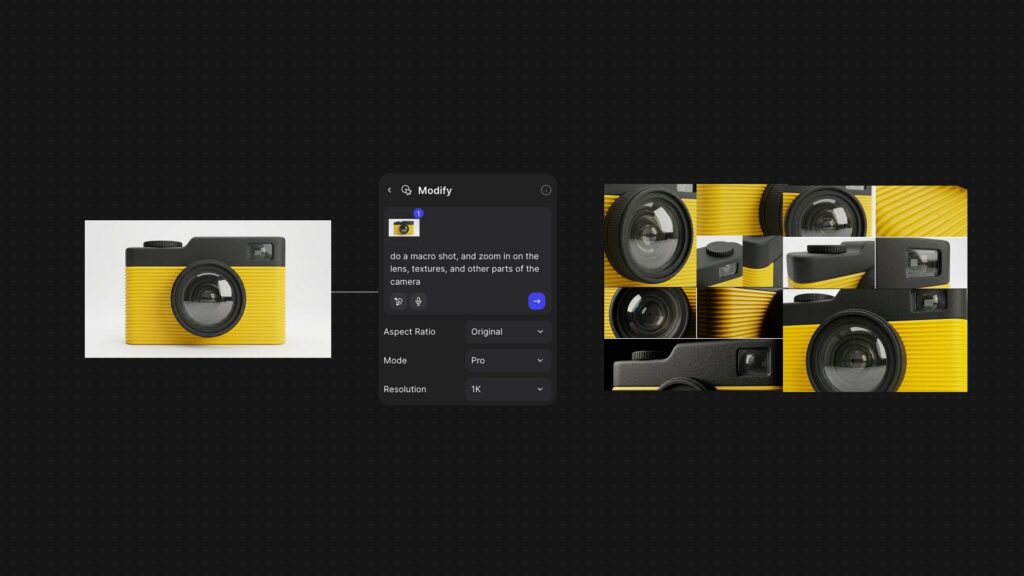
Designers can transform sketches, reference imagery, mood boards, and written prompts into visual explorations that help teams evaluate ideas before significant engineering resources are committed.
Vizcom is an AI design and visualization tool that turns hand-drawn sketches into polished, realistic images, previewing how an idea would look as a product. The Vizcom integration with Fusion gives designers the ability to explore more concepts, challenge assumptions, and visualize new directions without adding weeks to the design cycle. When a concept shows promise, it can move into Fusion for refinement, engineering, and manufacturing.
The result is simple: more ideas get explored, better ideas move forward, and designers stay in control of the decisions that shape the final product.
Turning AI concepts into real products
AI can generate concept images in seconds, but products aren’t built from renderings. They still need to be engineered, tested, manufactured, and documented. That’s where many AI-driven workflows stop.
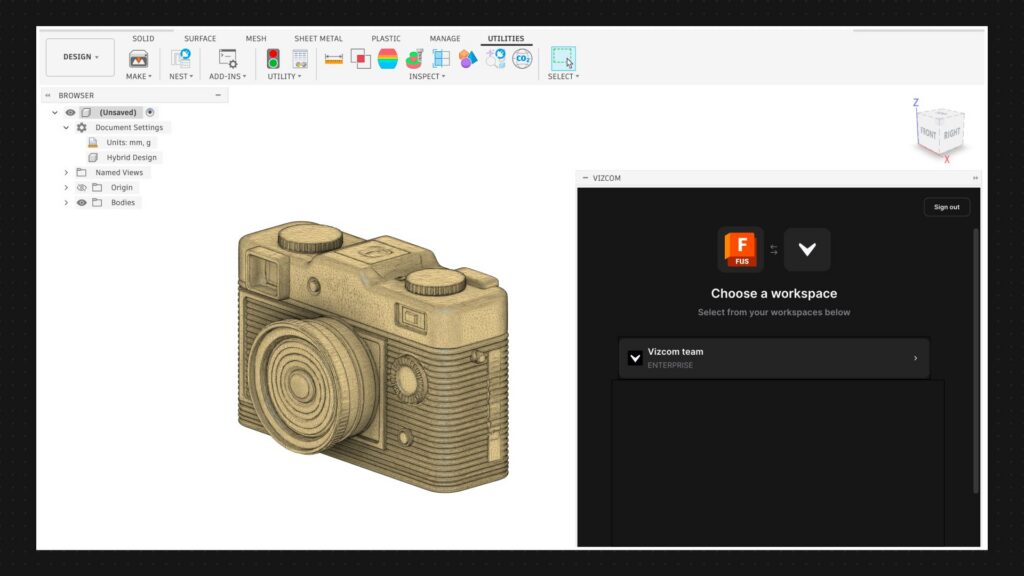
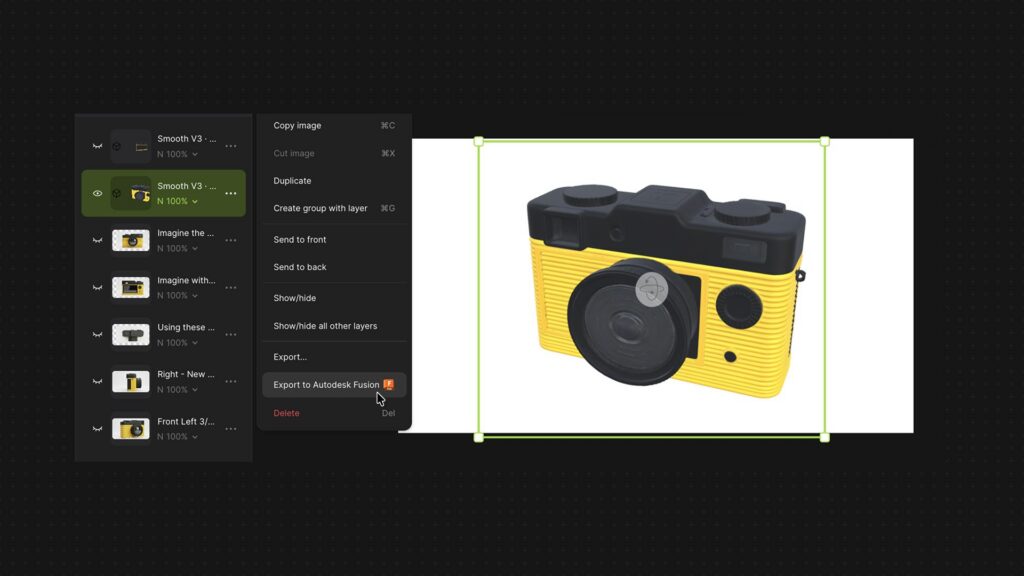
The Vizcom integration with Fusion helps close that gap. Designers can develop concepts in Vizcom, then bring promising ideas into Fusion to continue the journey from inspiration to engineering.
What begins as a sketch or AI-generated concept can evolve into a complete product development workflow that includes mechanical design, electronics, simulation, manufacturing, and technical documentation.
From concept to engineering
Once a concept enters Fusion, teams can continue developing it using tools for real-world product creation, including:
- Parametric modeling
- Mechanical design
- Surface refinement
- Assembly development
- Electronics integration
- Simulation and validation
- Manufacturing preparation
- Technical documentation
Engineering teams can begin with a visual direction that has already been explored and refined, helping reduce the recreation that often occurs between concept development and CAD while maintaining continuity between the original vision and the final product.
Where creativity meets engineering reality
One of the most valuable aspects of AI-assisted product development is the feedback loop it creates. Designers can explore more possibilities in less time, while engineers can evaluate those concepts earlier against real-world requirements such as:
- Manufacturing processes
- Material selection
- Mechanical performance
- Assembly considerations
- Production constraints
Instead of discovering limitations late in development, teams can discuss feasibility while concepts are still evolving. That earlier collaboration often leads to better decisions, fewer surprises, and a smoother path to production.
Why this matters
The biggest opportunity isn’t speed, it’s continuity. For decades, product development has relied on workflows that separate ideation from execution. As concepts move through presentations, screenshots, reviews, and handoffs, design intent can become diluted.
Connected workflows help reduce those disconnects, allowing for:
- Faster concept evaluation
- Stronger designer and engineer collaboration
- Better communication of design intent
- Earlier feasibility feedback
- Reduced concept recreation
- More efficient development cycles
Most importantly, everyone works from a shared vision of the product.
The next chapter of product development
AI is not replacing industrial designers or engineers. It’s helping connect stages of development that have historically operated in isolation.
The integration between Vizcom and Autodesk Fusion is one example of how that future is taking shape. Designers can move from inspiration to concept exploration more quickly. Engineers can engage earlier with stronger design context. Product teams can collaborate around a shared vision sooner in the development process.
Successful products have always depended on connecting imagination with execution. The difference today is that those connections are becoming faster, closer, and far more collaborative.