 Heather Miller
This post is also available in:
With Autodesk Fusion, Armadilla is effectively scaling their business and the design and production of luxury modular accommodations. By switching from SketchUp to Fusion, the company cut project timelines from 6–8 months down to 6–8 weeks, reduced design cycles by about 80%, and now saves up to £1,400 per project in materials while also minimizing waste with the Manufacturing Extension.
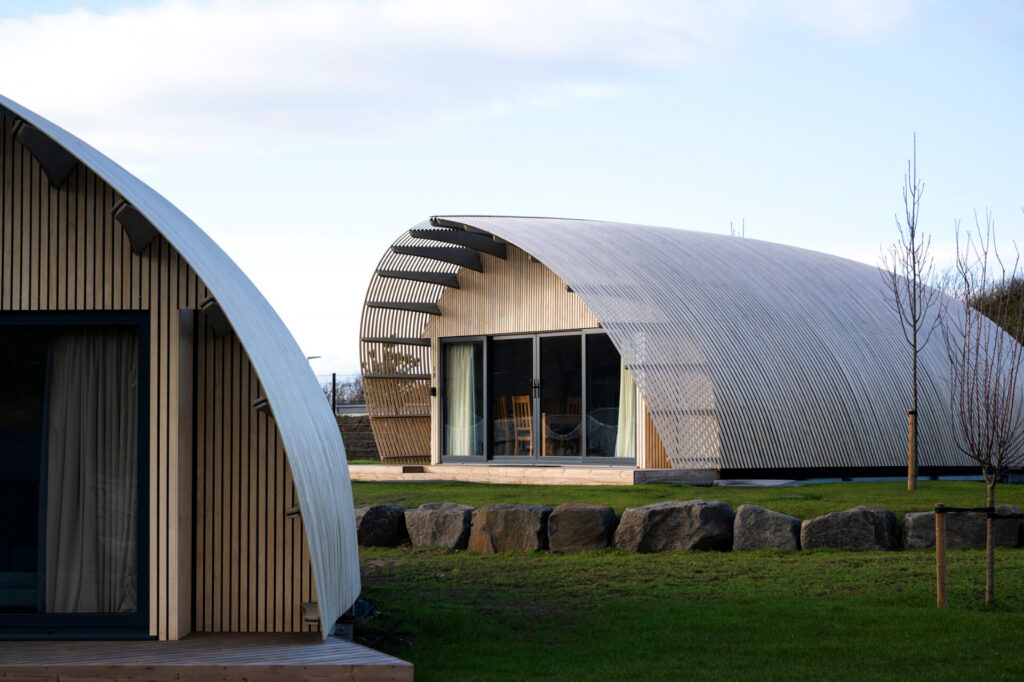
Fifteen years ago, Ross Hunter and his father Archie decided to do a little DIY project. There was some leftover construction materials from a stable recently built on a nearby farm. They decided to make a duck house, which is a small shelter placed beside a garden pond for, well, ducks of course. But this wasn’t just any duck house. It was highly stylized with a unique arch shape.
Neighbors and friends loved it. They started getting requests to build larger versions for storage, garden sheds, or something you could simply spend time in. That one-off duck house ultimately led the father-son duo to start their own company Armadilla. They began a remarkable journey designing what would become their luxury modular units for the hospitality industry focused on outdoor experiences.
Elevate your design and manufacturing processes with Autodesk Fusion
Designing a luxury experience way that goes way beyond “glamping”
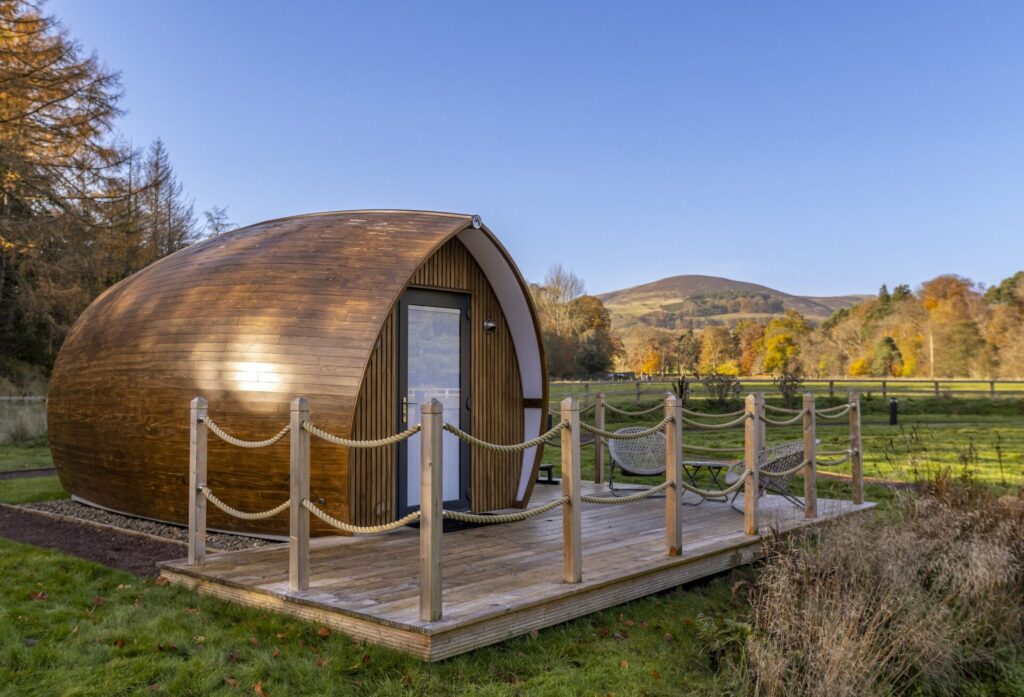
Based in Edinburgh, Scotland, Armadilla provides signature modular accommodation units, designed for luxury hotels, resorts, and large landowners. But don’t call it glamping. It entails a lot more than that.
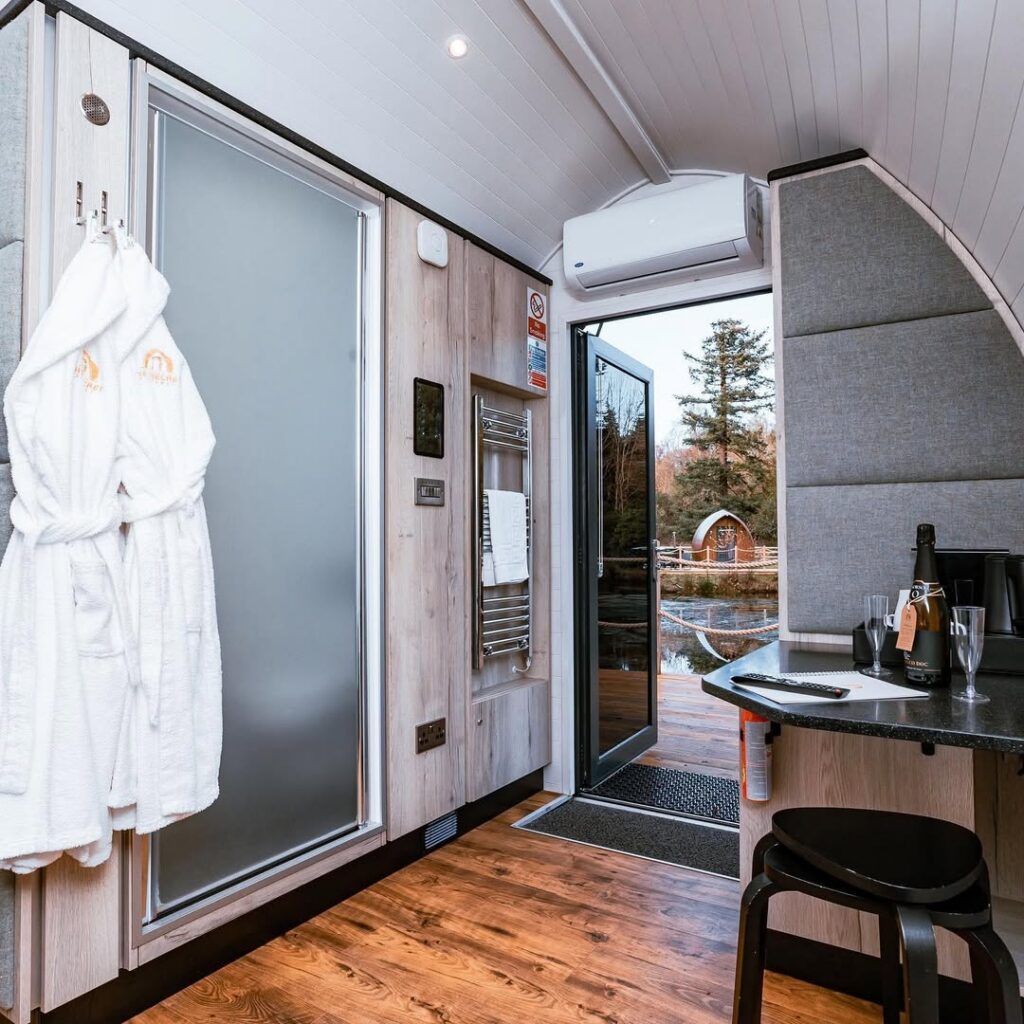
Armadilla’s three flagship units include The Pod, The Wave, and The Kurv for a range of size and amenity options. They are completely outfitted and furnished with high-spec finishes, from full en-suite facilities to smart technology, high-end furniture, controllable ventilation, and a host of premium features. Each unit leaves the factory almost entirely complete and flat packed, requiring only a few days for installation.
“We jokingly say, throw in a coffee maker and some bedsheets, and you’re ready to go,” Hunter says.
Making the move from SketchUp
Initially, Armadilla relied on SketchUp, and it suited their purposes for the small scale of their business. But eventually it couldn’t keep up with their complex designs.
“When we got into more and more detail, SketchUp became very cumbersome,” Hunter says. “We were waiting ten minutes for it to save. We were talking about gigabyte models.”
“There was no timeline or parametric aspect to it,” he adds. “If you made a change, it would affect something else and you had to manually do all these changes.”
Design changes became something the team actively avoided. Even something as simple as moving a hole could trigger hours of rework across design files and CAM workflows.
“We were very resistant to actually make changes because of the process involved,” Ross says. “It was just incredibly time-consuming.”
Things finally came to a head during one installation. Hunter was installing a beautiful glass door in the bathroom. He put on the hinges, went to close it, and the door hit the sink. He had to do some major workarounds on the fly to make it work. Hunter knew about Autodesk Fusion by this point and decided to investigate it more deeply. He began learning through YouTube videos and online tutorials. And, once he started using it, he didn’t look back.
“The parametric aspect and Timeline really got my attention,” Hunter says. “If you wanted to change a sketch further back, we were very easily able to do that.”
“I just love the way everything is integrated from CAD to CAM with Fusion,” he adds. “You make a change in the design, and it follows right through to the CAM.”
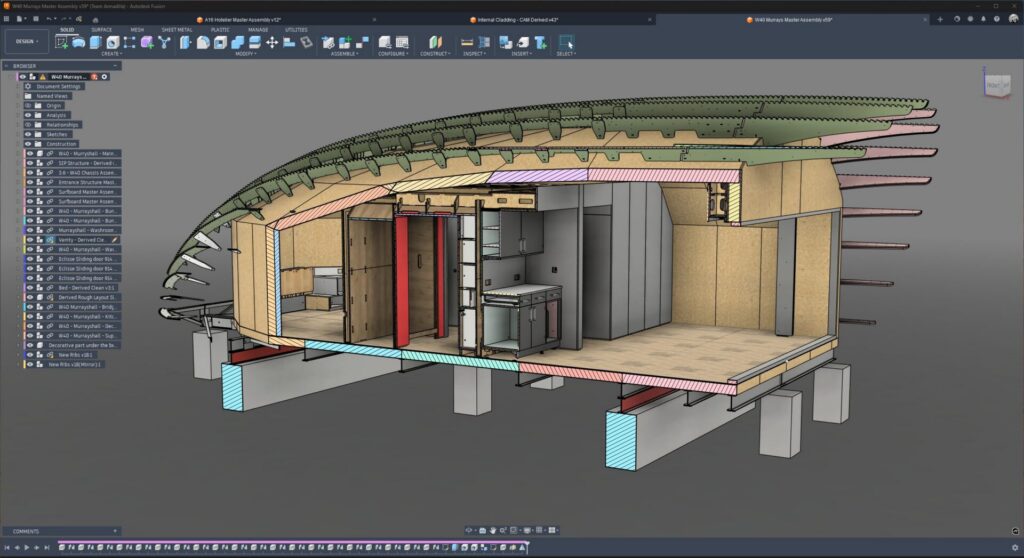
“With Fusion, our process only takes 6-8 weeks rather than 6-8 months. We’ve also reduced design cycles by approximately 80 percent.”
– Ross Hunter, Co-founder, Armadilla
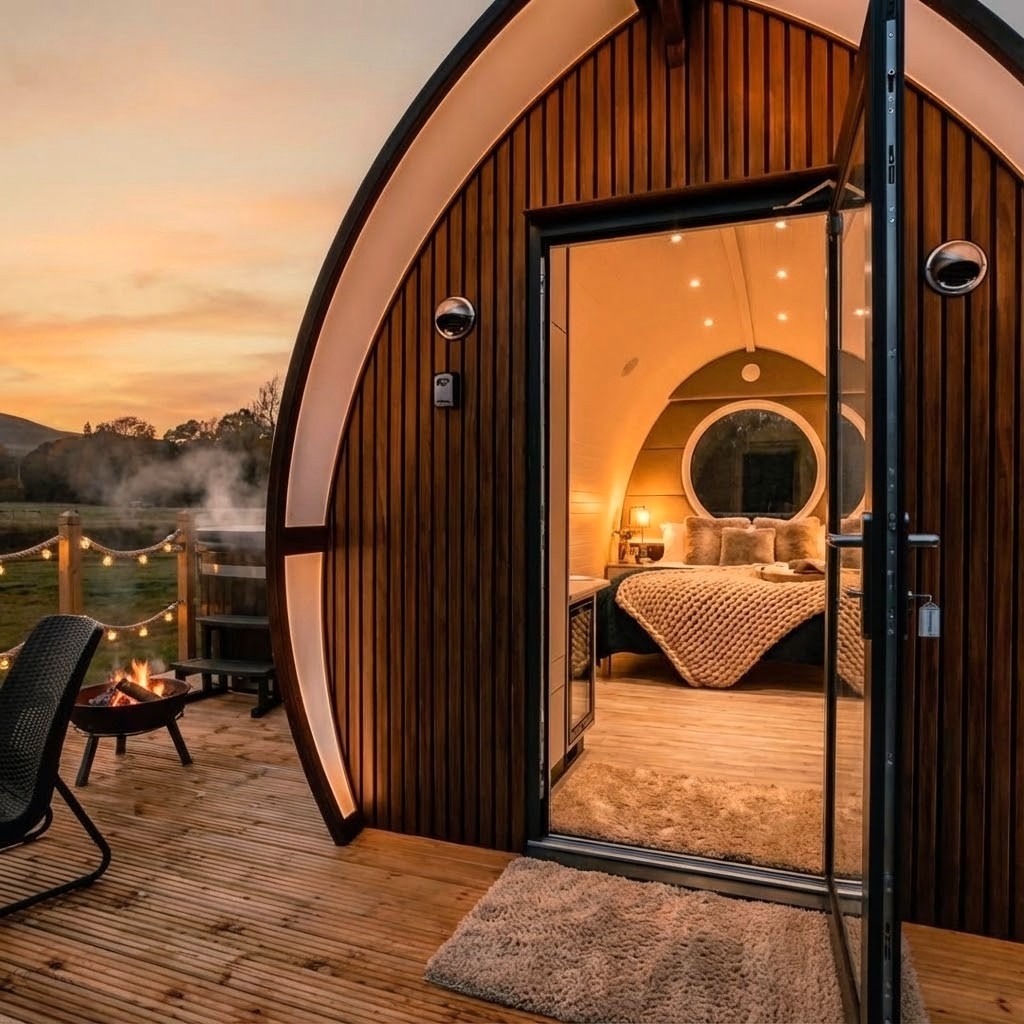
Uncovering new manufacturing efficiencies
The Autodesk Fusion Manufacturing Extension plays a critical role in Armadilla’s production efficiency, particularly when it comes to nesting and material usage. Previously, parts were nested unit by unit. Now, Armadilla nests entire projects together.
“With the Manufacturing Extension, we can save ourselves, in some cases, 28 sheets of material,” Hunter says. “Each one of those is about £50, so it adds up.”
Just as importantly, it dramatically reduces waste.
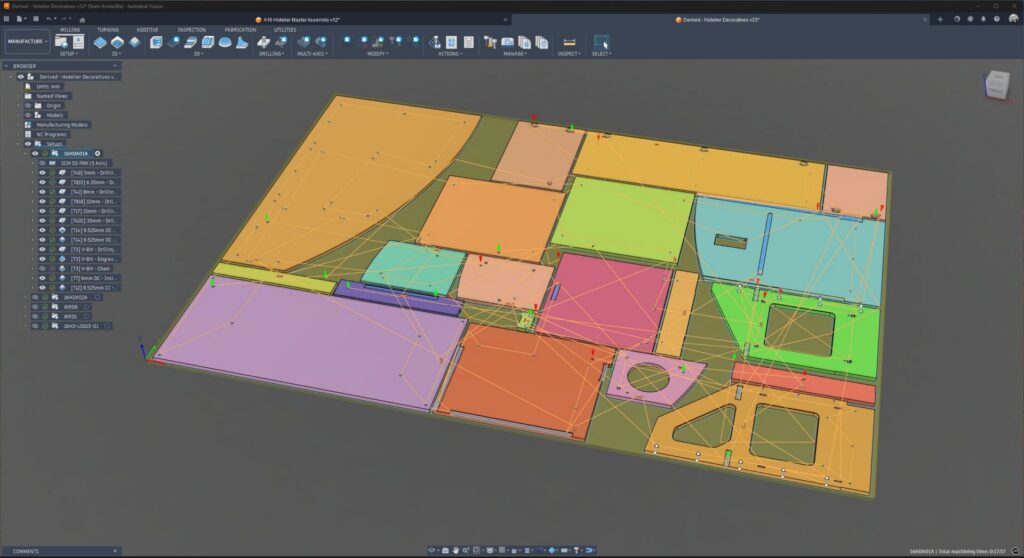
“It’s part of our lean principles,” he explains. “We want to minimize waste. The offcuts are nested and everything is numbered, so we can sort it efficiently once it comes out.”
With multiple 3-axis and 5-axis CNC machines, Fusion allows Armadilla to move seamlessly from design to production while keeping everything in a single platform.
“From initial concept to drawings, rendering, CAM, it’s all in one package with Fusion,” Hunter says. “You’re not jumping around from here to there.”
Designing for longevity and sustainability
Sustainability isn’t an afterthought at Armadilla—it’s a design requirement.
“I don’t believe in greenwashing, and our goal is to make the units last at least 50 years,” Hunter says.
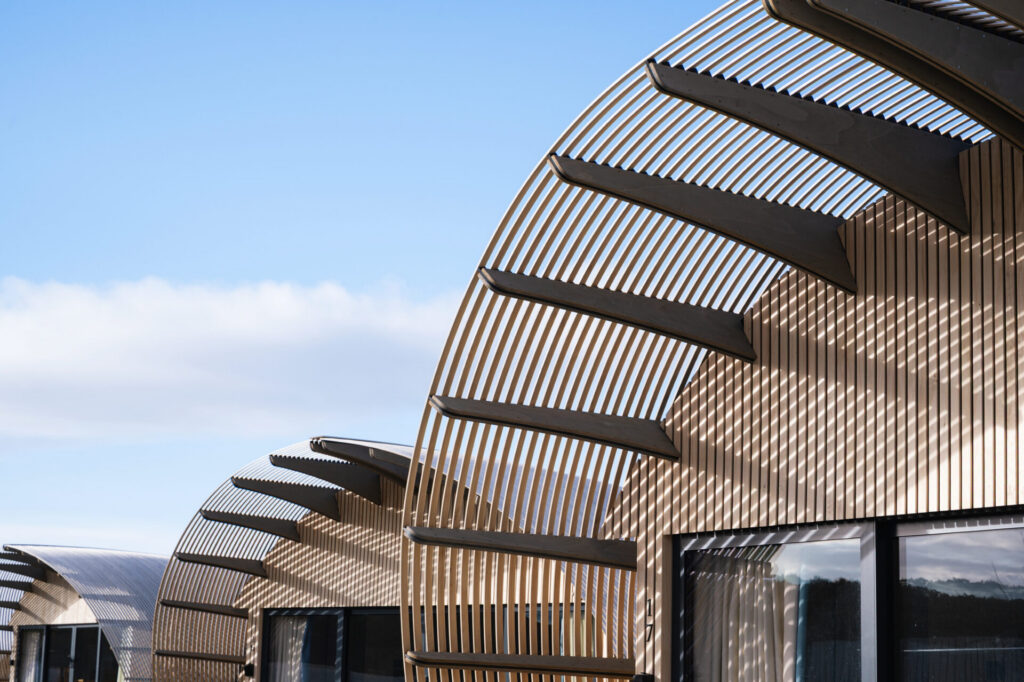
Material choices are driven by longevity and performance, including acetylated timber that lasts for decades, high-performance insulation, and nearly airtight construction. The mechanical heat and recovery ventilation system recovers about 80% of any heat or cooling produced in the unit from air source heat pumps.
“Knowing we really pay attention and make sustainable choices gives customers peace of mind,” Hunter says. “They know they’re choosing something that’s built to last and built responsibly.”