 Heather Miller
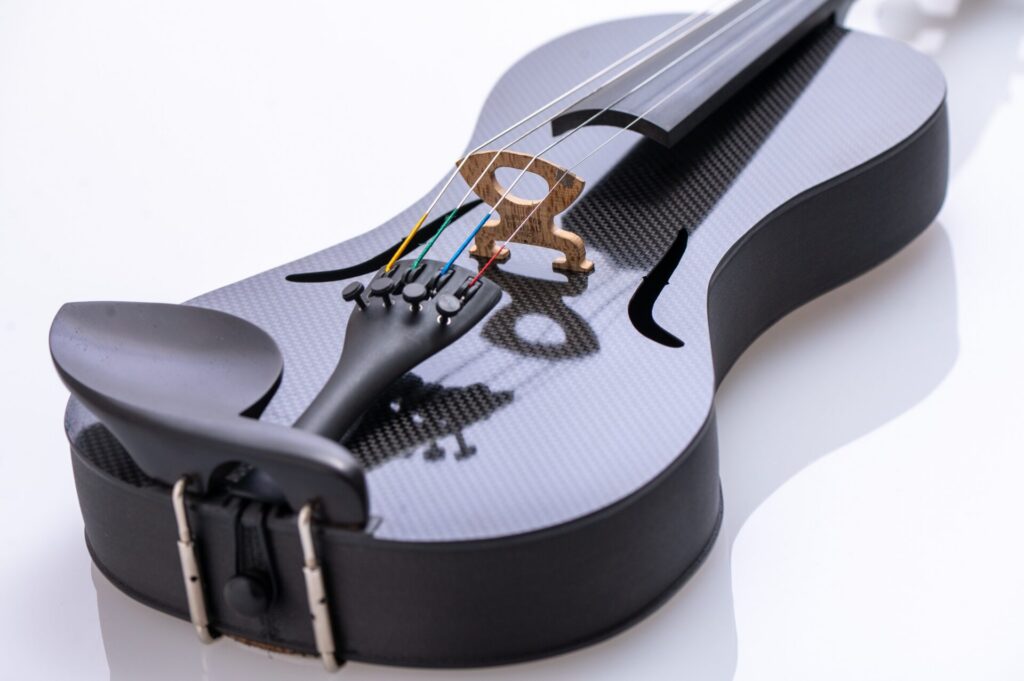
Forte3D turned a bold idea into a Shark Tank success, receiving a $250,000 investment with their professional-quality, 3D-printed cellos and violins. With Autodesk Fusion, the company took innovative design, rapid prototyping, and 3D printing to reshape the future of string instruments that are more durable, accessible, and better sounding than ever before.
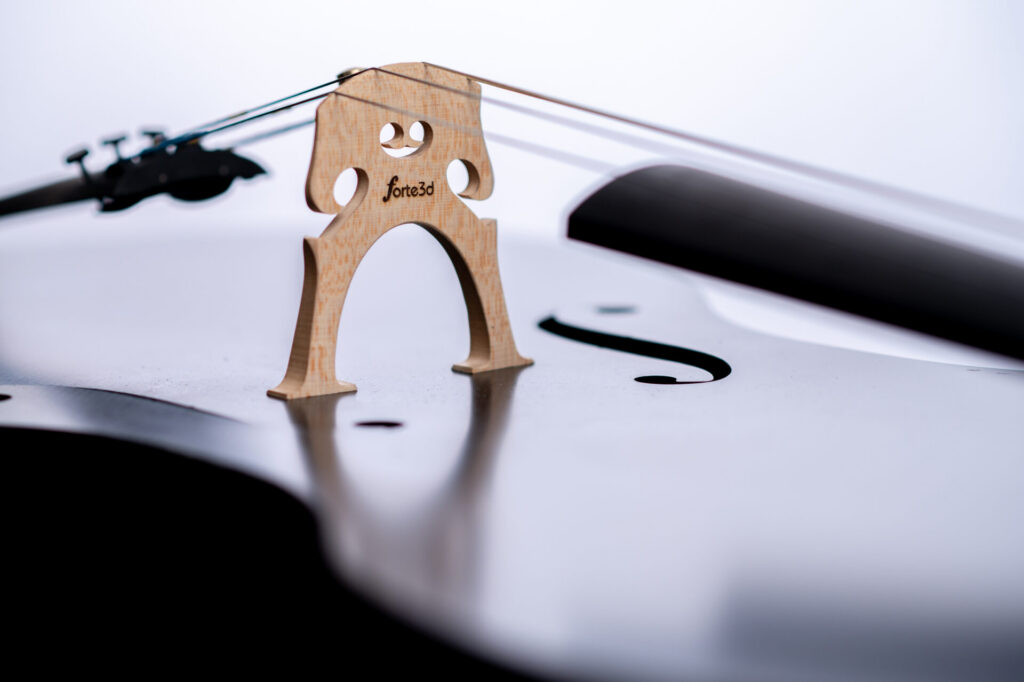
When you watch an episode of Shark Tank, the formula is always the same. Inventors and business owners walk out to the dramatic music, make their pitch, and get grilled by some of the biggest, heavy-hitting investors out there. And then they hope for the best.
Last winter, Forte3D co-founders Alfred Goodrich, Elijah Lee, and artist endorser Mike Block did that same familiar, hallway walk to present the world’s first, professional-quality, 3D-printed cellos and violins. They weren’t sure what was really going to happen either. But before they even said a word, cellists played the famous Shark Tank music and the investors were already blown away.
Over the course of 90 minutes (yes, the entire taping of their segment took that long), Goodrich, Lee and Block answered hard-hitting questions from the Sharks. But Kevin O’Leary (a.k.a. Mr. Wonderful) and Lori Greiner showed the most interest and had their own small bidding war. In the end, Forte3D walked out with a $250,000 investment from Greiner, incredible new exposure, and the opportunity to take professional, 3D-printed string instruments to the next level.
Elevate your design and manufacturing processes with Autodesk Fusion
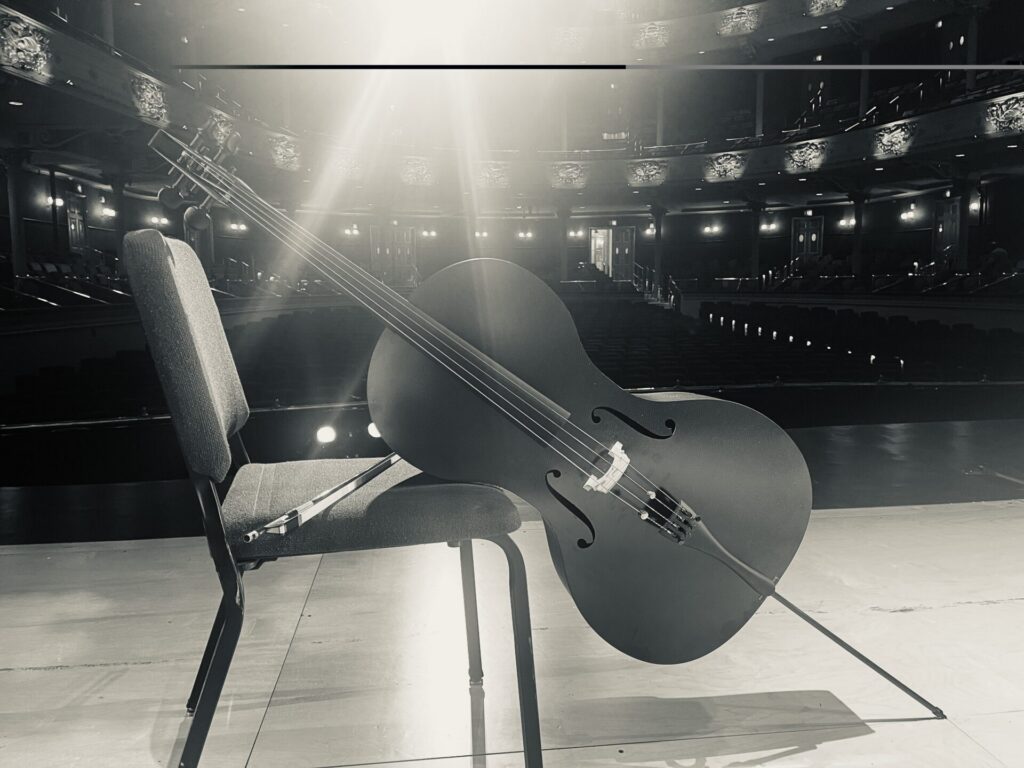
Redefining the modern cello
You might ask, why did Shark Tank find a carbon-fiber, 3D-printed cello so compelling? It isn’t just a novelty. The alternative to wood has a huge market opportunity. Traditional cellos are sensitive to environmental conditions and difficult to transport. By contrast, Forte3D’s instruments are designed to handle real-world use. Students and consumers alike are attracted to the low cost, incredible durability, and high-quality sound. That also extends to professionals, from string players in major orchestras to Grammy Award winners.
“One of the things I wanted to solve is how to make a cello easy to transport,” Goodrich says. “Often cellists must buy an additional airplane seat because you can’t check it without risk of major damage. You can actually check our cello with your luggage, and it’s totally fine. That’s a huge cost saving for cellist because they don’t have to buy another seat for it.”
Of course, sound is paramount and that’s the real testament to Forte3D’s success. Even Yo-Yo Ma tried out the cello and told the company, “We need more innovations like this, creative solutions that expand access to music-making and open new paths to imagination and expression.”
With Autodesk Fusion, Goodrich was able to take an idea and make it sing, from the early days of the pandemic to the Shark Tank stage.
Designing the world’s first 3D-printed cello
Prior to the pandemic, Goodrich was a professional touring musician and conducted the orchestra at a school in Pennsylvania. But when the world locked down, an idea that had been in the back of his mind came to the forefront: a 3D-printed cello. He was able to get a scan of his father’s cello and began to innovate some ideas.
“I had never done any CAD or 3D printing in my life,” Goodrich says. “I bought a giant 3D printer that Elijah and I put together in my house. I took the scan of my father’s cello and started tracing it out in Fusion. It was the first time I’d ever even tried CAD, and I cut my teeth 100 percent on designing a cello from scratch with the software.”
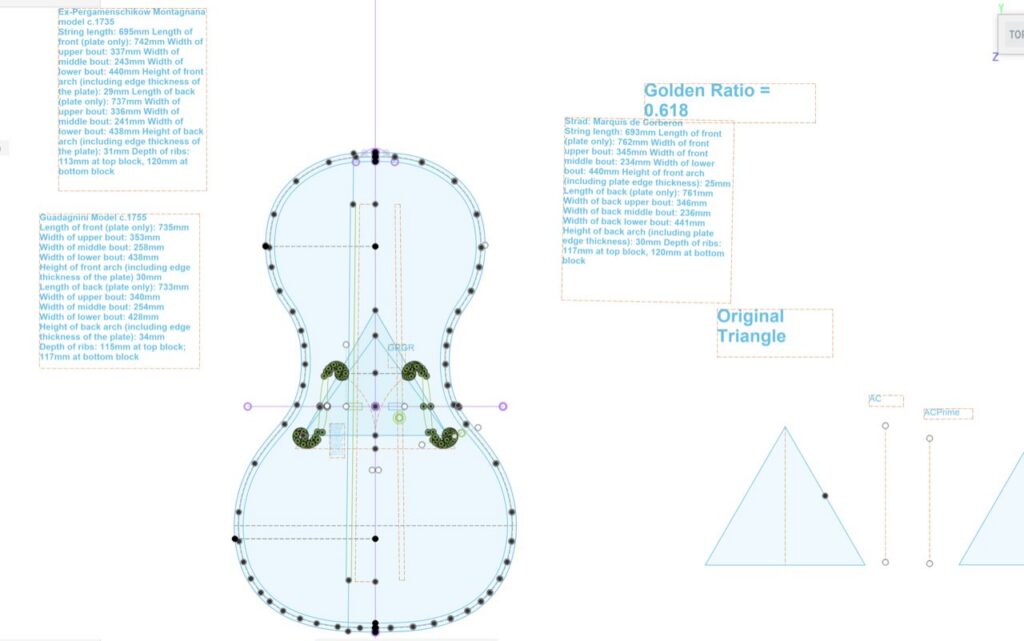
From there, Goodrich began intensive, rapid prototyping. Every parameter of a cello was designed and tested, from the height of the ribs to the width of the body, shape of the F-holes, angle of the neck, scroll design, thickness, and so much more. He estimates they made hundreds of cellos to test the sound, adjust in Fusion, recycle parts, and print again to hear the new version the very next day. Throughout the prototyping, the team honed in on very thin sheets of carbon fiber for the top and back of the instruments providing deeper sound and warmth.
“It’s funny because the very first instruments sounded like baroque cellos,” Goodrich says. “Then, as I iterated, I got them to sound like modern instruments. With Fusion, I could really experiment and rapidly prototype to make an instrument that is by far, in our opinion, the best non-wooden instrument in the world.”
“For our instruments, precision is everything. With Fusion, we can tweak things down to a tenth of a millimeter and that makes the difference between something sounding good or not.”
– Alfred Goodrich, CEO and Co-founder, Forte3D
Manufacturing cellos in a completely new way
Forte3D’s workshop is constantly humming with 3D printers and a CNC machine. The core structure of their cellos is 3D printed with their own proprietary filament, while the front and back plates are veneered with thin sheets of CNC-cut carbon fiber. The bridges are also CNC-machined with wood imported from France. Overall, the speed of Forte3D’s manufacturing process and cost-savings are striking. A cello can range anywhere from $10,000-$50,000. You can pick up a Forte3D cello for less than $3,000.
“It takes about five and a half hours to print a cello and a few hours for the new violins we’re producing,” Goodrich says. “That’s compared to the months it would take to make a traditional instrument.”
“It actually takes longer for us to put them together than to print them since we do it by hand,” he adds. “Each printer can make up to $1.5 million worth of cellos per year. We’re already into hundreds of violins that we just released this winter.”
Looking ahead
Forte3D continues to innovate for string instrument alternatives. Since the debut of their violins in November, they’re preparing for the launch of violas. In the last year everything has accelerated to an incredible new pace of scale and growth. Forte3D’s journey from a pandemic idea to appearing on national TV and a business-changing investment isn’t lost on Goodrich.
“I have to say, the whole cast and crew from Shark Tank team have been amazing, wonderful human beings,” he says. “I just reconnected with them when I went to the anniversary of our local casting call. Now being there as one of the winners of the show was really, really incredible. It’s been a life-changing experience.”