 Eric Suesz
If you’re a drainage designer in the UK, you probably already know about the CIRIA SuDS manual:
- The SuDS Manual (C753F) is a comprehensive 2015 update of the original 2007 edition, providing the latest research and best practices for sustainable drainage systems.
- The manual covers all aspects of SuDS lifecycle from planning and design to construction, management, and maintenance for multiple benefits.
- It includes practical tools like the Simple Index Approach (SIA) and downloadable checklists to support water quality management design across the UK.
- The CIRIA 753 SuDS manual is available as a free PDF download for CIRIA members and aligns with government non-statutory technical standards
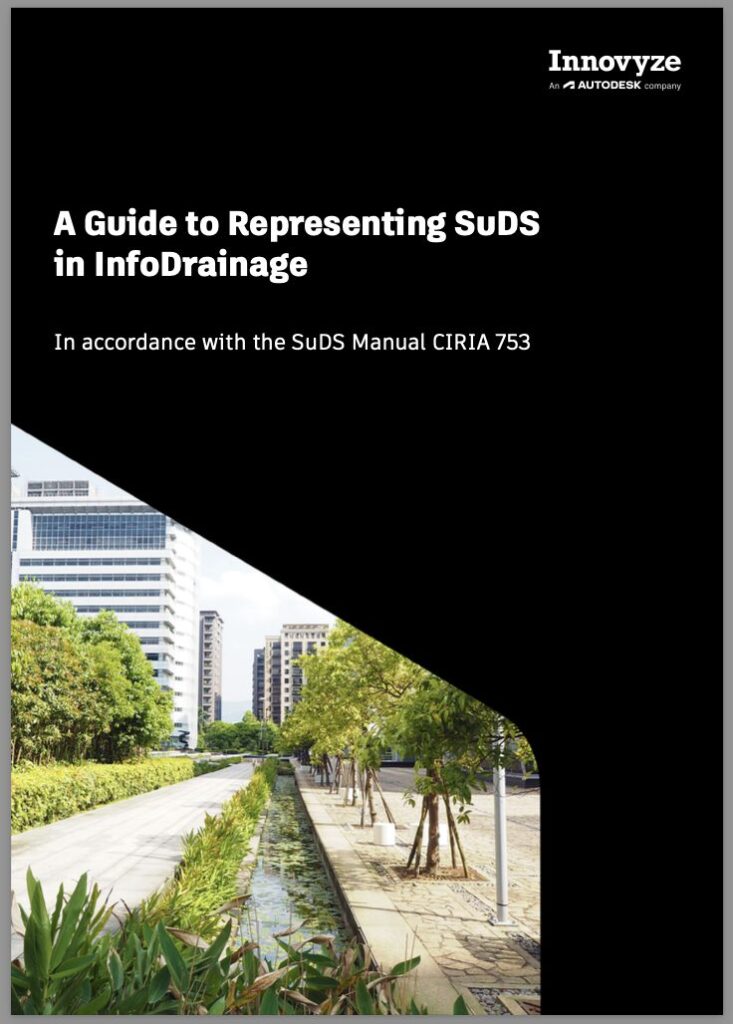
To help our customers interpret these guidelines, we’ve created “A Guide to Representing SuDS in InfoDrainage”, which explains all of the settings and options in the software that can help you meet the recommendations of the CIRIA manual.
Why the CIRIA 753 SuDS Manual is so important
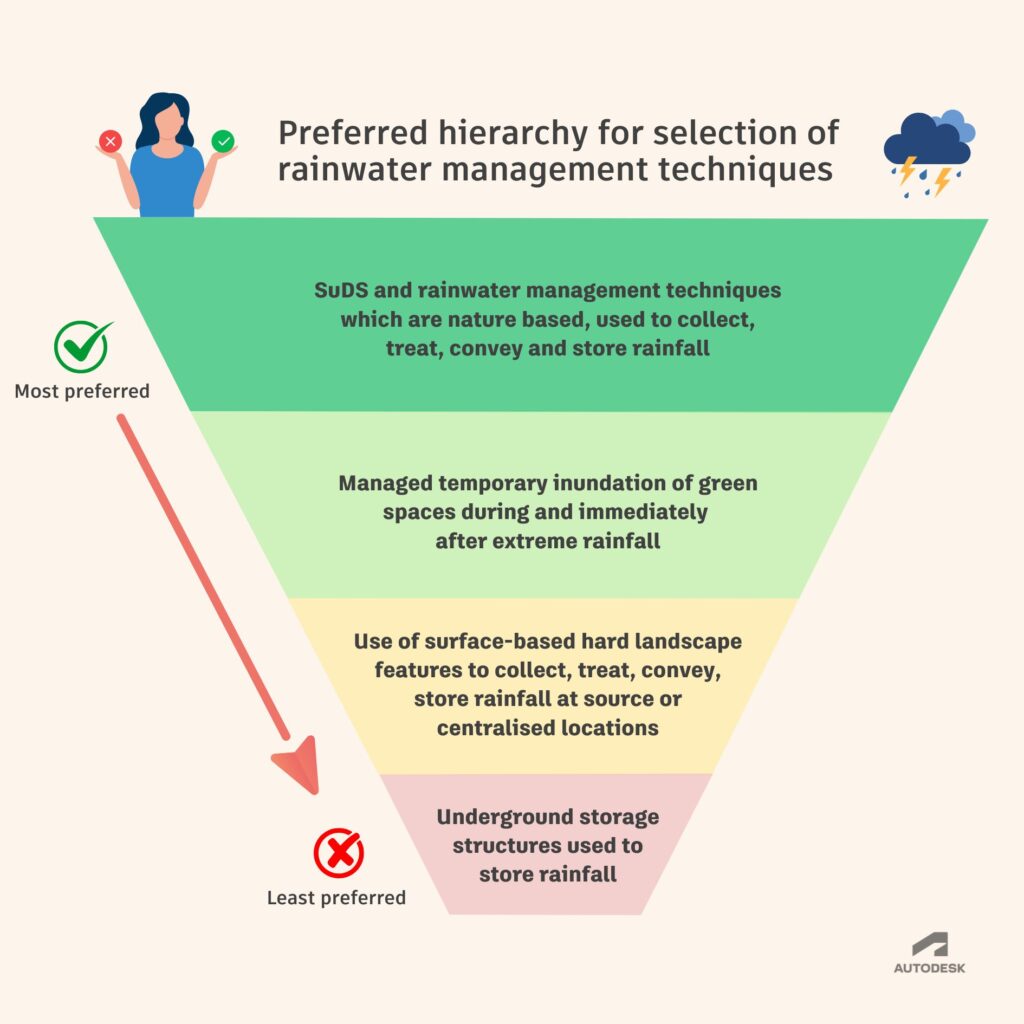
The management of surface water runoff in urban environments has become increasingly critical as climate change intensifies weather patterns and urbanization continues to expand. Traditional drainage systems, designed primarily for rapid water conveyance, often fail to address modern challenges of flooding, pollution, and environmental degradation. This is where the CIRIA SuDS Manual emerges as an essential guidance document, providing support for professionals seeking to implement sustainable drainage solutions. This SuDS Manual represents the culmination of decades of research and practical experience, offering a structured approach to creating drainage systems that work with natural processes rather than against them.
Autodesk has created an in-depth guide to help water professionals accurately represent SuDS using InfoDrainage, which is a popular tool in the UK for designing and auditing drainage systems. InfoDrainage is highly regarded among designers, developers, landscape architects, engineers, and consultants for its ability to model and audit drainage systems efficiently. It supports sustainable and compliant designs while integrating seamlessly with Building Information Modelling (BIM) workflows.
What are the four pillars of SuDS design?
If you’re not familiar with the analogy, SuDS design is fundamentally structured around four interconnected pillars that ensure comprehensive performance across multiple objectives:
- Water quantity management focuses on controlling surface water runoff rates and volumes to prevent flooding while maintaining natural hydrological processes.
- Water quality improvement represents the second pillar, emphasizing treatment of pollutants and improvement of water quality before discharge to receiving waters. This pillar addresses the growing recognition that urban runoff carries significant pollutant loads that can damage downstream ecosystems and water resources.
- Amenity provision creates attractive spaces that enhance local environments and communities through thoughtful integration of water management features into the urban landscape. This pillar recognizes that SuDS can contribute significantly to quality of life and property values when properly designed and maintained.
- Biodiversity enhancement supports wildlife habitats and ecological diversity through green infrastructure that provides food, shelter, and breeding opportunities for various species. This pillar aligns with broader environmental objectives while delivering practical drainage benefits.
The idea behind this integrated approach is that can help ensure SuDS deliver maximum benefits across all four categories rather than optimizing for single objectives. This holistic perspective requires designers to consider trade-offs and synergies between different performance criteria throughout the design process. Of course, design implementation varies significantly depending on site conditions and specific SuDS components selected, but the ultimate goal is to balance these four pillars across different development types, from residential estates to commercial and industrial sites.
Key features and functions of InfoDrainage SuDS
We think our customers choose InfoDrainage for designing their SuDS for a few key reasons:
- Efficiency: They want to streamline the design and auditing process.
- Compliance: They want to ensure their drainage designs meet regulatory standards.
- Sustainability: They genuinely want to promote environmentally responsible urban planning.
The downloadable PDF highlights several key features and functionalities of InfoDrainage that make it an ideal solution for SuDS representation:
- Comprehensive component library: InfoDrainage includes a comprehensive library of SuDS components like swales, porous pavement, infiltration trenches, cellular storage systems, soakaways, and bioretention systems – and they can all be linked together.
- Hydrological modelling: You can simulate rainfall events and understand how different SuDS components interact to manage water flow effectively.
- Design flexibility: You can customize your SuDS components to match specific project requirements and local conditions.
- Compliance and reporting: You can easily generate customized reports that demonstrate compliance with local and national regulations.
Representing SuDS in InfoDrainage offers a robust, efficient, and compliant approach to modern drainage design. By using this guide, water professionals can ensure their projects not only meet regulatory standards but also contribute positively to environmental sustainability.
Made for the UK, but helpful for everyone
While the manual is specifically designed for UK conditions and aligns with UK government standards and regulatory frameworks, the fundamental principles and design approaches can be used anywhere. And, indeed, these SuDS options are available inside InfoDrainage for our customers around the world, along with regional rainfall standards they can plug in and customize to fit their specific regulations. So whether you call them SuDS (UK), or LIDs and BMPs (US/Canada), or WSUDs (APAC), they’re universally a step in the right direction – toward a more green living environment.
Do you want to go even deeper into SuDS? In September 2025, CIRIA released a new companion report called Enabling development. Getting SuDS right from the start (C823F), which is free for CIRIA members.
Using InfoDrainage in your work
- Try InfoDrainage yourself by downloading a free trial for 30 days (no credit card required). Are you a student or educator? You can use our water software for free.
- Need a quick course? Watch our Introduction to InfoDrainage: free learning series.
- Dig into the InfoDrainage Technical Information Hub and examine how the software conforms to industry standards.
- New to SuDS? Watch our ‘Fundamentals of Drainage Design’: a framework with 8 steps video.