 Shannon McGarry
Learn how IIoT in design and manufacturing will drive innovation, efficiency, and competitiveness, playing a critical role in shaping next-generation manufacturing processes and products, and leading to a smarter, more connected, and sustainable future.
The Industrial Internet of Things (IIoT) is transforming design and manufacturing, as it ushers in a new era of connectivity, efficiency, and innovation. As industries continue to embrace digital transformation, IIoT is becoming a transformational technology that improves operational capabilities, optimizes processes, and drives competitive advantage.
Let’s dive into the future of IIoT in design and manufacturing, exploring its impact, trends, challenges, and opportunities.
Introduction to IIoT
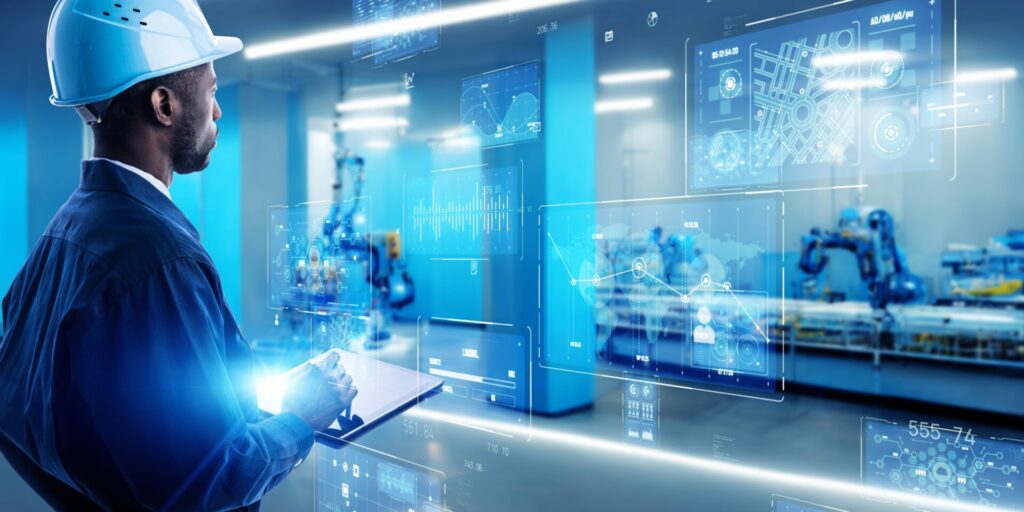
IIoT refers to the interconnected network of devices, sensors, machines, and systems that communicate and exchange data over industrial networks.
Unlike consumer IoT, which focuses on smart homes and personal devices, IIoT focuses on industrial applications, including manufacturing, logistics, energy, and agriculture. The primary goal of IIoT is to improve operational efficiency, reduce costs, enhance product quality, and enable predictive maintenance.
Impact on design and manufacturing
IIoT is changing the design and manufacturing processes in several ways:
- Enhanced data collection analysis:
IIoT enables real-time data collection from sources, including machinery, production lines, and supply chains. Data is analyzed using advanced algorithms and machine learning techniques to provide insights into performance, efficiency, and potential issues. Manufacturers can make data-driven decisions to improve streamline processes, reduce downtime, and improve product quality. - Predictive maintenance:
Sensors and connected devices monitor equipment health and performance, detecting anomalies and predicting failures before they occur. This proactive approach reduces unplanned downtime, extends the lifespan of machinery, and lowers maintenance costs. - Automation and smart manufacturing:
IIoT enables machines to communicate and coordinate with each other through automation. Smart manufacturing systems can autonomously adjust processes, manage workflows, and optimize resource allocation. This helps improve productivity, reduce human error, and allow for more flexible and agile manufacturing. - Supply chain optimization:
Real-time tracking and monitoring help identify bottlenecks, streamline logistics, and ensure timely deliveries. Manufacturers can respond quickly to changes in demand, minimize inventory costs, and improve customer satisfaction. - Product design and development:
IIoT accelerates product design and development through digital twins and simulations. Digital twins are virtual replicas of physical products or systems, created using data from sensors and connected devices. Engineers can test and refine designs in a virtual environment, reducing the need for physical prototypes and speeding up the development process.
Emerging trends in IIoT
Edge computing
Edge computing involves processing data closer to its source, rather than relying on centralized cloud servers. This approach reduces latency and bandwidth usage, which in turn enables faster decision-making and real-time responses. As Industrial Internet of Things (IIoT) devices generate massive amounts of data, edge computing becomes essential for efficient data management and analysis.
5G connectivity
The rollout of 5G networks offers higher speeds, lower latency, and greater reliability compared to previous generations of wireless technology. 5G enhances IIoT capabilities by supporting more devices, enabling real-time communication, and providing robust connectivity in industrial environments.
Artificial intelligence and machine learning
Artificial intelligence (AI) and machine learning are integral to IIoT, enabling advanced data analysis, predictive analytics, and autonomous decision-making. These technologies enhance the ability to detect patterns, optimize processes, and predict maintenance needs, driving efficiency and innovation.
Cybersecurity
As IIoT devices become more interconnected, cybersecurity becomes a critical concern. Protecting sensitive data and ensuring the integrity of industrial systems require robust security measures, including encryption, authentication, and intrusion detection. Manufacturers must prioritize cybersecurity to safeguard their operations.
Interoperability and standards
The success of IIoT depends on seamless integration and interoperability between devices, systems, and platforms. Industry standards and protocols, such as OPC UA and MQTT, facilitate communication and data exchange, enabling a cohesive and scalable ecosystem.
Challenges and considerations
While IIoT offers significant benefits, it also presents several challenges that manufacturers must address:
- Data management: The sheer volume of data generated by IIoT devices can be overwhelming. Effective data management involves storing, processing, and analyzing this data to extract meaningful insights. Manufacturers need robust data infrastructure and analytics tools to handle the influx of information.
- Investment and ROI: Implementing IIoT solutions requires substantial investment in hardware, software, and infrastructure. Manufacturers must carefully evaluate the return on investment (ROI) to ensure that the benefits outweigh the costs. Strategic planning and pilot projects can help mitigate risks and demonstrate value.
- Skill Development: The adoption of IIoT necessitates a workforce skilled in digital technologies, data analysis, and cybersecurity. Manufacturers must invest in training and development to equip their employees with the necessary skills to leverage IIoT effectively.
- Scalability: Solutions must be scalable to accommodate growing data volumes and expanding networks of connected devices. Manufacturers need flexible and scalable architectures that can adapt to changing requirements and support future growth.
- Regulatory Compliance: Implementations must comply with industry regulations and standards, particularly in sectors such as healthcare, energy, and automotive. Manufacturers must stay abreast of regulatory changes and ensure that their IIoT solutions meet compliance requirements.
Opportunities and future outlook
The future in design and manufacturing is rife with opportunities:
- Digital twins and simulation:
Digital twins will become more sophisticated, enabling real-time monitoring and optimization of entire production systems. Manufacturers can simulate various scenarios, predict outcomes, and make informed decisions to enhance efficiency and innovation. - Collaborative robots (Cobots):
IIoT will drive the proliferation of collaborative robots, or cobots, that work alongside human operators. Cobots can perform repetitive tasks, assist in complex operations, and improve workplace safety, leading to higher productivity and reduced labor costs. - Smart factories:
The concept of smart factories will evolve, with fully interconnected and automated production facilities. These factories will leverage IIoT, AI, and machine learning to optimize every aspect of manufacturing, from raw material handling to final product assembly. - Sustainable manufacturing:
IIoT can contribute to sustainable manufacturing practices by optimizing resource utilization, reducing waste, and minimizing energy consumption. Manufacturers can monitor environmental impact and implement green initiatives to achieve sustainability goals. - Customized and on-demand production:
IIoT enables flexible and agile manufacturing, allowing for customized and on-demand production. Manufacturers can respond quickly to changing customer preferences, produce smaller batches, and deliver personalized products without compromising efficiency.
Conclusion
The future of IIoT in design and manufacturing is promising, with transformative potential that drives innovation, efficiency, and competitiveness. As industries continue to embrace digital transformation, IIoT will play a critical role in shaping the next generation of manufacturing processes and products. By addressing challenges, leveraging emerging trends, and capitalizing on opportunities, manufacturers can pave the way for a smarter, more connected, and sustainable future.