 Markus Cueva
Learn how accurate factory layout reduces installation errors, minimizes construction rework, and improves ROI using Autodesk Factory Design Utilities.

During factory layout projects, design teams face the daunting question of how to place heavy machinery and structural elements within tight factory floors. If not handled correctly, inaccurate measurements during the planning phase can lead to cascading failures during installation, which in turn cost money and waste time. Ultimately, engineers need a robust methodology to validate every square foot of the floor plan before equipment arrives at the loading dock.
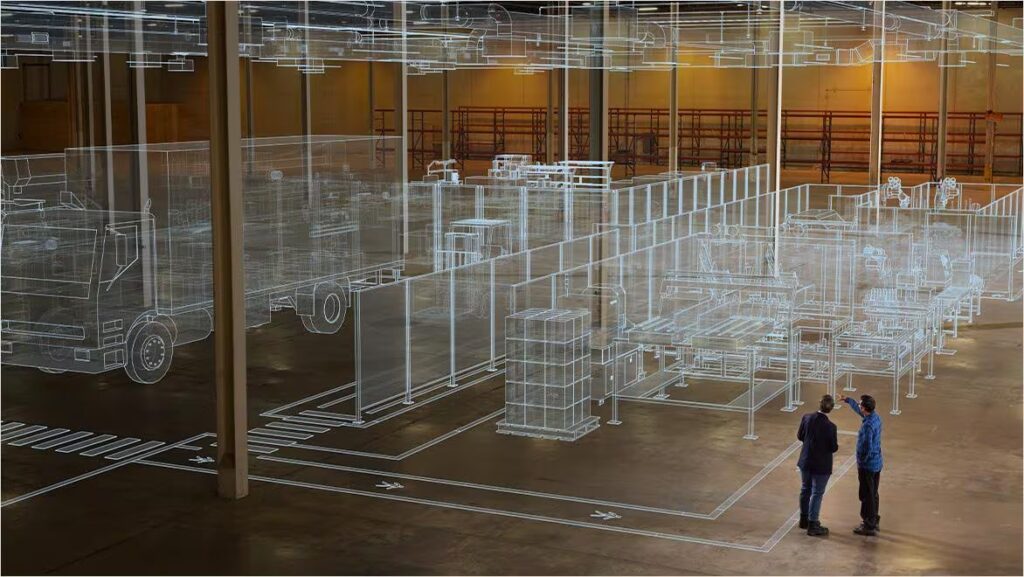
Avoiding errors and reworks in factory layout
Precise facility planning is a significant factor in determining the financial success of manufacturing projects, as accurate factory layouts directly prevent the cascading costs of onsite rework. When development teams overlook spatial constraints or process flows during the design phase, the resulting errors typically surface during the installation of heavy machinery. These late-stage discoveries force manufacturing teams to halt operations while operators modify structural elements or reroute utilities, resulting in labor costs and lost production time.
Designers face challenges when integrating new production lines into existing buildings. Traditional workflows frequently rely on outdated 2D floor plans that fail to account for overhead obstructions such as HVAC ducting or structural support beams. This lack of spatial awareness leads to physical clashes where equipment cannot fit into the intended footprint. To mitigate these risks, product teams can benefit from comprehensive digital twins that capture the facility’s as-is state. This approach allows teams to identify potential interference between new assets and existing infrastructure long before any hardware arrives at the loading dock.
Manufacturing teams can also use layout validation to optimize material flow and improve operator safety. Improperly placed equipment can create bottlenecks that restrict throughput or expose workers to ergonomic hazards. By simulating the movement of parts and personnel within a digital environment, designers can test multiple configurations to find the most efficient arrangement. This technical preparation reduces the likelihood of post-installation adjustments. Every hour spent refining the digital layout saves multiple days of physical construction work and ensures the facility achieves its performance targets on schedule.
Optimizing facility performance with Autodesk Factory Design Utilities
Autodesk Factory Design Utilities introduces specialized tools that help designers create a bidirectional link between 2D and 3D design environments. With this software, manufacturing teams can start their planning in a familiar 2D interface and see those changes update automatically in a detailed 3D assembly. As part of this, development teams can leverage Autodesk’s comprehensive library of parametric assets to build a complete digital representation of the factory floor. With standardized assets and a synchronized workflow, every stakeholder works from a single source of truth.
Using the integrated asset browser, designers can quickly drag and drop standard components, like conveyors or robotic cells, into the layout. These assets contain embedded metadata and connection points that allow them to snap together with precision, eliminating the manual effort required to align complex systems and reducing the chance of human error during the drafting process. Product teams can also define custom parameters for these assets to match the hardware’s exact specifications.
Finally, manufacturing teams can further enhance their ROI by using clash detection features within the integrated workflow. By aggregating models from multiple suppliers, engineers can perform comprehensive interference checks against the building structure that identify exactly where a machine might hit a pipe or a column. By resolving these conflicts digitally, teams avoid the expensive change orders that typically plague large-scale installations. This workflow empowers organizations to execute complex facility transitions with confidence and predictable financial outcomes.
Achieving certainty in industrial design
When designers eliminate the uncertainty of physical installation, they protect the project budget and keep production schedules on time. But, without the proper tools, errors are inevitable. By visualizing and validating every square inch of a facility, design teams can take a new, more powerful approach to expansion and retooling. Autodesk Factory Design Utilities provides the framework engineers need to turn ambitious production goals into reality while keeping total control over the construction process.
Factory layout frequently asked questions (FAQs)
Factory layout planning is often enough when changes are low‑risk and well understood, such as rearranging equipment with known footprints, validating clearances, or planning straightforward expansions in stable production environments. In these cases, teams mainly need to visualize space, material flow, and equipment placement rather than test complex behaviors.
However, once variability, throughput constraints, or future growth come into play, static layouts reach their limits. Tools like Factory Design Utilities (FDU) are designed for this middle ground, letting teams create accurate 2D and 3D layouts, reuse real equipment data, and validate designs visually before committing to full discrete‑event simulation. This makes FDU a practical step when layout planning alone feels insufficient, but full simulation would be overkill
The “best” factory layout planning software depends on how closely layout decisions need to connect to real production data and downstream manufacturing tools. For many manufacturers, Autodesk Factory Design Utilities (FDU) is a strong choice because it combines familiar tools—AutoCAD, Inventor, and Navisworks, into a single factory layout workflow.
FDU enables teams to design layouts in 2D, populate them with intelligent 3D assets, and review designs in context without rebuilding models from scratch. Unlike generic diagramming tools, it is purpose‑built for manufacturing environments and integrates directly with existing Autodesk design data. For organizations that want accurate layouts today with a clear path to simulation and optimization tomorrow, FDU provides a solid foundation.
Factory design directly affects material flow, labor efficiency, space utilization, and production throughput. A well‑designed factory minimizes unnecessary movement, reduces bottlenecks, and supports safer, more predictable operations. Poor layout decisions, by contrast, can lock inefficiencies into the business for years, increasing costs and limiting flexibility.
Using tools like Factory Design Utilities, manufacturers can evaluate layout decisions digitally before making physical changes—helping align equipment placement, workflows, and future expansion plans with operational goals. This upfront clarity improves manufacturing efficiency by reducing rework, supporting lean principles, and enabling better‑informed decisions across design, manufacturing, and operations teams.
Factory design looks at the factory holistically, building structure, utilities, production flow, safety, and long‑term scalability. Factory layout is a subset of that work, focused specifically on how machines, workstations, and material flow are arranged on the floor.
In practice, layout decisions are where many factory design assumptions get tested. Tools like Factory Design Utilities help teams connect high‑level factory design intent to detailed, executable layouts in 2D and 3D.
The most common factory layouts include process layouts, product (line) layouts, cellular layouts, and fixed‑position layouts. Each supports different production volumes, product variety, and flexibility needs.
Modern factories often use hybrid approaches, which is why digital layout tools are valuable—they let teams explore and compare layout types without committing physically.
The right layout depends on product mix, production volume, material flow, and growth plans. High‑volume, repeatable products often benefit from line layouts, while high‑mix, low‑volume production favors process or cellular layouts.
Digital layout tools make it easier to evaluate these trade‑offs visually and catch issues early, before equipment is installed or moved.
Factory layout directly affects material travel distance, handling time, work‑in‑progress, and operator movement. Poor layouts create hidden waste through extra motion and delays, even if individual processes are efficient.
Well‑planned layouts streamline flow and make inefficiencies visible, especially when reviewed in 3D or alongside production data.
Yes. Layout planning plays a key role in aisle spacing, emergency access, visibility, and safe separation of people and machines. Visual layouts make it easier to identify pinch points and safety risks early.
Many teams use digital layout tools to review safety considerations with operations, EHS, and maintenance before making physical changes.
At a minimum, teams need equipment dimensions, clearances, building constraints, and material flow assumptions. More detailed data—like utilities, access zones, and future expansion needs—improves accuracy.
Factory Design Utilities supports both lightweight placeholder assets and detailed models, so teams can start planning even if all data isn’t finalized.
Basic CAD layouts show where things fit spatially, but digital factory layout planning connects space, assets, and intent across 2D and 3D views. This makes layouts easier to review, communicate, and evolve as plans change.
Factory Design Utilities builds on familiar CAD tools while adding factory‑specific context, which helps reduce rework as designs mature.