 Shannon McGarry
Learn how Autodesk PDMC helps BP&F teams avoid coordination failures, align design and fabrication, and meet tight project timelines.

Autodesk Product Design & Manufacturing Collection
Solve interesting problems efficiently with the ultimate set of engineering apps.
Learn MoreManufacturing teams are under constant pressure to deliver complex building components as fast as possible. As architectural designs become more intricate, the distance between the initial conceptual model and the final fabrication file often leads to errors. Eventually, these discrepancies can cause delays that propagate throughout the entire construction schedule and increase costs for all stakeholders involved. Successful delivery requires a strategy that treats design and manufacturing as a single, continuous flow of information rather than two separate stages.
Overcoming silos in building product design and fabrication
Building product and fabrication (BP&F) teams can struggle when asked to translate high-level architectural requirements into detailed manufacturing specifications. And, if engineering departments work in isolation from the broader construction project, the challenge only compounds. When a designer creates a component without visibility into the surrounding building systems, the risk of physical interference during installation grows significantly. To avoid these issues, teams need a way to validate their products within the context of the larger assembly before any material is cut or shaped on the factory floor.

Effective coordination requires teams to share high-fidelity geometry between different disciplines. If not addressed early in the design process, manufacturing engineers might spend hours recreating architectural models just to start their own detailing process. This manual effort introduces human error and consumes valuable time that teams could spend on optimization or quality control. By adopting processes that support native data exchange, designers can guarantee that every change in the building layout is reflected immediately in the fabrication requirements.
Ultimately, fabrication precision depends on the uninhibited flow of metadata alongside physical geometry. Manufacturing teams need geometries, material properties, tolerance data, and assembly instructions that stay attached to the digital model. Without this connection, the shop floor operates on incomplete information, leading to parts that do not meet site standards. Instead, establishing a digital thread lets organizations maintain a single source of truth from the first sketch to the final shipment.
Enhancing BP&F workflows with Autodesk PDMC
Autodesk’s Product Design & Manufacturing Collection (PDMC) provides an integrated set of tools that help development teams marry engineering and construction. Using the specialized toolsets within the collection, designers can create detailed 3D models that remain fully associative with architectural BIM data. As such, any modification made by the architect automatically updates the manufacturing model, which prevents the coordination failures that typically haunt late-stage project phases.
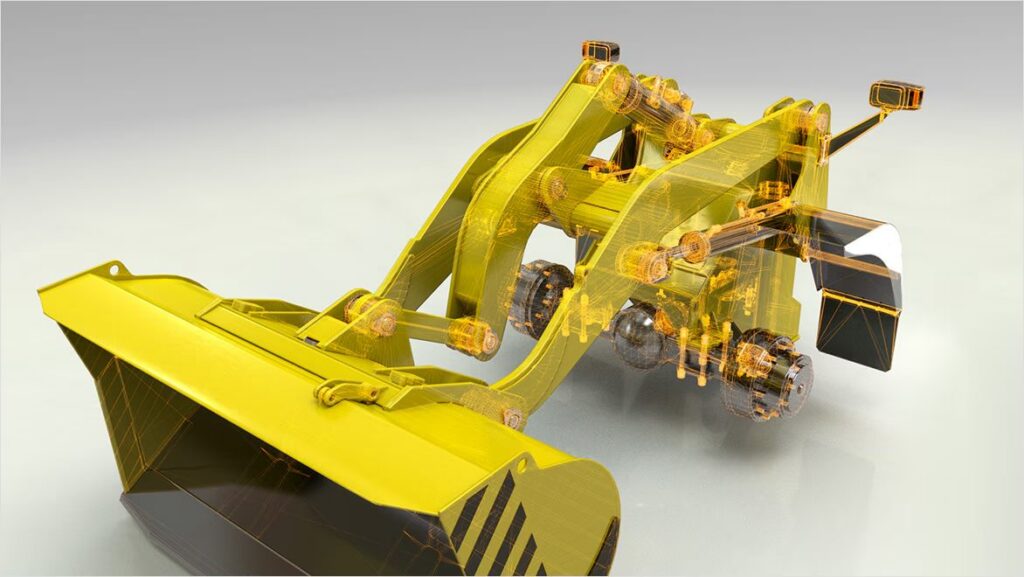
Development teams can use the collection to automatically generate production-ready documentation directly from their design files, effectively eliminating manual drafting, which would otherwise slow down the handoff from engineering to the shop floor. Because the software handles complex geometric calculations and bill of materials (BOM) management, engineers can concentrate on refining product performance. Ultimately, these tools let manufacturing teams produce accurate drawings and instructions that reflect the latest design iteration without delay.
Manufacturing teams, on the other hand, can greatly benefit from the PDMC’s simulation and nesting features. These tools help designers test how components behave under real-world loads before fabrication begins. By identifying potential points of failure early, teams avoid the costly rework that results from onsite discoveries. Furthermore, integrated CAM functionality helps programmers generate toolpaths directly from the design model, making sure that the final physical part matches the digital intent with absolute precision.
Alignment for better outcomes
Success in the building product sector depends on the ability to move quickly without jeopardizing accuracy. When teams align their technology and workflows, they can create a predictable environment that keeps projects on schedule while letting manufacturers meet the high standards of the manufacturing and AEC industries. Fortunately, tools like Autodesk’s PDMC enable the data continuity organizations need to turn their fabrication processes into a competitive advantage that drives long-term growth.