 Trevor English
If you’ve ever taken shop class in high school or watched an episode of How It’s Made, you probably have some idea of how lathes and other metalworking machines function. As technology and computers have improved over the years, CNC machining has emerged. In this article, we’ll explore what CNC machining is, its origins, and how it works.
Table of Contents
- What is CNC machining?
- When were CNC machines invented?
- How do CNC machines work?
- Understanding drills, lathes, and milling machines
- What materials can you use on a CNC machine?
- Manufacturing the future with CNC machining
What is CNC machining?
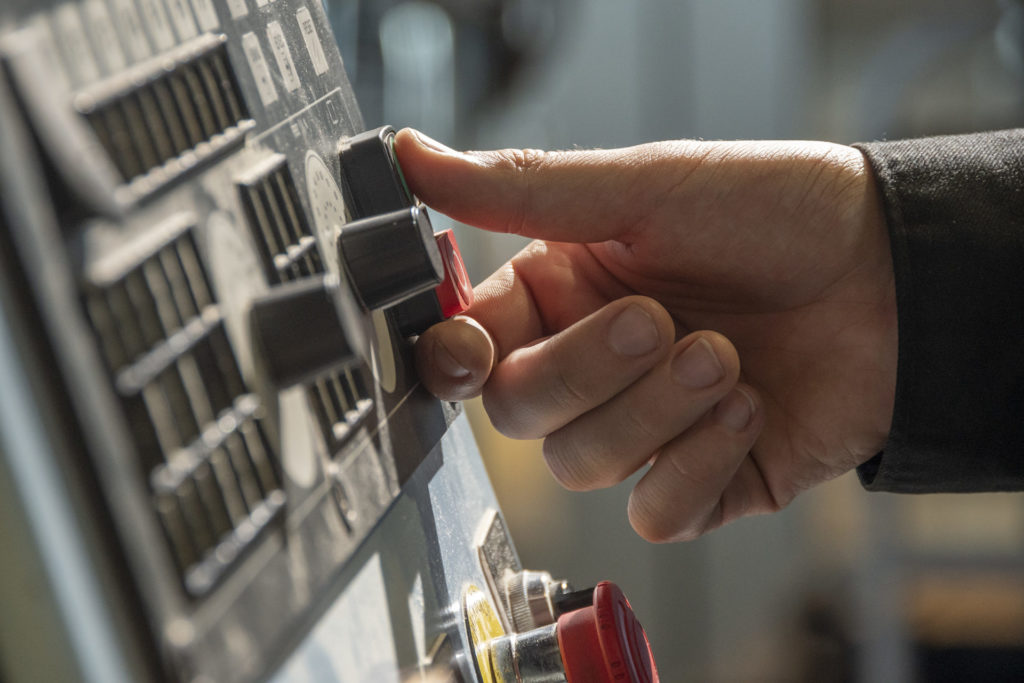
CNC machines, or computer numerically controlled machines, are electromechanical devices that can manipulate tools around a varying number of axes, usually 3 or 5, with high precision per instruction from a computer program. CNC machining is one of two ways that engineers, machinists, or makers can generate a physical part from a computer design file, with the other being 3D printing, known as additive manufacturing.
The contrast between these two techniques is stark. CNC machining, like other machining processes, is a subtractive process, where material is removed from a stock, and 3D printing is an additive process, essentially functioning in reverse.
When were CNC machines invented?
The first CNC machines were developed in the 1940s and 50s and relied primarily on a data storage technique known as “punched tape.” The “code” to control the machines would be manually punched into a data card and fed into a system that would then interpret that data. Needless to say, these early machines were rudimentary, and their functionality was limited.

Image Source: Concerning Reality
CNC machining technologies rapidly grew as technological capability only accelerated in the late 20th century, which brings us to how modern CNC machines work.
As mentioned before, machining is a way to transform a stock piece of material, such as aluminum, steel, or titanium, into a finished product or part. CNC machines rely on digital instructions, specifically referred to as G-code. Before modern computer-aided manufacturing (CAM) and computer-aided design (CAD) programs, such as Autodesk Fusion, were around, machinists would manually write the G-code to control these machines. CAM programs today allow you to take a 3D model and automatically generate G-code that will drive the machine with little input required.
When you compare the capabilities of automated CNC machining to the manual alternative, like lathes and other machining techniques, you can see the benefits. CNC machines simply run faster at higher precision and accuracy while simultaneously allowing the transformation of a digital design into a physical part.
CNC machines are precise and are measured in thousands of an inch, referred to as thou. Standard machining can provide tolerances on parts around ±0.005″, fine machining can produce tolerances of ±0.001″, and specialized processes like polishing can offer repeatable tolerances as tight as ±0.00005″. For reference, a human hair is .00069 inches thick.
How do CNC machines work?
Many designs or specific machining processes require the use of multiple tools to make cuts. One tool doesn’t function universally. For this, machinists will often build digital tool libraries that interface with the physical CNC machine. These machines, often costing hundreds of thousands of dollars, can automatically switch tooling when directed by their digital instructions, allowing them to become manufacturing workhorses.
Basic CNC machines will move in one or two axes, referred to as the x-axis and y-axis, followed by the third, z-axis, which you’ll hear the term 2.5 axis, meaning only two axes move together, rather than all 3. You’ll often hear the terms 2.5, 3-axis, and 5-axis CNC machines, which simply refer to the degrees of freedom a machine can make cuts in. A three-axis machine can move in the x, y, and z axes, whereas a 5-axis machine can move in these 3 axes along with 2 rotational axes.
As you might be able to imagine, the possibilities of production with 5-axis machines are practically endless. 5-axis machines used to be relegated to high-precision work, but as they have become more affordable, they are quickly becoming standard in many shops.
Understanding drills, lathes, and milling machines
There are three conventional machining technologies you need to understand to grasp the basics of how material is removed from stock in CNC machines.
Drills
Drills work by spinning a drill bit and moving the bit into contact with stationary stock.
Lathes
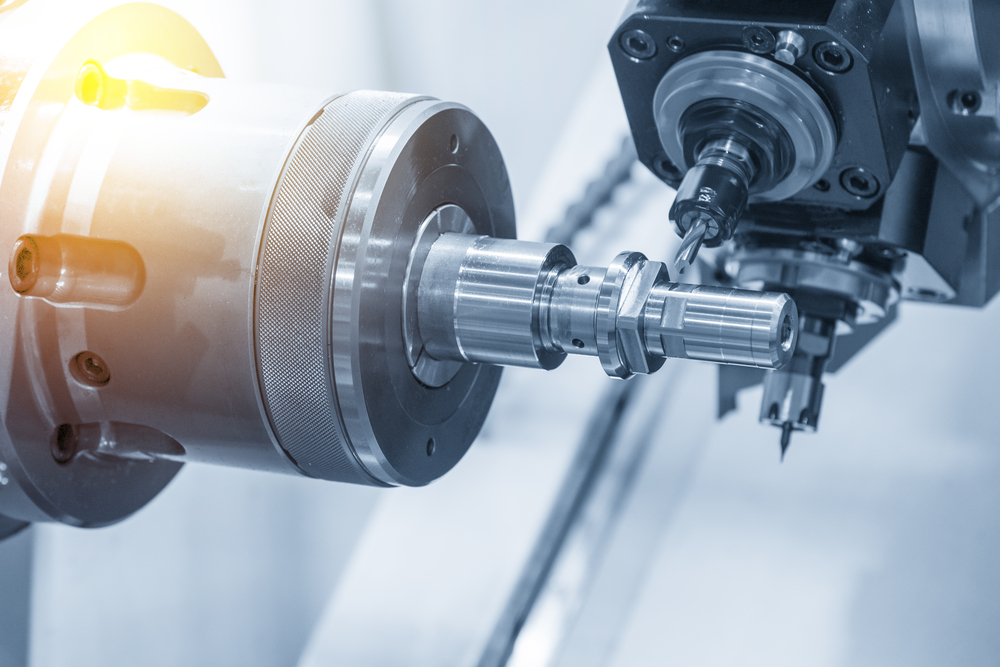
Next, we have lathes, which function in reverse to drilling. Lathes spin the block of material against a stationary drill bit or cutter to remove material in a circular or fluid path. The shape capabilities on lathes are more limited than other techniques, but modern technology does allow these machines to create things such as square holes and non-circular shapes.
Milling machines
Lastly, the most common CNC machine type is referred to as a milling machine. Milling machines involve the use of rotary cutting tools to remove material from a stock piece. These machines function similarly to drills, with their tooling capabilities encompassing a much greater variety.
What materials can you use on a CNC machine?
Almost any material can be used in a CNC machine, from plastic to titanium. Different materials have different properties, so machinists and engineers will overcome their unique challenges by altering machining variables like tool selection, RPM, feed rate, coolant flow, among an extensive variety of other factors.
Manufacturing the future with CNC machining
CNC-machined parts are all around you. They hold together your car and perform vital functions aboard SpaceX rockets. CNC machining is arguably the only way to produce high-precision metal parts for engineering designs across the world.
So, CNC machining is arguably the most significant manufacturing process of the 21st century, and its functionality drives technological advancement across the globe. It’s a trade that is keeping up with the growth of technology, and machinists across the planet are changing the world with their CNC machining skills.