 Heather Miller
Vermland creates high-end, modular kitchen and bathroom cabinetry, shelving, and furniture for clients around the world. Eight team members use Autodesk Fusion to connect design, technical development, and manufacturing while managing more than a thousand parts and an extensive library of modules in a shared cloud-based system. With precision modeling, integrated CAD and CAM, and API capabilities in Fusion, Vermland saves time, improves accuracy, and scales production internationally without compromising craftsmanship.
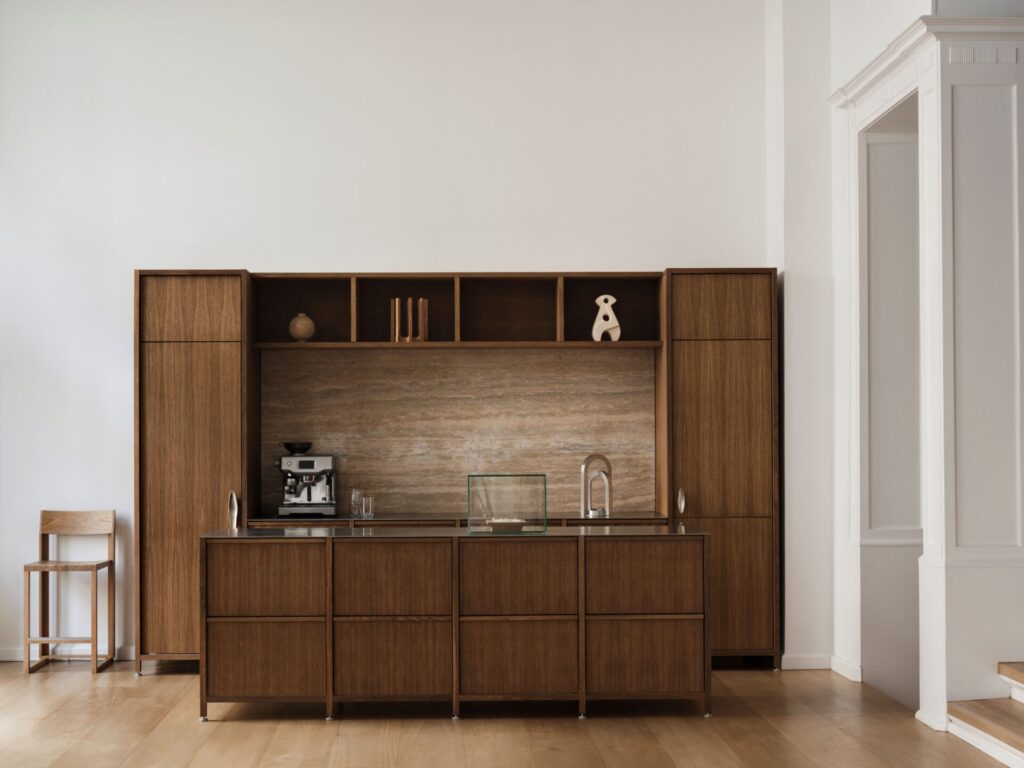
Vermland began nearly a decade ago as a local joinery in Copenhagen. Much of their early work was bespoke and focused on oak carpentry with handcrafted projects for restaurants, private clients, and businesses. As the company grew, so did its fabrication techniques, and CNC gradually became a more central part of the workflow. It was through this shift that Vermland was first introduced to Autodesk Fusion.
“Fusion became a real breakthrough for us,” says Anton Bak, co-founder, Vermland. “That communication from all our designers to the actual production downstairs in the workshop was a huge upgrade in our workflow. We could start completing the more technical drawings upstairs and share directly down to the CNC and workshop where the carpenters worked.”
Elevate your design and manufacturing processes with Autodesk Fusion
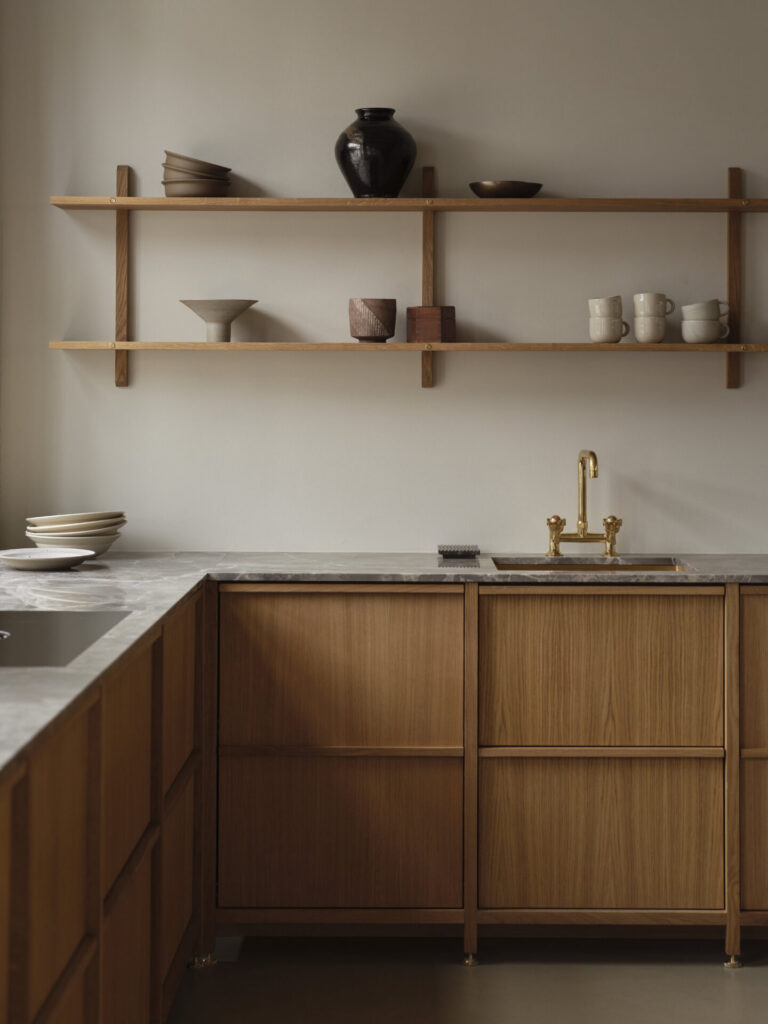
Vermland’s design journey was also evolving with a new ambition to create high-end kitchen cabinetry. The result is a timeless look, inspired by classic Danish design combined with a commitment to quality and durability. As interest grew, Vermland began receiving more requests from clients across Europe and the United States who wanted to bring their designs into their own homes and projects. At first, the team shipped fully built cabinetry in large containers. It worked, but it was complex, expensive, and difficult to scale.
That challenge pushed Vermland to rethink the system entirely. The result was a flat-packable, modular approach designed for international projects without compromising on quality or craftsmanship.
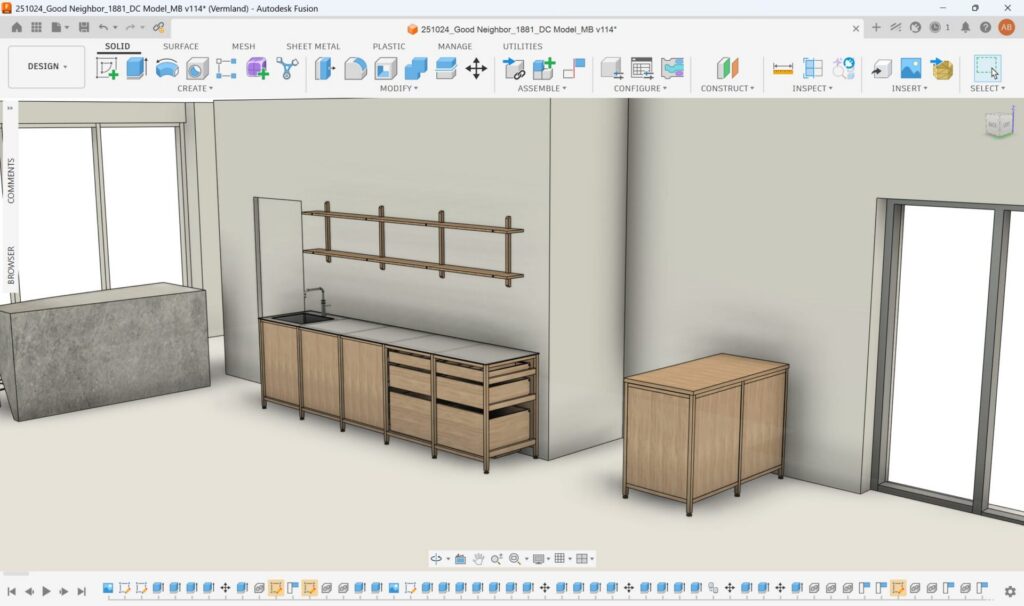
“Everything is in Fusion so we can just drag and drop our modules into the environment for new installations around the world,” Bak says. “We spent three years further developing the system, and now we’re delivering everything from full kitchen and bathroom cabinetry to wardrobes, shelving, benches, and more. It’s quite a flexible modular system. All parts and all designs have been developed directly in Fusion, and we can have all our models and parts live in the cloud.”
Relying on Fusion throughout the entire design-to-manufacturing process
As Vermland has grown, Fusion has become the connection point between design, technical design, and work with a local workshop for manufacturing that also uses Fusion. Designers begin with the customer to create the layout that reflects the client’s home and needs. They work in Fusion with a structured library of cabinet assemblies and modules that include more than a thousand individual parts. Once the customer signs off on the design, the technical design team takes that same Fusion project and prepares it for production.
That step includes quality assurance, cleanup, checking for duplicate parts, reviewing solutions for installation, creating technical drawings, and producing drawing sets for installers. From there, the team generates the bill of materials and sends the drawings and part data to the workshop.
“The precision we have with Fusion is a major benefit,” Bak says. “When we are modeling, we can make all these constraints around our system, modules, and parts down to the very single hole and the screw that we use.”
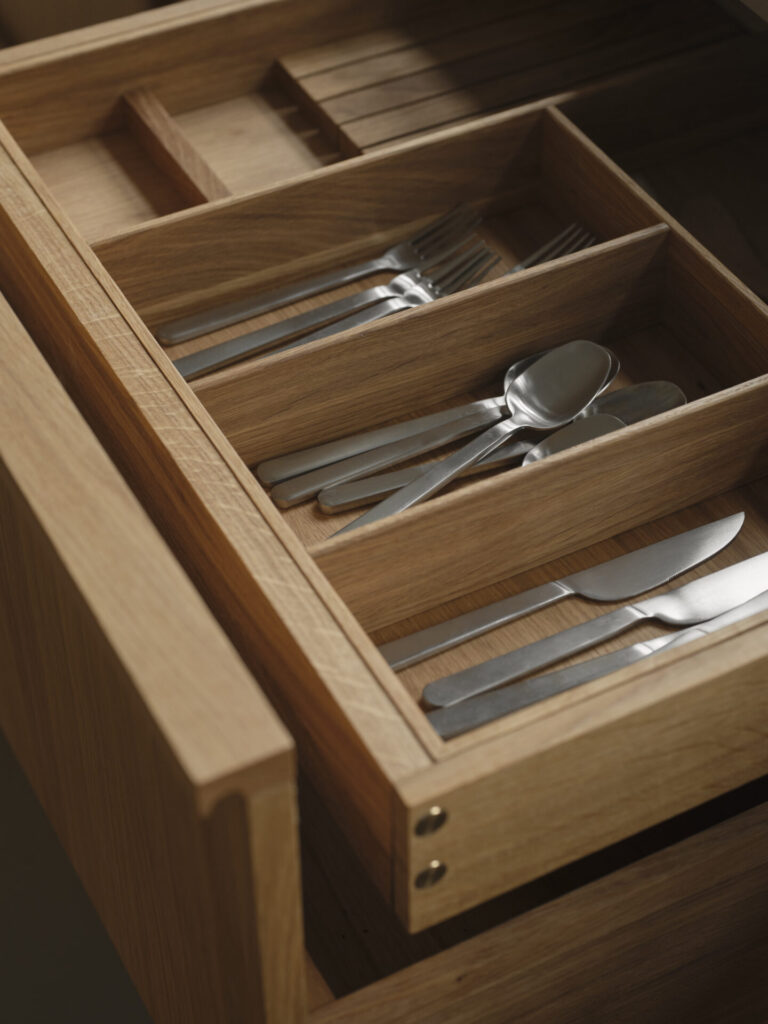
Vermland is also extending Fusion to fit the way the company works. The team developed its own plugin with the Fusion API that can read part numbers, pull out data linked to each part, connect to a price list in Excel, and generate a complete part list with prices. That information can then be used to create quotations for customers and created both massive time savings and increased accuracy.
Morten Arnfred, technical design manager at Vermland, is now building a lightweight product configurator as well. “It’s all made possible by the library that we have in Fusion and the API to pull out data from Fusion,” he says.
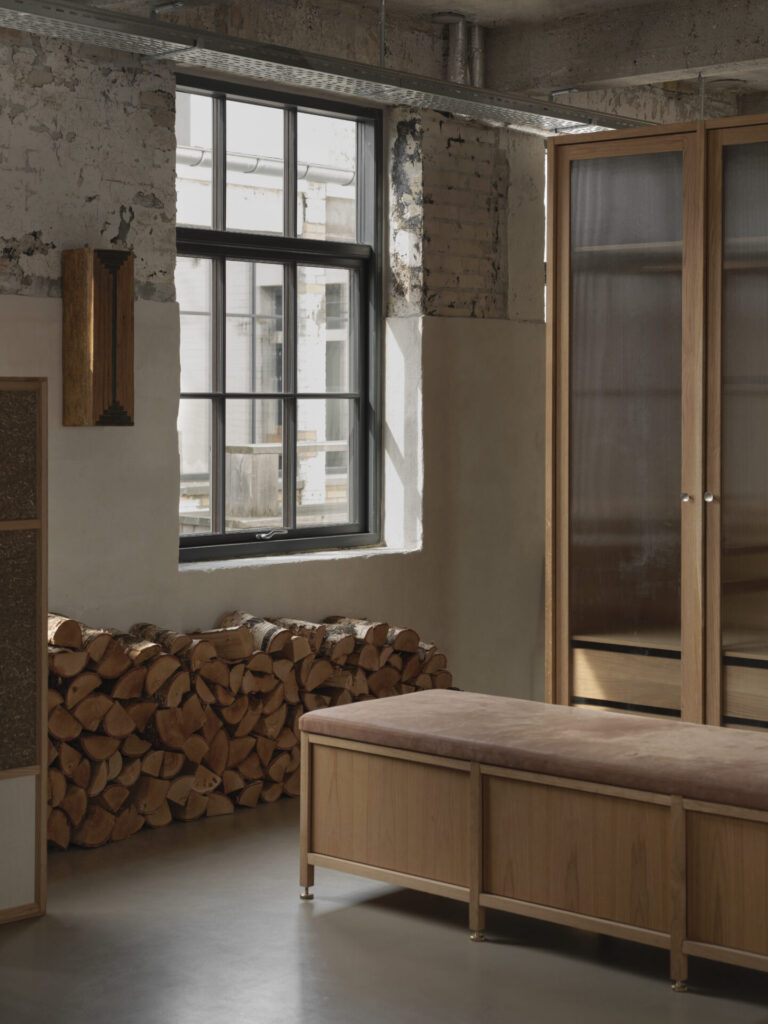
“It’s very appealing that Fusion is a cloud-native platform, and we can have this digital thread with the factory. If we make a change, we can be confident that everything stays aligned. We also love the fact that it’s cross-platform. The modeling tools are great, and everything is in one package from CAD to CAM.”
– Morten Arnfred, Technical Design Manager, Vermland
Creating a digital backbone with Fusion
Fusion is what Jacob Hageman, Vermland CEO and co-founder, calls their “backbone” for design, manufacturing, and scaling the business. After six years building the modules, Vermland has spent the last three years focused on growth. Early next year, they will open a showroom in Washington D.C., marking their first international expansion.
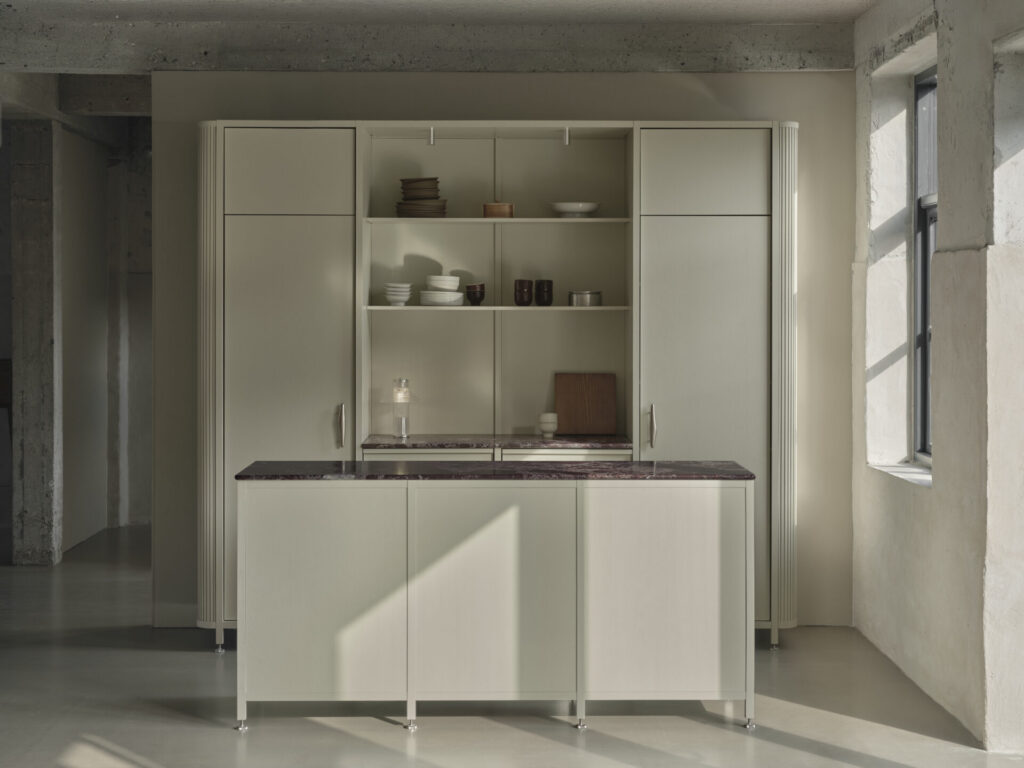
The company now completes roughly 150 to 200 projects a year. In the world of large kitchen brands, that number is small, especially compared to companies producing thousands of kitchens at industrial scale. But in the world of craft-based installations, it is significant.
“Part of our scaling internationally means opening up new production sites,” Hageman says. “With one global backbone and one source of truth with Fusion, we can actually give access to a U.S.-based workshop to set up new production. Fusion is key to helping us make this happen.”