 Heather Miller
Nikolas Weinstein Studios uses Autodesk Fusion to design custom-built machines that power its complex glass fabrication process. These include a bespoke kiln, a precision glass-grooving machine, and specialized weaving systems engineered specifically for the studio’s unique glass sculptures. By combining custom-machined assemblies with off-the-shelf parts, Fusion enables the team to rapidly prototype and create tools tailored for their work.
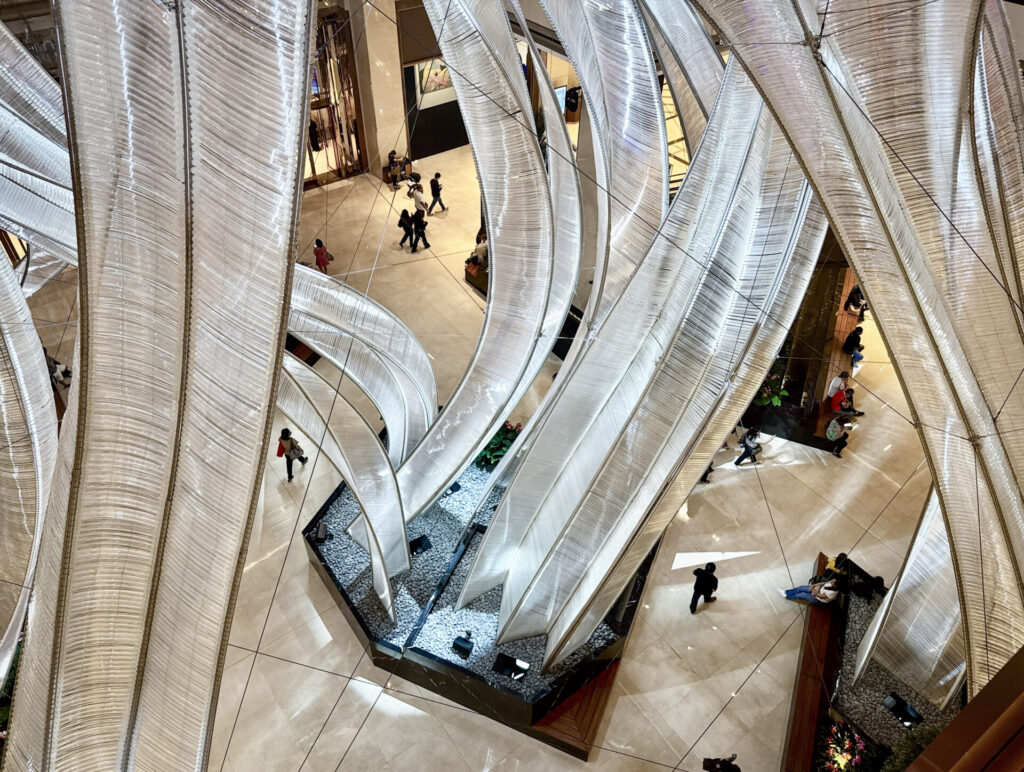
Nikolas Weinstein’s sculptures are immediately recognizable. Often composed of thousands of glass tubes, they are defined by fluidity and inspired by the architectural spaces they inhabit. In fact, Nikolas Weinstein Studios is also a Guinness Book of World Records record-holder with Mangrove, the world’s largest glass tube installation.
Weinstein first encountered glass after college, working at a stained-glass company in Brooklyn. That rigid approach was a far cry from what he would eventually design. But the experience inspired a fascination with glass he couldn’t shake.
A turning point came when renowned architect Frank Gehry encountered one of Weinstein’s sculptural pieces and invited him to collaborate. The relationship proved formative, not only because of Gehry’s stature, but because of the trust he extended to a young, relatively untested glass artist.

Elevate your design and manufacturing processes with Autodesk Fusion
“I lucked out,” Weinstein says. “He gave me a tremendous amount of latitude, and it was, to say the least, both rewarding and harrowing.”
From there, he began his sculpting career in earnest. Over the past 27 years, he has created pieces installed in public buildings and private homes around the world. Even though these glass sculptures are hand-crafted, Weinstein has always been an early and enthusiastic technology adopter. Now, Autodesk Fusion plays a key role in bringing his visions to life.
Connecting art and engineering with Fusion
Fusion sits at the center of Nikolas Weinstein Studio’s workflow. While the organic glass designs originate with paper models and then move into Rhino, anything that must meet physical reality—dimensions, tolerances, hardware, and more—moves into Fusion.
“As soon as that organic shape needs to meet a hard reality, we move into Fusion,” says Jonah Burns, manufacturing engineer, Nikolas Weinstein Studios. “It becomes real there.”
Fusion helps the team to continually iterate and rapidly prototype. Changes in material thickness, threads, or fabrication constraints are immediately updated in the model.
Fusion also enables fast analysis. “We can set up a quick FEA, and it’s enough so that when Jonah is working, he can see something is too small or needs a stronger material,” Weinstein says. “We can do all of that right there in the model.”
Designing a custom kiln
Now central to the studio’s glass shaping process is a custom-built kiln designed with Fusion. The kiln is used to heat-form or “slump” straight glass tubes into controlled curves with custom molds for Weinstein’s woven sculptures. The glass is heated to a temperature where it softens and, over the course of several hours, the tubes slowly bend to conform to the mold, developing precise curvature for that specific glass project.
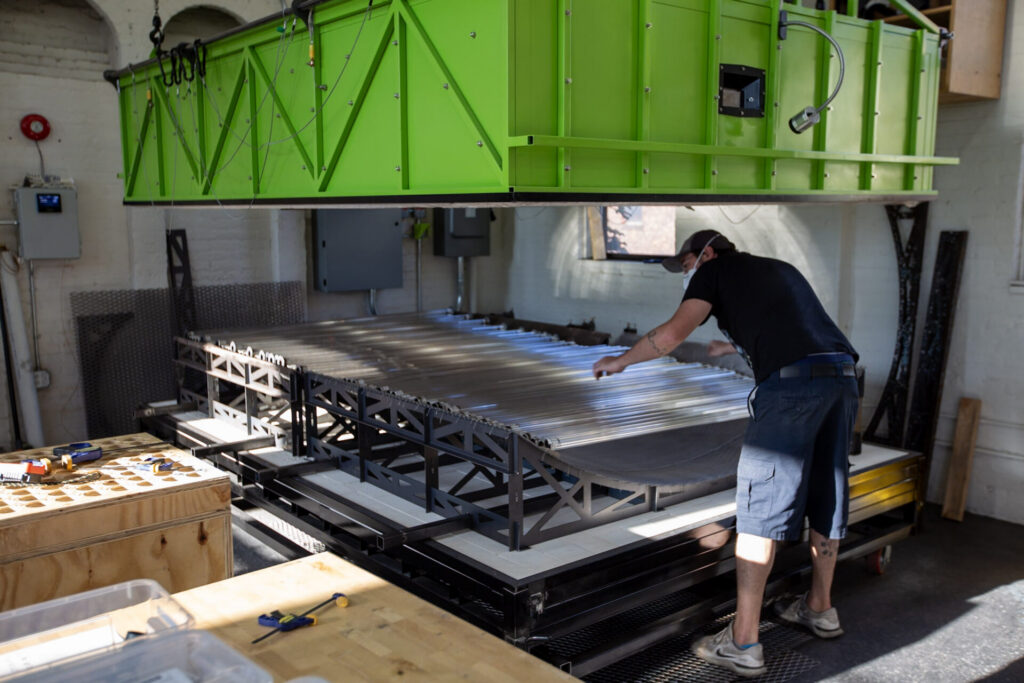
Since the studio is in a historic building in New York, the kiln was conceived as a sectional system, allowing it to be hoisted piece by piece to a second-floor workspace and assembled. Fusion enabled the team to coordinate the structure, electrical, and more within a single parametric model, ensuring that every component fit both in the space and for the actual production of the tubes.
“In just the last five years, we’ve completely reinvented how we iterate. Fusion allows us to imagine a machine that incorporates off-the-shelf parts with custom machined assemblies. Now we can make unicorn machines that do just what we want really quickly. It’s a dream that opens doors to a different way of working.”
– Nikolas Weinstein, Founder, Nikolas Weinstein Studios
Making custom machines a reality
Weinstein is a firm believer that the person designing the piece should also be making it. With Fusion, they’re taking that “make” component to an entirely new level. They’re now designing and building their own custom machines specifically to help fabricate and customize components for the sculptures.
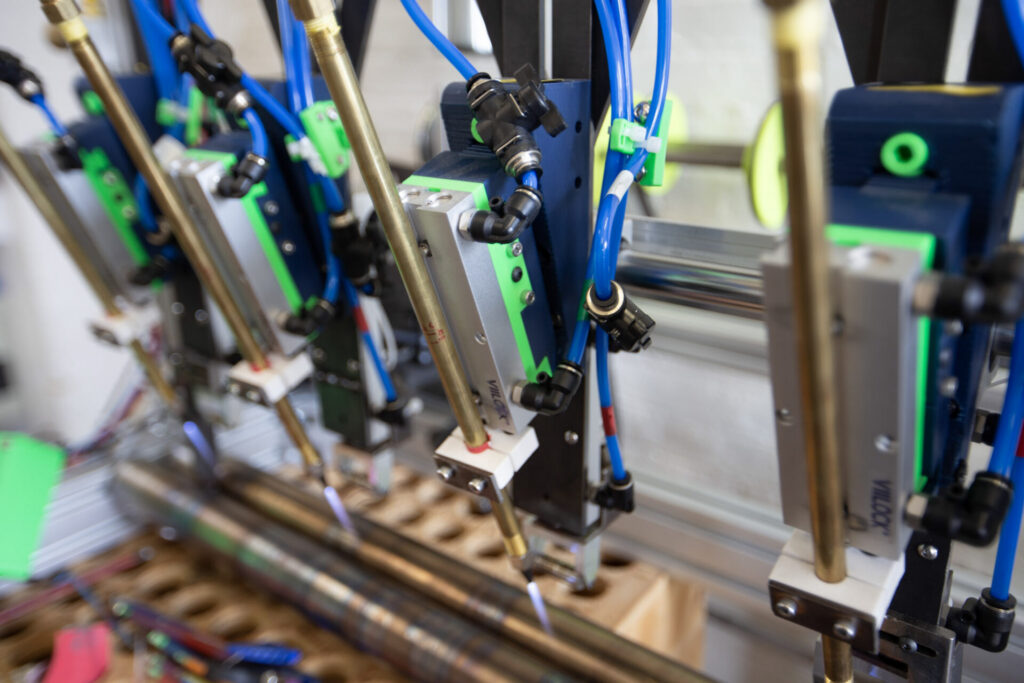
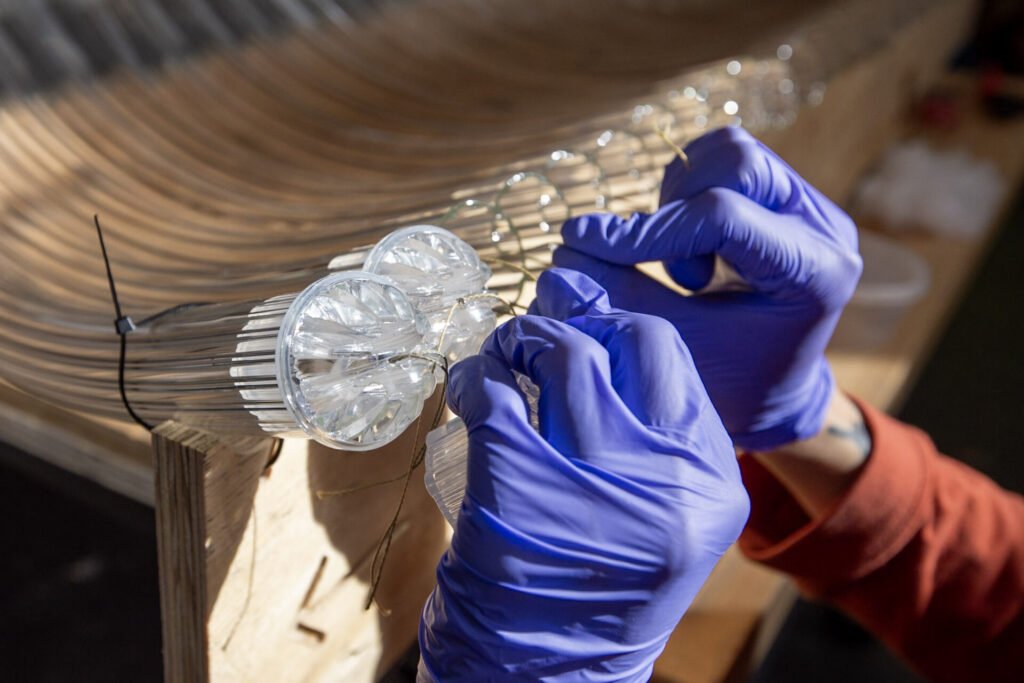
One of these is a glass-grooving machine, designed to dynamically and equally space multiple precise circular indentations into glass tubes. These grooves indent spaces for the stainless-steel crossweave cables so they can’t slide. “The entire thing was made in Fusion, and it’s now integral to our whole process,” Burns says.
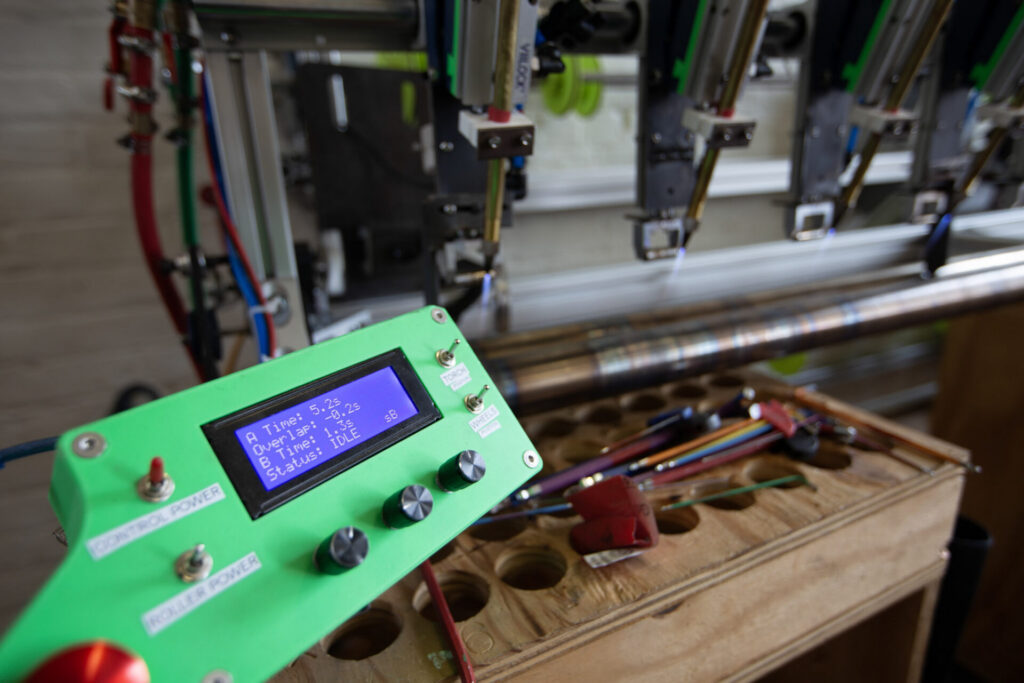
Two additional machines act like a loom, producing characteristic warp and the weft. One automates the threading of continuous cable through hundreds of glass tubes. Another manages cross-weaving and twists cables into grooves with controlled tension and spacing.
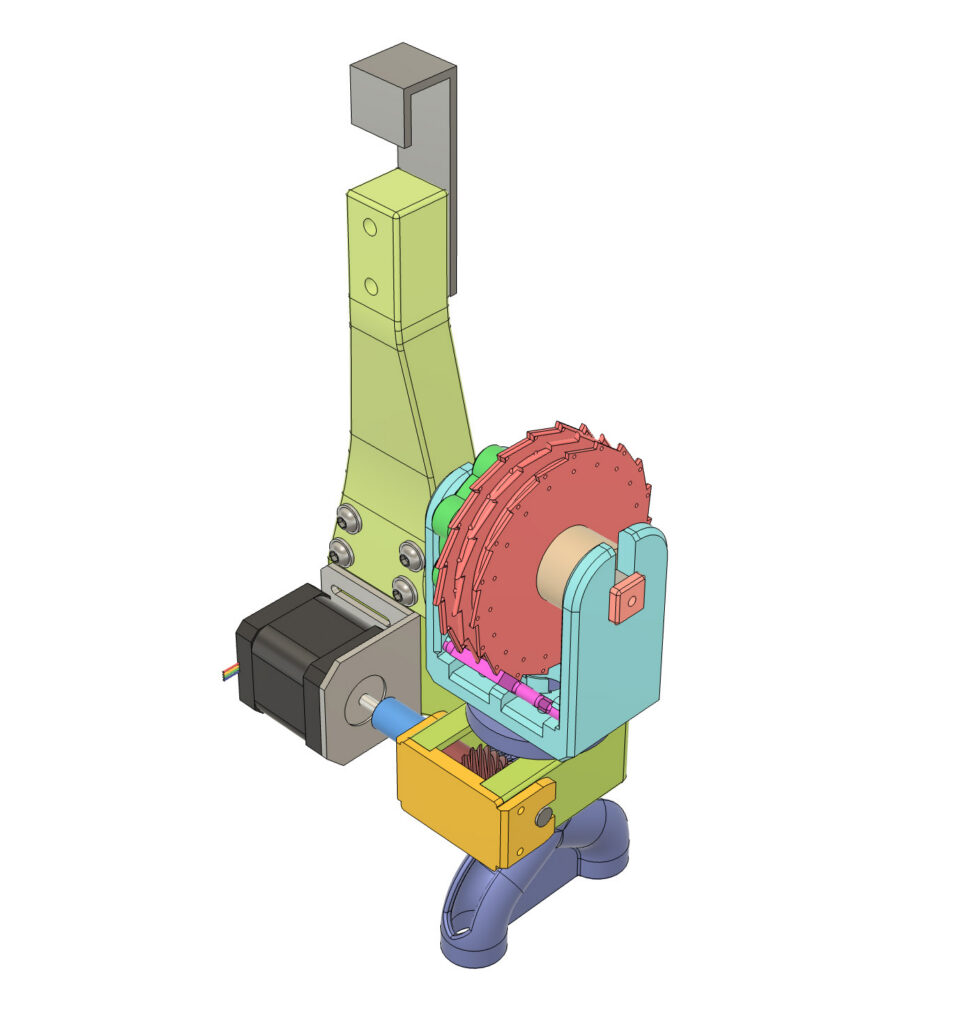
“No one else is going to want these machines or even try to make them,” Weinstein says. “They’re perfectly built for the kind of crazy things that only we would want them to do. Fusion allows us this freedom to design the machines and solutions we really need.”
For Weinstein, these machines and the kiln are not ancillary, but now an integral part of their design and manufacturing process. “We’re at this moment where everything is coming together,” he says. “With Fusion, we have the freedom to design and make anything we really want or need.”